
Species guide
Japanese Black Pine Bonsai Care
Pinus thunbergii
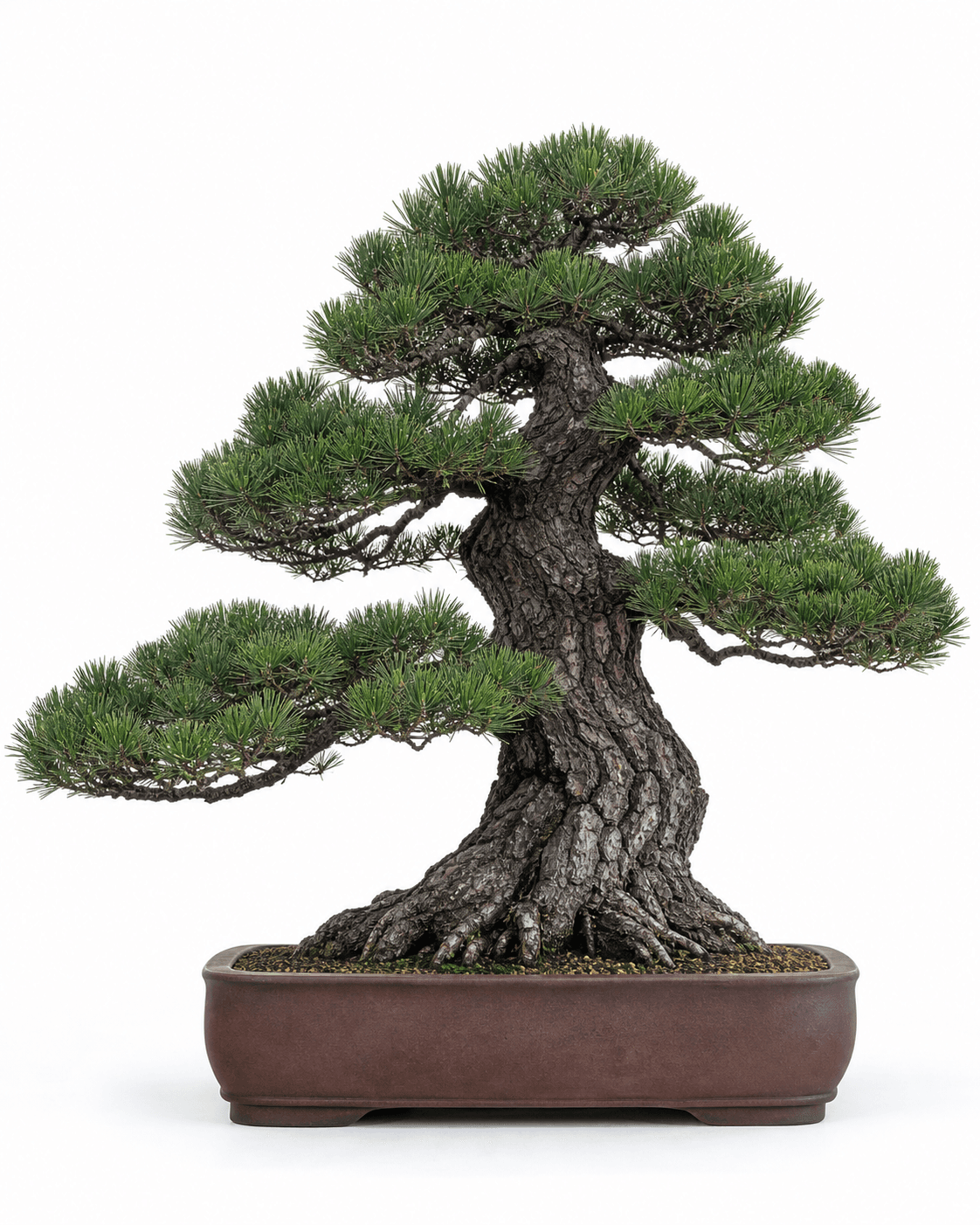
Japanese black pine, Pinus thunbergii, is an outdoor multiflush pine for full sun, oxygen-rich soil, seasonal dormancy, and careful stage reading. It is a classic bonsai species because a strong refined tree can produce a second flush after decandling, then be balanced again through fall shoot selection and needle work.
The care decision is always stage first. Development trees need roots, needles, sacrifice growth, and feeding, while refinement trees can receive decandling, shoot selection, needle density balancing, and periodic rest years.
For beginners, the safest plan is full outdoor sun, open mineral soil, patient development, and restraint around advanced pine techniques. A weak, newly repotted, shaded, insect-hit, or young trunk-building black pine should rebuild strength before any decandling program.
Updated July 5, 2026. Written by EntGrove Editorial. Last verified July 5, 2026.
Care fingerprint
Read the species through its shared care pattern.
Time decandling by species, climate, and strength; a weak multiflush pine should still be treated conservatively. Use this as the starting point before local conditions and tree strength refine the calendar.
Identify flush behavior
Single-flush, multiflush, white pine, and compact pine groups have different pruning windows and different risk levels.
Avoid default decandling
Japanese black pine methods do not transfer safely to every pine, especially slow, weak, collected, or five-needle trees.
Use needles as strength data
Needle length, color, age, and density help show where vigor is strong, weak, or becoming shaded.
Care cadence
The calendar starts with the tree's seasonal state.
Placement
Timing: Grow outdoors year-round in full sun and strong airflow. Use brief display indoors only after the tree is healthy and hydrated.
Watch for: Long needles, shaded interior buds, weak root response, warm indoor winter rooms, and foliage kept away from direct sun after decandling.
NC State ExtensionBonsai Mirai LibraryWatering
Timing: Water deeply when the upper soil begins to dry, then let the pot regain oxygen. Shohin and colanders need closer checks than deep training boxes.
Watch for: Slow drainage, a wet old nursery core, dry pockets, midsummer pot heat, and yellowing that follows stale roots rather than fertilizer shortage.
Bonsai Mirai LibraryDevelopment feeding
Timing: Feed development trees heavily through the growing season, pausing only for extreme heat where needed. Preserve long shoots and sacrifice growth until the tree has built roots, trunk, and interior options.
Watch for: Underfed trunk-building trees, removing sacrifice growth too early, and treating development material like a finished refinement pine.
Bonsai Mirai LibraryDecandling
Timing: Decandle only healthy refinement-stage trees with enough season left for the second flush to harden. Stop feeding roughly one month before the work, avoid feeding during second-flush extension, then resume after hardening in fall.
Watch for: Weak roots, recent repotting, insect damage, shaded branches, young trunk-building material, and second-flush needles that keep shrinking year after year.
Bonsai Mirai LibraryFall shoot selection
Timing: Work after the second flush hardens, often early fall through the dormant window before buds move. Reduce clusters to two shoots, preserve old needles, and balance to the weakest useful branch.
Watch for: Leaving three or more shoots at a junction, plucking below 10-12 needle pairs, stripping all old needles, and performing fall work without winter protection.
Bonsai Mirai LibraryRest years
Timing: Pause annual decandling about every 4-5 years on black pine, and always after major repotting or visible reserve depletion. Let the tree rebuild foliage, roots, sugars, and starches.
Watch for: Second-flush needles becoming too small for the tree size, isolated branch weakness, poor back budding, and a grower mistaking reserve depletion for refinement.
Bonsai Mirai LibraryRepotting
Timing: Repot as candles just begin to move. Warm climates work earlier, cool wet springs work later, and aftercare should keep roots warm and protected from prolonged cold rain.
Watch for: Bare-rooting the whole tree, losing the root sheen, stale nursery clay, weak post-repot bud push, and decandling before recovery is proven.
Bonsai Mirai LibraryWiring
Timing: Use fall after hardening for major wiring and structure, or wire during the post-decandling window before new buds are fragile. Check often as growth resumes.
Watch for: Needle breakage from working from above, wire bite on vigorous shoots, thick whorl swelling, bark damage, and heavy work on a tree also receiving root work.
Bonsai Mirai LibraryWinter protection
Timing: Development trees with full foliage tolerate more cold than fall-worked refinement trees. After shoot selection or needle plucking, protect the tree when hard freezes threaten.
Watch for: Fall foliage reduction followed by temperatures below about 28 F, cold rain after repotting, frozen small pots, and low foliar mass going into winter.
Bonsai Mirai LibraryNC State ExtensionPest and disease checks
Timing: Inspect during spring candle extension, humid needle-cast weather, after heat stress, and whenever older needles shed suddenly.
Watch for: Pine wilt disease, needle cast, scale, aphids, mites, sawfly larvae, root rot, and sudden two-year-old needle loss while current needles remain green.
NC State ExtensionBonsai Mirai LibrarySpecies guide
Apply the species profile before copying another tree's calendar.
Spec
Japanese black pine is the classic outdoor multiflush pine.
Pinus thunbergii is an evergreen pine in Pinaceae. Kew accepts the name and places the native range in Korea plus central and southern Japan, while NC State lists Japanese black pine, black pine, and Thunberg pine as common names and notes the older Pinus thunbergiana label. Kew POWONC State Extension
The tree is suited to outdoor growers with full sun, airflow, seasonal dormancy, and enough space for either development growth or refined needle work. In landscape terms NC State lists Zones 5a-8b, full sun, dark paired needles, abundant cones, and black-gray fissured bark; Oregon State notes the irregular contorted character that helped make it a bonsai subject. NC State ExtensionOregon State Landscape Plants
As bonsai, the defining identity is Pine > Multiflush. Healthy refinement-stage black pine can be decandled to produce a summer flush, then balanced through fall shoot selection and needle density. Young, weak, shaded, newly repotted, or trunk-building trees should stay in development mode. Bonsai Mirai Library
Beginner difficulty is therefore mixed. Basic outdoor culture is forgiving when the roots are healthy, but high-quality black pine refinement asks for calendar discipline, needle-count restraint, strong aftercare, and the humility to skip work when the tree needs a rest year. Bonsai Mirai Library
Native habit
The wild image is coastal strength, salt wind, and lean mineral ground.
Japanese black pine is strongly associated with coastal Japan and Korea. USDA describes the species as salt-spray resistant and poorly tolerant of shade, and Oregon State presents it as a hardy Japanese pine with irregular, picturesque form. Kew POWOUSDA NRCSOregon State Landscape Plants
That ecology explains the care. The tree asks for strong light, moving air, mineral drainage, and a root zone that dries enough to breathe. A shallow bonsai container reduces drought tolerance, so the grower must deliver both thorough watering and rapid oxygen return. Bonsai Mirai LibraryUSDA NRCS
It also explains the design language. A strong black pine reads as compressed coastal power: heavy trunk, plated bark, strong root grip, hard paired needles, dense pads, and a broad silhouette shaped by exposure. Mirai design work starts with where the tree lives, then turns that ecology into structure. Bonsai Mirai LibraryBonsai Mirai / Asymmetry
Energy
Read stage before technique: development, transition, refinement, or recovery.
Mirai treats pine strength as root-centered. Pine needles photosynthesize less efficiently than many broadleaf leaves, and coarse roots store the sugars and starches that pay for spring growth, back budding, decandling response, and wound recovery. Bonsai Mirai Library
Development-stage black pine should carry lots of needles and often a sacrificial leader or branch. The goal is trunk, root, bark, taper, and interior bud potential. Decandling the whole tree commits it to refinement and slows thickening, wound closure, root recovery, and major back-budding unless sacrificial growth remains. Bonsai Mirai Library
A transition tree can carry both modes. One part may run long to thicken or close a design problem, while another part is decandled and balanced as future refinement. That mixed strategy is one reason black pine is powerful material, and it is also why blanket calendar work creates weak branches. Bonsai Mirai Library
A refinement tree aims for equal strength across the canopy. Shoot length, needle count, old-needle retention, sun exposure, wind exposure, and root strength all affect where water, hormones, and stored energy move. The weakest useful branch becomes the reference for balancing stronger zones. Bonsai Mirai Library
Technique
Decandling and fall work are a two-touchpoint refinement system.
Decandling removes the first-flush shoot from a strong multiflush pine so dormant buds at the base push a summer flush. Mirai uses the technique for density, shorter internodes, shorter needles, and balanced refinement, but only when the tree has stored energy and enough season for the second flush to harden. Bonsai Mirai Library
Timing changes with climate and tree size. Large trees are usually decandled earlier than shohin because they can tolerate a longer second flush; shohin may be worked later in cool climates to keep needles proportional. The principle is the same: enough time for maturity, limited time for elongation. Bonsai Mirai Library
Feeding should match the operation. A black pine prepared for decandling should be fed before the work, then left unfertilized while the second flush elongates so the new needles and internodes stay compact. Feeding resumes after hardening, usually with a restrained fall program. Bonsai Mirai Library
Fall shoot selection follows the second flush. Reduce clusters of three or more shoots to two, prioritizing strength first, acute crotch angle second, and lateral orientation third. Remove central stubs flush so branch junctions do not swell into permanent flaws. Bonsai Mirai Library
Needle work is a strength-balancing tool. Mirai repeatedly warns against stripping all older needles, because old needles carry hormonal value and help sustain the branch. For refinement, keep at least 10-12 needle pairs per shoot in weak areas, use 15-20 pairs when balanced strength allows, and treat any lower number as a special shohin or severe-imbalance case. Bonsai Mirai Library
Roots
Repot for active root growth, oxygen, and mycorrhizal continuity.
Mirai repots Japanese black pine as candles begin to move. In cool wet springs, waiting a little later can avoid cold saturated roots; in warm climates, earlier work lets the tree root before heat arrives. Calendar dates are secondary to candle movement, root activity, and aftercare. Bonsai Mirai Library
After root work, Mirai favors warm recovery. A root zone around 70-80 F, shelter from cold prolonged rain, and a stable tie-down all support new root growth. A loose black pine in a pot wastes energy healing root tears every time the trunk moves. Bonsai Mirai Library
Old nursery soil should be corrected in stages. Pines depend on a living root sheen and mycorrhizal relationship, so full bare-rooting, aggressive washing, and total old-core removal are risky. Move the tree gradually into a breathable bonsai soil while preserving enough functioning roots to power the foliage. Bonsai Mirai Library
A recently repotted black pine should skip decandling until recovery is visible. Mirai shohin and field-grown pine guidance both treat major repotting as a reason to rest the tree, rebuild needle mass, and let root strength return before refinement stress resumes. Bonsai Mirai Library
Soil and pot
Use mineral soil, particle size, and pot volume to control water and oxygen.
Mirai gives a baseline pine mix of one part pumice, one part lava, and one part akadama. Pumice contributes water retention, lava contributes oxygen, and akadama contributes nutrient holding and fine-root division. The mix works because particle size and pore space are controlled. Bonsai Mirai Library
Interior particles should generally sit around 1/16 to 1/4 inch, roughly 2-6 mm. Fines hold too much water and suffocate pine roots; oversized particles create oxygen but do not support fine root production inside the pot. A single coarser drainage layer can help hold soil while admitting oxygen through drainage holes. Bonsai Mirai Library
Pot choice follows stage. Development trees need boxes, pond baskets, colanders, or training pots that build roots and trunk. Refined trees need shallower containers that support proportion without overheating, drying too fast, or forcing a weak root system into a decorative compromise. Bonsai Mirai Library
A powerful black pine usually pairs well with an unglazed rectangle, soft rectangle, or drum-style container whose visual weight matches the trunk. Shohin and exposed-root pines can use more assertive pots, but the pot still has to serve root recovery and water control first. Bonsai Mirai LibraryBonsai Mirai / Asymmetry
Climate
Warm coastal vigor is the baseline; cold and hot climates change aftercare.
Mirai notes that Japanese black pine develops faster and more easily in warmer climates because its native logic is warm coastal southern Japan. Cold-climate growers need stronger fall reserve building, more conservative fall foliage reduction, and better post-work protection. Bonsai Mirai LibraryKew POWO
Development trees with full foliage may tolerate roughly mid-20s F temperatures, and robust large trees may handle slightly colder exposure, but fall shoot selection and needle plucking reduce winter hardiness. After fall work, protect when lows approach about 28 F. Bonsai Mirai Library
In hot inland climates, full sun remains the goal for a strong black pine, but the pot and roots may need protection from heat fatigue. Use watering, pot placement, afternoon container shade, and soil particle adjustment before reducing sun so much that buds and needles weaken. Bonsai Mirai LibraryNC State Extension
In wet maritime climates, drainage and shelter from prolonged cold rain matter after repotting. In dry climates, the tree may need more frequent watering than its coastal drought reputation suggests because a bonsai pot cannot draw on deep mineral soil. USDA NRCSBonsai Mirai Library
Pests
Weak roots, wet needles, and lost vigor make pine problems harder to reverse.
NC State links Japanese black pine with conifer pests and names pine wilt disease as a serious issue. The page also lists stress resistance to drought and salt, which can mislead bonsai growers into ignoring the tighter root, water, and disease constraints of a shallow pot. NC State ExtensionOregon State Landscape Plants
Mirai flags sudden shedding of two-year-old needles while current needles stay green as a diagnostic warning. Prior weakness, needle-cast disease such as Dothistroma, or pest damage can all sit behind that symptom. Normal old-needle shedding is more orderly and should match the season and tree strength. Bonsai Mirai Library
Inspect candles, needle bases, undersides of older needles, bark plates, graft unions, and the surface roots. Scale, aphids, mites, sawfly larvae, needle-cast fungi, pine wilt, root rot, and root oxygen failure all need different responses. Stabilize culture before pushing fertilizer. NC State ExtensionBonsai Mirai Library
Prevention is the best pine treatment. Full sun, airflow, open soil, correct watering, quarantine for nursery stock, tool hygiene, and avoiding overwork keep more trees alive than late rescue work after needles have already collapsed. Bonsai Mirai Library
Wiring
Wire from underneath, preserve buds, and respect the reset cycle.
Fall structural wiring can be combined with fall shoot selection on a strong refinement pine, but the combined wound load increases the need for warm controlled winter protection. For many trees, major structural wiring is a once-every-3-to-4-year reset, with smaller tweaks between resets. Bonsai Mirai Library
Mirai approaches pine foliage from underneath during shoot selection, needle plucking, and wiring. Entering from above breaks needles, and broken needles reduce both the aesthetic and the photosynthetic mass the branch needs. Bonsai Mirai Library
Wire should extend far enough to control the branch line before transitioning to finer gauges near tips. On annually decandled refined branches that thicken slowly, Mirai may use wire one gauge heavier than minimum holding strength so placement lasts for 2-3 years without repeated bending. Bonsai Mirai Library
Protect buds and needle distribution. Interior buds away from dominant tips are future cutback options, so avoid crushing them under wire or stripping their surrounding needle mass. Where weak underside needles can be turned upward by the final wire turn, preserve them instead of plucking. Bonsai Mirai Library
Propagation
Seed builds standard black pine; grafting preserves forms and solves design gaps.
Straight Japanese black pine is commonly grown from seed, which is ideal for root work, trunk development, and early bonsai training. Seedlings let a grower build radial roots early and avoid awkward graft unions. Bonsai Mirai LibraryNC State Extension
Grafting is central to specialty material. Mirai documents Japanese black pine scion grafting, branch grafting, and foliage conversion on other pine stock. Good grafts require fresh scions, cambial contact, protection from wetness and freezing, and several weeks of shade while the union stabilizes. Bonsai Mirai Library
Same-species grafts have the best compatibility. Branch grafting can add missing foliage, root grafting can improve nebari, and veneer grafting can convert a coarse pine design to black-pine foliage when horticultural and aesthetic reasons justify the composite tree. Bonsai Mirai Library
Cuttings and air layers are not the ordinary path for black pine bonsai. Treat them as specialist propagation experiments, while seed and grafting remain the practical tools for most growers and nurseries. Bonsai Mirai Library
Sourcing
Buy vigor, roots, trunk, and correct identity before rarity.
A good beginner black pine has bright full needle mass, firm buds, active drainage, a stable tie-down, visible trunk potential, no heavy pest load, and no evidence of recent stacked work. A bargain tree with weak roots and thin shaded foliage is expensive in recovery time. Bonsai Mirai Library
Nursery stock can be excellent if the root transition is staged. Look for trunk movement, low branches, interior buds, manageable whorl swelling, and enough foliage to drive root correction. Avoid material that requires a full top chop, full root replacement, and major wiring in the same year. Bonsai Mirai Library
Field-grown black pine can bring trunk and bark quickly, but the first years are usually horticultural: establish roots, preserve sacrifice strategy, style only after recovery, and delay decandling until the tree proves it can rebuild reserves. Bonsai Mirai Library
Identity matters. A tag that says black pine can point to Pinus thunbergii, Austrian black pine, Jeffrey pine, or a regional common-name mixup. Confirm paired needles, buds, bark, provenance, and a reliable botanical source before applying Japanese black pine decandling. Kew POWONC State Extension
Troubleshooting
Most black pine failures are strength, root oxygen, or timing failures.
Symptom: long coarse needles. Likely causes: too much extension time, too much feeding during second-flush elongation, weak light, coarse development stage, or no refinement program. Fix: improve sun, match feeding to stage, and use decandling only when the tree is strong enough. Bonsai Mirai Library
Symptom: progressively tiny second-flush needles. Likely causes: stored sugar and starch depletion from repeated decandling. Fix: take a rest year, keep full sun, fertilize to rebuild reserves, and leave refined branches untouched while strength returns. Bonsai Mirai Library
Symptom: widespread yellowing or weak candles. Likely causes: stale wet soil, poor root oxygen, root damage, shade, or disease pressure. Fix: check drainage and root health first, then adjust water, light, and recovery before adding more fertilizer. Bonsai Mirai LibraryNC State Extension
Symptom: branch junction swelling. Likely causes: leaving three or more shoots at a cut site, leaving central stubs, or letting whorled growth thicken unchecked. Fix: shoot-select to two where strength allows, cut stubs flush, and plan future reductions before swelling becomes permanent. Bonsai Mirai Library
Symptom: needle drop after fall work. Likely causes: too much foliage reduction, freezing after needle plucking, cutting needles before a spring repot, or root weakness. Fix: protect from freezes, preserve old needles in future work, and avoid needle cutting when roots are compromised. Bonsai Mirai Library
Symptom: decandled shoots fail to bud. Likely causes: weak stored reserves, a late cut with too little season, cutting beyond viable bud zones, insect damage, or recent root stress. Fix: stop refinement work, protect the tree, rebuild foliage, and review whether the branch had enough needle mass before the cut. Bonsai Mirai Library
Design
Black pine design starts with power, bark, roots, and species-correct tip movement.
A convincing Japanese black pine begins with base, trunk, bark, and branch hierarchy. The defining branch and apex should express strength rather than delicacy, with dense but readable pads supported by hard paired needles. Bonsai Mirai LibraryBonsai Mirai / Asymmetry
Mirai pine design language distinguishes tip movement by species. Black pine tips read tighter and more rigid than white pine, while red pine carries softer informal arcs. Wiring should support the species identity rather than forcing every pine into the same silhouette. Bonsai Mirai Library
Traditional Japanese black pine styling usually avoids decorative deadwood. When deadwood exists on black pine, clean it to solid wood and preserve it with wood hardener rather than whitening it into a juniper-like feature. Pine deadwood can be powerful, but it should follow the tree story. Bonsai Mirai Library
Development design is allowed to look messy for a while. Sacrifice branches, long leaders, and uneven foliage are tools that build trunk, bark, roots, and interior options. Refinement design begins when the tree has enough structure and strength to support shorter internodes, denser buds, and repeated selection. Bonsai Mirai Library
Forms
Cork bark and dwarf forms need slower, more protective technique.
NC State lists forms and cultivars such as Banshosho, Oculus Draconis, Pygmaea, Shirone Jamone, Thunderhead, and Yatban Sho. Oregon State also notes compact, dwarf, and variegated forms. These labels identify material, but they do not change the outdoor pine requirement. NC State ExtensionOregon State Landscape Plants
Cork bark Japanese black pine is a special case. Mirai describes cork bark as a recessive mutation that severely limits vascular conductivity because cork occupies much of the branch girth. Most cork bark black pines are grafted onto ordinary black pine, often at the crown or first branch. Bonsai Mirai Library
That limited vascular system changes technique. Cork bark forms need more retained needle mass, gentler root work, less aggressive decandling, cautious bending, and careful graft-union inspection. A full year off after heavy root or sheen work is often the right aftercare. Bonsai Mirai Library
For learning, ordinary vigorous seed-grown black pine is usually better than rare weak material. It teaches candle growth, root recovery, needle retention, fall selection, sacrifice strategy, and timing without the extra fragility of specialty forms. Bonsai Mirai Library
History
Japanese black pine is a benchmark for pine bonsai refinement.
Japanese black pine is deeply associated with Japanese coastal plantings, garden training, and bonsai. Its salt tolerance, rugged bark, paired needles, and strong silhouette made it useful in landscape culture and visually powerful in miniature. USDA NRCSOregon State Landscape PlantsBonsai Mirai / Asymmetry
In bonsai education, black pine is the species that teaches the difference between development and refinement. The same tree can be grown aggressively for trunk, then later managed through decandling, shoot selection, needle density, and periodic rest years. Bonsai Mirai Library
Exhibition-quality black pine usually shows accumulated decisions: stable nebari, plated bark, powerful trunk taper, compact but living pads, clean junctions, balanced needle density, and evidence that roots and foliage have been managed together for many seasons. Bonsai Mirai LibraryBonsai Mirai / Asymmetry
FAQ
Japanese black pine bonsai questions, answered directly.
The FAQ below covers the most common beginner and refinement questions: indoor culture, watering, decandling, repotting, long needles, yellowing, and cork bark black pine care.
Species questions
Answer the beginner questions before styling.
Is Japanese black pine a good beginner bonsai?
It can be a good beginner outdoor conifer for a patient grower with full sun. It is a poor fit for indoor culture or for growers who want to combine repotting, major pruning, wiring, and decandling in one season.
Can Japanese black pine bonsai live indoors?
No. Japanese black pine needs outdoor sun, airflow, and seasonal rhythm. Indoor display should be brief, and the tree should return outdoors before light, humidity, and temperature compromise its strength.
How often should I water Japanese black pine bonsai?
Check the soil and pot rather than following a fixed schedule. Water thoroughly when the upper soil begins to dry, then let the pot regain oxygen before watering again. Shohin, colanders, heat, and wind shorten the interval.
When should I decandle Japanese black pine?
Decandle only healthy refinement-stage trees with strong roots, good needle mass, and enough growing season left for a second flush to harden. The exact date changes by climate and tree size, so record your timing and the tree response.
Should I decandle a young Japanese black pine?
Usually no. Young trees that still need trunk, root, bark, and primary branch development should grow, feed, and carry sacrifice growth. Decandling is useful after the tree has structure and enough strength for refinement.
When should I repot Japanese black pine bonsai?
Repot as candles begin to move, adjusted for climate and aftercare. Warm climates can work earlier, cool wet springs often work later, and any recently repotted tree should skip refinement stress until recovery is visible.
Why are my Japanese black pine needles getting long?
Common causes include development-stage vigor, too much feeding during second-flush elongation, too little sun, too long a post-decandling growth window, or skipping refinement work on a strong tree that is ready for it.
Why is my Japanese black pine turning yellow?
Seasonal old-needle drop can be normal. Widespread or sudden yellowing can point to stale soil, poor root oxygen, overwatering, needle cast, pests, pine wilt disease, or weakness after too much work.
How many needles should I leave after fall needle plucking?
Use the weakest useful branch as the reference. Mirai gives 10-12 needle pairs per shoot as an absolute floor in weak areas, while 15-20 pairs is a healthier balanced target for refined trees. Never strip all older needles.
Is cork bark black pine cared for like standard black pine?
The basic outdoor sun, soil, and seasonal rhythm are similar, but cork bark forms need more retained needle mass, gentler root work, less aggressive decandling, cautious bending, and careful graft-union inspection.
Sources
Species advice needs source discipline.
Next decisions
Plan the operation before copying the calendar.
A good care note for Japanese black pine / kuromatsu records the tree's stage, the work done, and the aftercare used. That record matters more than a month-name rule.
Related species