
Species guide
Savin Juniper Bonsai Care
Juniperus sabina
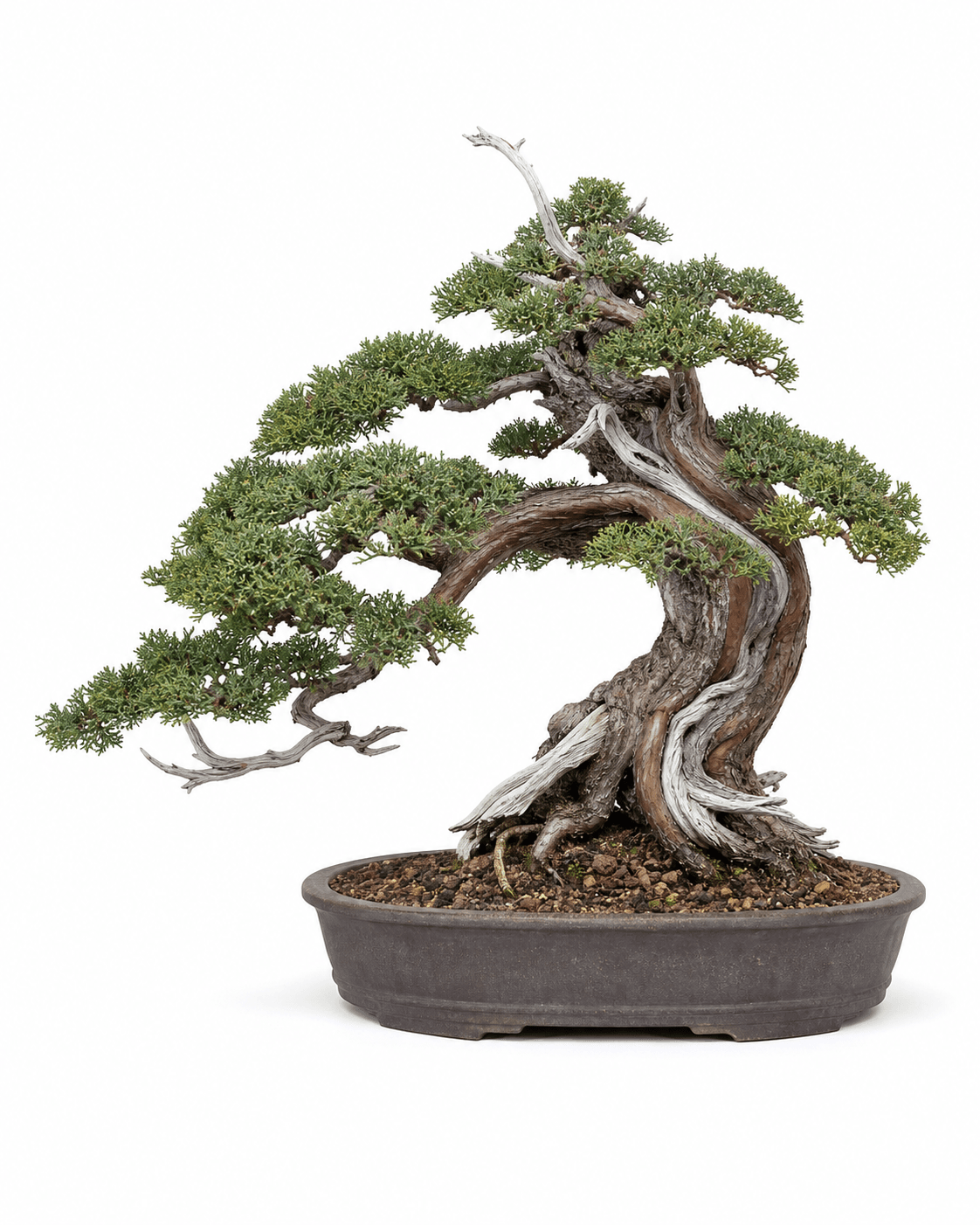
Savin juniper, Juniperus sabina, is an outdoor European and Asian juniper with low, spreading growth, mixed scale and juvenile foliage, strong cold tolerance, and excellent bonsai foliage when the label is correct. Grow it in full sun, open mineral soil, and outdoor dormancy, then prune after growth hardens instead of pinching.
The local Mirai corpus has direct Savin coverage in sabina-juniper-enhancement and european-juniper-design, plus running-juniper, refinement, grafting, nursery-stock, watering, soil, repotting, wiring, and design files. This profile treats Savin as Juniper > Running in the site taxonomy while asking the grower to read actual growth habit, since some Savin work uses mounding-to-running cues during development.
Separate Savin, Sabina, Juniperus sabina, Tam, Pfitzer, Parsons, Daurian, procumbens, Blue rug, Andorra, Hollywood, San Jose, and eastern red cedar before copying timing or value assumptions. Bare savin labels can also refer to eastern red cedar in older North American sources, so the Latin name matters.
Updated June 11, 2026. Written by EntGrove Editorial. Last verified June 11, 2026.
Care fingerprint
Read the species through its shared care pattern.
Use the running habit instead of fighting it; branch selection, live foliage preservation, and gradual styling are the main constraints. Use this as the starting point before local conditions and tree strength refine the calendar.
Note: Cold-hardy Eurasian Juniperus sabina with dedicated local Mirai Savin design and refinement coverage; verify against Tam, Pfitzer, Parsons, Daurian, procumbens, Blue rug, Andorra, Hollywood, San Jose, and eastern red cedar because savin and sabina labels are historically overloaded.
Keep foliage strong
Junipers recover through active foliage, so styling choices should leave enough healthy tips to power the tree.
Protect live veins
Old junipers often depend on narrow live veins between roots and foliage; root work and carving should respect that path.
Do not stack major work
Heavy bending, major foliage reduction, carving, and repotting belong in a staged plan rather than the same weekend.
Care cadence
The calendar starts with the tree's seasonal state.
Placement
Timing: Grow outdoors year round in full sun and airflow. Use temporary protection after repotting, major bending, or extreme heat exposure.
Watch for: Indoor display, shaded porches, overheated benches, stagnant winter shelters, and newly worked trees exposed to hard drying wind.
Bonsai Mirai LibraryOregon State Landscape PlantsWatering
Timing: Water in repeated passes until the whole rootball drains, then wait for the surface and upper root zone to begin drying before watering again.
Watch for: Hydrophobic old nursery soil, runoff around compact cores, wet peat after foliage reduction, and drought assumptions copied from in-ground landscape use.
Bonsai Mirai LibraryFeeding
Timing: Feed development trees during active growth. In refinement, withhold heavy feeding until the first flush has hardened, then use light feeding to avoid coarse growth.
Watch for: Long coarse runners, repeated pruning needs, fertilizer on weak roots, and late heavy feeding that raises spring pest pressure.
Bonsai Mirai LibraryPruning
Timing: For refinement, prune after the first flush hardens and energy is near neutral. For running behavior, shorten extension to strong interior side growth before shaded interior foliage is abandoned.
Watch for: Pinching, hedge-shearing, cutting to weak interior growth, spring refinement cuts that force coarse response, and stripping all small interior pieces.
Bonsai Mirai LibraryStructural work
Timing: Do major styling in early spring as winter color leaves the foliage and before tips activate. Light refinement and secondary wiring can continue in fall when more than half the foliage stays on the tree.
Watch for: Deep-dormancy restyling, spring work after slippery cambium begins, major foliar reduction in fall, and styling immediately after repotting.
Bonsai Mirai LibraryRepotting
Timing: Repot in spring before active growth. Convert old roots over staged cycles, keep some conifer continuity, and tie the root mass firmly.
Watch for: Bare-rooting, loose tie-downs, sour organic cores, combining severe root and foliage cuts, and emergency work after tips have hardened.
Bonsai Mirai LibraryWiring
Timing: Wire hydrated branches with clear structural intent. For larger moves, raffia, wire spines, guy wires, and live-vein tracing matter more than force.
Watch for: Hidden wire bite, torn crotches, crushed foliage, weak live veins, soft deadwood that snaps dry, and wire left through a strong growth season.
Bonsai Mirai LibraryPests and disease
Timing: Inspect dense foliage during wet springs, hot dry mite periods, winter shelter, and the year after nursery-stock reduction.
Watch for: Spider mites, scale, aphids, bagworms, borers, twig blights, rusts, root rot, scorch, water stress, and dead interiors hidden below the surface.
Clemson Extension juniper pestsUC IPM JuniperUC IPM Juniper Twig BlightsWinter protection
Timing: Keep dormant outdoors. Protect shallow containers before repeated hard freeze, drying wind, or thaw-freeze cycles.
Watch for: Warm indoor overwintering, frozen dry roots, wet unventilated shelters, late heavy pruning, and freshly repotted roots exposed to sudden cold.
The Gymnosperm DatabaseBonsai Mirai LibrarySpecies guide
Apply the species profile before copying another tree's calendar.
At a glance
Savin is a cold-hardy outdoor juniper with excellent foliage and tricky labels.
Record the tree as Juniperus sabina only when the tag, source, or botany supports it. Kew accepts the species, while Oregon State and the Gymnosperm Database describe a low, evergreen, often prostrate shrub with both scale and needle foliage. Kew POWOOregon State Landscape PlantsThe Gymnosperm Database
For bonsai, the strengths are compact foliage, low spread, deadwood potential, and a European old-juniper image that can be more distinctive than generic grafted shimpaku. Mirai specifically argues that good Sabina foliage should not be reflexively grafted over. Bonsai Mirai LibraryBonsai Mirai / Asymmetry
The care baseline is simple: outdoor sun, complete watering, mineral soil, no pinching, spring root work, and measured pruning after the first flush hardens. The hard part is reading whether the individual plant is behaving as a running juniper or as a compact Savin that needs interior cleaning before extension. Bonsai Mirai Library
Wild context
Wild Savin comes from exposed temperate Eurasian habitats, often rocky and cold.
Kew places Juniperus sabina from central and southern Europe to southwestern Siberia and northern China. The Gymnosperm Database adds rocky mountain slopes, thickets, forests, and vegetated dunes, with most records in montane elevations. Kew POWOThe Gymnosperm Database
Oregon State describes it as sun-loving, adaptable, and comfortable on limestone and dry well-drained soils. In a bonsai pot, that translates to high light, air movement, oxygen-rich soil, and winter dormancy rather than dry neglect. Oregon State Landscape PlantsBonsai Mirai Library
For design, the wild lesson is horizontal pressure, exposed live veins, old deadwood, and compact foliage that survives in harsh sites. Avoid making every Savin a polished shimpaku silhouette when the trunk, deadwood, and foliage ask for a more rugged image. Bonsai Mirai / AsymmetryBonsai Mirai Library
The range also explains regional prestige. Mirai treats European collected Sabina as a capstone material in that context, while Kew and the Gymnosperm Database show the species is broader than Europe alone. Kew POWOThe Gymnosperm DatabaseBonsai Mirai Library
Reading the tree
Read identity, habit, live vein, and foliage quality before choosing technique.
Start with the label. Savin, Sabina, Juniperus sabina, Tam, Pfitzer, Parsons, Daurian, eastern red cedar, and generic low juniper labels can overlap in trade and old common-name usage. Kew POWOThe Gymnosperm DatabaseBonsai Mirai juniper identification
Then read the foliage. Strong Savin foliage can be one of the main reasons to keep the species identity, while weak juvenile foliage in crotches or undersides signals stress or poorly timed reduction. Bonsai Mirai Library
Look for the live vein from the base through each keeper branch. Mirai structural work on Sabina depends on tracing live tissue, preserving mobile veins, and using deadwood as part of the structural image. Bonsai Mirai LibraryBonsai Mirai / Asymmetry
Classify the current behavior from the plant in front of you. If it elongates first and builds density behind the tips, use running-juniper timing. If it sits dense and compact, clean only spent interior pieces and wait for extension before reducing more. Bonsai Mirai Library
Foliage work
Prune with scissors after hardening and preserve the interior you will need later.
Avoid pinching. Mirai repeatedly ties juniper pinching to torn tissue, root weakness, stress foliage, and long-term decline. Use sharp scissors and make cuts against a design goal. Bonsai Mirai Library
In refinement, wait until the first spring flush has hardened and the tree is near energy-neutral. Prune strong extensions back to healthy interior side growth before old shaded foliage is abandoned. Bonsai Mirai Library
For compact Savin material, interior cleaning can trigger extension when weak crotch and bottom growth are removed from the first 1/8 to 1/4 inch of small branches. Keep productive shoots and remove spent pieces only. Bonsai Mirai Library
Fall can support light cutback and secondary wiring when the tree keeps more than half its foliage. Save major restyling, major reduction, and live-vein risk for spring. Bonsai Mirai Library
Roots
Repot in spring and keep foliage strong enough to rebuild roots.
Repot Savin in spring before active tips make the cambium slippery and before summer heat raises aftercare risk. Spring gives the tree active metabolism for repair without the stress of late repotting. Bonsai Mirai Library
Juniper strength lives in the foliage mass. Preserve enough green tissue to drive root regeneration, especially after heavy nursery-core reduction or collected-material recovery. Bonsai Mirai Library
Convert compact old roots in stages. Work the main limitation first, secure the tree firmly, and keep a functioning conifer root core rather than cleaning every old particle in one operation. Bonsai Mirai Library
A repot that changes the planting angle should serve the design. If a radical angle change is needed, set structural wiring first or plan a second repot after styling clarifies the true front. Bonsai Mirai Library
Soil and pot
Use mineral soil first for roots, then choose a pot that supports the low line.
Use 1:1:1 akadama:pumice:lava for most Savin development and early refinement. If foliage mass is weak, the same balanced mix keeps oxygen high without demanding heavy water retention. Bonsai Mirai Library
Move toward 2:1:1 with more akadama when the tree is vigorous, fine roots occupy the pot, and refinement needs more nutrient retention. Keep particle size appropriate to the container and climate. Bonsai Mirai Library
Oregon State notes Savin tolerates limestone and dry well-drained soils in landscape culture. Bonsai culture should honor drainage and oxygen while still watering completely through the whole rootball. Oregon State Landscape PlantsBonsai Mirai Library
Low unglazed ovals, shallow rectangles, cascade containers, slabs, and rugged stone plantings can all suit Savin. Let trunk movement, live vein, and defining branch choose the container shape before color becomes important. Bonsai Mirai / AsymmetryBonsai Mirai Library
Climate
Cold hardiness is real, but bonsai roots are less buffered than landscape roots.
Oregon State lists Savin as hardy to USDA Zone (3) 4, and the Gymnosperm Database gives Zone 3 context. A shallow bonsai container loses the ground insulation that makes those landscape numbers feel easy. Oregon State Landscape PlantsThe Gymnosperm Database
In cold regions, keep the tree outdoors but protect the pot before repeated hard root-zone freezing. Ground placement, mulch, or an unheated cold frame preserves dormancy while reducing drying wind. Bonsai Mirai Library
In hot regions, sun remains important, but reflected heat and shallow dark pots can overheat roots. Use airflow, accurate watering, and short afternoon protection after invasive work. Bonsai Mirai Library
In humid or wet regions, prioritize airflow through dense foliage and fast oxygen return in the soil. Twig blight, rust, and root disorders follow stressed, shaded, wet junipers. Clemson Extension juniper pestsUC IPM Juniper Twig BlightsBonsai Mirai Library
Pests and disease
Dense Savin foliage hides pests, blight, and stress foliage until damage is advanced.
UC IPM lists common juniper issues including mites, scale, aphids, borers, root rot, rusts, scorch, water stress, and wet-soil disorders. Dense Savin foliage should be opened enough for inspection without stripping productive tissue. UC IPM JuniperBonsai Mirai Library
Twig blights show as browning tips or dying shoots. UC IPM and Clemson emphasize sanitation, airflow, dry foliage, and stress reduction as the first prevention layer. UC IPM Juniper Twig BlightsClemson Extension juniper pests
Rust risk is part of juniper culture, especially where pears, apples, crabapples, hawthorns, or other alternate hosts are nearby. Remove infected juniper tissue before spores release when practical. Clemson Extension juniper pestsThe Gymnosperm Database
Spider mites are common on dense stressed junipers. Use a white-paper tap test during hot dry periods and respond before stippling becomes broad bronzing. UC IPM JuniperBonsai Mirai Library
The foliage and seed cones are poisonous. Dispose of cuttings deliberately, wash hands after heavy work, and keep pruned material away from pets and children. The Gymnosperm Database
Wiring
Savin wiring rewards preparation because live veins and soft deadwood matter.
Mirai dedicated Savin work describes soft, lower-tannin deadwood compared with other junipers. Hydrating and wrapping soft deadwood with raffia can restore enough flexibility for controlled structural moves. Bonsai Mirai Library
Trace live veins before major bending. If a live vein must be separated from deadwood, remove enough tissue to make the vein mobile while preserving enough conductive tissue for long-term weather and branch load. Bonsai Mirai Library
Use wire spines, raffia compression, and guy wires for large moves. A broad coil can be compressed by guy wire to change branch direction without relying on brute force at one point. Bonsai Mirai Library
Secondary and tertiary wiring on Savin is slow work. Support the terminal wire with your fingers, keep tips propped, and check hidden wire frequently after feeding or warm weather. Bonsai Mirai Library
Propagation
Use cuttings, air layers, and grafting only when the identity or design justifies it.
Cuttings preserve a Savin cultivar or selected foliage type better than seed. Seed-grown plants should be tracked as seedlings unless provenance and identification are clear. Oregon State Landscape PlantsBonsai Mirai Library
Juniper air layers are best planned in midsummer, when heat and photosynthesis push sugar and starch toward the layer. Keep active foliage above the layer and wait for strong roots before separation. Bonsai Mirai Library
Grafting should be a decision, not a reflex. Mirai specifically argues that good Sabina foliage has high bonsai value and should not automatically be replaced with Itoigawa or shimpaku. Bonsai Mirai Library
When grafting is used, record rootstock, scion, date, union position, and aftercare. Savin, Pfitzer, Tam, and Daurian labels can change how future growers interpret the tree. Bonsai Mirai LibraryThe Gymnosperm Database
Buying
Buy verified identity, foliage quality, root potential, and one convincing line.
Good Savin material has credible Juniperus sabina labeling, firm compact foliage, a findable base, one strong trunk or cascade line, and enough live vein and interior growth to support a staged conversion. Kew POWOBonsai Mirai Library
Oregon State lists many cultivated Savin selections, including Arcadia, Blue Danube, Broadmore, Buffalo, Calgary Carpet, Moor-Dense, Skandia, Tamariscifolia, and New Blue. Treat named cultivar labels as clone claims that need nursery credibility. Oregon State Landscape Plants
Red flags include generic low juniper tags, dead interiors, mite stippling, sour organic cores, hydrophobic peat, no visible base, hidden wire bite, recent shearing, severe inverse swelling, and foliage with poor attachment after wiring. Bonsai Mirai LibraryUC IPM Juniper
Collected European Savin can be elite material, but legal and ethical sourcing must be unquestionable. For most growers, nursery or field-grown material is the practical path. Bonsai Mirai LibraryThe Gymnosperm Database
Troubleshooting
Diagnose Savin by identity, roots, foliage age, recent work, and pest pressure.
Symptom: the tree stays green but stops extending after styling. Likely cause: too much foliage removed before roots and interior density recovered. Fix: stop pruning, protect from stress, and wait for strong extension. Bonsai Mirai Library
Symptom: juvenile foliage appears in crotches or undersides. Likely cause: stress from pinching, over-reduction, shade, root trouble, or poorly timed work. Fix: stabilize light, water, roots, and feeding before refining again. Bonsai Mirai Library
Symptom: interior browns under a healthy shell. Likely cause: shade, old foliage shedding, mites, scale, twig blight, or dense wet foliage. Fix: inspect with light and magnification, then clean gradually. Bonsai Mirai LibraryUC IPM JuniperUC IPM Juniper Twig Blights
Symptom: the center of the rootball stays dry or sour. Likely cause: old nursery core, hydrophobic organic media, or compact roots. Fix: manage watering now and plan staged spring root work. Bonsai Mirai Library
Symptom: branches snap or die after wiring. Likely cause: unsupported bends, torn crotches, dry soft deadwood, or live-vein damage. Fix: trace veins, hydrate and wrap when needed, and make future moves through distributed support. Bonsai Mirai Library
Design
Let Savin read as old juniper before it reads as a tidy silhouette.
Begin with the base, live vein, deadwood, and defining branch. Mirai design method puts those structural cues before pad shape because they determine whether a low juniper has age, direction, and hierarchy. Bonsai Mirai / AsymmetryBonsai Mirai Library
Savin can carry rugged European-juniper character: low movement, soft deadwood, exposed veins, compact foliage, and asymmetric negative space. Preserve that identity when the material earns it. Bonsai Mirai Library
Avoid grafting away good Savin foliage simply to follow a shimpaku trend. Grafting makes sense when foliage quality, health, or design demands it, and it weakens the tree story when used only for fashion. Bonsai Mirai Library
Low ovals and slabs suit spreading material, while cascade containers suit strong dropping lines. If the best feature is a live-vein coil or soft deadwood bend, build the composition around that feature. Bonsai Mirai / AsymmetryBonsai Mirai Library
Cultivars
Separate species Savin from Tam, Pfitzer, Parsons, and other low junipers.
This page covers species-level Juniperus sabina. Kew accepts two infraspecifics, including var. sabina and var. balkanensis, while Oregon State lists common landscape selections used in cultivation. Kew POWOOregon State Landscape Plants
Tam juniper, Juniperus sabina 'Tamariscifolia', deserves separate tracking because the cultivar label affects search, nursery identity, and design expectations. Oregon State notes Tamariscifolia and New Blue under Savin selections. Oregon State Landscape Plants
Pfitzer juniper sits in the Juniperus chinensis and Juniperus sabina hybrid complex, and Parsons or Daurian labels can be discussed near the Savin complex. Keep those records separate until the tree is identified. The Gymnosperm DatabaseFlora of China: Juniperus
A bare savin common name can also point to eastern red cedar in older North American usage. For EntGrove records and article links, use Savin juniper or Juniperus sabina when that species is intended. The Gymnosperm Database
History
Savin carries European bonsai prestige and a long, cautionary human history.
Mirai presents European Savin as a coveted regional material, especially when old deadwood, live vein, and native foliage quality are all present. That makes identity preservation part of the artistic value. Bonsai Mirai LibraryBonsai Mirai / Asymmetry
The Gymnosperm Database notes poisonous foliage and seed cones, plus historical medicinal use. Modern bonsai practice should treat Savin as an ornamental conifer and handle clippings with care. The Gymnosperm Database
For collection records, keep the story practical: source, verified label, first root work, old-core removal, major bends, live-vein treatment, graft decisions, and any toxicity or pest incidents. Bonsai Mirai Library
Species questions
Answer the beginner questions before styling.
Can Savin juniper be used for bonsai?
Yes. Savin juniper can be excellent outdoor bonsai material when the plant is correctly identified, kept in full sun, and developed with staged root work, no-pinching pruning, and deliberate wiring.
Can Savin juniper live indoors?
Savin juniper needs outdoor sun, airflow, seasonal change, and winter dormancy. Indoor display should be brief.
When should Savin juniper be repotted?
Repot Savin in spring before active extension, and keep enough foliage to rebuild roots. Established bonsai are usually inspected every 3 to 5 years.
What soil is best for Savin juniper bonsai?
Start with open mineral soil such as 1:1:1 akadama:pumice:lava. Increase akadama only when the tree has enough foliage mass and fine roots to use more retention.
Should Savin juniper be pinched?
Avoid pinching. Let growth harden, then prune with sharp scissors to strong interior side growth while preserving enough foliage to power roots.
Is Savin juniper poisonous?
Yes. Treat the foliage and seed cones as poisonous. Do not ingest any part of the plant, and keep clippings away from pets, children, and edible-garden compost.
Is Savin juniper the same as Tam juniper?
Tam juniper is usually a named Savin selection, Juniperus sabina 'Tamariscifolia'. Track Tam separately because cultivar identity affects search, sourcing, and design expectations.
Is Savin juniper the same as Parsons juniper?
Treat them as separate records. Savin points to Juniperus sabina, while Parsons is usually sold as Juniperus davurica Parsonii or in the Daurian and savin-complex trade context.
Why is my Savin juniper producing juvenile foliage?
Juvenile foliage can follow stress, shade, pinching, over-reduction, root trouble, or heavy work. Stabilize light, watering, roots, and feeding before doing more refinement.
Should Savin juniper be grafted to shimpaku?
Graft only when the tree needs it. Mirai specifically argues that strong Sabina foliage has high bonsai value and should not be replaced simply because shimpaku grafting is fashionable.
Sources
Species advice needs source discipline.
Next decisions
Plan the operation before copying the calendar.
A good care note for Savin juniper records the tree's stage, the work done, and the aftercare used. That record matters more than a month-name rule.
Related species
Compare nearby trees before transferring advice.
Hollywood juniper
Juniperus chinensis 'Torulosa'
Blue rug juniper
Juniperus horizontalis 'Wiltonii'
Andorra juniper
Juniperus horizontalis 'Plumosa'
Parsons juniper
Juniperus davurica 'Parsonii'
Tam juniper
Juniperus sabina 'Tamariscifolia'