
Species guide
Parsons Juniper Bonsai Care
Juniperus davurica 'Parsonii'
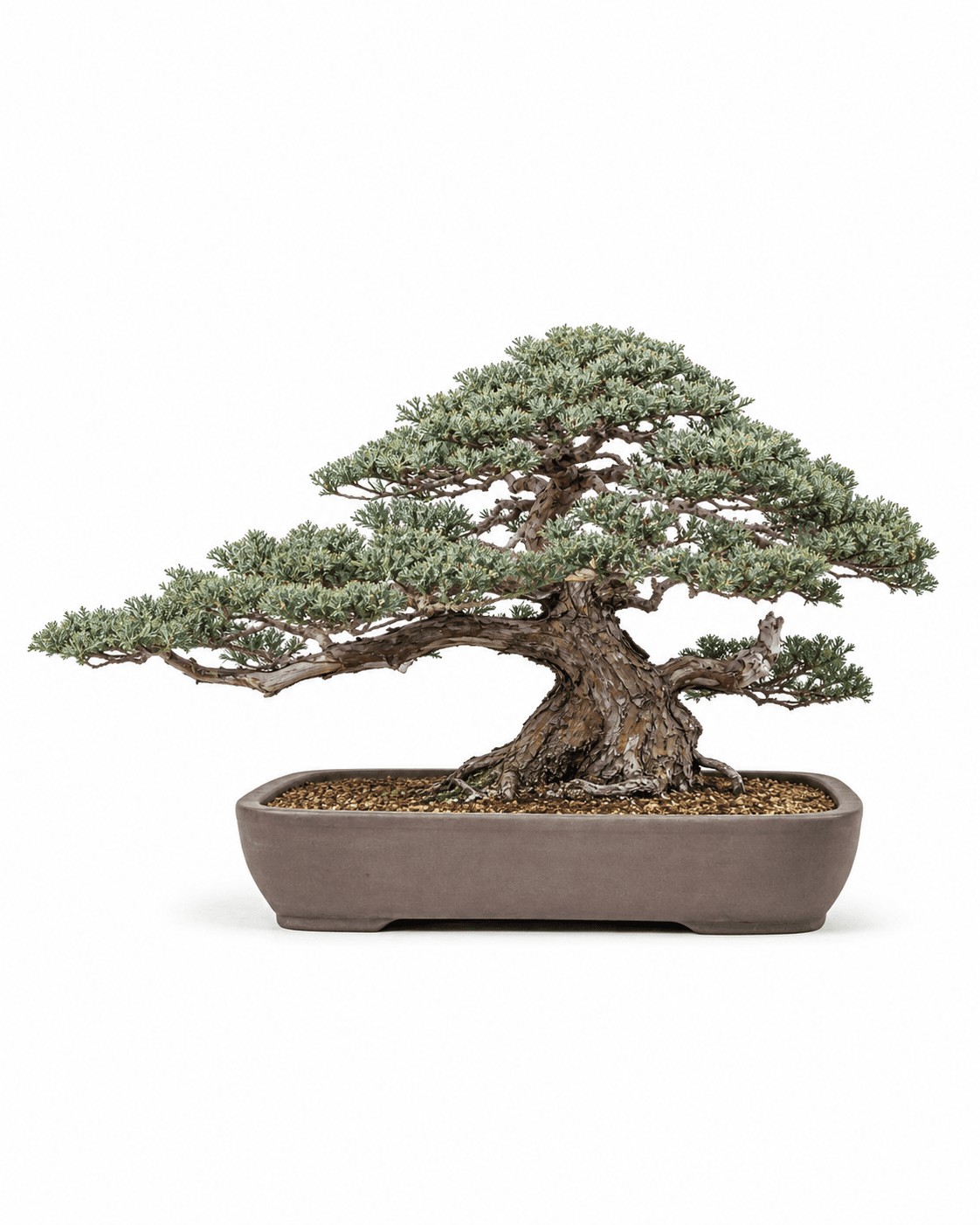
Parsons juniper is usually sold as Juniperus davurica Parsonii, a low spreading landscape juniper that can become useful outdoor bonsai when the grower respects its running habit and verifies the label. Give it full outdoor light, open mineral soil, complete watering with oxygen return, and scissor pruning after the first flush has hardened.
The local Mirai corpus has no dedicated Parsons file, but it names Parsons directly in Q&A material and gives a clear spring-only repotting caution for valuable Parsons and procumbens junipers. This profile uses that direct note plus the broader running-juniper, nursery-stock, juniper-refinement, juniper-structure, watering, soil, repotting, wiring, and design corpus.
Cultivar-level public evidence is thin, so keep the page conservative: separate Parsons, Parsonii, and Daurian juniper labels from Pfitzer, Savin, Tam, procumbens, Blue rug, Andorra, Hollywood, San Jose, and eastern red cedar before copying timing or pricing assumptions.
Updated June 11, 2026. Written by EntGrove Editorial. Last verified June 11, 2026.
Care fingerprint
Read the species through its shared care pattern.
Use the running habit instead of fighting it; branch selection, live foliage preservation, and gradual styling are the main constraints. Use this as the starting point before local conditions and tree strength refine the calendar.
Note: Low spreading davurica or Daurian juniper trade label with thin public cultivar evidence but direct Mirai Parsons repotting mention; verify against Pfitzer, Savin, Tam, procumbens, Blue rug, Andorra, Hollywood, San Jose, and eastern red cedar before copying timing.
Keep foliage strong
Junipers recover through active foliage, so styling choices should leave enough healthy tips to power the tree.
Protect live veins
Old junipers often depend on narrow live veins between roots and foliage; root work and carving should respect that path.
Do not stack major work
Heavy bending, major foliage reduction, carving, and repotting belong in a staged plan rather than the same weekend.
Care cadence
The calendar starts with the tree's seasonal state.
Placement
Timing: Grow outdoors year round in full sun and moving air. Use afternoon protection only for recovery, fresh root work, or severe reflected heat.
Watch for: Indoor display, shaded patios, hot pavement, winter shelves with stagnant wet soil, and recently repotted roots exposed to wind.
Bonsai Mirai LibraryWatering
Timing: Water in repeated passes until the entire root mass drains, then wait for the upper soil to begin drying before watering again.
Watch for: Hydrophobic nursery cores, runoff around compact roots, wet old organic soil after foliage reduction, and drought assumptions copied from landscape use.
Bonsai Mirai LibraryFeeding
Timing: Feed healthy development trees during active growth. In refinement, use moderate feeding after timing has been set by hardened foliage and desired density.
Watch for: Coarse runners from overfeeding, starving a tree that still needs branch development, fertilizer on weak roots, and pushing dense foliage into pest-prone mats.
Bonsai Mirai LibraryPruning
Timing: For running-juniper behavior, let the first flush harden, then shorten extension to strong interior side growth before shaded interior foliage is shed.
Watch for: Pinching, hedge-shearing, spring refinement cuts that create coarse response, cutting to bare wood, and removing all interior growth.
Bonsai Mirai LibraryRepotting
Timing: Repot in spring on strong foliage. Convert old nursery media over staged cycles and tie the root mass firmly so new roots can extend.
Watch for: Bare-rooting, combining heavy canopy and root reduction, loose tie-downs, wet peat sealed inside mineral soil, and late-season emergency repotting.
Bonsai Mirai LibraryWiring
Timing: Wire lignified branches when the tree is hydrated and growth has hardened. Check often because low foliage can hide wire bite.
Watch for: Torn crotches, crushed scale foliage, wire under dense mats, bends after major root work, and exploratory repositioning of weak small branches.
Bonsai Mirai LibraryPropagation
Timing: Use cuttings, air layers, or grafting only when the plant is vigorous and the cultivar label is worth preserving. Air layers are best planned around strong summer photosynthesis.
Watch for: Seedlings sold as Parsonii, layers without foliage below the cut, separated layers worked too soon, and graft unions that change foliage behavior.
Bonsai Mirai LibraryPests and disease
Timing: Inspect dense foliage during wet springs, hot dry mite periods, winter shelter, and the year after nursery-stock reduction.
Watch for: Spider mites, scale, aphids, bagworms, borers, twig blights, rust, root rot, scorch, water stress, and dead interiors hidden below the surface.
Clemson Extension juniper pestsUC IPM JuniperUC IPM Juniper Twig BlightsWinter protection
Timing: Keep dormant outdoors and protect shallow pots from repeated hard freeze, drying wind, and thaw-freeze cycles.
Watch for: Warm indoor overwintering, frozen dry roots, late heavy pruning, wet unventilated shelters, and fresh root work exposed to sudden cold.
Bonsai Mirai LibrarySpecies guide
Apply the species profile before copying another tree's calendar.
At a glance
Parsons is a low spreading juniper that needs verified labels and running-juniper timing.
Record the plant as Juniperus davurica 'Parsonii' when the label or propagation history supports it. Because davurica material can be handled inside the savin and Daurian juniper complex, keep the trade label visible in notes and sales records. Flora of China: Juniperus
For bonsai, the useful traits are low spread, accessible nursery material, rugged foliage, and the possibility of compact raft, cascade, clump, or low informal designs. The best stock has a visible base, one usable line, and interior foliage close enough to compress. Bonsai Mirai LibraryBonsai Mirai / Asymmetry
The source depth is mixed. Mirai names Parsons directly and gives a spring-only repotting caution, while most technique comes from transferable running-juniper and nursery-stock files. This page avoids cultivar-specific claims that are not supported by the reviewed sources. Bonsai Mirai Library
Wild context
Use Daurian and savin-complex ecology as a guide, then verify the nursery cultivar.
Parsonii is a cultivated selection, so wild context begins with the Daurian or savin-complex parentage rather than a wild Parsonii population. The useful care signal is a tough, low, sun-seeking juniper from open northern habitat. Flora of China: Juniperus
For care, that points toward full outdoor light, moving air, sharp drainage, and winter dormancy. Container culture changes the wild lesson because shallow roots lose the buffering of ground soil. Bonsai Mirai Library
For design, low open habitat supports horizontal line, exposed roots, small deadwood, rock edges, raft logic, and negative space below a spreading canopy. Force a tall tree image only when the trunk line already earns it. Bonsai Mirai / AsymmetryBonsai Mirai Library
For sourcing, be precise. A low green landscape juniper may be Parsons, Pfitzer, Savin, Tam, procumbens, creeping juniper, or juvenile Chinese juniper. Each label changes expectations for growth habit, foliage, and price. Bonsai Mirai juniper identificationBonsai Mirai Library
Reading the tree
Read label, root flare, foliage type, and recovery before styling.
Start with identity. Parsons should be separated from Pfitzer, Savin, Tam, procumbens nana, Blue rug, Andorra, Hollywood, San Jose, eastern red cedar, and generic low juniper tags before timing is copied. Bonsai Mirai juniper identificationBonsai Mirai Library
Expose the true root flare before choosing a front. Mirai nursery-stock method warns that the visible soil line often hides the real base and useful root division. Bonsai Mirai Library
Classify the behavior from the plant in front of you. If tips elongate first and density builds behind them, use running-juniper timing. If the foliage mounds first and runs later, slow down and use mounding cues. Bonsai Mirai Library
Judge recovery by firm extension, active interior foliage, even water use, and stable color. A recently reduced juniper can look green for a long time while roots and interior foliage are still behind. Bonsai Mirai Library
Foliage work
Let running growth harden, then prune to strong interior growth.
Avoid pinching. Mirai juniper method ties pinching to torn tissue, weak roots, and stress foliage. Use sharp scissors and make each cut against a branch-level design goal. Bonsai Mirai Library
For refinement, wait until the first flush has hardened and the tree is near energy-neutral. Prune the extending tip back to strong interior side growth before shade causes the interior to be abandoned. Bonsai Mirai Library
For development or recovery, let the tree run. Parsons material with weak roots, thin interiors, or recent styling needs foliage mass more than tidy pads. Bonsai Mirai Library
Preserve useful crotch and interior growth where compression is needed. Removing every small interior piece can make a low spreading juniper permanently leggy. Bonsai Mirai Library
Roots
Repot Parsons in spring and convert nursery roots over staged cycles.
Mirai directly names Parsons in a repotting Q&A and advises confining valuable Parsons and procumbens junipers to spring repotting because energy stores, weather, and developmental phase are most predictable then. Bonsai Mirai Library
Most Parsons candidates are landscape nursery stock. Expect old organic media, circling roots, a buried base, and a center that may stay wet after the outer soil looks dry. Bonsai Mirai Library
Do root work in stages. Keep a functional conifer root core, remove the greatest limitation first, and secure the plant firmly so new roots are not broken by wobble. Bonsai Mirai Library
Do not combine a severe root reduction with a severe canopy reduction on older stock. Juniper roots depend on foliage strength, so leave enough green to rebuild the root system. Bonsai Mirai Library
Soil and pot
Use open mineral soil and a container that supports a low spreading line.
A 1:1:1 akadama:pumice:lava mix is a good developed-bonsai starting point for Parsons. Increase akadama when water and nutrient retention are needed, or increase drainage where heat and old cores create risk. Bonsai Mirai Library
Particle size matters. Mirai juniper overview places juniper root work around small mineral particles that balance oxygen with fine-root production, commonly about 2 to 6 mm for the main soil column. Bonsai Mirai Library
Training containers should be chosen first for root function, tie-down security, and even wetting. A shallow show pot comes later, after the core has been converted and the design is stable. Bonsai Mirai Library
Low unglazed ovals, shallow rectangles, slabs, and stone pockets suit many Parsons designs. Keep pot color quiet so the line, base, and live foliage remain the focus. Bonsai Mirai / Asymmetry
Climate
Grow cold-hardy landscape material with bonsai root protection.
Parsons is outdoor juniper material. Keep it outside through dormancy, then protect the pot earlier than an in-ground landscape shrub would need protection. Bonsai Mirai Library
In cold regions, move pots off exposed benches before root-zone hard freeze becomes repeated and drying. Ground placement, mulch, or a cold frame protects fine roots while preserving dormancy. Bonsai Mirai Library
In hot regions, full sun is still the goal, but benches, walls, and dark pots can overheat roots. Use airflow, accurate watering, and temporary afternoon protection after invasive work. Bonsai Mirai Library
In wet regions, disease prevention starts with drainage and airflow. Dense low foliage and old nursery media can hold humidity and water long after the surface appears acceptable. Clemson Extension juniper pestsBonsai Mirai Library
Pests and disease
Dense low foliage makes inspection a regular task.
UC IPM lists common juniper problems including mites, scale, aphids, borers, bark beetles, root rots, rusts, scorch, water stress, and wet-soil disorders. Parsons should be inspected with the same practical lens. UC IPM Juniper
Twig blights show as browned shoot tips or dying shoots. UC IPM and Clemson both emphasize sanitation, dry foliage, airflow, and avoiding cultural stress as the first prevention layer. UC IPM Juniper Twig BlightsClemson Extension juniper pests
Spider mites are easy to miss in low dense foliage. Use a white-paper tap test during hot dry weather and respond before stippling becomes widespread bronzing. Bonsai Mirai LibraryUC IPM Juniper
Root rot prevention is mostly cultural. Correct old media, avoid stagnant wet benches, keep the pot draining, and do major work only when the foliage mass can support recovery. Bonsai Mirai LibraryUC IPM Juniper
Wiring
Wire deliberate low lines and check hidden wire often.
Wire lignified branches rather than soft tufts. Foliage is the recovery engine, and crushed foliage weakens the branch you are trying to keep. Bonsai Mirai Library
Use structural wiring to make the low line intentional: trunk direction, defining branch, side branch spacing, and negative space all need to read before detail wiring matters. Bonsai Mirai / AsymmetryBonsai Mirai Library
Inspect often. Low spreading junipers can hide wire bite under overlapping foliage, especially after feeding, warm weather, or recovery growth. Bonsai Mirai Library
Use modest deadwood only where it supports the low composition. A small jin, shari, or exposed dead branch can add age, while oversized carving can overwhelm a groundcover-scale tree. Bonsai Mirai / AsymmetryBonsai Mirai Library
Propagation
Use clone-preserving propagation when the Parsonii label matters.
Cuttings and air layers preserve cultivar identity better than seed. Seedlings from a davurica or savin-complex plant should not be sold or tracked as Parsonii without clone proof. Bonsai Mirai Library
Mirai nursery-stock material places juniper air layering in midsummer because heat and photosynthesis support callus and root formation. Keep active foliage above the layer. Bonsai Mirai Library
Separate layers only after roots are strong enough to handle. Let the separated plant rebuild before pruning, wiring, or moving into a smaller pot. Bonsai Mirai Library
Grafting is possible in broader juniper practice, but Parsons is usually treated as own-root landscape material. Record any graft union because foliage behavior and root behavior may no longer match the tag. Bonsai Mirai Library
Buying
Buy the base, label, foliage condition, and root behavior.
Good Parsons material has credible Parsonii or Juniperus davurica labeling, firm green foliage, a visible or findable root flare, one usable trunk or raft line, and a rootball that wets evenly enough for staged conversion. Bonsai Mirai Library
Mirai nursery-stock selection prioritizes an expanding base, non-repetitive movement, and at least one distinguishing feature. On Parsons, that feature may be a trunk line, low raft, old branch stub, or useful deadwood. Bonsai Mirai LibraryBonsai Mirai / Asymmetry
Red flags include no visible trunk, severe inverse taper, dead interior branches, mite stippling, wet sour media, hydrophobic peat, hidden wire bite, fresh shearing, and a generic low juniper tag. Bonsai Mirai LibraryClemson Extension juniper pests
Price it as landscape-derived material unless age, label certainty, root work, trunk quality, and recovery history justify more. Parsons can become good bonsai, but the label alone does not create value. Bonsai Mirai / AsymmetryBonsai Mirai Library
Troubleshooting
Diagnose by identity, roots, recent work, density, and pests.
Symptom: dull green foliage after styling. Likely cause: too much foliage removed before roots and interior growth recovered. Fix: stop pruning, protect from stress, and let strong extension return. Bonsai Mirai Library
Symptom: brown interior under a green shell. Likely cause: shade, old foliage shedding, mites, scale, or twig blight. Fix: inspect with light and magnification, then clean gradually. Bonsai Mirai LibraryUC IPM JuniperUC IPM Juniper Twig Blights
Symptom: water runs down the pot wall while the center remains dry or sour. Likely cause: hydrophobic nursery core or compact old roots. Fix: soak carefully now and plan staged spring root work. Bonsai Mirai Library
Symptom: juvenile needle foliage appears after hard work. Likely cause: stress, overstimulation, shade, or cultivar behavior. Fix: stabilize light, roots, water, and feeding before further refinement. Bonsai Mirai Library
Symptom: the plant never becomes convincing as a tall tree. Likely cause: forcing low spreading material into an upright image without enough trunk. Fix: shift toward mound, raft, cascade, slab, root-over-rock, or low clump design. Bonsai Mirai / AsymmetryBonsai Mirai Library
Design
Design Parsons from its low spread, then build hierarchy.
Start at the base and follow the most convincing live line. Parsons usually succeeds when its spreading habit becomes deliberate movement with open spaces instead of a clipped green mass. Bonsai Mirai / AsymmetryBonsai Mirai Library
Choose one defining branch or trunk line that sets direction. In clump or connected-root compositions, let the thickest trunk lead and keep subordinate trunks quieter. Bonsai Mirai / Asymmetry
Running-juniper foliage can make elegant sparse images when tips, live veins, and negative space are aligned. Keep enough interior density to sustain the design before reducing length. Bonsai Mirai Library
Pot pairing should keep scale honest. Low unglazed ovals, slabs, shallow rectangles, and stone pockets can all work when roots are ready and the container explains the low line. Bonsai Mirai / Asymmetry
Cultivars
Parsonii is one low juniper label among many lookalikes.
This page covers plants sold as Parsons, Parsonii, or Juniperus davurica Parsonii. Because cultivar-level public evidence is thin, keep provenance notes attached to the tree record. Bonsai Mirai LibraryFlora of China: Juniperus
Pfitzer, Savin, Tam, procumbens, Blue rug, Andorra, Blue Pacific, Blue Star, Hollywood, San Jose, and eastern red cedar can all appear on the same retail bench. The bonsai schedule should follow the verified plant, not the silhouette. Bonsai Mirai juniper identificationBonsai Mirai Library
If the plant shows obvious grafting, mature scale foliage, juvenile reversion, or unusual vigor, record those observations. Foliage behavior may be more useful than the trade name during maintenance. Bonsai Mirai Library
History
Parsons is better understood as practical nursery material than as a famous exhibition lineage.
Parsons does not carry the same documented Japanese exhibition lineage as shimpaku cultivars such as Itoigawa, Kishu, or Toyama. Its value is practical: accessible nursery stock, low lines, and useful training material. Bonsai Mirai / AsymmetryBonsai Mirai Library
That practical role matters. Many good bonsai begin as humble landscape junipers when the grower reveals the base, chooses one direction, and preserves enough foliage and roots to survive the conversion. Bonsai Mirai LibraryBonsai Mirai / Asymmetry
Keep records of source, date purchased, first repot, old-core removal, pruning cycles, and any air layers. For lookalike low junipers, provenance becomes part of the tree story. Bonsai Mirai Library
Species questions
Answer the beginner questions before styling.
Can Parsons juniper be used for bonsai?
Yes. Parsons juniper can be used for outdoor bonsai, especially low mound, raft, clump, cascade, semi-cascade, slab, root-over-rock, and compact informal designs.
Can Parsons juniper live indoors?
No. Parsons juniper needs outdoor sun, airflow, seasonal change, and winter dormancy. Indoor display should be brief.
When should Parsons juniper be repotted?
Repot Parsons in spring on a strong tree. Mirai directly cautions that valuable Parsons and procumbens junipers should be repotted in spring because energy, weather, and developmental phase are most predictable then.
What soil is best for Parsons juniper bonsai?
Start with open mineral soil such as 1:1:1 akadama:pumice:lava, then adjust particle size and water retention for climate, pot depth, and old nursery media.
Should Parsons juniper be pinched?
Avoid pinching. Let growth harden, then prune with sharp scissors to strong interior side growth while preserving enough foliage to power roots.
Is Parsons juniper the same as Savin juniper?
Treat them as related labels, not interchangeable bonsai records. Parsons is sold as Juniperus davurica Parsonii, while savin labels often point to Juniperus sabina or its varieties. Verify the tag and foliage behavior before copying care.
How is Parsons different from Pfitzer juniper?
Parsons is usually sold under the davurica or Daurian label. Pfitzer is commonly used for Juniperus x pfitzeriana or Juniperus x media hybrid material. They can look similar as landscape shrubs, so verify the label and growth habit.
Why is my Parsons juniper turning brown inside?
Interior browning can come from shade, old foliage shedding, spider mites, scale, twig blight, wet roots, or stress after heavy work. Inspect the foliage and roots before pruning more.
Can Parsons juniper be air-layered?
Yes, if the plant is vigorous. Use air layers to preserve a useful line or clone, keep active foliage above the layer, and let the separated plant recover before further styling.
Is Parsons juniper beginner friendly?
It can be a good intermediate beginner project outdoors. The main risks are mislabeling, old nursery soil, pinching, over-reduction, and forcing a low spreading shrub into an unsuitable upright design.
Sources
Species advice needs source discipline.
Next decisions
Plan the operation before copying the calendar.
A good care note for Parsons juniper records the tree's stage, the work done, and the aftercare used. That record matters more than a month-name rule.
Related species
Compare nearby trees before transferring advice.
Hollywood juniper
Juniperus chinensis 'Torulosa'
Blue rug juniper
Juniperus horizontalis 'Wiltonii'
Andorra juniper
Juniperus horizontalis 'Plumosa'
Savin juniper
Juniperus sabina
Tam juniper
Juniperus sabina 'Tamariscifolia'