
Species guide
Korean Boxwood Bonsai Care
Buxus sinica var. insularis
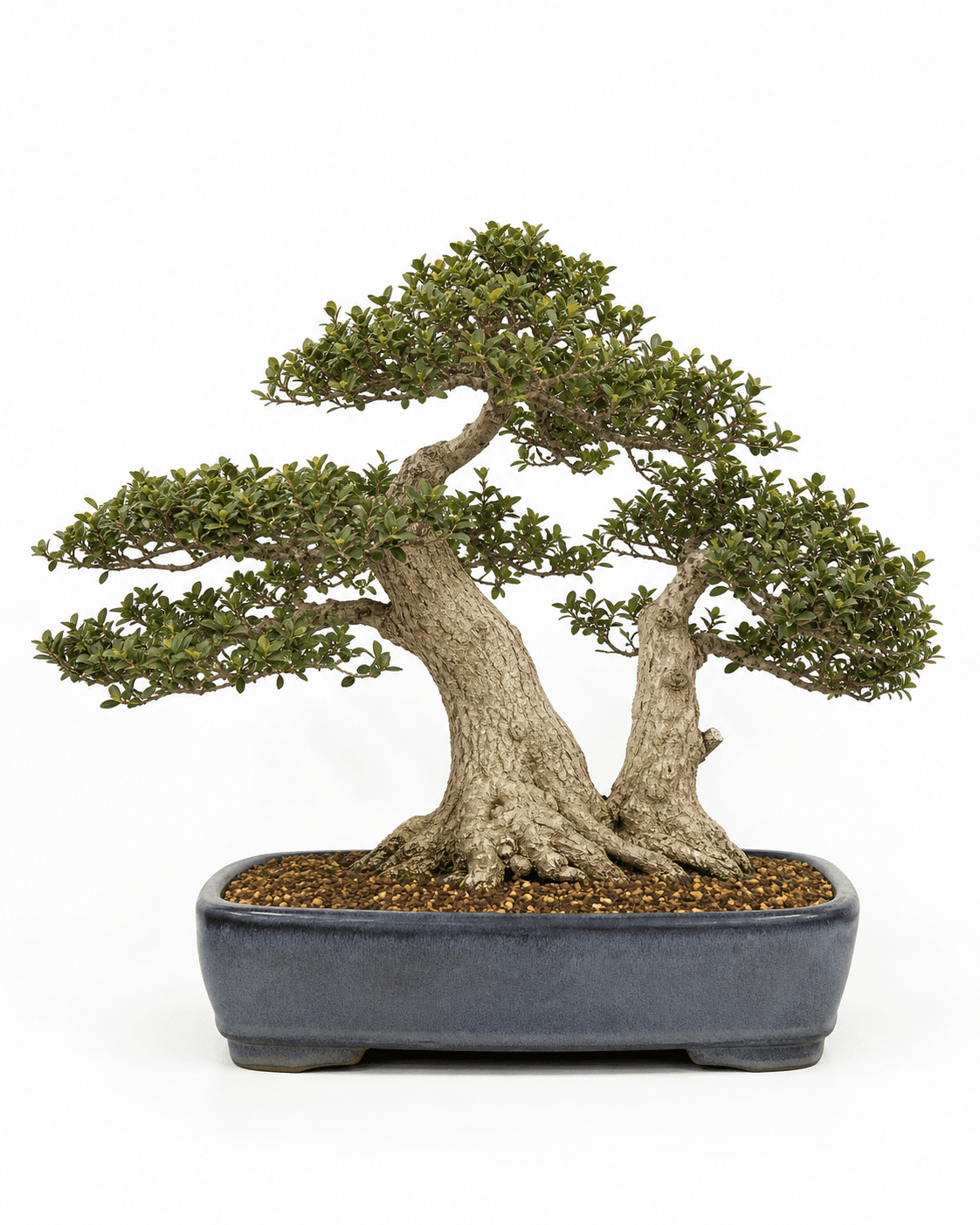
Korean boxwood bonsai should be grown as an outdoor broadleaf evergreen with cool, moist, oxygenated roots and careful pruning after growth has hardened. Its value is cold hardiness, small leaves, dense branching, and reliable back-budding, with the main risks coming from stale wet soil, winter wind, dense unthinned foliage, and label confusion.
The accepted botanical name for the Korean boxwood group is Buxus sinica var. insularis. Older and nursery labels include Buxus microphylla var. koreana, Buxus koreana, Korean littleleaf boxwood, Wintergreen, Winter Gem, Green Gem, Green Velvet, and other Korean-derived cultivars or hybrids.
Use the substantial Mirai Buxus method for bonsai technique, then apply Korean-specific public sources for identity and hardiness. The reviewed Mirai files are Kingsville and Buxus-heavy rather than Korean-boxwood-specific, so this page stays conservative where cultivar evidence is thin.
Updated June 11, 2026. Written by EntGrove Editorial. Last verified June 11, 2026.
Care fingerprint
Read the species through its shared care pattern.
Protect from hard freezes when species demands it, prune with active foliage in mind, and repot when roots can recover without dormancy cues. Use this as the starting point before local conditions and tree strength refine the calendar.
Read the foliage first
Broadleaf stress usually shows in leaf color, leaf size, wilt, scorch, or delayed hardening before it becomes a branch problem.
Match work to dormancy
Deciduous, evergreen, tropical, succulent, and flowering broadleaf trees recover on different calendars.
Protect fine roots
Root work should preserve enough active fine roots for the tree to rehydrate quickly after the operation.
Care cadence
The calendar starts with the tree's seasonal state.
Placement
Timing: Grow outdoors in bright part shade, morning sun, or full sun where the pot stays cool. Move recently worked trees to dappled shade during hot spells.
Watch for: Indoor decline, washed yellow-green foliage in hot shallow pots, winter wind burn, full-sun winter bronzing, and weak interior twigs from deep shade.
Missouri Botanical Garden: Wintergreen Korean boxwoodBonsai Mirai LibraryWatering
Timing: Water thoroughly when the upper mix begins to dry, then let oxygen return. Enforce a wet-dry cycle if water sits on the surface or the pot remains wet for days.
Watch for: Compacted nursery cores, sour organic soil, roots staying wet and inactive, yellow margins from water or pH stress, and top dressing that hides poor drainage.
Bonsai Mirai LibraryMissouri Botanical Garden: Wintergreen Korean boxwoodFeeding
Timing: Feed lightly. Refined Buxus usually wants low-nitrogen organic fertilizer only a few times per year, with fall feeding used to bank energy for spring.
Watch for: Large leaves, coarse spring extension, salt buildup in peak heat, and feeding as a substitute for fixing roots.
Bonsai Mirai LibraryPruning
Timing: Use development pruning before spring bud push when you want stronger growth, and refinement pruning after the first flush hardens or in late fall on refined dwarf Buxus.
Watch for: Late-summer pruning that pushes tender growth before winter, single-shell hedge clipping, removing all interior buds, and cutting only the strong side of the tree.
Bonsai Mirai LibraryWiring
Timing: Wire hydrated branches around the cusp of hardening, support every bend with the off hand, and check often because thin bark scars for years.
Watch for: Dry brittle wood, inverted foliage, wire used as a branch fulcrum, copper staining on pale bark, and tension cracks on the outside of bends.
Bonsai Mirai LibraryRepotting
Timing: Repot when water no longer penetrates, soil has broken down, the nursery core needs staged conversion, or growth visibly slows. Keep enough old core and foliage for recovery.
Watch for: Bare-rooting broadleaf evergreens, heavy root work plus heavy top reduction, loose tie-downs, and moving into a very shallow pot before the shin is healthy.
Bonsai Mirai LibraryPropagation
Timing: Root cuttings, air layers, and raft-style buried branches when clone identity matters. Seed is a species-level gamble, not a cultivar-preserving route.
Watch for: Unlabeled Korean-derived hybrids, branch sports, mismatched grafting scions, and cuttings taken from coarse reverted growth.
Bonsai Mirai LibraryKew POWOPests and disease
Timing: Inspect new nursery stock in isolation, then check dense interiors through wet disease periods, leafminer season, mite weather, and winter injury recovery.
Watch for: Boxwood blight, Volutella, leaf spots, Phytophthora root rot, leafminer blisters, mites, psyllids, scale, box tree moth, root rot, and sudden spring dieback after winter root damage.
Clemson Extension boxwood pestsMissouri Botanical Garden: Wintergreen Korean boxwoodBonsai Mirai LibraryWinter protection
Timing: Keep dormant outdoors, then shelter the pot from full winter sun, strong wind, and rapid freeze-thaw swings. Landscape Zone 4 hardiness does not remove bonsai root risk.
Watch for: Bronzing that is cosmetic versus dead roots that reveal themselves after spring push, exposed pots on benches, and newly repotted trees freezing dry.
Missouri Botanical Garden: Wintergreen Korean boxwoodBonsai Mirai LibrarySpecies guide
Apply the species profile before copying another tree's calendar.
At a glance
Korean boxwood is the cold-hardy Buxus route, with careful bonsai limits.
Korean boxwood is best recorded as Buxus sinica var. insularis. Kew accepts the variety and places it in Buxaceae, native to Korea and Japan. Missouri Botanical Garden uses the common name Korean boxwood for Wintergreen and records the older trade label Buxus microphylla var. koreana. Kew POWOMissouri Botanical Garden: Wintergreen Korean boxwood
The horticultural profile is attractive for bonsai: evergreen leaves to about 3/4 in, slow dense branching, spring flowers, strong cold tolerance, and tolerance of pruning. The same traits slow trunk building and make rough branch removal or wire scars linger. Missouri Botanical Garden: Wintergreen Korean boxwoodBonsai Mirai Library
The Mirai corpus does not provide a Korean-boxwood-only technique file. It does provide substantial Buxus, Kingsville, and broadleaf-evergreen method, so this profile applies those principles while keeping Korean-specific claims tied to Kew and Missouri. Bonsai Mirai LibraryKew POWOMissouri Botanical Garden: Wintergreen Korean boxwood
Habitat
Its wild signal is temperate evergreen shrubland, not indoor culture.
Kew gives Buxus sinica var. insularis as a shrub of the temperate biome, native to South Korea and part of Japan. That matters because the plant expects seasonal change, outdoor light, and real winter dormancy. Kew POWO
For care, translate that habitat into cool roots, medium moisture, drainage, moving air, and winter protection from drying exposure. Missouri recommends average medium-moisture well-drained soil, sun to part shade, shallow-root care, annual thinning, and winter shelter from full sun and strong wind in Zone 5. Missouri Botanical Garden: Wintergreen Korean boxwood
For design, the habitat and growth rate point toward broad, dense, old-shrub images rather than fast tall-tree development. Buxus can suggest aged broadleaf character through trunk density, fine leaves, and billowing crowns. Bonsai Mirai / AsymmetryBonsai Mirai Library
Reading the tree
Read label, leaf scale, roots, and interior light before cutting.
Start with identity. Korean boxwood, Buxus sinica var. insularis, Buxus microphylla var. koreana, and Buxus koreana labels often describe the same Korean-derived group, while Japanese boxwood, Kingsville, Harland, English, and American boxwood have different vigor, hardiness, disease, and bark behavior. Kew POWOAmerican Boxwood SocietyBonsai Mirai Library
Then read the roots. Mirai treats boxwood and most broadleaf evergreens as shin-based: the interior soil under the trunk has to stay aerobic and functional. Random top dieback, water sitting on the surface, or a pot that stays wet point toward root oxygen trouble. Bonsai Mirai Library
Finally read the interior. Dense outer growth can hide dead twigs, weak buds, disease, and wire bite. Boxwood styling begins by opening enough space to see the branch decisions, then protecting useful small buds on major lines. Bonsai Mirai LibraryClemson Extension boxwood pests
Pruning
Use timing to decide whether you want strength or refinement.
For development, prune before spring push when you want the stored energy to drive stronger, coarser growth for rebuilding secondary structure. For refinement, wait until the first flush hardens, then prune back to interior buds or pairs of two. Bonsai Mirai Library
On refined Buxus, late-fall pruning can produce a smaller, more evenly distributed spring response. Avoid late-summer or early-fall pruning that creates soft growth unable to harden before winter. Bonsai Mirai Library
Thin before you shear. Remove congestion, underside growth, crotch clutter, and weak interior waste so light reaches living buds. A single dense green shell weakens the interior and makes boxwood look like topiary. Bonsai Mirai LibraryClemson Extension boxwood pests
When reducing old branches, leave a stub or create a natural tear where appropriate, then reduce later after water lines adjust. Large clean round cuts on boxwood can remain visible for years. Bonsai Mirai Library
Roots
Protect the shin and convert old soil in stages.
Mirai gives two useful root rules for Buxus. First, repot as winter color fades and active green returns because Buxus responds to sustained warmth. Second, avoid bare-rooting broadleaf evergreens because retained soil and root continuity support recovery. Bonsai Mirai Library
A Korean boxwood in nursery soil often needs conversion more than calendar repotting. Work the surface, sides, and bottom enough to restore oxygen, then refill voids carefully so new soil contacts fine roots and water does not bypass the old center. Bonsai Mirai Library
Do not combine a first heavy root conversion with a dramatic top reduction. Buxus can back-bud from old wood. The foliage mass is also the energy battery that rebuilds roots after repotting. Bonsai Mirai Library
Use a deeper training pot, grow box, or mica container after collection or harsh nursery conversion. Move to a shallow show pot once the root plate is consolidated, tie-down stability is reliable, and water use is predictable. Bonsai Mirai Library
Soil and pot
Aim for moisture with air, then choose a pot that suits slow growth.
Mirai describes boxwood as a duff plant: evenly moist, never wet, with strong air movement through the soil. A standard akadama, pumice, and lava mix can work, but Buxus often benefits from more akadama and less lava when roots are healthy and watering is controlled. Bonsai Mirai Library
Missouri gives the public horticultural baseline: average medium moisture, well-drained soil, sun-dappled part shade, and slightly acidic to slightly alkaline pH. Mirai narrows refined bonsai pH toward mildly acidic 6.5 to 6.8, especially where alkaline water causes yellow leaf margins. Missouri Botanical Garden: Wintergreen Korean boxwoodBonsai Mirai Library
Pot shape should carry the design quietly. Broad, low, old-shrub images often fit soft rectangles, subdued ovals, or restrained glazed containers. Very shallow pots are best saved for refined trees with mature root systems. Bonsai Mirai / AsymmetryBonsai Mirai Library
Climate
Korean boxwood is hardy, but bonsai roots are exposed.
In cold climates, Korean boxwood has a real advantage. Missouri lists Wintergreen for USDA Zones 4 to 9 and notes that Korean boxwoods are among the most winter-hardy boxwoods. For bonsai, protect the pot from wind, full winter sun, and freeze-dry cycles. Missouri Botanical Garden: Wintergreen Korean boxwoodBonsai Mirai Library
In hot inland climates, use morning sun and afternoon shade during heat, especially on small pots, collected trees, or recently wired material. Mirai notes that container-grown broadleaf evergreens can need summer sun protection because shallow soil heats and loses cooling capacity. Bonsai Mirai LibraryMissouri Botanical Garden: Wintergreen Korean boxwood
In humid regions, thin for airflow and quarantine new boxwood. Clemson documents boxwood blight, Volutella, Phytophthora, leafminer, mites, psyllids, nematodes, and box tree moth as serious boxwood issues. Clemson Extension boxwood pests
Near coasts, Korean and other Asian-lineage boxwoods can be useful because the Mirai primer treats microphylla-line boxwoods as salt-tolerant compared with many European forms. Still rinse salt, protect small pots from wind, and monitor water quality. Bonsai Mirai Library
Pests and diseases
Quarantine boxwood first, then manage air, roots, and tools.
Boxwood blight is the disease to respect. Mirai treats suspect material as a quarantine and lab-confirmation problem, while Clemson describes black stem lesions, defoliation, sanitation, and disease spread through contaminated tools, leaves, and plant contact. Bonsai Mirai LibraryClemson Extension boxwood pests
Root rot is the everyday container risk. Missouri notes root rot in poorly drained soils, and Clemson ties Phytophthora to wet soil, overwatering, warm soil, heavy texture, and poor drainage. Bonsai prevention is structural: open soil, accurate watering, and no stale nursery core. Missouri Botanical Garden: Wintergreen Korean boxwoodClemson Extension boxwood pests
Inspect dense foliage for leafminer blisters, mites, psyllids, scale, and box tree moth. Missouri says Korean boxwood is usually not affected by boxwood psyllid. The same source still lists leafminer, mites, and box tree moth as concerns. Missouri Botanical Garden: Wintergreen Korean boxwoodClemson Extension boxwood pests
Yellowing should be diagnosed from the roots upward. Mirai flags water quality, pH, substrate condition, and magnesium availability before assuming a leaf disease. Bonsai Mirai Library
Wiring
Boxwood bends best when hydrated, supported, and respected.
Boxwood is brittle and flexible in a narrow window. Mirai notes that flexibility tracks tissue hydration, with bending easiest when sap is moving, while bark is also delicate then. Bonsai Mirai Library
Use heavier wire than the branch size may suggest, then bend with the existing curve rather than against it. Stop at visible tension cracking because pushing farther risks complete branch failure. Bonsai Mirai Library
Protect foliage orientation. Buxus leaves have a defined top and bottom, and inverting a foliage mass during bending can sunburn and weaken it. Bonsai Mirai Library
Use clip-and-grow whenever the bend would require brute force. Scars on thin, pale boxwood bark remain visible for years, and older wood often looks better when branch selection and deadwood tell the story. Bonsai Mirai Library
Propagation
Preserve named material with cuttings, layers, and careful records.
Korean boxwood cultivar names should be preserved vegetatively. Mirai notes that boxwood roots from cuttings and air layers readily, and even a horizontal branch laid in substrate can root and push new tops. Bonsai Mirai Library
Take cuttings from verified foliage. If a branch has larger, faster, coarser growth, it may be a sport or reversion, and propagating it can preserve the wrong trait. Bonsai Mirai Library
Grafting rarely earns its complexity in boxwood because Buxus back-buds well on old wood. When grafting is considered, Mirai recommends using scion material from the same tree because trade labels are unreliable. Bonsai Mirai Library
Seed is mainly a species-level route. It will not reproduce Wintergreen, Winter Gem, Green Gem, or Green Velvet as named plants. Kew POWOMissouri Botanical Garden: Wintergreen Korean boxwood
Buying
Buy the roots and leaf scale, then record the label.
The best Korean boxwood starter is healthy, outdoor-grown, and already close to the scale you want. Look for small leaves, short internodes, visible interior buds, a stable trunk base, and water that enters the whole rootball. Bonsai Mirai LibraryMissouri Botanical Garden: Wintergreen Korean boxwood
Treat the tag as evidence, not proof. Older labels include Buxus microphylla var. koreana and Buxus koreana, while modern hybrid cultivars such as Green Gem and Green Velvet can carry Korean parentage without being the straight variety. Kew POWOAmerican Boxwood Society
Separate Korean boxwood from Japanese boxwood and Kingsville. Kingsville and Compacta are Buxus microphylla dwarf material with their own tiny-leaf appeal and reversion issues; Korean boxwood is usually chosen for cold hardiness and broader nursery access. Oregon State: B. microphylla CompactaMissouri Botanical Garden: Wintergreen Korean boxwoodBonsai Mirai Library
Red flags include black stem lesions, sudden defoliation, stale wet soil, bronzing plus dry roots, hidden wire, no interior buds, fresh heavy pruning on weak stock, and recent imports or nursery lots without disease isolation. Clemson Extension boxwood pestsBonsai Mirai Library
Troubleshooting
Most symptoms trace back to roots, exposure, or density.
Leaves turn bronze in winter: check exposure first. Missouri describes harsh winter bronzing in full sun and wind, and Mirai notes that foliar color can reverse while root damage may reveal itself later during spring demand. Missouri Botanical Garden: Wintergreen Korean boxwoodBonsai Mirai Library
Leaves yellow at the margins: check pH, water quality, magnesium, and root oxygen before treating the canopy. Mirai ties alkaline irrigation and root-zone imbalance to boxwood chlorosis. Bonsai Mirai Library
Interior twigs die: thin the shell, open air lanes, and inspect for disease. Dense unthinned foliage lowers light, holds humidity, and hides pests. Bonsai Mirai LibraryClemson Extension boxwood pests
Water stops penetrating: repot or decompact the surface and sides. A constantly wet surface with inactive roots means the pot has lost water-oxygen balance. Bonsai Mirai Library
New growth is coarse: review timing and fertilizer. Heavy spring feeding and pruning at peak energy can push large leaves and long internodes when the goal was refinement. Bonsai Mirai Library
Design
Let Korean boxwood read as an old broadleaf shrub or small tree.
The strongest boxwood designs use scale, age, and density rather than dramatic movement. Mirai recommends billowing tufts with varied size and spacing because a uniform dome makes the trunk read smaller. Bonsai Mirai LibraryBonsai Mirai / Asymmetry
Choose the primary line from the base and trunk, then preserve branches with short internodes, close bifurcations, useful outside-curve buds, and good taper transitions. Remove branches by design value rather than rote rules. Bonsai Mirai LibraryBonsai Mirai / Asymmetry
Deadwood is possible, but Buxus deadwood ages differently from juniper. Freshly carved boxwood can look too smooth, while torn or water-worn texture reads more naturally and should be allowed to evolve. Bonsai Mirai Library
For refined Korean boxwood, build a complex apex with several small sub-crowns rather than one rounded cap. This suits slow broadleaf growth and supports the old-oak or old-hedge image. Bonsai Mirai LibraryBonsai Mirai / Asymmetry
Cultivars
Wintergreen is documented, but many Korean-derived labels need care.
Missouri documents Wintergreen as Buxus sinica var. insularis 'Wintergreen', with the older Buxus microphylla var. koreana 'Wintergreen' label still used. It is less likely to bronze in winter than many Korean boxwoods. Missouri Botanical Garden: Wintergreen Korean boxwood
Kew accepts Buxus sinica var. insularis as the botanical variety and lists the older Korean names as synonyms. That gives the page a stable botanical home even when nursery labels lag. Kew POWO
American Boxwood Society material helps explain the cultivar problem: many landscape boxwoods are selections or hybrids, and names such as Green Gem, Green Velvet, Green Mountain, and Winter Gem may carry Korean or littleleaf ancestry rather than matching one straight species page. American Boxwood SocietyKew POWO
Harland boxwood should stay separate. Mirai treats Harlandii as useful, less winter-hardy material, and public taxonomy places it outside the Korean boxwood variety. Bonsai Mirai Library
History
Korean boxwood sits inside a larger Buxus bonsai tradition.
The strongest documented Mirai boxwood examples center on Kingsville and other Buxus material, with Rodney Clemons contributing detailed practice around old boxwood refinement, pruning, root work, pests, and deadwood. Bonsai Mirai Library
Korean boxwood matters because it expands the Buxus palette for colder climates. Missouri calls Korean boxwoods especially winter-hardy and suitable for the St. Louis area, which makes them practical starter material beyond mild coastal gardens. Missouri Botanical Garden: Wintergreen Korean boxwood
As bonsai, Korean boxwood should be judged by the same standard as other Buxus: trunk age, root function, leaf scale, interior buds, believable branch architecture, and clean disease history. Bonsai Mirai LibraryBonsai Mirai / Asymmetry
Species questions
Answer the beginner questions before styling.
Is Korean boxwood good for bonsai?
Yes. Korean boxwood is useful outdoor bonsai material because it is small-leaved, slow, dense, cold-hardy, and tolerant of pruning. It rewards patient clip-and-grow work more than fast trunk building.
Can Korean boxwood bonsai live indoors?
No as normal culture. Korean boxwood needs outdoor light, airflow, seasonal change, and winter dormancy. Indoor display should be brief.
What is the scientific name for Korean boxwood?
Use Buxus sinica var. insularis. Older labels include Buxus microphylla var. koreana, Buxus koreana, and Buxus sinica var. koreana.
How cold hardy is Korean boxwood bonsai?
Missouri Botanical Garden lists Wintergreen Korean boxwood for USDA Zones 4 to 9, but bonsai roots need protection from hard freezes, winter wind, and full winter sun.
How much sun does Korean boxwood bonsai need?
Use morning sun or sun-dappled part shade as the safest default. Full sun can work where the pot stays cool and water is steady; recently worked trees need more protection.
When should Korean boxwood be pruned?
Prune before spring push for development, after the first flush hardens for refinement, or in late fall on refined Buxus when small even spring buds are the goal. Avoid late-summer pruning that pushes tender growth before winter.
When should Korean boxwood be repotted?
Repot when active green returns after winter color fades, or when water no longer penetrates the rootball. Convert old nursery soil in stages and avoid combining heavy root work with heavy top reduction.
What soil works for Korean boxwood bonsai?
Use a mineral mix that stays evenly moist while draining well. Akadama-heavy mixes suit refined boxwood when watering is reliable; add pumice or lava when extra oxygen and heat buffering are needed.
Is Korean boxwood the same as Japanese boxwood?
No. Korean boxwood is Buxus sinica var. insularis, while Japanese boxwood is Buxus microphylla. Older nursery labels can blur the two, so record the tag and verify leaf scale, growth habit, and hardiness claims.
What pests and diseases affect Korean boxwood bonsai?
Watch for boxwood blight, Volutella, Phytophthora root rot, leaf spots, leafminer, mites, scale, psyllids, nematodes, box tree moth, and winter injury. Quarantine new boxwood before placing it near a collection.
Sources
Species advice needs source discipline.
Next decisions
Plan the operation before copying the calendar.
A good care note for Korean boxwood records the tree's stage, the work done, and the aftercare used. That record matters more than a month-name rule.
Related species
Compare nearby trees before transferring advice.
English boxwood
Buxus sempervirens
Japanese boxwood
Buxus microphylla
English holly
Ilex aquifolium
Japanese holly
Ilex crenata
Yaupon holly
Ilex vomitoria