
Species guide
Mistletoe Fig Bonsai Care
Ficus deltoidea
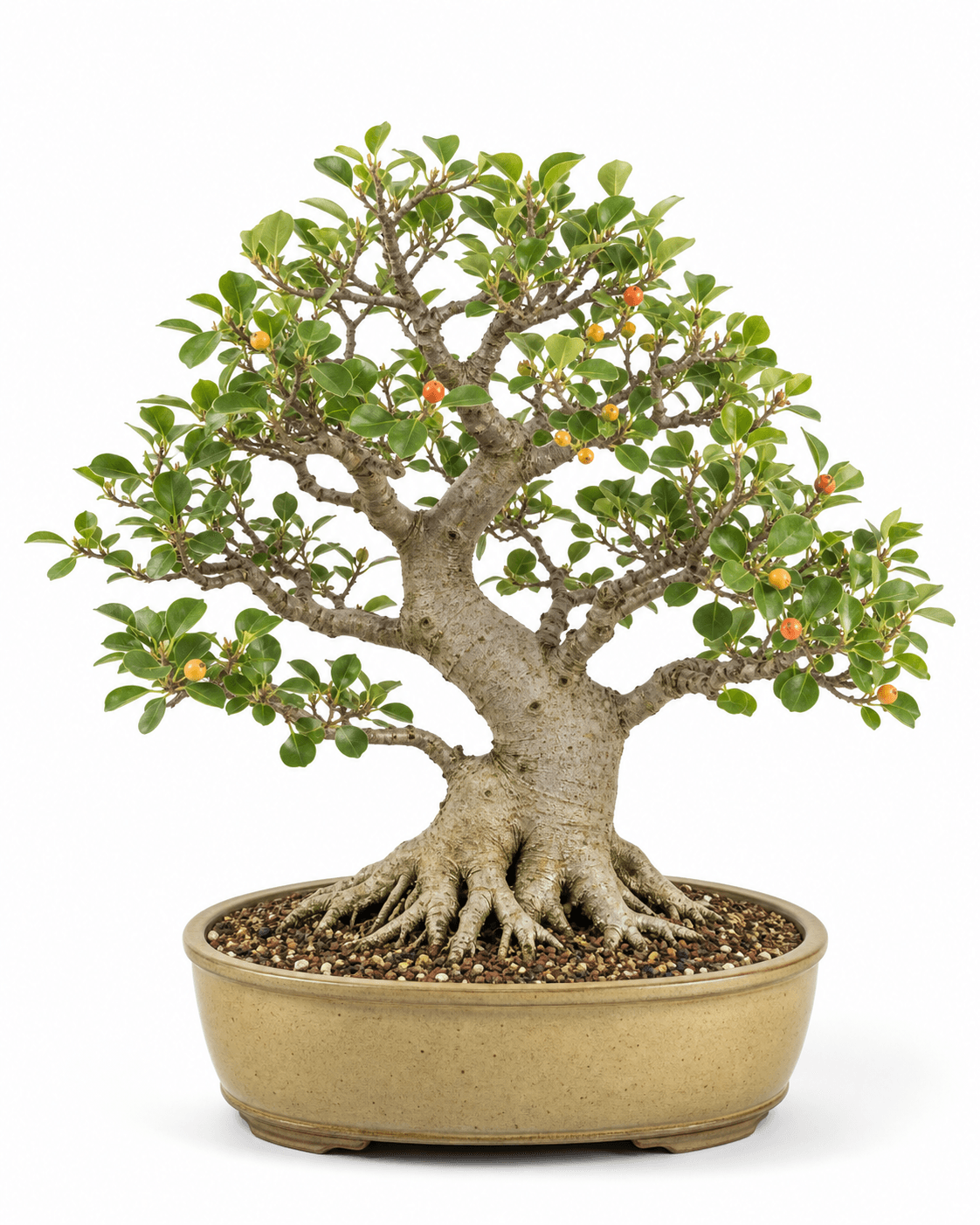
Mistletoe fig bonsai, Ficus deltoidea, is a small tropical fig best treated as a bright, warm, dry-side ficus with an airy root zone. It has smaller leaves and ornamental figs than many indoor ficus, but it grows more slowly and should be developed with patience rather than hard recovery assumptions borrowed from Ficus microcarpa.
Kew accepts Ficus deltoidea Jack in Moraceae and places its native range from Peninsular Thailand to Malesia in the wet tropical biome. NC State describes it as an evergreen shrub or small tree, previously known as Ficus diversifolia, with deltoid leaves, black glands on the undersides, year-round non-edible figs, and bonsai use.
The practical care answer is high light, warm protection, thorough watering followed by oxygen return, conservative root work in a warm active-growth window, and frequent pest checks when the plant is kept indoors. Bonsai Mirai has no dedicated mistletoe fig transcript, so this profile applies Mirai general ficus and tropical methods alongside species-specific botanical and horticultural sources.
Updated June 19, 2026. Written by EntGrove Editorial. Last verified June 19, 2026.
Care fingerprint
Read the species through its shared care pattern.
Treat indoor culture as a light-management problem first; prune and repot when the tree is actively growing and warm enough to recover. Use this as the starting point before local conditions and tree strength refine the calendar.
Read the foliage first
Broadleaf stress usually shows in leaf color, leaf size, wilt, scorch, or delayed hardening before it becomes a branch problem.
Match work to dormancy
Deciduous, evergreen, tropical, succulent, and flowering broadleaf trees recover on different calendars.
Protect fine roots
Root work should preserve enough active fine roots for the tree to rehydrate quickly after the operation.
Care cadence
The calendar starts with the tree's seasonal state.
Placement
Timing: Keep warm and bright. Move outdoors only after nights stay near 60 F / 16 C or warmer, then acclimate gradually to direct sun.
Watch for: Cold glass, air-conditioning drafts, dim rooms, bleached leaves from sudden sun, and slow drying that signals weak light or cold roots.
Bonsai Mirai LibraryNC State ExtensionNParks GardeningSGWatering
Timing: Water thoroughly when the upper particles are drying and the root ball still holds slight internal moisture. Let the pot breathe before the next watering.
Watch for: Wet saucers, sour soil, yellowing in cool rooms, pests after waterlogging, and dry shrinkage at the pot edge during hot sun.
Bonsai Mirai LibraryNParks GardeningSGFertilizer
Timing: Feed lightly during active growth. Development plants can take more support, but NParks notes established landscape plants generally need little fertilizing.
Watch for: Coarse leaves, weak light paired with fertilizer, or feeding a cold, wet, recently repotted tree before roots are active.
NParks GardeningSGBonsai Mirai LibraryPruning
Timing: Prune during warm active growth after shoots extend and harden. NC State notes the species withstands heavy pruning, but bonsai cuts should still be sequenced around recovery.
Watch for: Sheared outer shells, hollow interiors, latex flow, large cuts without enough foliage, and hard pruning paired with root work.
NC State ExtensionBonsai Mirai LibraryLeaf work
Timing: Use selective leaf cutting or partial leaf reduction only on vigorous trees in warm bright conditions. The small leaves usually make full defoliation unnecessary.
Watch for: A leafless tree watered like a full canopy, cool nights after leaf removal, and weak interior branches stripped of their last useful leaves.
Bonsai Mirai LibraryNC State ExtensionRepotting
Timing: Repot in the warm active-growth window, usually when nights are consistently near 60 F / 16 C or warmer and several warm weeks remain.
Watch for: Compacted organic soil, blocked drainage, buried crown tissue, root rot, or attempts to wash every root clean on a fully leafed tree.
Bonsai Mirai LibraryNParks GardeningSGWiring
Timing: Wire only flexible branches during active growth, then inspect often. Clip-and-grow is often cleaner for the short stiff branching NC State describes.
Watch for: Latex during bending, wire bite in smooth gray bark, cracked stiff stems, and fine twig wire left through a warm growth push.
Bonsai Mirai LibraryNC State ExtensionPest checks
Timing: Inspect year-round indoors and after every outdoor season. Check leaf undersides, black gland areas, branch forks, and shaded interior shoots.
Watch for: Mealybugs, scale, spider mites, greenhouse thrips, sticky residue, sooty mold, and pest flare-ups after waterlogging.
NC State ExtensionNParks GardeningSGSpecies guide
Apply the species profile before copying another tree's calendar.
At a glance
Mistletoe fig is a compact tropical fig that wants light and air at the roots.
Ficus deltoidea is an evergreen tropical fig with a shrub-to-small-tree habit, deltoid leaves, light gray bark, milky latex, and small ornamental figs. Kew accepts the name, while NC State also records the older Ficus diversifolia label used in horticulture. Kew POWONC State Extension
Its bonsai appeal is scale. NC State describes container plants around 2-3 feet tall, slow growth, leaves generally 1-3 inches long, and year-round figs. That combination makes the species useful for small tropical bonsai where Ficus elastica or coarse houseplant figs would be too large. NC State Extension
The care profile is dryer than many growers expect from a tropical fig. NC State lists dry soil and medium humidity preferences, and NParks stresses sandy, inorganic, well-aerated soil because the plant is vulnerable to root rot. NC State ExtensionNParks GardeningSG
Wild habit
Its habitat points to bright exposure, sandy soil, and a shrubby image.
Kew places Ficus deltoidea from Peninsular Thailand to Malesia, growing as a shrub or tree in wet tropical habitat. NParks adds local Singapore context: the plant grows in scrub and sandy-soil areas and is used in exposed gardens, rooftop settings, and biodiversity plantings. Kew POWONParks GardeningSG
For care, that means warmth and tropical light without keeping the root ball swampy. A mistletoe fig bonsai can handle regular rain or thorough watering when the soil has enough mineral structure and oxygen; the same water in dense peat or a cold room becomes the risk. NParks GardeningSGBonsai Mirai Library
For design, let the plant read as a small rounded tropical shrub or compact tree. The deltoid leaves, black underside glands, and figs are part of the identity, so a quiet canopy with visible fruiting wood often suits it better than an aggressive contorted trunk. NC State ExtensionBonsai Mirai / Asymmetry
Reading the tree
Use growth speed and drying rhythm as the health signal.
Mirai frames growth as surplus energy beyond maintenance. On mistletoe fig, that surplus may appear as steady extension rather than explosive Ficus microcarpa-style regrowth. Firm new leaves, regular drying, and clean interior buds matter more than raw speed. Bonsai Mirai LibraryNC State Extension
Development means building roots, trunk, branch options, and a reliable canopy. Refinement means shortening internodes, keeping leaf size in scale, preserving fruiting points, and avoiding a dense outer shell that shades the interior. Bonsai Mirai Library
Read the water response closely. If the pot stays wet for days, the tree is telling you the balance of light, temperature, foliage, and substrate is off. If leaves dull, fold, or drop in hot direct sun, the tree may need a slower acclimation or a larger water reservoir. Bonsai Mirai LibraryNParks GardeningSG
Pruning
Prune for structure, fruiting wood, and interior light.
NC State notes that mistletoe fig withstands heavy pruning and can flower and fruit on both new and old growth. In bonsai, use that tolerance to build taper and branch division during warm active growth, then let the tree regain enough foliage to support roots and wound closure. NC State ExtensionBonsai Mirai Library
Avoid hedge shearing. Mirai shows that sheared tropical canopies push growth to the outside and starve interior branches. Work branch by branch: choose the next fork, remove crowding, keep useful inner leaves, and shorten strong tips after they have fed the structure. Bonsai Mirai Library
The leaves are already small enough for many bonsai sizes, so leaf work should be selective. Use partial leaf cutting on overly strong areas and leave petioles when reducing ficus leaves. Keep extra foliage on trees recovering from water stress, root work, or pest pressure. Bonsai Mirai LibraryNC State Extension
Latex flow after pruning is normal for ficus. Mirai recommends misting fresh ficus cuts with water to slow latex loss, then relying on vigorous warm growth rather than constant recutting to close wounds. Bonsai Mirai Library
Roots
Repot in warmth, keep oxygen high, and expose the crown.
Mirai places tropical ficus repotting in the warm window, around consistent nights near 60 F / 16 C or warmer. That timing matters more for a slow mistletoe fig than for a fast tropical because recovery depends on active root growth. Bonsai Mirai Library
Repot for evidence: compacted organic soil, blocked percolation, sour smell, root congestion, a buried crown, or a design change. NParks specifically warns that mistletoe fig is vulnerable to root rot and needs plenty of inorganic soil amendments to keep roots breathing. NParks GardeningSGBonsai Mirai Library
Do root work conservatively on leafy trees. Mirai general repotting guidance keeps a portion of the root mass intact whenever the tree is carrying foliage, so hydration does not stop suddenly. This is especially useful for a dry-side ficus that can decline in cold wet aftercare. Bonsai Mirai Library
After repotting, secure the tree firmly, keep the crown slightly above the soil line, and give bright protected warmth. Hold strong fertilizer until new growth confirms root recovery. Bonsai Mirai LibraryNParks GardeningSG
Soil and pot
Build the pot around drainage first, then display.
A practical starting mix is equal parts akadama, pumice, and lava for a bright warm bonsai setting. Akadama supports fine roots and nutrient retention; pumice and lava preserve water movement and oxygen. In humid, indoor, or low-light conditions, increase the structural particles. Bonsai Mirai Library
NParks gives the species a sandy-soil preference and calls for inorganic amendments because of root-rot risk. That supports a grittier mix than many tropical houseplants receive, especially when the tree is in a shallow bonsai pot. NParks GardeningSG
Pot depth should match your growing setup. A slightly deeper oval or rectangle gives indoor trees a safer moisture buffer and root insulation, while a shallow display pot should wait until root quality, light, and watering control are proven. Bonsai Mirai Library
Glazed pots suit tropical evergreens because the foliage changes less dramatically by season. Cream, muted green, soft yellow, or warm gray glazes can echo the small figs and yellow leaf undersides without overpowering the tree. Bonsai Mirai / AsymmetryNC State Extension
Climate
Warmth drives growth; cold changes every operation.
NC State lists Zone 10a-11b and says mistletoe fig prefers temperatures above 55 F / 13 C while tolerating 30 F / -1 C briefly. Bonsai pots lose the thermal buffer of ground soil, so treat that brief tolerance as emergency margin. NC State ExtensionBonsai Mirai Library
Mirai tropical guidance says ficus growth is strongest when nights stay above about 18 C and slows sharply near 12-13 C nights. Use that as the work filter: prune, wire, repot, and propagate when the tree is warm enough to respond. Bonsai Mirai Library
In cold-winter regions, grow it as a protected tropical: outdoors for warm months, indoors or greenhouse protected before cold nights, bright winter placement, reduced watering, and no heavy work while the tree is cold. Bonsai Mirai LibraryNC State Extension
In tropical and subtropical regions, the challenge shifts to exposure and root oxygen. NParks notes drought resistance and exposed-garden suitability, but root rot still follows waterlogging. Strong sun, sandy mineral soil, and airflow keep that balance workable. NParks GardeningSG
Pests and disease
Most pest problems ride on weak light or wet roots.
NC State describes mistletoe fig as having few pest and disease problems, while listing banded greenhouse thrips and fern scale as known insect issues. NParks adds mealybugs, scale insects, and spider mites when underlying problems such as waterlogging are present. NC State ExtensionNParks GardeningSG
Indoor monitoring should focus on leaf undersides, the black gland areas, branch forks, and dense shaded shoots. Sticky residue, fine webbing, cottony clusters, armored bumps, or bronzed leaves are inspection cues. NC State ExtensionNParks GardeningSG
Root rot is the cultural disease to prevent. Dense peat, decorative cachepots, water left in saucers, low winter light, and a buried crown all reduce oxygen. Fix the water-oxygen balance before pushing the tree with fertilizer or styling. NParks GardeningSGBonsai Mirai Library
Light infestations can often be reduced by isolating the tree, pruning the worst pockets, cleaning leaves, and correcting the growing condition that let pests build. Use any pesticide only after identifying the pest and checking label safety for ficus and indoor use. NParks GardeningSGNC State Extension
Wiring
Use wiring for structure, then let pruning do the fine work.
NC State describes mistletoe fig stems as slender, multibranched, stiff, and short. That points toward early wiring on young flexible growth and clip-and-grow on mature twigs, rather than forcing old branches into dramatic bends. NC State ExtensionBonsai Mirai Library
Mirai ficus guidance favors aluminum wire close to the branch diameter because tropical growth can swell quickly and small wire scars before it holds. Inspect frequently in warm active growth. Bonsai Mirai Library
Latex during a bend is the stop signal. It means the tissue is reaching its structural limit. Back off, support the branch, and continue the design with staged pruning, guying, or a future replacement shoot. Bonsai Mirai Library
The best branch architecture is broadleaf fan logic: one line divides into two, then four, then finer twigs. Keep the lower branches a little stronger and let upper growth become shorter and more refined. Bonsai Mirai Library
Propagation
Stem cuttings are the cleanest route for bonsai growers.
NParks states that mistletoe figs can be grown from stem cuttings rooted in soil. Mirai general ficus propagation also favors cuttings because ficus respond well when warmth, humidity, and oxygen are present. NParks GardeningSGBonsai Mirai Library
For bonsai, take cuttings during warm active growth from compact material with short internodes and good leaf scale. A coarse, sterile, airy medium such as perlite or a gritty cutting mix lowers rot risk while holding humidity around the cutting. Bonsai Mirai LibraryNParks GardeningSG
Air layers are possible on ficus, but large cuttings are often more efficient. Use an air layer when the purpose is to rescue a better trunk line, improve the root base, or separate a promising upper section from poor nursery roots. Bonsai Mirai Library
Grafting belongs to advanced design work. It can add a missing branch or root, but mistletoe fig grows slowly enough that selecting material with useful low branches is usually the better first move. Bonsai Mirai LibraryNC State Extension
Buying
Choose compact, clean-rooted material over a dramatic label.
Good mistletoe fig bonsai material has a visible base, healthy deltoid leaves, short internodes, branch options low on the trunk, firm gray bark, and no sour smell from the soil. Small fruit is a bonus only if the roots and structure are healthy. NC State ExtensionNParks GardeningSG
Check the name. NC State records Ficus diversifolia as a previous label, and NParks lists mistletoe rubber plant, rusty-leafed bush fig, mas cotek, serapat angin, and other local names. The accepted botanical anchor for this page is Ficus deltoidea. Kew POWONC State ExtensionNParks GardeningSG
Avoid plants in decorative containers without drainage, dense black peat that stays wet, buried trunks, active scale, webbing, or yellowing leaves after constant water. Those problems can be fixed only after months of stable culture. Bonsai Mirai LibraryNParks GardeningSG
Compared with Ficus microcarpa, mistletoe fig is usually a slower specialty tropical. Buy it for fruiting character, compact leaves, and shrubby design potential, then plan development on a slower calendar. NC State ExtensionBonsai Mirai Library
Troubleshooting
Start with light, warmth, roots, and pests.
Symptom: yellow leaves and soil that stays wet. Likely causes: low light, cool roots, dense organic soil, a cachepot holding water, or watering before oxygen returns. Fix: increase warmth and light, drain the container fully, and plan a warm-season move into grittier soil if percolation has failed. Bonsai Mirai LibraryNParks GardeningSG
Symptom: shriveled leaves in hot sun. Likely causes: sudden outdoor exposure, a small reservoir, dry wind, or roots that have not colonized the pot. Fix: acclimate in stages, water thoroughly, add afternoon protection, and avoid pruning until the tree is rehydrated. Bonsai Mirai LibraryNParks GardeningSG
Symptom: sticky leaves, black film, webbing, or cottony pockets. Likely causes: scale, mealybugs, spider mites, or thrips. Fix: quarantine, identify the pest, clean the canopy, prune dense infested pockets, and correct waterlogging or weak light. NC State ExtensionNParks GardeningSG
Symptom: long internodes and larger leaves. Likely causes: weak indoor light, too much fertilizer for the light level, or development growth left unchecked. Fix: increase light, reduce feeding intensity, and cut back after shoots harden. Bonsai Mirai LibraryNC State Extension
Symptom: branch cracking during wiring. Likely causes: old stiff growth, excessive bend, or wire chosen to force a line the branch cannot take. Fix: stop, support the branch, and use clip-and-grow or a younger replacement shoot. Bonsai Mirai LibraryNC State Extension
Symptom: no fruit. Likely causes: weak light, immature material, pruning away fruiting shoots, or insufficient warm active growth. Fix: improve light, avoid constant tip removal, and let selected branches mature before refinement cuts. NC State ExtensionNParks GardeningSG
Design
Style it as a fruiting tropical shrub or compact fig tree.
Begin with the trunk line, base, defining branch, and crown mass. Mistletoe fig rarely needs an exaggerated old-mountain image. Its strongest bonsai identity is a compact tropical with fruit, deltoid leaves, and a rounded canopy. NC State ExtensionBonsai Mirai / Asymmetry
For a single trunk, build a quiet informal upright or broom-like shrub form with lower branches slightly heavier than the top. For clumps and twin trunks, keep trunk sizes unequal and create one shared canopy instead of several separate domes. Bonsai Mirai LibraryBonsai Mirai / Asymmetry
Root-over-rock can work because ficus roots can adhere over time, but Mirai cautions that root-over-rock ficus should be left undisturbed for years so roots can grip the stone. Disturbing early roots resets the design. Bonsai Mirai Library
Use fruit sparingly in display. The small figs add scale and identity, while too much fruit can distract from branch structure or overload a small tree. Remove fruit when recovery, repotting, or root health needs priority. NC State ExtensionNParks GardeningSG
Forms
Know the variegated and golden forms, then inspect the actual growth.
NC State lists Golden Form, Variegata, and Variegatus. Golden Form has small golden leaves, while the variegated forms carry cream or white markings on small triangular leaves. NC State Extension
Variegation can reduce usable vigor in bonsai if the plant is kept indoors or shaded. Buy variegated material only when the branch structure, root health, and light setup are already strong enough to support slower growth. Bonsai Mirai LibraryNC State Extension
Ficus diversifolia may appear as an older label. Treat it as a label clue, then confirm by deltoid leaves, black glands on the underside, and the accepted Ficus deltoidea name. NC State ExtensionKew POWO
Mistletoe rubber plant is another common-name trap because rubber fig usually means Ficus elastica. For bonsai care, separate Ficus deltoidea from Ficus elastica by leaf size, fruiting habit, and shrub scale. NC State ExtensionNParks GardeningSG
History
Its bonsai value comes from houseplant access and Southeast Asian plant character.
Ficus deltoidea was published by Jack in 1822, according to Kew. It remains a Southeast Asian tropical fig with local names and uses, including the mas cotek name noted by NParks. Kew POWONParks GardeningSG
In the houseplant trade, mistletoe fig is valued because it stays smaller than many figs and fruits readily in containers. NC State specifically notes indoor houseplant and bonsai use in cooler climates. NC State Extension
In bonsai, it sits behind the more common Ficus microcarpa, Tigerbark, willow-leaf ficus, and Benjamin fig. That lower profile can be useful: the best trees show species character rather than trying to imitate a mass-market ficus. Bonsai Mirai LibraryNC State Extension
Exhibition-quality mistletoe fig depends on patient refinement: clean roots, compact foliage, fruit placed in scale, and a canopy that looks grown rather than clipped. The tree rewards growers who protect its dry-side root preference. Bonsai Mirai / AsymmetryNParks GardeningSG
Species questions
Answer the beginner questions before styling.
Is mistletoe fig a good indoor bonsai?
Yes, if it receives bright light, warmth, and a fast-draining root zone. It is a legitimate indoor tropical bonsai candidate, but it grows slowly and suffers when roots stay cold and wet.
Is mistletoe fig the same as Ficus deltoidea?
Yes. Kew accepts Ficus deltoidea Jack. NC State also records Ficus diversifolia as a previous name, and common labels include delta fig, fig shrub, and mistletoe rubber plant.
How often should I water mistletoe fig bonsai?
Water when the upper soil particles are drying and the root ball still has slight internal moisture. In cool or dim indoor conditions, wait longer because the tree uses less water.
Does mistletoe fig need full sun?
It likes strong light. NParks recommends 4-8 hours of direct sun or at least 6 hours of indirect light, while indoor trees need the brightest stable window or supplemental grow lights.
What soil is best for mistletoe fig bonsai?
Use a gritty, free-draining tropical mix. Equal parts akadama, pumice, and lava are a reasonable start; in humid or indoor rooms, add more inorganic structure so roots can breathe.
When should I repot mistletoe fig bonsai?
Repot during warm active growth when nights are consistently near 60 F / 16 C or warmer. Repot because drainage, soil condition, roots, or design require it.
Can mistletoe fig bonsai fruit indoors?
It can produce small non-edible figs, and NC State notes fruit can appear year-round. Strong light, warm growth, and mature shoots make fruiting more likely.
Can I defoliate mistletoe fig?
Use selective or partial leaf work only on vigorous trees in warm bright conditions. The leaves are usually small enough that full defoliation is unnecessary for most bonsai goals.
What pests attack mistletoe fig bonsai?
Watch for scale, mealybugs, spider mites, and greenhouse thrips. Pest problems often follow waterlogging, weak light, dense canopies, or indoor still air.
Is mistletoe fig safe for pets?
NC State flags Ficus deltoidea as a problem plant for cats, dogs, and horses. Keep pets away from the plant and its milky sap.
Sources
Species advice needs source discipline.
Next decisions
Plan the operation before copying the calendar.
A good care note for Mistletoe fig records the tree's stage, the work done, and the aftercare used. That record matters more than a month-name rule.
Related species
Compare nearby trees before transferring advice.
Ficus retusa / Indian laurel
Ficus microcarpa
Tigerbark ficus
Ficus microcarpa 'Tigerbark'
Willow-leaf ficus
Ficus salicaria
Benjamin fig
Ficus benjamina
Ginseng ficus
Ficus microcarpa 'Ginseng'