
Species guide
Mugo Pine Bonsai Care
Pinus mugo
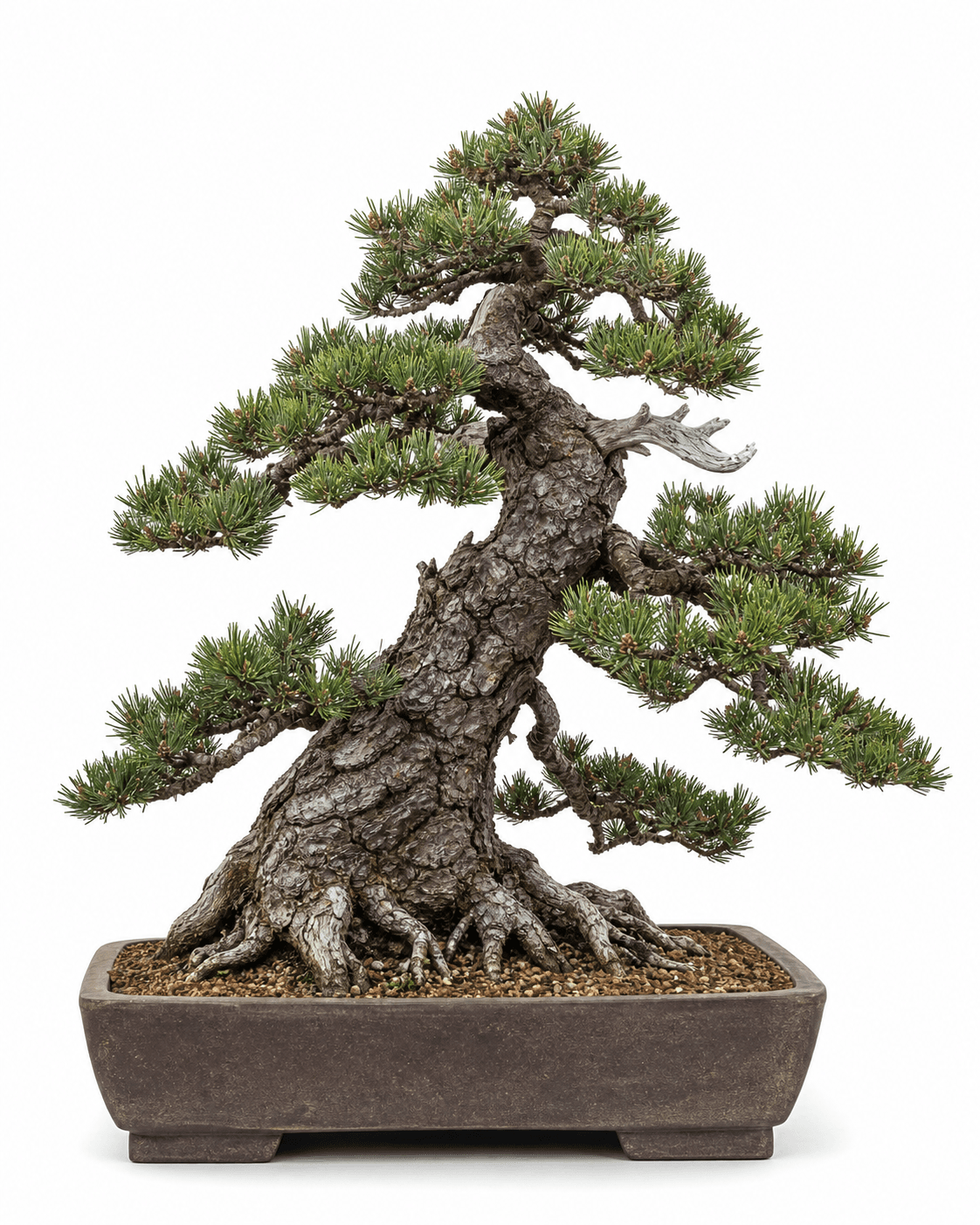
Mugo pine bonsai belongs outdoors in strong light, with a slow single-flush pine calendar and conservative root handling. The core care pattern is to build needle mass and roots first, then use pinching, post-flush pruning, and fall cleaning only when the tree shows enough stored strength.
Treat Pinus mugo as Pine > Short-Needle Single-Flush Pines in the EntGrove taxonomy. It can be pinched in refinement, pruned after the spring flush begins hardening, and cleaned in fall after older needle drop signals an energy-positive tree.
The beginner fit is narrow but real: patient outdoor growers can learn a great deal from ordinary nursery Mugo stock. The common failures are indoor culture, wet compact roots, black-pine-style decandling, and stacking root work with heavy styling.
Updated July 12, 2026. Written by EntGrove Editorial. Last verified July 12, 2026.
Care fingerprint
Read the species through its shared care pattern.
Use candle timing and bud selection carefully; compact needles do not mean the tree tolerates repeated aggressive work. Use this as the starting point before local conditions and tree strength refine the calendar.
Identify flush behavior
Single-flush, multiflush, white pine, and compact pine groups have different pruning windows and different risk levels.
Avoid default decandling
Japanese black pine methods do not transfer safely to every pine, especially slow, weak, collected, or five-needle trees.
Use needles as strength data
Needle length, color, age, and density help show where vigor is strong, weak, or becoming shaded.
Care cadence
The calendar starts with the tree's seasonal state.
Placement
Timing: Keep outdoors year-round in full sun, with afternoon heat relief for hot-climate benches or high-elevation stock that stalls under summer heat.
Watch for: Long indoor display, shaded elongated needles, reflected patio heat, dry wind, or winter storage that prevents dormancy.
NC State ExtensionEUFORGENBonsai Mirai LibraryWatering
Timing: Water thoroughly when the top layer begins drying and the pot still has air movement. In fall, expect water demand to stay active while the tree builds vascular tissue for next spring.
Watch for: Permanent moisture, compact nursery cores, water bypassing dry pockets, dry newly worked roots, or fertilizer salt load during heat.
Bonsai Mirai LibraryNC State ExtensionFertilizer
Timing: Feed development trees through the growing season to build roots, trunk, and needle mass. In refinement, fertilize short-needle single-flush pines enough to support pinching response, then prioritize fall reserves.
Watch for: Starved nursery stock, weak post-repot roots, heavy summer salt load, or refined areas that are being fed without a pinching plan.
Bonsai Mirai LibraryRoot work
Timing: Repot only when the tree is strong, in a locally proven pine window, and with mycorrhizal continuity preserved. Mirai cautions that Mugo roots are more sensitive than Scots pine roots, so reduce the root ball less aggressively.
Watch for: Bare-rooting, washing all old soil away, cutting roots and foliage heavily together, hot aftercare, or leaving a sour core untouched for too many cycles.
Bonsai Mirai LibrarySpring pinching
Timing: In refinement, pinch only elongating strong shoots when brown candle sheaths separate and green needle primordia are visible. Leave at least one set of new needle primordia attached.
Watch for: Pinching weak shoots, pinching before the silhouette is designed, tearing a lignifying candle, or removing the full tip and creating a dead end.
Bonsai Mirai LibraryPost-flush pruning
Timing: Use the June-to-July window after new growth starts hardening and before it enters the vascular phase. Shorten current shoots only where interior buds or enough needle mass can support the cut.
Watch for: Universal decandling, pruning coarse tips with no back buds, leaving three or four shoots at a junction, or cutting after the current growth has fully hardened.
Bonsai Mirai LibraryWiring
Timing: Wire once branches carry enough ramification to lay out as secondary structure. Fall is useful for refinement wiring because growth has hardened and third-year needle drop confirms energy.
Watch for: Spring cambium slip, hidden bark tears under raffia, fragile new back buds, wire bite during fall thickening, or downward-set foliage that cannot photosynthesize well.
Bonsai Mirai LibraryWinter protection
Timing: Keep dormant outside and protect the container as temperatures fall. Mirai uses 28 F / -2 C at the root zone as the first protection trigger for temperate container trees.
Watch for: Frozen-dry roots, open bench wind, small pots below 15 F / -10 C, early spring soft growth, or wet inactive soil under cover.
NC State ExtensionOregon State Landscape PlantsBonsai Mirai LibraryPests and disorders
Timing: Inspect during spring extension, summer heat, post-work recovery, and winter storage. Stress usually shows first as dull needles, resin at cuts, stalled buds, or root odor.
Watch for: Pine needle scale, sawflies, moths, borers, aphids, caterpillars, mealybugs, weevils, tip blight, needlecast, rust, root rot, or wind damage.
NC State ExtensionBonsai Mirai LibrarySpecies guide
Apply the species profile before copying another tree's calendar.
At a glance
A compact mountain pine with a slow, strength-first calendar.
Mugo pine is Pinus mugo, a Pinaceae conifer with paired needles, resinous buds, persistent cones, and a habit that ranges from low multi-stemmed shrub to small tree. NC State lists full sun, moist well-drained loam or sandy soil, slow growth, and USDA Zones 2a-7b; Oregon State lists landscape hardiness to Zone 2 and notes that seed source can change final size dramatically. Kew POWONC State ExtensionOregon State Landscape Plants
As bonsai, Mugo is an outdoor intermediate pine for growers who can protect roots in winter, keep the tree in strong light, and wait for energy signals before pruning. Best sizes are shohin through medium bonsai when the trunk already has movement; large collected or field-grown material can support powerful alpine and semi-cascade designs. Bonsai Mirai LibraryNC State Extension
The reliable care summary is simple to state and slow to practice: build needle mass, keep roots oxygenated, preserve some old needles, reduce junctions to pairs, and make only the cuts that the tree has enough vascular strength to answer. Bonsai Mirai Library
Wild ecology
Its best bonsai image comes from exposed European mountain habitats.
Kew places the native range from eastern France to the Carpathians, central Italy, and the northern Balkan Peninsula. EUFORGEN broadens the ecological image: mountain pine lives across the Balkans, Alps, Carpathians, Pyrenees, and other European mountain ranges, often in alpine, subalpine, bog, rocky, snowy, or poor-soil environments. Kew POWOEUFORGEN
Those habitats explain the bonsai posture. Low, bushy, snow-pressed growth can become low informal upright, slanting, raft, cascade, or semi-cascade work. Old bark, dead tips, and compact live veins make sense when the design reads as a high mountain tree that has survived cold, wind, rock, snow load, and brief growing seasons. Bonsai Mirai / AsymmetryEUFORGEN
Care follows the same ecology. Strong light, oxygenated mineral soil, restrained root reduction, and winter dormancy matter more than a decorative indoor placement. Warm-region success depends on local adaptation, heat management, and sourcing from material already grown in a similar climate. Bonsai Mirai LibraryEUFORGEN
Reading vigor
Needle mass tells you whether the tree is in development or refinement.
Mirai treats developing pines as root-and-needle projects before they become silhouette projects. During development, let growth elongate, preserve needle mass, wire branches down to create hormonal conditions for back budding, and avoid needle reduction that steals the battery needed for future interior buds. Bonsai Mirai Library
A Mugo can move toward secondary work when structure is set, branches have thickened, and accumulated needle mass has produced visible back buds that grew into real shoots. Mirai flags third-year needle shedding as a useful late-season signal that a single-flush pine has hardened, restored energy, and can enter cleaning or structural decisions. Bonsai Mirai Library
The practical test before any cut is branch-specific: strong elongating candles, several years of needles, and interior buds license work. A weak branch with sparse needles and no back budding stays intact for another season because those needles still feed the roots and vascular tissue supporting the rest of the tree. Bonsai Mirai Library
Pinching and pruning
Mugo is pinched and pruned selectively, never reset like a black pine.
Mugo sits in the short-needle single-flush group with Scots, lodgepole, shore, pinyon, and some dwarf white-pine cultivars. Mirai distinguishes this group from multi-flush pines: strength is managed by spring pinching of selected strong tips, then by post-flush pruning and fall cleaning, while full decandling belongs to species that can mature a second flush. Bonsai Mirai Library
Spring pinching is a refinement move. Pinch when the brown candle sheath begins to separate and green needle primordia are visible. Break the strong candle by hand, leave at least one set of developing needles, and return later for medium-strength shoots if the tree responds. Weak interior shoots and undeveloped areas are left to extend. Bonsai Mirai Library
The post-flush pruning window is narrower: June into July in many northern temperate calendars, after new growth starts hardening and before it becomes too vascular. The allowed actions are to shorten current growth while leaving new needles, reduce three- or four-way junctions to two, and cut coarse tips back only where interior ramification already carries enough buds and needles. Bonsai Mirai Library
Fall work is different again. When third-year needles begin to shed, clean junctions, preserve a 360-degree tuft around each retained bud, remove downward or unusable needles for pad separation, and make pruning cuts only back to a bud, secondary branch, or structural branch. Bonsai Mirai Library
Repotting and roots
The root system is the source of pine strength, so preserve continuity.
Mirai describes pine strength as root-origin energy distributed across needles. In a bonsai pot, the goal is to reduce and organize the root system gradually while preserving enough root function, mycorrhizae, and foliage to keep the tree energy-positive after the operation. Bonsai Mirai Library
Timing needs climate judgment. Mirai material on Mugo in hot, humid, long-season climates points to January or February, using day length as the cue because late spring and summer heat can overwhelm water conduction after root work. In colder temperate regions, many pine growers still use bud-swell timing, but the shared rule is strength, oxygen, and aftercare before calendar habit. Bonsai Mirai Library
Mugo roots deserve extra restraint compared with Scots pine. Reduce the root ball less aggressively, keep a stable core, remove old compacted nursery soil in stages, and pair root work with quiet aftercare rather than immediate structural styling. A tree that has just lost roots keeps more foliage so it can rebuild. Bonsai Mirai Library
A healthy established Mugo may be checked every 3 to 5 years. Old collected material, field-grown stock after extraction, and trees in refinement can take longer if percolation is good and the root core still breathes. Bonsai Mirai LibraryNC State Extension
Soil and pot
Use a mineral pine mix and a pot that supports alpine weight.
NC State says landscape Mugo prefers moist, well-drained loam or sandy soils and warns against wet poorly drained soil. In bonsai, translate that into a mineral mix that drains freely, holds enough water for active fall vascular loading, and keeps oxygen available around pine roots and mycorrhizae. NC State ExtensionBonsai Mirai Library
A practical development mix can be akadama, pumice, and lava in roughly equal parts, adjusted toward more pumice or larger particles for heat, heavy rain, or retained nursery soil. Refinement can move toward akadama-heavy blends only when watering skill, root density, and pot size support that moisture rhythm. Bonsai Mirai Library
Pot choice should make the mountain story credible. Unglazed oval, round, crescent, slab, or rugged rectangle containers usually suit Mugo better than bright glazed pots. Deeper training containers are often wiser during nursery conversion because pine roots and microbial recovery matter more than show proportions. Bonsai Mirai / AsymmetryBonsai Mirai Library
Climate adaptation
Cold tolerance helps, but container roots set the winter rule.
Mugo is genetically a high-mountain pine and EUFORGEN describes tolerance of cold climates and exposed alpine or subalpine sites. In a shallow bonsai container, that hardiness is filtered through root mass, pot size, wind, water status, and recent work. EUFORGENBonsai Mirai Library
Mirai winter guidance starts active protection near 28 F / -2 C at the container root zone. From there, escalate from lateral insulation to ground-level protection, healing-in beds, and cold shelter for sustained severe cold. The goal is dormancy with protected roots, never warm indoor growth. Bonsai Mirai LibraryNC State ExtensionOregon State Landscape Plants
Hot climates require the opposite adjustment. Use full sun when the tree can use it, but protect the pot and foliage during heat spikes, avoid root work during water-conduction stress, reduce fertilizer salt load in summer heat, and consider warm-climate-grown stock rather than newly imported alpine material. Bonsai Mirai Library
Pests and diseases
Most pest problems follow stress, dense foliage, or weak roots.
NC State lists pine needle scale, sawflies, moths, borers, tip blight, rust, rot, and wind damage for Mugo pine, with aphids, caterpillars, mealybugs, and weevils also appearing in the plant detail. Bonsai culture adds tight foliage, old bark, small pots, and recent work as stress multipliers. NC State ExtensionBonsai Mirai Library
Inspect first, treat second. Look under old needles and branch crotches for scale, mite webbing, sawfly larvae, resin trails, borer holes, and yellowing needle clusters. Improve light, airflow, drainage, and watering rhythm before applying sprays, because stressed roots will keep inviting secondary problems. NC State ExtensionBonsai Mirai Library
Disease triage starts at the roots. Dull needles, weak buds, and sour soil odor often point to wet compacted soil or root rot. Tip blight and needlecast need sanitation, airflow, and local extension guidance, especially when a tree has just been pruned or repotted. NC State ExtensionBonsai Mirai Library
Wiring
Wire branches after they are strong enough to become structure.
Wire is most useful after development has produced branches long enough to lay down and ramification that can become secondary pads. Mirai uses horizontal branch placement to shift energy and encourage back budding; a vertical shoot that stays vertical keeps behaving like a tip. Bonsai Mirai Library
Mugo and Scots pine branches are often flexible enough that raffia can hide more danger than it prevents. Watch for outer-bark tearing as the bend limit, support the shoulder, and anchor guy wires to the tree or deadwood rather than to the pot if the tree will be repotted before the bend sets. Bonsai Mirai Library
Fall wiring fits many refinement situations because the growth has hardened and the tree is moving into vascular storage. Spring wiring can work for skilled hands, but cambium can slip under high water movement, so hand placement and restraint matter. Bonsai Mirai Library
Check wire through fall thickening and again at spring push. A branch that bites deeply loses transport tissue; a branch left unwired after major correction can rebound because pine tissue keeps directional memory. Bonsai Mirai Library
Propagation
Seed and grafting matter more than cuttings for reliable Mugo material.
NC State lists seed, grafting, and root cutting among propagation strategies, while Oregon State notes large variation by seed source. For bonsai, seed gives control and time, grafting preserves a named cultivar, and nursery selection is the fastest route to usable trunk movement. NC State ExtensionOregon State Landscape Plants
Mirai pine grafting guidance favors bud grafting over approach grafting because pines have low water mobility and approach grafts can fail even with careful technique. Use grafting only where the scion, rootstock, aftercare, and purpose justify the risk. Bonsai Mirai Library
Air-layering and ordinary cuttings are not the dependable beginner routes for Mugo bonsai. If the goal is a specific compact cultivar, buy verified nursery stock or grafted material and inspect the base carefully before committing years of work. Bonsai Mirai LibraryNC State Extension
Buying and sourcing
Choose ordinary vigorous structure before tiny cultivar labels.
Nursery Mugo is useful because it is common, cold hardy, and often has low branches. The first inspection should be structural: trunk movement, visible basal flare, a usable first branch, interior needles, strong buds, and enough foliage to fuel a staged conversion. NC State ExtensionBonsai Mirai Library
Avoid material with a sour wet root ball, compact peat that never drains, weak one-year growth, missing interior needles, heavy wire scars, or a graft union that will dominate the design. A small perfect mound with no trunk or interior options will often be harder to improve than a plain landscape Mugo with better bones. Bonsai Mirai LibraryOregon State Landscape Plants
Collected Mugo or high-mountain material should come from legal, ethical sources with a recovery history. Imported alpine stock can be beautiful and fragile; ask when it was collected, when it was last repotted, how much native soil remains, and whether the tree has pushed strong new buds after collection. Bonsai Mirai LibraryEUFORGEN
Troubleshooting
Read symptoms as timing, root, and needle-mass evidence.
Symptom: long weak needles and sparse buds. Likely cause: shade, excessive water, weak roots, or development growth left unmanaged for too long. Fix: improve sun and airflow, stabilize watering, build vigor for a season, then use selective pinching or post-flush pruning only where strong shoots appear. Bonsai Mirai LibraryNC State Extension
Symptom: yellowing lower needles in fall. Likely cause: normal old-needle shedding if third-year needles drop while current buds stay firm. Fix: clean selectively, keep needle tufts around retained buds, and use the signal as permission for refinement work on strong branches. Bonsai Mirai Library
Symptom: dull needles, weak buds, and wet soil smell. Likely cause: compact root core or rot. Fix: stop cosmetic work, move the tree into a stable sun-and-air position, correct watering, and plan staged root-core conversion only after the tree shows strength. NC State ExtensionBonsai Mirai Library
Symptom: branch dieback after candle cutting. Likely cause: the cut removed too much current growth or was made on a branch without back buds and stored strength. Fix: preserve remaining needles, feed and water for recovery, then wait for visible buds before any further reduction. Bonsai Mirai Library
Design and styling
Build the design from base, trunk, defining branch, and alpine gesture.
Mirai design method starts with the base and trunk line, then identifies the defining branch, the apex origin, and the negative space that makes the trunk readable. On Mugo, the best designs often use low movement, compressed age, and a branch pattern that suggests snow load, wind, rock, or exposed alpine margins. Bonsai Mirai LibraryBonsai Mirai / Asymmetry
Primary branches can express environment: alpine branches tend to move down under snow and exposure, while coastal or wind-shaped interpretations move up and out. Secondary branches are laid more level, and tertiary shoots rise slightly toward light. That progression keeps the image old without flattening all foliage into shelves. Bonsai Mirai LibraryBonsai Mirai / Asymmetry
Deadwood should support the pine story without overpowering the bark. Mirai pine guidance generally leaves pine deadwood gray and natural, with preservation only when wood begins to degrade. Fresh pine jin is best created in low-sap periods so pitch does not create an oversized resin scar. Bonsai Mirai Library
Cultivars and forms
Dwarf names are useful labels, but structure is the purchase.
NC State lists forms and cultivars including Columnaris, Compacta, Gallica, Gnome, Golden Mound, Mini Mini, Mitsch Mini, Mops, Ophir, Oregon Jade, Slowmound, and var. pumilio. Oregon State also lists Golden Mound, Mini Mini, Mitsch Mini, and other dwarf forms. NC State ExtensionOregon State Landscape Plants
For bonsai, cultivar labels should clarify growth habit, needle scale, and eventual vigor. They should never replace inspection of roots, trunk, branch placement, and buds. Very dwarf material can be charming in a rock garden and still lack enough energy or structure for satisfying bonsai development. Bonsai Mirai LibraryOregon State Landscape Plants
Var. pumilio, Mops, Ophir, and similar compact selections can be useful when they offer a trunk line and interior growth. If the plant is only a dense ball of tiny shoots, plan a multi-year opening and root conversion rather than a one-day styling. NC State ExtensionBonsai Mirai Library
History and notable trees
Mugo carries both European mountain ecology and modern nursery-stock usefulness.
Mugo has long horticultural use as a compact hardy conifer, and NC State lists landscape uses from foundations and rock gardens to containers and winter interest. EUFORGEN frames the species more broadly as a mountain ecosystem tree that stabilizes soil, protects water, resists avalanche and snowstorm disturbance, and can live up to 300 years. NC State ExtensionEUFORGEN
Its bonsai value comes from that same dual identity. Ordinary nursery plants teach slow pine technique, while older European material can carry the age, bark, deadwood, and weathered posture associated with high-elevation pines. Exhibition-quality Mugo usually shows years of staged root work, branch layout, fall cleaning, and patient ramification rather than a single dramatic conversion. Bonsai Mirai LibraryBonsai Mirai / Asymmetry
The species also has conservation context. EUFORGEN notes isolated marginal populations, climate pressure, construction impacts, and the value of local reproductive material. Bonsai growers should read that as a sourcing ethic: buy cultivated or legally collected material with provenance, and avoid treating wild mountain pines as generic raw stock. EUFORGENBonsai Mirai Library
Species questions
Answer the beginner questions before styling.
Is Mugo pine a good beginner bonsai?
Yes, for a patient outdoor grower with sun, winter protection, and restraint. It is widely available as nursery stock, but it responds best to staged pine work rather than fast styling.
Can Mugo pine bonsai live indoors?
Mugo pine is a temperate outdoor pine. It needs strong sun, airflow, seasonal change, and winter dormancy, so indoor display should be brief and occasional.
How much sun does Mugo pine bonsai need?
Use full sun as the baseline. In hot climates, protect the pot and foliage from harsh afternoon heat, especially with high-elevation or recently worked material.
How often should I water Mugo pine bonsai?
Water thoroughly when the upper soil begins drying and the mix still drains freely. The target is full hydration followed by oxygen return, not permanent dampness.
Should I decandle Mugo pine like Japanese black pine?
Avoid black-pine-style decandling. Mugo is a short-needle single-flush pine, so use selective spring pinching, post-flush pruning, and fall cleaning while preserving needles and buds.
When should I repot Mugo pine bonsai?
Repot in the locally proven pine window only when the tree is strong. Preserve mycorrhizal continuity, reduce roots conservatively, and separate root work from major styling.
When should I wire Mugo pine bonsai?
Wire once branches have enough strength and ramification to become structure. Fall is a good refinement window, while spring wiring requires lighter handling because cambium can slip.
Are dwarf Mugo cultivars like Mops good for bonsai?
Sometimes. Buy for trunk, roots, branch placement, interior needles, and vigor first. A dwarf label helps only when the plant also has usable structure.
Why is my Mugo pine dropping old needles?
Old-needle drop in late season can be normal and useful. If current buds are firm and current needles are healthy, third-year needle shedding often marks readiness for fall cleaning.
What is the biggest Mugo pine bonsai mistake?
The largest mistake is doing several high-cost operations together. Heavy root work, full foliage reduction, major bends, and aggressive pruning should be separated by recovery seasons.
Sources
Species advice needs source discipline.
Next decisions
Plan the operation before copying the calendar.
A good care note for Mugo pine records the tree's stage, the work done, and the aftercare used. That record matters more than a month-name rule.
Related species
Compare nearby trees before transferring advice.
Scots pine
Pinus sylvestris
Lodgepole / shore pine
Pinus contorta
Jack pine
Pinus banksiana
Foxtail pine
Pinus balfouriana