
Species guide
Lodgepole and Shore Pine Bonsai Care
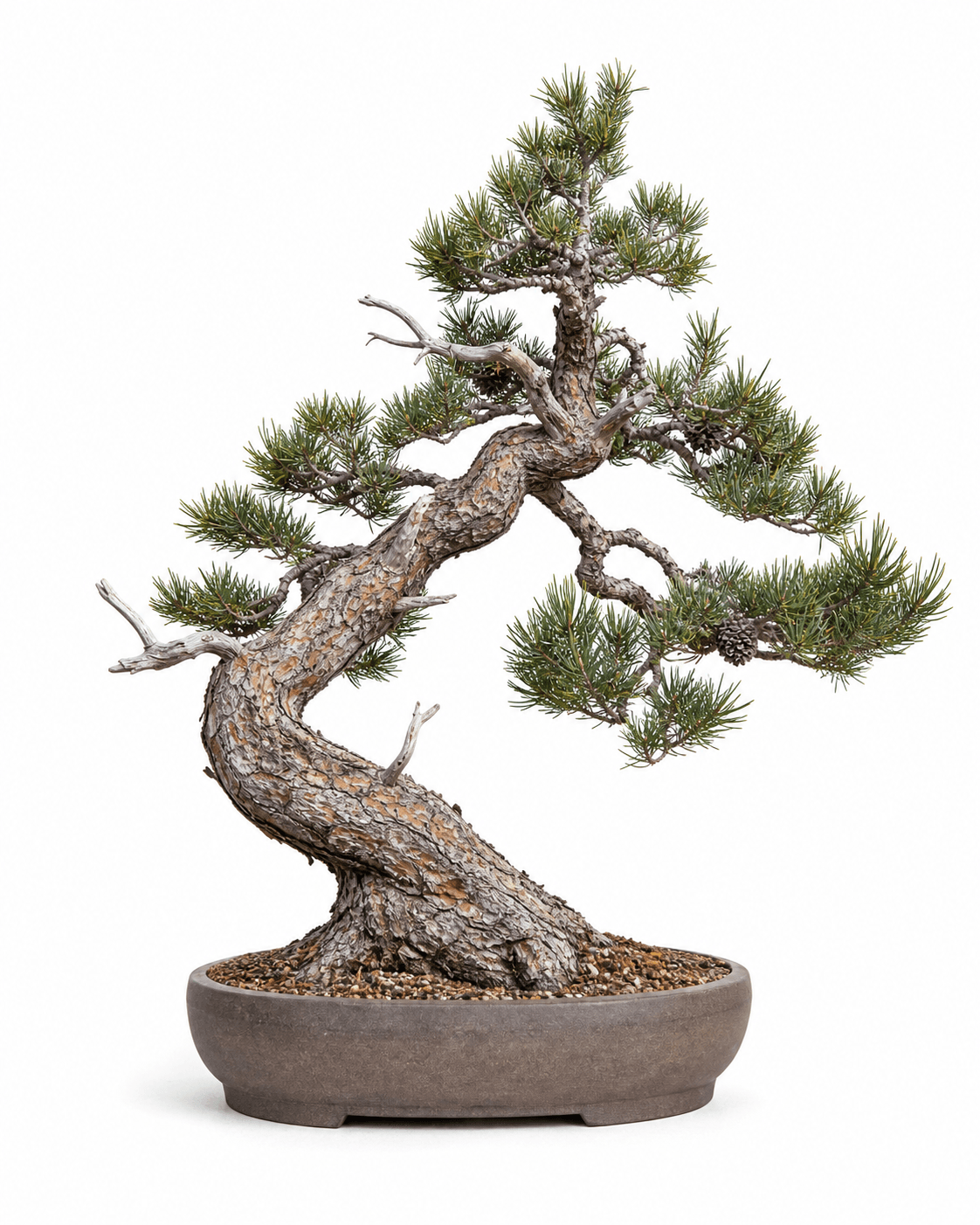
Pinus contorta
Lodgepole and shore pine are outdoor two-needle pines in the Pinus contorta complex. For bonsai, treat confirmed Pinus contorta as Pine > Short-Needle Single-Flush: preserve needle mass, pinch only strong refined candles, prune after the flush hardens, and avoid annual Japanese black pine decandling.
This guide is grounded in two dedicated Bonsai Mirai lodgepole pine files, Mirai short-needle single-flush pine method, and public sources from Kew, Flora of North America, USDA Forest Service Silvics, and Oregon State. The practical work starts with identity because coastal shore pine, inland lodgepole, Sierra lodgepole, and Bolander pine carry different climate and growth habits under one accepted species name.
Updated June 8, 2026. Written by EntGrove Editorial. Last verified June 8, 2026.
Care fingerprint
Read the species through its shared care pattern.
Use candle timing and bud selection carefully; compact needles do not mean the tree tolerates repeated aggressive work. Use this as the starting point before local conditions and tree strength refine the calendar.
Identify flush behavior
Single-flush, multiflush, white pine, and compact pine groups have different pruning windows and different risk levels.
Avoid default decandling
Japanese black pine methods do not transfer safely to every pine, especially slow, weak, collected, or five-needle trees.
Use needles as strength data
Needle length, color, age, and density help show where vigor is strong, weak, or becoming shaded.
Care cadence
The calendar starts with the tree's seasonal state.
Placement
Timing: Grow outdoors year-round in full sun, with airflow and a real winter. Moderate the pot rather than moving the tree into indoor warmth.
Watch for: Weak shaded interiors, warm winter storage, sunburn after sudden thinning, and provenance mismatch between coastal material and inland heat or cold.
USDA Forest Service SilvicsBonsai Mirai LibraryWatering
Timing: Water until the whole root mass is wet, then let air return. Old field soil, nursery peat, or empty collector-box soil can hold water where there are few roots.
Watch for: Hydrophobic dry cores, sour wet pockets, oversized recovery boxes, and confusing coastal wetland tolerance with low-oxygen bonsai culture.
Bonsai Mirai LibraryUSDA Forest Service SilvicsDevelopment feeding
Timing: Feed strongly while building root strength, branches, and interior buds. Lodgepole needle mass powers back budding and later needle reduction.
Watch for: Removing the engine too early, trying to refine a tree before interior growth exists, or starving collected material during recovery.
Bonsai Mirai LibraryRefinement feeding
Timing: Once the design length and branch framework exist, reduce spring excess and support fall recovery after pinching or post-flush pruning.
Watch for: Overfeeding refined crowns into coarse candles, or withholding nutrition after work that needs a strong bud response.
Bonsai Mirai LibrarySpring candle pinching
Timing: Pinch only strong candles in refinement when the candle has extended and needle clusters are beginning to separate. Leave weak and recovering branches alone.
Watch for: Pinching new yamadori, recently repotted trees, or branch sections that still need length before ramification.
Bonsai Mirai LibraryPost-flush pruning
Timing: After the spring flush begins to harden, cut overlong shoots back to usable needles or interior growth. Keep at least two needle pairs at cut sites where buds are needed.
Watch for: Cutting like black-pine decandling, removing all needle-bearing sites, or pruning after the hardening window has closed.
Bonsai Mirai LibraryRepotting
Timing: Repot in spring as buds begin to move when the tree is established. For collected material, wait until recovery evidence is clear and stage old soil conversion.
Watch for: Bare-rooting, oversized wet containers, loose tie-downs, and repotting the spring after a heavy first styling on a recent yamadori.
Bonsai Mirai LibraryWiring
Timing: Wire structural branches when the tree is strong enough to heal, often late summer through fall before deep winter, or in a protected pre-push window.
Watch for: Crushed needles, wire bite, cambium fissures during heavy bends, branch twists concentrated in one spot, and guy wires left unmanaged.
Bonsai Mirai LibraryPests and disease
Timing: Inspect during warm beetle seasons, after drought or root stress, and whenever needles brown outside normal old-needle shed.
Watch for: Mountain pine beetle, Ips, terminal weevil, pine needle scale, spider mites, sawflies, dwarf mistletoe, Atropellis canker, comandra blister rust, western gall rust, needle cast, Armillaria, and Heterobasidion.
USDA Forest Service SilvicsSpecies guide
Apply the species profile before copying another tree's calendar.
At a glance
Confirm the Pinus contorta identity before choosing the climate story.
Pinus contorta is one accepted species with several important regional faces. Kew accepts the species and four infraspecifics, while FNA keys the main North American varieties as contorta, latifolia, and murrayana. Kew POWOFlora of North America
For bonsai method, EntGrove places lodgepole and shore pine in Pine > Short-Needle Single-Flush Pines. Mirai directly names Pinus contorta with the short-needle pine group and documents strong back budding when the tree is allowed to build needle mass first. Bonsai Mirai Library
The care baseline is outdoor full sun, complete watering, fast oxygen return, mineral pine soil, winter dormancy, and patient staging. The risk is assuming all common names describe the same climate behavior. USDA Forest Service SilvicsOregon State Landscape Plants
Wild habitat
The species spans coastal shorelines, cold mountains, and fire-renewed inland stands.
USDA Silvics describes four geographic forms: coastal var. contorta known as shore, coast, or beach pine; Bolander pine in Mendocino County; Sierra lodgepole or tamarack pine as var. murrayana; and inland Rocky Mountain lodgepole or regional black pine as var. latifolia. USDA Forest Service Silvics
The same source gives a striking climate range, from cool maritime sites to inland mountain habitats with severe winter lows. It also describes low summer rainfall in some interior sites and high coastal precipitation in others. USDA Forest Service Silvics
That ecology becomes practical bonsai care. Shore pine may tolerate cool coastal moisture and wind, while inland lodgepole asks for cold dormancy, bright sun, and careful summer root cooling. Both still need oxygen in a shallow pot. USDA Forest Service SilvicsBonsai Mirai Library
Design should also follow habitat. Coastal material can read as wind-shaped and irregular. Inland lodgepole can read as fire, snow, altitude, and dense-stand competition. Use the tree evidence before choosing the story. Bonsai Mirai / AsymmetryUSDA Forest Service Silvics
Energy
Read recovery, needle mass, and back buds before doing pine technique.
Mirai lodgepole guidance says collected lodgepole becomes ready for first styling after it has rebuilt roots, produced a longer post-collection needle flush, and begun back-budding heavily, often around the end of the second growing season after collection. Bonsai Mirai Library
That recovery signal matters more than a calendar. Long post-collection needles can be a temporary recovery response; needle length settles only after root function and ramification mature. Bonsai Mirai Library
Development means building length, vascular strength, interior buds, and branch options. Refinement begins after the branch has reached design length and has enough buds to divide strength without weakening the line. Bonsai Mirai Library
On healthy established lodgepole, back budding can be generous. Keep extra branches during early styling so the tree retains photosynthetic capacity and reveals which interior buds become reliable future structure. Bonsai Mirai Library
Pine technique
Keep the work on short-needle single-flush timing.
Mirai short-needle pine method uses spring pinching to move energy and stimulate interior buds, then post-flush pruning after spring growth begins to harden to reduce multi-bud clusters and preserve clean bifurcation. Bonsai Mirai Library
Pinch only candles that have strength to spare and are beyond the intended outline. Leave weak candles, recovering branches, and developing branch sections to extend until they have done their job. Bonsai Mirai Library
When pruning shoots, leave needle pairs at the cut site so new buds have living needle axils. This is especially important on lodgepole because the species can back-bud well when the foliage engine remains intact. Bonsai Mirai Library
Avoid routine full decandling. Lodgepole is managed as a single-flush pine, so annual black-pine removal cycles can drain the tree instead of creating a reliable second flush. Bonsai Mirai Library
After pinching creates several buds at a junction, thin to two shoots by strength, acute crotch, and lateral orientation. That keeps inverse swelling out of the branch and preserves a clean taper from base to tip. Bonsai Mirai Library
Roots
Let the root system choose the first container, then move toward bonsai soil in stages.
Mirai collected-lodgepole guidance says survival containers should match the existing root geometry. Empty soil areas in an oversized box can stay wet where no roots exist, lowering oxygen around the actual root system. Bonsai Mirai Library
For fresh yamadori, block off unused container space rather than filling a large box with wet soil. Design container choices come after the tree survives and produces evidence of recovery. Bonsai Mirai Library
Repot established lodgepole in spring as buds begin to move, then separate heavy root work from heavy foliage work. A tree styled hard in fall should receive protected overwintering and usually should not face aggressive spring root work if it is recent collection material. Bonsai Mirai Library
Preserve mycorrhizal continuity and functioning fine roots. Old field soil or nursery cores should be converted over multiple cycles when removal would erase the root system that currently supports the tree. Bonsai Mirai Library
Soil and pot
Use pine soil for oxygen, then adjust water retention to provenance and pot depth.
Mirai pine soil method starts with equal parts akadama, pumice, and lava, then adjusts particle size and fines to control oxygen and water. Interior particles around 2-6 mm support fine roots while keeping air in the mix. Bonsai Mirai Library
Coastal shore pine material may need a touch more water retention in hot inland benches. Inland lodgepole in cool mountains may need stronger drainage and winter protection against freeze-dry cycles. The variety and bench climate decide the adjustment. USDA Forest Service SilvicsOregon State Landscape Plants
Development containers can be deeper and more practical while root recovery and branch building continue. Refined containers should be secure, unglazed, and visually quiet enough to keep attention on rugged bark, contorted line, needles, and deadwood. Bonsai Mirai / Asymmetry
Avoid delicate glazed pots for old collected lodgepole unless the design clearly asks for contrast. Rugged rectangles, ovals, drums, slabs, and deeper training pots usually match the species better. Bonsai Mirai / Asymmetry
Climate
Match the bench plan to provenance: coast, inland, Sierra, or collected high-elevation material.
USDA Silvics places coastal var. contorta mainly from sea level to about 610 m, while inland lodgepole can run from about 490 m to 3660 m. That range explains why one Pinus contorta may behave like a shore tree and another like a cold mountain pine. USDA Forest Service Silvics
Full sun remains the default because the species is very shade intolerant. In hot sites, protect the pot and root zone first, then use afternoon relief without turning the foliage into a shade crop. USDA Forest Service Silvics
Cold-hardy landscape numbers do not fully protect bonsai roots. Pot exposure, recent root work, heavy fall styling, wind, and freeze-thaw cycles should determine winter shelter. Bonsai Mirai LibraryUSDA Forest Service Silvics
Coastal material may dislike dry inland wind, and high-elevation material may resent hot warm nights. Track needle color, candle length, water uptake, and bud density after moves between climates. USDA Forest Service SilvicsBonsai Mirai Library
Pests and diseases
Most serious problems follow stress, dense foliage, or regional forest pest pressure.
USDA Silvics names mountain pine beetle as the most severe insect pest of lodgepole pine, with Ips also important. Bonsai growers should treat sudden pitch, boring dust, and rapid crown dulling as urgent local-diagnosis signals. USDA Forest Service Silvics
Other insect issues include terminal weevil, collar weevil, branch-mining weevils, pine needle scale, black pineleaf scale, spruce spider mite, lodgepole sawfly, needle miner, sugar pine tortrix, pine tube moth, and pandora moth. USDA Forest Service Silvics
Dwarf mistletoe is a major forest parasite of lodgepole pine. On bonsai material, inspect suspicious witches-broom growth, swelling, and collection-site history, then isolate and get local advice before keeping infected material near other pines. USDA Forest Service Silvics
Disease risks include Atropellis canker, comandra blister rust, western gall rust, needle casts, Armillaria root rot, Heterobasidion root disease, and wood decays. Container prevention starts with light, airflow, root oxygen, sanitation, and avoiding stress stacking. USDA Forest Service Silvics
Wiring
Use lodgepole flexibility, but spread force over the branch.
Mirai describes contorta wood as flexible and malleable, which allows assertive reorientation. That flexibility rewards skilled wiring, guy wires, and staged bends more than one violent move. Bonsai Mirai Library
For heavy structural work, Mirai favors copper on pines and galvanized steel for guy wires or pot anchors where stretch would lose the bend. Select wire by branch resistance rather than habit. Bonsai Mirai Library
Distribute twist across several points along the branch. White fissures in cambium tissue are a limit signal during heavy bending, so stop, stabilize, and let the tree recover. Bonsai Mirai Library
Keep wire out of needle clusters and return rotated foliage toward light. A branch that has been turned upside down will spend energy correcting orientation rather than strengthening the design. Bonsai Mirai Library
Heavy styling and significant needle reduction reduce cold hardiness. Protect a freshly styled lodgepole through winter, especially if it is a collected tree still rebuilding roots. Bonsai Mirai Library
Propagation
Seed is biologically natural; bonsai propagation is usually nursery or collected material.
USDA Silvics describes lodgepole as a prolific seed producer with viable seed at a young age and good seed crops often every 1 to 3 years. Cones can persist and store seed for fire-renewed stands. USDA Forest Service Silvics
Seedlings are useful for forests, groups, and long-term exposed-root experiments. Select early for needle length, internodes, low buds, root spread, and provenance rather than assuming every seedling will suit shohin scale. Flora of North AmericaBonsai Mirai / Asymmetry
Cuttings and air layers are poor default strategies for pines. Grafting is possible in pine culture, but the page should treat grafted lodgepole as an advanced project with rootstock behavior and scion behavior recorded separately. Bonsai Mirai Library
Collected material should be legal, ethically sourced, and staged around survival. The strongest first container protects existing roots and leaves final bonsai-pot decisions for later. Bonsai Mirai Library
Sourcing
Buy identity, roots, buds, and recovery history before rugged bark.
Good material has a credible Pinus contorta label, visible buds near future branch sites, healthy old needles, trunk movement, roots that can be staged into bonsai soil, and a provenance story that matches your climate. Kew POWOBonsai Mirai Library
Oregon State lists common nursery and landscape labels including shore pine, lodgepole pine, Rocky Mountain lodgepole pine, Chief Joseph, Taylor's Sunburst, and Spaan's Dwarf shore pine. These names are useful only after roots and vigor pass inspection. Oregon State Landscape Plants
Avoid recently collected trees with no new strong flush, oversized wet boxes, no tie-down, severe beetle or canker evidence, dry active-season needles, and material advertised as generic black pine without scientific-name clarity. USDA Forest Service SilvicsBonsai Mirai Library
Style yamadori after root recovery, long healthy new needles, and abundant back buds. The Mirai lodgepole files make that recovery evidence the starting gate for first styling. Bonsai Mirai Library
Troubleshooting
Diagnose by recent work, root oxygen, provenance, and forest-pest symptoms.
Symptom: long coarse needles after collection. Likely cause: the tree is rebuilding roots and energy. Fix: preserve needle mass, feed and water correctly, and wait for ramification before expecting shorter needles. Bonsai Mirai Library
Symptom: no back buds after pruning. Likely cause: too little needle mass, weak roots, low light, or branch sections still in development. Fix: grow the branch, restore strength, and prune only when needle axils can respond. Bonsai Mirai Library
Symptom: branch tip dies after candle work. Likely cause: cutback removed all usable needle pairs or the branch was weak. Fix: leave needles at cut sites and reserve pinching for strong refined zones. Bonsai Mirai Library
Symptom: root decline after potting. Likely cause: too much wet empty soil, unstable tie-down, old core staying sour, or root work before recovery. Fix: stabilize, improve oxygen, protect from extremes, and wait for strong candles. Bonsai Mirai Library
Symptom: sudden dull needles, pitch, bore dust, or rapid collapse. Likely cause: bark beetles, canker, root disease, or severe stress. Fix: isolate, photograph symptoms, and get local extension or arborist diagnosis quickly. USDA Forest Service Silvics
Symptom: twisted sparse weak growth in the wrong climate. Likely cause: provenance mismatch, heat nights, dry coastal wind, cold-freeze exposure, or shade. Fix: adjust bench placement and record whether the tree behaves like shore, inland, or Sierra material. USDA Forest Service SilvicsOregon State Landscape Plants
Design
Let contorted line, provenance, and branch hierarchy choose the design.
Mirai lodgepole styling begins by choosing a planting angle that reveals movement, deadwood, taper, and base. A tilted trunk can make the base read wider and more stable if the roots still fit a realistic container. Bonsai Mirai Library
The Fujikawa lodgepole file treats Pinus contorta as an artistic pine with flexible wood, long sinuous lines, and branch pads that can drop at the shoulder and rise again at the tip when the material supports that language. Bonsai Mirai Library
Windswept design should be reserved for material that already shows wind evidence in trunk movement, branch arrangement, and deadwood. Use snow, fire, exposure, and coastal pressure only when the tree already carries the clue. Bonsai Mirai LibraryBonsai Mirai / Asymmetry
Primary line dictates secondary movement. Branches should reference the trunk line so the final tree looks as if the chosen branches grew into position rather than being forced there. Bonsai Mirai Library
Pine deadwood should stay pine-specific. Crush and strip bark where a living branch becomes jin, but leave some bark texture and age so it weathers differently from juniper deadwood. Bonsai Mirai Library
Forms
Variety and provenance matter more than cultivar novelty.
Kew lists var. contorta, var. latifolia, var. murrayana, and var. yukonensis as accepted infraspecifics. Oregon State gives practical distinctions among shore pine, Rocky Mountain lodgepole, and Sierra lodgepole. Kew POWOOregon State Landscape Plants
Shore pine var. contorta is often smaller, irregular, and coastal. Var. latifolia is the inland lodgepole form. Var. murrayana covers Sierra lodgepole with cones that typically shed after seed release. Oregon State Landscape PlantsFlora of North America
Cultivar and form labels such as Chief Joseph, Taylor's Sunburst, and Spaan's Dwarf can matter for color, scale, or habit. Inspect roots, graft status, buds, needle health, and climate fit before valuing the name. Oregon State Landscape Plants
Regional black pine can mean inland Pinus contorta in USDA Silvics, while bonsai trade language often points to Japanese black pine. Confirm the scientific name before applying decandling or care advice. USDA Forest Service SilvicsBonsai Mirai Library
History
The species is a western fire-tree with a growing modern bonsai record.
Kew records Pinus contorta Douglas ex Loudon as first published in 1838. FNA describes trees or shrubs to 50 m with crowns that vary by genetic race. Kew POWOFlora of North America
USDA Silvics describes lodgepole as a fire-successional species over much of its range, with prolific seeding and high seed viability in disturbed habitats. Serotinous cones and beetle-fire cycles are part of its landscape role. USDA Forest Service Silvics
Bonsai Mirai has enough direct lodgepole coverage to move beyond generic pine advice: Jan Culek and Masayuki Fujikawa lodgepole files document yamadori recovery, flexible wood, wiring strategy, and design reading. Bonsai Mirai Library
The most credible exhibition lodgepole should make identity visible: paired twisted needles, contorted line, appropriate deadwood, and a design that reads as shore, fire, snow, altitude, or collected western pine rather than generic pine styling. Flora of North AmericaBonsai Mirai / Asymmetry
Species questions
Answer the beginner questions before styling.
Can lodgepole pine be grown as bonsai?
Yes. Lodgepole and shore pine can be grown as outdoor bonsai when identity is confirmed, roots are kept oxygenated, and short-needle single-flush timing is used.
Can lodgepole pine bonsai live indoors?
Keep lodgepole pine outdoors. It needs full sun, airflow, seasonal temperature change, and winter dormancy, with only brief indoor display.
Is shore pine the same as lodgepole pine?
Shore pine is commonly used for coastal Pinus contorta var. contorta. Lodgepole pine often refers to inland var. latifolia, but both sit inside the Pinus contorta species complex.
Should I decandle lodgepole pine?
Avoid routine Japanese black pine decandling. Treat lodgepole as a short-needle single-flush pine: spring pinching only on strong refined candles, then post-flush pruning where needle pairs can support buds.
When should lodgepole pine be pinched?
Pinch strong refined candles in spring when they have extended and needle clusters are beginning to separate. Leave weak, developing, recently collected, and recently repotted branches alone.
When is collected lodgepole ready for first styling?
Mirai lodgepole guidance waits for root recovery, a strong post-collection needle flush, and abundant back buds, often around the end of the second growing season after collection.
What soil works for lodgepole pine bonsai?
Use a fast-draining mineral pine mix such as akadama, pumice, and lava. Adjust particle size and water retention for climate, provenance, and any old field soil still inside the rootball.
How cold hardy is lodgepole pine bonsai?
Landscape hardiness varies dramatically by provenance. USDA Silvics records climates from mild coast to severe Northern Rockies cold, but bonsai roots need pot protection during hard freezes and drying wind.
Why are my lodgepole pine needles long?
Long needles after collection or heavy recovery can be normal while roots rebuild. Needle length usually improves after ramification, root health, and branch density develop.
What pests matter most for lodgepole pine bonsai?
Watch mountain pine beetle, Ips, terminal weevil, pine needle scale, spider mites, sawflies, dwarf mistletoe, Atropellis canker, blister rusts, western gall rust, needle casts, and root rots.
Sources
Species advice needs source discipline.
Next decisions
Plan the operation before copying the calendar.
A good care note for Lodgepole / shore pine records the tree's stage, the work done, and the aftercare used. That record matters more than a month-name rule.
Related species