
Species guide
Scots Pine Bonsai Care
Pinus sylvestris
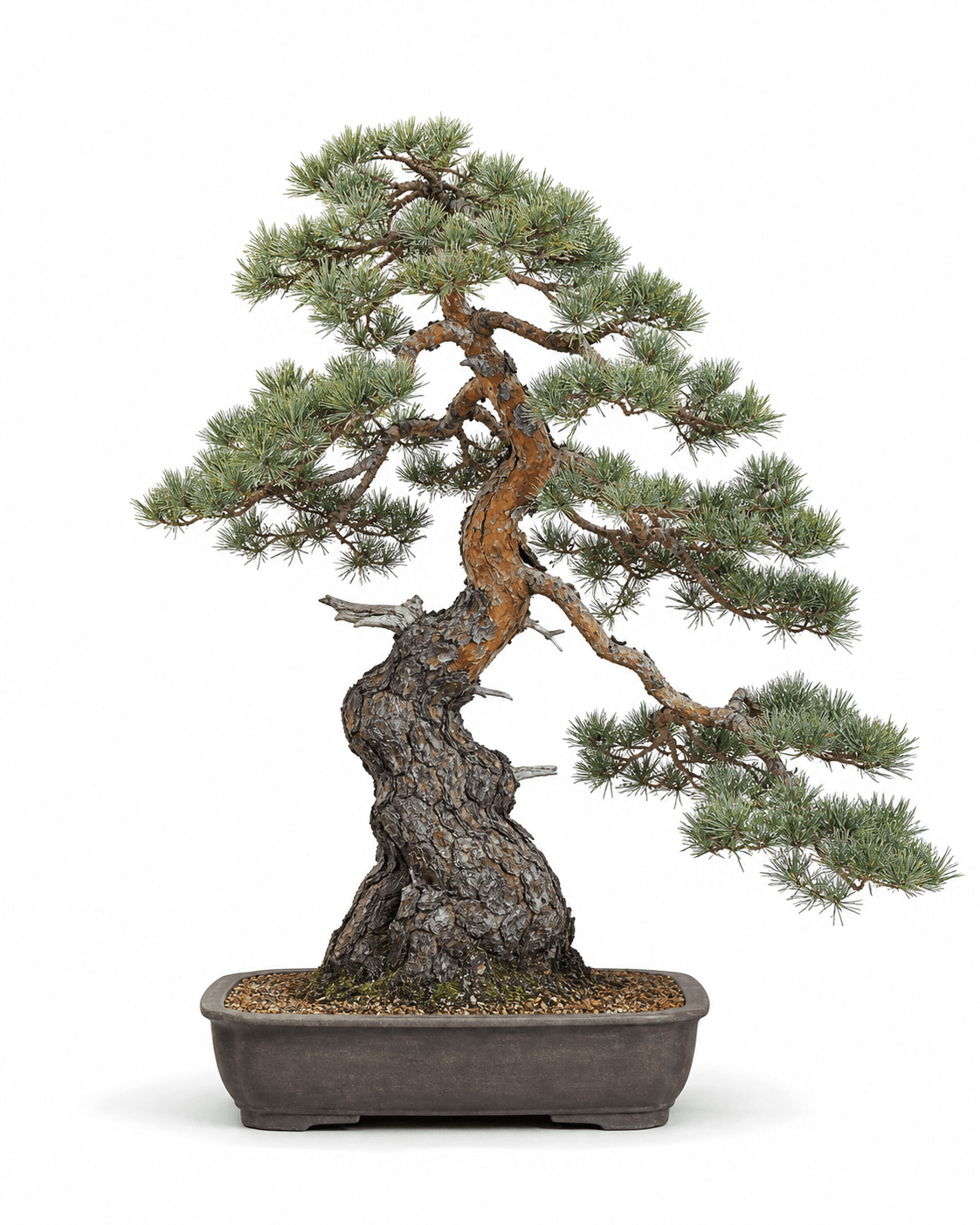
Scots pine is an outdoor, cold-dormant, two-needle pine that responds best as a short-needle single-flush bonsai. Use full sun, complete watering with fast oxygen return, spring candle pinching only on strong refined branches, and post-flush cutback only where interior buds are already working.
This profile is grounded in a dedicated Bonsai Mirai Pinus sylvestris styling file, Mirai short-needle single-flush pine files, and public botanical sources from Kew, RHS, Oregon State, USDA, Morton Arboretum, and NRCS. The main practical warning is simple: Scots pine can be pinched in refinement, but it still must not be handled like Japanese black pine.
Updated June 6, 2026. Written by EntGrove Editorial. Last verified June 6, 2026.
Care fingerprint
Read the species through its shared care pattern.
Use candle timing and bud selection carefully; compact needles do not mean the tree tolerates repeated aggressive work. Use this as the starting point before local conditions and tree strength refine the calendar.
Identify flush behavior
Single-flush, multiflush, white pine, and compact pine groups have different pruning windows and different risk levels.
Avoid default decandling
Japanese black pine methods do not transfer safely to every pine, especially slow, weak, collected, or five-needle trees.
Use needles as strength data
Needle length, color, age, and density help show where vigor is strong, weak, or becoming shaded.
Care cadence
The calendar starts with the tree's seasonal state.
Placement
Timing: Grow outdoors year-round in full sun with moving air. Give winter dormancy, then protect the pot when container roots face temperatures below the tree root zone can tolerate.
Watch for: Indoor storage, shaded benches, warm garages in winter, reflected summer heat, and nursery dwarf forms that dry faster than full-size stock.
RHSOregon State Landscape PlantsBonsai Mirai LibraryWatering
Timing: Water until the whole root mass is wet, then let air return. Strong candles, back buds, and short needles come from balanced water and oxygen, not from chronic drought.
Watch for: Dry pockets in old field soil, compact peat, water-repellent nursery cores, and using dryness as the main needle-shortening tool.
Oregon State Landscape PlantsBonsai Mirai LibraryDevelopment feeding
Timing: Feed strongly while building trunk, branches, and interior buds. Needle mass is the battery that creates vascular tissue and future back budding.
Watch for: Trying to refine a tree that lacks interior shoots, cutting fertilizer before buds become branches, and removing sacrifice foliage too early.
Bonsai Mirai LibraryRefinement feeding
Timing: When the branch structure is dense enough, feed with more restraint during the strongest spring push and support fall recovery after pinching or cutback.
Watch for: Overfeeding a finished crown into coarse candles, or starving a pinched tree so it replaces lost foliage with longer needles next year.
Bonsai Mirai LibrarySpring candle pinching
Timing: Pinch only strong candles that are extending beyond the intended silhouette while the needle clusters have begun to separate but remain attached to the candle.
Watch for: Pinching weak, newly collected, recently repotted, or under-ramified branches. Always leave needle bundles at the base of a candle.
Bonsai Mirai LibraryPost-flush cutback
Timing: For developing branches, cut current-season growth only in the narrow early-summer hardening window, leaving new needles at the base to set buds.
Watch for: Cutting every shoot like a decandling pass, pruning after the window closes, or cutting to a site with no interior buds.
Bonsai Mirai LibraryRepotting
Timing: Repot in early spring as buds begin to move. Separate heavy root work from heavy foliage work unless the tree has unusual strength and recovery support.
Watch for: Bare-rooting old field soil, loose tie-downs, root rot from retained organic cores, and combining first styling with root reduction.
Bonsai Mirai LibraryWiring
Timing: Wire structural branches after the tree is energy-positive, often late summer to fall, or in the final pre-push window. Check frequently because vigorous Scots pine can thicken fast.
Watch for: Wire bite, cracked older bark, hidden branch tears, bends across graft unions, and rotating needles out of light.
Bonsai Mirai LibraryPests and disease
Timing: Inspect during humid needle-cast seasons, after drought stress, around nursery-stock purchase, and whenever old needles brown outside the normal seasonal pattern.
Watch for: Lophodermium and Cyclaneusma needle casts, Diplodia or Sphaeropsis tip blight, pine wilt nematode in risk regions, spittlebug, sawflies, pine needle scale, aphids, and moth larvae.
USDA Forest Service SilvicsMorton ArboretumUSDA NRCSRHSSpecies guide
Apply the species profile before copying another tree's calendar.
At a glance
Scots pine is the classic short-needle single-flush pine with flexible technique.
Kew accepts Pinus sylvestris L. in Pinaceae and gives the native range as Europe to the Russian Far East and Caucasus. RHS lists Scots pine as a large evergreen tree with orange-brown upper bark, paired grey-green needles, and Eurasian range. Kew POWORHS
For bonsai, Scots pine belongs in the short-needle single-flush pine group. Mirai pinching guidance names Scots among the short-needle single-flush pines that can be candle-pinched without the long-needle elongation response seen in Ponderosa and standard five-needle pines. Bonsai Mirai Library
That classification does not make the tree casual. Scots pine still needs outdoor dormancy, strong sun, root oxygen, staged work, and enough foliage to fund back budding before refinement techniques begin. Bonsai Mirai LibraryOregon State Landscape Plants
Wild habitat
Its wild story is broad Eurasian range, cold tolerance, and poor-soil adaptability.
Oregon State describes a range from Norway and Scotland to Spain, western Asia, and northeastern Siberia, with great geographic variability. Kew broadens that same idea across Europe, the Russian Far East, and the Caucasus. Oregon State Landscape PlantsKew POWO
FEIS places Scots pine in European and Asian boreal forest with Norway spruce. RHS gives full sun, well-drained soils, broad pH tolerance, drought resistance, and H7 hardiness. Oregon State adds poor and dry soils if drainage is good. USDA Forest Service FEISRHSOregon State Landscape Plants
The care translation is straightforward: full sun, strong winter rest, sharp drainage, and complete watering. In a bonsai pot, its poor-soil tolerance should become mineral aeration, not neglect. Oregon State Landscape PlantsBonsai Mirai Library
The design translation comes from orange upper bark, dark lower plates, open crowns, cold landscapes, and old limbs shaped by exposure. A Scots pine bonsai can read as a European forest pine, a windswept highland tree, or a compact nursery cultivar grown into age. RHSOregon State Landscape PlantsBonsai Mirai / Asymmetry
Reading the tree
Read Scots pine through needle mass, back buds, candle stage, and old-needle release.
Development trees need foliage mass. Mirai pine guidance repeatedly ties back budding to photosynthesis, transpiration, and vascular thickening, so a sparse Scots pine should grow before it is compressed. Bonsai Mirai Library
A refined branch is different. When interior buds have become actual needle-bearing shoots, spring pinching can redirect energy from strong candles into weaker regions and help keep the silhouette compact. Bonsai Mirai Library
Needle age is a timing signal. The dedicated Pinus sylvestris Mirai file treats natural interior needle shedding on short-needle single-flush pine as evidence that growth has hardened and the tree has returned to a stronger energy state. Bonsai Mirai Library
Identity still matters. Scots pine has paired, twisted, blue-green to grey-green needles and orange upper bark; generic Scotch pine, dwarf Scots pine, lodgepole, mugo, Austrian black pine, red pine, and Japanese black pine labels can lead to wrong timing. Oregon State Landscape PlantsRHSUSDA NRCS
Pruning
Use pinching for refinement and selective cutback for development.
Spring candle pinching is available on Scots pine because it is a short-needle single-flush pine. Pinch only the candles that exceed the intended silhouette, then leave medium and weak candles to receive redirected energy. Bonsai Mirai Library
Timing is narrow. Mirai pinching guidance says the needle clusters should be visible but still attached to the candle. Support the base, twist cleanly, and do the job once per candle. Bonsai Mirai Library
Development cutback uses a different window. Mirai mugo and short-needle pine pruning guidance places post-flush hardened pruning between June and July, after new growth starts hardening and before it becomes too vascular to reliably bud at the remaining needles. Bonsai Mirai Library
Every reduction needs a reason. Shorten current-season growth while leaving basal needles, reduce clusters to two shoots, or cut back to finer interior ramification that already has strength. Leave weak branches alone to build. Bonsai Mirai Library
Avoid black-pine decandling as a routine method. The Mirai Pinus sylvestris file says lodgepole, shore, and Scots pine are single-flush species; any apparent second push is vigor-driven activation of weak buds, not a true second flush. Bonsai Mirai Library
Roots
Repot at spring movement and preserve the recovery engine.
Mirai pine guidance places repotting in early spring as candles begin to move. This gives Scots pine the full growing season to rebuild fine roots and support the season of candle growth. Bonsai Mirai Library
Nursery and field-grown Scots pine often carry dense old soil. Stage the conversion into bonsai soil, keep part of the functioning root system intact, and secure the trunk firmly so new roots are not torn by wind. Bonsai Mirai Library
When a tree needs root work and styling in the same year, repot first and style later after recovery. The dedicated Pinus sylvestris Mirai file is explicit that foliage mass should drive root recovery before styling spends it. Bonsai Mirai Library
After a heavy root operation, hold pruning and heavy fertilizer until the tree resumes reliable growth. The existing needles are the recovery battery and should stay on the tree. Bonsai Mirai Library
Soil and pot
Build a mineral root system that drains fast and never dries in pockets.
Oregon State says Scots pine grows on poor and dry soils if they are well drained and notes an acid-soil preference. RHS lists chalk, clay, loam, and sand as acceptable when drainage is present. Oregon State Landscape PlantsRHS
For bonsai, start with an aerated pine mix such as akadama, pumice, and lava adjusted to climate. Refined trees can use more akadama for fine roots; hot dry gardens may need slightly more water-holding capacity. Bonsai Mirai Library
Particle size should match the tree and pot. Short-needle single-flush pine repotting guidance uses finer working particles than very dry western long-needle pine mixes, while still avoiding a stale saturated core. Bonsai Mirai Library
Pot choice should reinforce the image. Unglazed rectangles, soft rectangles, ovals, and rugged slabs suit old bark and blue-green needles. Dwarf cultivars and compact literati may take quieter, smaller containers once roots are refined. Bonsai Mirai / AsymmetryOregon State Landscape Plants
Climate
Cold is usually easier than heat, but the pot changes every tolerance.
Landscape Scots pine is very cold hardy. Oregon State gives USDA Zone 2, and RHS gives H7. A bonsai pot exposes roots to colder air, so protect the container during severe freezes while keeping the tree dormant. Oregon State Landscape PlantsRHS
Cool temperate gardens can run Scots pine in full sun with strong airflow. In hot inland gardens, cool the pot, avoid heat-radiating walls, and water before the root ball loses continuity. RHSBonsai Mirai Library
Humid regions need disease discipline. Morton Arboretum warns that Scots pine has enough insect and disease issues to make it a poor landscape recommendation in the Midwest. Bonsai growers should respond with airflow, dry foliage at night, and local diagnosis. Morton ArboretumUSDA Forest Service Silvics
Provenance matters. USDA Silvics notes that different seed origins vary in growth, cold hardiness, and disease susceptibility. Record source, cultivar, and local adaptation instead of assuming all Scots pine behave the same. USDA Forest Service SilvicsUSDA NRCS
Pests
Needle cast, tip blight, scale, sawflies, and pine wilt deserve early attention.
USDA Silvics names Lophodermium needlecast as a serious disease in Scotch pine Christmas tree plantations. The same source flags pine spittlebug as a serious plantation pest and links heavy infestations with branch and tree mortality. USDA Forest Service Silvics
USDA NRCS lists Cyclaneusma needle cast, western gall rust, Lophodermium needle cast, tip moth, sawflies, pine needle scales, and giant conifer aphid as common pest and disease issues. USDA NRCS
Morton Arboretum highlights Diplodia, also called Sphaeropsis tip blight, pine wilt nematode, and Zimmerman pine moth. It discourages Midwest planting because disease and insect pressure can be severe. Morton Arboretum
RHS adds adelgids, conifer aphid, sawfly larvae, pine shoot moth, honey fungus, and needle cast diseases. For bonsai, isolate weak material, improve airflow, avoid wet foliage overnight, and use local extension diagnosis before treatment. RHS
Wiring
Wire after strength returns, protect bark, and respect grafts or old wood.
The dedicated Mirai Pinus sylvestris styling file uses Scots pine for structural branch selection and wiring. It emphasizes early structural decisions while branches are still correctable, then reducing junctions to pairs to avoid swelling. Bonsai Mirai Library
Scots pine branches are often more flexible than brittle high-elevation pines, but field-grown and grafted branches can still tear. Use guy wires, padding, raffia, and staged bends when the branch has age or unknown history. Bonsai Mirai Library
Fall is often a strong window for conifer structural work because sap flow through fresh wounds is lower and the tree is loading vascular resources. Avoid late work inside the final four to six weeks before hard frost. Bonsai Mirai Library
Watch wire bite closely. A strong Scots pine branch can thicken quickly after feeding, pinching, or cutback, and bark damage on orange-barked upper branches becomes visible for years. Bonsai Mirai LibraryOregon State Landscape Plants
Propagation
Seed and grafting are realistic; air layers are speculative.
RHS lists seed propagation for Scots pine, and NRCS notes that seed origin is important for quality in a subregion. For bonsai, seed gives control but takes time before bark and branch character mature. RHSUSDA NRCS
Seed and grafting are the practical propagation paths for serious Scots pine bonsai. Grafting is common when a grower wants Scots pine foliage on a collected or established pine trunk, and the graft union remains a permanent structural concern. Bonsai Mirai Library
Mirai grafted-pine guidance says Scots pine scions can outpace Ponderosa rootstock in vigor because Scots tolerates a broader range of soil and salt conditions. Keep the scion behavior and rootstock behavior documented. Bonsai Mirai Library
Air-layering pines almost never succeeds in practice according to Mirai Austrian black pine nursery-stock guidance. Treat any Scots pine air layer as an experiment, not a production plan. Bonsai Mirai Library
Sourcing
Buy identity, roots, buds, and source history before old bark alone.
Good Scots pine material has a confirmed Pinus sylvestris label, strong buds, live old needles, usable interior shoots, trunk movement, and roots that can be staged into a bonsai container. Oregon State Landscape PlantsBonsai Mirai Library
Nursery dwarf forms can be useful. Oregon State lists forms such as Glauca Nana, Nana, Watereri, Hillside Creeper, Fastigiata, Aurea, Gold Coin, Nisbet's Gold, and Pendula. Judge the individual roots and branches before valuing the name. Oregon State Landscape Plants
Avoid weak Christmas-tree leftovers, recent landscape removals with few fine roots, sour compacted soil, severe needle cast, dead interiors from shearing, graft unions in planned bend zones, and labels that confuse Scots with Austrian black pine, mugo, lodgepole, Japanese black pine, or red pine. USDA Forest Service SilvicsMorton ArboretumBonsai Mirai Library
Collected material requires legal permission and long aftercare. Scots pine is widely planted and naturalized in some regions, but local regulations and ecological context still matter. Kew POWOOregon State Landscape PlantsUSDA Forest Service FEIS
Troubleshooting
Start with timing, root oxygen, disease pressure, and whether the last work matched the branch stage.
Symptom: candles are long and coarse. Likely cause: development feeding, too few growing points, oversized pot, or weak pinching strategy. Fix: build interior buds first, then refine feeding and pinch only strong out-of-profile candles. Bonsai Mirai Library
Symptom: branch tips die after spring work. Likely cause: candle removed too far or cutback made without basal needles. Fix: always leave needle bundles and use post-flush cutback only in the correct hardening window. Bonsai Mirai Library
Symptom: no back buds after pruning. Likely cause: too little needle mass, weak light, poor fertilizer timing, old hardened bark, or cutting before interior buds were ready. Fix: grow the branch for a season and rebuild vascular strength. Bonsai Mirai Library
Symptom: yellowing or browning old needles in the normal late-season pattern. Likely cause: natural old-needle release after growth hardens. Fix: clean only needles that release easily and keep records so disease is not confused with rhythm. Bonsai Mirai Library
Symptom: banded needles, widespread premature needle drop, or blotchy browning. Likely cause: needle cast or fungal pressure. Fix: improve airflow, keep foliage dry overnight, remove fallen needles, and get local diagnosis before treatment. USDA Forest Service SilvicsUSDA NRCSRHS
Symptom: decline after repotting. Likely cause: too much root removal, unstable tie-down, compact old soil left wet, or pruning the foliage battery too soon. Fix: stabilize the tree, protect from extremes, and wait for strong candles before more work. Bonsai Mirai Library
Design
Design for orange bark, cold light, old limbs, and readable branch hierarchy.
The Mirai Pinus sylvestris file styles a field-grown Scots pine as an orthodox informal upright. The design work starts with the trunk line, usable primary branches, wound strategy, and avoiding inverse swelling at branch junctions. Bonsai Mirai Library
Oregon State describes a tree that is pyramidal in youth and becomes wide spreading, flat-topped, or rounded with age. That aging pattern suits open crowns, visible trunk movement, and negative space between pads. Oregon State Landscape PlantsBonsai Mirai / Asymmetry
Scots pine can carry more refined foliage than Ponderosa, but it should still read as pine. Use bark, trunk direction, defining branch, apex movement, and old branch angles before chasing perfectly even pads. Bonsai Mirai LibraryBonsai Mirai / Asymmetry
Deadwood should be credible for pine: old broken stubs, reduced sacrificial leaders, weathered branch bases, and wounds that heal with protected cambium. Avoid treating every scar like juniper deadwood. Bonsai Mirai Library
Small compact cultivars can support shohin or chuhin designs, while seedling and field-grown material often wants medium or large scale. Let needle length, internodes, bark age, and trunk diameter decide the finished size. Oregon State Landscape PlantsBonsai Mirai Library
Cultivars
Cultivar names can help with scale, but provenance still matters.
Oregon State notes many cultivars and lists dwarf, upright, variegated, and weeping forms. Bonsai-relevant names include Glauca Nana, Nana, Watereri, Hillside Creeper, Fastigiata, Aurea, Gold Coin, Nisbet's Gold, and Pendula. Oregon State Landscape Plants
RHS lists several old common names and treats Pinus sylvestris as the correct name. Kew lists accepted infraspecific varieties including hamata, lapponica, mongholica, sylvestris, and elicinii. RHSKew POWO
USDA Silvics emphasizes provenance differences in growth and disease response. A compact cultivar from one nursery and a seed-grown landscape tree from another region can need different pacing even under the same species name. USDA Forest Service SilvicsUSDA NRCS
Record the label, source, graft status, seed origin if known, and observed candle behavior. The care calendar should follow the tree response, with Scots pine method as the starting point. Bonsai Mirai Library
History
Scots pine has a deep European identity and a practical bonsai role.
Kew records Pinus sylvestris as first published by Linnaeus in Species Plantarum in 1753. RHS lists it as native to Great Britain and Ireland, and Oregon State notes it is the only native pine of the United Kingdom. Kew POWORHSOregon State Landscape Plants
USDA Silvics says Scotch pine was introduced to North America from Europe, probably in colonial days, and has since been widely planted, especially for Christmas trees and windbreaks. USDA Forest Service SilvicsUSDA Forest Service FEIS
In bonsai, Scots pine is important because it gives growers a compact-needle, single-flush pine that responds to pinching and back-budding work more readily than many long-needle native pines. Bonsai Mirai Library
The public bonsai record is broader in European collections than in the U.S. sources reviewed here. For EntGrove, the reliable teaching value is the species method: short-needle single-flush timing, pinching in refinement, branch hierarchy, and evidence-led design. Bonsai Mirai LibraryBonsai Mirai / Asymmetry
Species questions
Answer the beginner questions before styling.
Can Scots pine be grown as bonsai?
Yes. Scots pine is a strong outdoor bonsai species when grown in full sun, cold dormancy, mineral soil, and short-needle single-flush timing.
Can Scots pine bonsai live indoors?
No. Scots pine needs outdoor light, airflow, and winter dormancy. Indoor display should be brief, then the tree should return outside.
Is Scots pine a short-needle or long-needle single-flush pine?
For bonsai technique, treat Scots pine as a short-needle single-flush pine. Mirai places Scots with mugo, lodgepole, shore, pinyon, and Jack pine for candle-pinching behavior.
Should I decandle Scots pine bonsai?
Do not use routine Japanese black pine decandling on Scots pine. Use spring pinching on strong refined candles and selective post-flush cutback where basal needles or interior buds can support new buds.
When should Scots pine be pinched?
Pinch strong candles in spring when needle clusters have started to separate but still cling to the candle. Leave weak candles and recovering branches alone.
When should Scots pine be pruned?
Use selective post-flush cutback in early summer before the new growth becomes fully vascular, or heavier structural reduction in a strong late-season window with enough time before hard frost.
What soil works for Scots pine bonsai?
Use a fast-draining mineral pine mix, often akadama, pumice, and lava adjusted to climate. Keep roots moist enough for growth and airy enough to avoid stale wet cores.
How cold hardy is Scots pine bonsai?
Landscape Scots pine is very cold hardy, with Oregon State giving Zone 2 and RHS rating H7. Bonsai roots need extra protection because pots expose roots to colder air.
Why are my Scots pine needles browning?
Late-season old-needle release can be normal. Banded needles, premature drop, tip dieback, or widespread browning can point to needle cast, tip blight, root trouble, drought stress, or pest pressure.
Which Scots pine cultivars are useful for bonsai?
Compact and distinctive forms such as Glauca Nana, Nana, Watereri, Hillside Creeper, Fastigiata, Aurea, Gold Coin, Nisbet's Gold, and Pendula can be useful, but roots, trunk, and buds matter more than the cultivar label.
Sources
Species advice needs source discipline.
Next decisions
Plan the operation before copying the calendar.
A good care note for Scots pine records the tree's stage, the work done, and the aftercare used. That record matters more than a month-name rule.
Related species
Compare nearby trees before transferring advice.
Mugo pine
Pinus mugo
Lodgepole / shore pine
Pinus contorta
Jack pine
Pinus banksiana
Foxtail pine
Pinus balfouriana