
Species guide
Boojum Tree Bonsai Care
Fouquieria columnaris
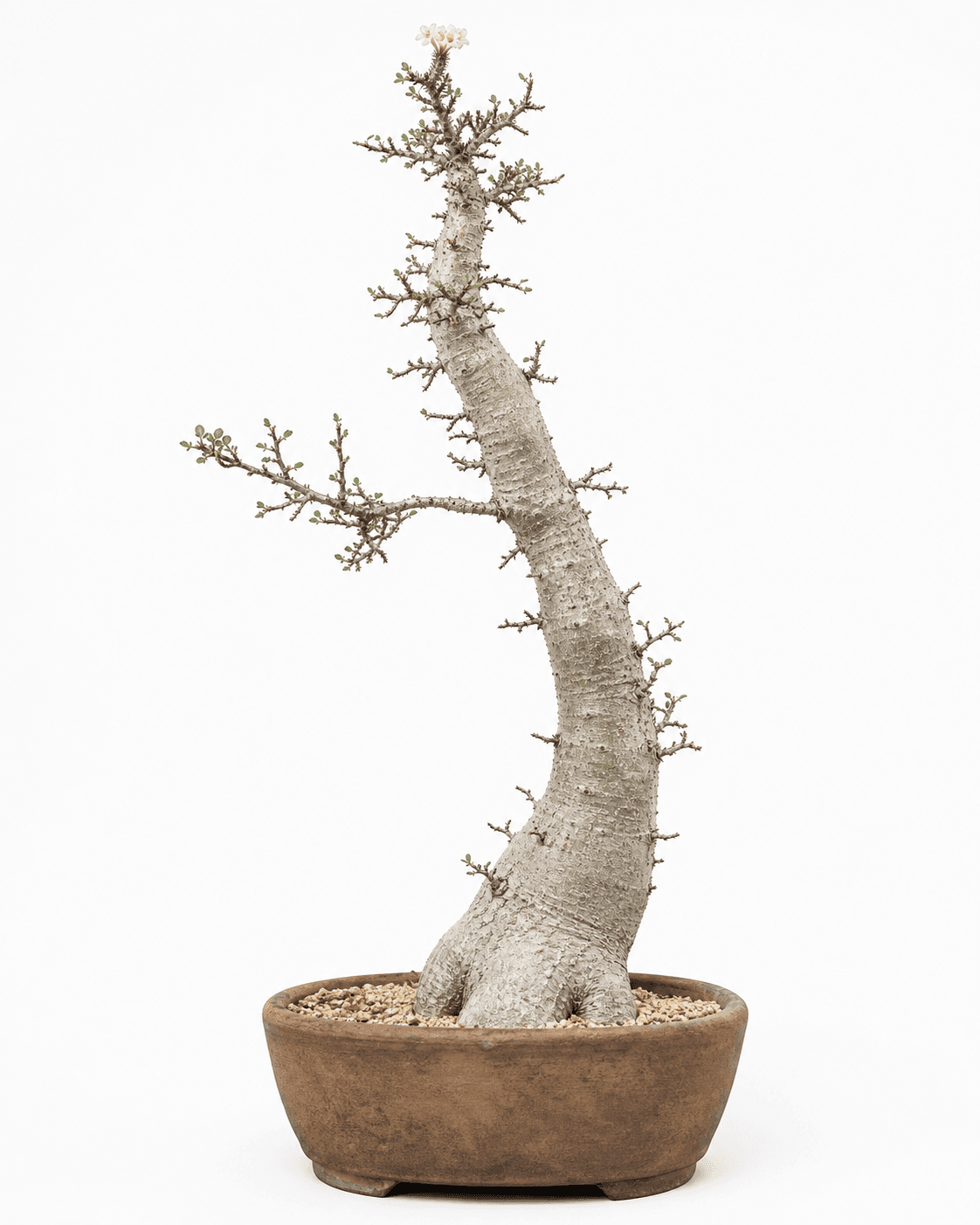
Boojum tree bonsai care starts with restraint. Fouquieria columnaris is a rare, slow, columnar desert succulent from Baja California and northwestern Sonora, usually grown as collector material rather than ordinary beginner bonsai.
Treat it as Broadleaf > Succulent material: very bright light, mineral drainage, water only when the plant is in active leaf and the soil has dried, and warm recovery after root work. The columnar trunk is the design value, so heavy pruning and branch-forcing usually reduce the quality of the tree.
The local Mirai corpus has no dedicated Boojum tree file. This profile transfers Mirai succulent-repotting, succulent-kusamono, propagation, watering, soil, wiring, fertilizer, and design method transparently, while public botanical and succulent sources ground the name, range, morphology, growth habit, and collector-source cautions.
Updated June 13, 2026. Written by EntGrove Editorial. Last verified June 13, 2026.
Care fingerprint
Read the species through its shared care pattern.
Err on mineral drainage, warm recovery, and conservative watering; many tolerate pruning but not cold wet roots. Use this as the starting point before local conditions and tree strength refine the calendar.
Note: Rare Baja California and Sonora columnar succulent with slow growth, thorny side shoots, and collector-source ethics. Treat as advanced bright-light, mineral-soil material, and verify cultivated provenance before buying old trunks.
Read the foliage first
Broadleaf stress usually shows in leaf color, leaf size, wilt, scorch, or delayed hardening before it becomes a branch problem.
Match work to dormancy
Deciduous, evergreen, tropical, succulent, and flowering broadleaf trees recover on different calendars.
Protect fine roots
Root work should preserve enough active fine roots for the tree to rehydrate quickly after the operation.
Care cadence
The calendar starts with the tree's seasonal state.
Placement
Timing: Give maximum bright light with heat and frost protection. Move indoor or greenhouse plants into outdoor sun gradually after nights are warm.
Watch for: Sudden sunburn on recently shaded tissue, cold windowsills, wind tipping a tall pot, and weak stretched shoots from insufficient light.
World of Succulents: Boojum treeBonsai Mirai LibraryWatering
Timing: Water during active leaf growth after the soil has dried. Reduce sharply when the plant is leafless, cool, newly repotted, or heat-resting.
Watch for: Softening trunk base, sour soil, black roots, panic watering after leaf drop, and long wet intervals in organic nursery media.
World of Succulents: Boojum treeBonsai Mirai LibraryFeeding
Timing: Feed lightly only when leaves are active and light is strong. A low-dose monthly rhythm during active growth is safer than pushing a rare slow plant.
Watch for: Fertilizing dry roots, feeding after root work before new growth, lush weak shoots in low light, and salt accumulation in small pots.
Bonsai Mirai LibraryWorld of Succulents: Boojum treePruning
Timing: Prune only in warm active growth, and keep cuts minimal. Remove dead or unusable twigging, shorten obvious design conflicts, and preserve the column.
Watch for: Large cuts on leafless plants, removing too much photosynthetic surface, expecting quick back budding, and cutting before a cool or dry rest.
Bonsai Mirai LibraryLLIFLE: Fouquieria columnarisRepotting
Timing: Repot in warm active growth when the plant can restart roots. Anchor the trunk firmly, reduce old soil gradually, and keep fresh root work dry enough to callus.
Watch for: Cold wet aftercare, hard chopsticking around succulent roots, unanchored tall trunks, and combining root reduction with structural pruning.
Bonsai Mirai LibraryWorld of Succulents: Boojum treeWiring
Timing: Use wire sparingly on young side shoots only when they are flexible and active. Most design work is orientation, selection, and negative space.
Watch for: Wire biting into swelling shoots, cracked brittle tissue, thorn punctures, and bends that turn a natural column into forced geometry.
Bonsai Mirai LibraryBonsai Mirai / AsymmetryPropagation
Timing: Seed is the cleanest route for ethical collector stock. Cuttings are specialist work and should be kept dry, warm, oxygen-rich, and clearly documented.
Watch for: Wild-collected plants without provenance, cold wet seedling media, uncallused cuttings, and buying dramatic old trunks with vague legal history.
World of Succulents: Boojum treeBonsai Mirai LibrarySeasonal rhythm
Timing: Read the leaves more than the month. Boojum can leaf after useful moisture, then rest when dry, cold, or excessively hot.
Watch for: Applying a generic daily bonsai watering habit, forcing work while leafless, and mistaking normal leaf drop for fertilizer deficiency.
LLIFLE: Fouquieria columnarisWorld of Succulents: Boojum treePests and disease
Timing: Inspect under greenhouse and indoor conditions. Root rot is the main horticultural failure; scale, mealybug, aphids, and mites are secondary checks.
Watch for: Sticky residue, clustered pests on fresh leaves, webbing in dry heat, trunk-base softness, and soil that remains wet after the plant has stopped growing.
Bonsai Mirai LibraryWorld of Succulents: Boojum treeSpecies guide
Apply the species profile before copying another tree's calendar.
At a glance
Boojum tree is rare columnar succulent material, not routine beginner stock.
Apply this page to Fouquieria columnaris. Kew and GBIF search workflows support the current botanical-name check, while succulent references preserve older labels such as Idria columnaris and Fouquieria gigantea. Kew POWO search: Fouquieria columnarisGBIF species search: Fouquieria columnarisLLIFLE: Fouquieria columnaris
In the EntGrove taxonomy, Boojum tree sits in Broadleaf > Succulent. That is a care behavior label: warm recovery, dry-back watering, stored moisture, low organic soil, and rot prevention matter more than ordinary broadleaf schedules. Bonsai Mirai LibraryWorld of Succulents: Boojum tree
The bonsai value is the column: a tapering, pale, vertical trunk with short thorny side shoots and sparse leaf episodes. Work with that architecture first, then make small branch decisions around it. LLIFLE: Fouquieria columnarisBonsai Mirai / Asymmetry
The page carries a source-depth caveat. The local Mirai corpus does not include dedicated Boojum material, so bonsai technique here is transferred from Mirai succulent method and checked against public Boojum morphology and culture sources. Bonsai Mirai LibraryWorld of Succulents: Boojum tree
Habitat
Baja desert ecology explains the narrow column and cautious watering.
Public botanical and succulent sources place Fouquieria columnaris in northwestern Mexico, especially the Baja California peninsula and a limited Sonora presence. That range points to intense light, long dry intervals, mineral soils, and unreliable rainfall. GBIF species search: Fouquieria columnarisLLIFLE: Fouquieria columnarisWorld of Succulents: Boojum tree
In habitat, the plant stores water in a tall trunk and carries small leaves on short lateral shoots when moisture is available. For care, that means the shallow pot must drain quickly, dry predictably, and stay warm enough for roots to recover after work. LLIFLE: Fouquieria columnarisBonsai Mirai Library
For design, the wild image is dry-country verticality. A convincing bonsai should make the trunk, lean, taper, pale bark, short side branches, and empty space read as one desert organism. Bonsai Mirai / AsymmetryLLIFLE: Fouquieria columnaris
Reading the tree
Read leaf status, trunk firmness, and soil drying before every decision.
A healthy Boojum has a firm base, active leaves or buds when conditions are favorable, a dry mineral soil cycle, and no dark soft tissue near the root crown. World of Succulents: Boojum treeBonsai Mirai Library
Development is mostly survival, trunk presentation, and root stability. Because growth is slow, each reduction should preserve recovery capacity and avoid spending years of stored momentum. LLIFLE: Fouquieria columnarisBonsai Mirai Library
Refinement is light. Select useful side shoots, preserve enough leaf-bearing tissue, clean dead or crowded twigs, and let the trunk remain the main event. Bonsai Mirai / AsymmetryLLIFLE: Fouquieria columnaris
Pruning
Prune only around active growth, and keep cuts small.
Use the leaf cycle as your first timing cue. A leafed, warm, bright plant can close small wounds and replace some photosynthetic area; a leafless, cool, or resting plant should be left alone. World of Succulents: Boojum treeBonsai Mirai Library
Remove dead shoots, crossing shoots, and design conflicts with clean tools. Avoid major trunk chops or large branch removals unless the plant is strong, the cut is truly necessary, and the aftercare is warm and dry. Bonsai Mirai LibraryLLIFLE: Fouquieria columnaris
Never chase fine twig density as the main goal. Boojum reads best when sparse lateral shoots reinforce the column rather than hiding it. Bonsai Mirai / AsymmetryLLIFLE: Fouquieria columnaris
Roots
Repot warm, anchor hard, and keep succulent roots oxygenated.
Mirai succulent method prioritizes warm recovery, oxygen-rich media, clean cuts, and gentle handling of fleshy roots. That is the safest transfer for Boojum because the public sources describe a water-storing desert tree. Bonsai Mirai LibraryLLIFLE: Fouquieria columnaris
Repot when the plant is waking into active growth, not because a calendar says two years have passed. Drainage failure, unstable planting, sour organic media, or a necessary design angle are better reasons. Bonsai Mirai LibraryWorld of Succulents: Boojum tree
After root work, water once to settle if needed, then let oxygen return before the next watering. Mirai succulent material includes a three to five week dry-aftercare window for some repotted succulents; adapt the exact interval to warmth, soil, and root loss. Bonsai Mirai Library
Soil and pot
Use mineral soil and a pot that stabilizes the vertical trunk.
A good development mix is mostly mineral aggregate: pumice, lava, akadama, decomposed granite, or coarse sand blended so water moves through quickly and fine roots still have contact. Keep organic content low. Bonsai Mirai LibraryWorld of Succulents: Boojum tree
For a newly acquired nursery plant, remove old organic soil in stages. A rare slow plant in compacted peat is a horticultural conversion before it is a styling project. Bonsai Mirai LibraryWorld of Succulents: Boojum tree
Pot choice should solve balance first. Tall narrow containers, unglazed desert-toned pots, slab-accented displays, or deeper training pots can work, but the trunk must be anchored so new roots are not torn by movement. Bonsai Mirai / AsymmetryBonsai Mirai Library
Climate
Warm arid regions get growth; cold or humid regions need protection.
In frost-free arid regions, Boojum can spend more of the year outside in bright light, with watering keyed to active leaves and actual soil drying. LLIFLE: Fouquieria columnarisWorld of Succulents: Boojum tree
In cold-winter regions, grow it like a protected collector succulent: bright indoor winter, greenhouse, conservatory, or strong grow light, with sparse water while cool and leafless. Bonsai Mirai LibraryWorld of Succulents: Boojum tree
In humid regions, drainage and airflow matter more than drought folklore. A desert plant in a shallow humid pot can rot while the top still looks dry, especially after repotting. Bonsai Mirai LibraryLLIFLE: Fouquieria columnaris
Pests
Root rot is the main risk; indoor pests follow weak culture.
The primary disease pattern is rot from cold, wet, low-oxygen media. If the trunk base softens or the soil smells sour, stop watering, warm the plant, improve airflow, and delay all styling. Bonsai Mirai LibraryWorld of Succulents: Boojum tree
Scale, mealybug, aphids, and spider mites are the pests to inspect for under greenhouse or indoor conditions. Look around fresh leaves, thorn bases, and sheltered twig junctions. Bonsai Mirai Library
Treat pests as a culture diagnostic too. Low light, stagnant air, excess nitrogen, and too much retained moisture often make pest problems more persistent. Bonsai Mirai LibraryWorld of Succulents: Boojum tree
Wiring
Wire side shoots sparingly and protect the trunk character.
The trunk should usually remain the trunk. Use wire only on flexible lateral shoots, and keep bends subtle enough that the plant still reads as Boojum rather than generic bonsai styling. Bonsai Mirai / AsymmetryLLIFLE: Fouquieria columnaris
Wire during active growth when tissue can respond, check often, and remove before swelling scars. Thorns and small leaves make wire checks easy to postpone, so schedule them. Bonsai Mirai Library
Large movement is better made by choosing the front, changing the planting angle, selecting leaders, or rotating the design over multiple repots. Forcing old brittle tissue is a poor trade on slow material. Bonsai Mirai / AsymmetryBonsai Mirai Library
Propagation
Seed is the ethical default; cuttings are slow specialist work.
For bonsai culture, seed-grown or nursery-propagated Boojum is the cleanest source. Seed preserves provenance clarity and avoids pressure on narrow wild populations. World of Succulents: Boojum treeGBIF species search: Fouquieria columnaris
Cuttings are sometimes discussed in succulent culture, but Boojum cuttings are a specialist route rather than a beginner path. If attempted, use warm conditions, callused cuts, and an oxygen-rich medium with restrained water. World of Succulents: Boojum treeBonsai Mirai Library
Air-layering and grafting are not practical default methods for most growers. The growth rate, trunk value, and source ethics favor starting with documented cultivated material and designing from what it already offers. Bonsai Mirai / AsymmetryWorld of Succulents: Boojum tree
Buying
Buy legal, cultivated plants with provenance and firm roots.
Ask for the botanical name and origin story. Good labels include Fouquieria columnaris, Boojum tree, or cirio. Older Idria columnaris language is a synonym signal, not a separate care page. Kew POWO search: Fouquieria columnarisLLIFLE: Fouquieria columnaris
Inspect for a firm trunk base, clean pale bark, active buds or leaf scars, no black soft tissue, free-draining soil, and a stable pot. A dramatic plant in wet old media needs horticultural recovery before styling. World of Succulents: Boojum treeBonsai Mirai Library
Avoid vague wild-origin claims. The species has a narrow natural range and slow growth, so cultivated seedlings or documented nursery plants are the responsible route for bonsai. GBIF species search: Fouquieria columnarisWorld of Succulents: Boojum tree
Choose trunk line over branch count. A subtle lean, good taper, healthy crown, and usable base are worth more than many twiggy side shoots. Bonsai Mirai / AsymmetryLLIFLE: Fouquieria columnaris
Troubleshooting
Diagnose Boojum problems from firmness, leaves, soil, and recent weather.
Leaves drop: check whether the plant is entering dry, cold, or heat rest. If the trunk is firm and the soil is dry, reduce watering and wait for better growth conditions. World of Succulents: Boojum treeLLIFLE: Fouquieria columnaris
Base softens: assume root or crown rot risk. Stop routine watering, move warmer and brighter, improve airflow, and inspect drainage before doing any more work. Bonsai Mirai LibraryWorld of Succulents: Boojum tree
Shoots stretch: increase light gradually and reduce nitrogen. Long weak side shoots are usually a light problem, not a pruning opportunity. World of Succulents: Boojum treeBonsai Mirai Library
Fresh repot stalls: keep the plant warm, bright, and stable. Do not repeatedly unpot it; movement breaks new roots before they can reestablish. Bonsai Mirai Library
Old trunk has scars or bends: decide whether they strengthen the dry-country image. Boojum character often comes from eccentric verticality, not from a polished branch map. Bonsai Mirai / AsymmetryLLIFLE: Fouquieria columnaris
Design
Design from the column, not from a conventional branch template.
Start with base, trunk line, defining side movement, and apex. Boojum gives you a vertical sculpture first and a branch system second. Bonsai Mirai / AsymmetryLLIFLE: Fouquieria columnaris
A strong design leaves enough empty space for the pale trunk to read. Keep only the side shoots that clarify scale, age, direction, or asymmetry. Bonsai Mirai / AsymmetryWorld of Succulents: Boojum tree
Useful formats include tall informal upright, leaning column, literati succulent, exposed-root desert subject, rock-side composition, and larger collector container. Dense conifer-pad styling is the wrong visual language. LLIFLE: Fouquieria columnarisBonsai Mirai / Asymmetry
Deadwood should be conservative. The species already has pale sculptural bark and thorns; excessive carving can make rare material look artificial and may increase rot risk. Bonsai Mirai / AsymmetryBonsai Mirai Library
Forms
Most bonsai decisions resolve to species identity, seedling origin, and trunk form.
Boojum is usually handled as Fouquieria columnaris rather than as named bonsai cultivars. Variation in trunk lean, taper, side-shoot density, and seedling vigor matters more than cultivar label. Kew POWO search: Fouquieria columnarisLLIFLE: Fouquieria columnaris
Keep it separate from ocotillo, Fouquieria splendens, and other Fouquieria species. They share family traits but differ in habit, branch architecture, and bonsai value. Kew POWO search: Fouquieria columnarisWorld of Succulents: Boojum tree
Also separate Boojum from Madagascar palm, Pachycormus, Operculicarya, and other caudiciforms. Similar collector aesthetics do not make the care identical. LLIFLE: Fouquieria columnarisKew POWO: Operculicarya decaryiKew POWO
History
Boojum belongs to desert-plant collecting before bonsai collecting.
The common name Boojum is tied to the plant uncanny form and its long-standing reputation among Baja desert botanists, travelers, and succulent collectors. Cirio, the Spanish name, points to the candle-like column. LLIFLE: Fouquieria columnarisWorld of Succulents: Boojum tree
In bonsai, Boojum is best treated as rare collector material with bonsai principles applied lightly. The tradition supplies design discipline; the species supplies the visual identity. Bonsai Mirai / AsymmetryBonsai Mirai Library
The most convincing container trees honor the slow growth: legal cultivated source, firm roots, clean mineral soil, strong light, a stable pot, and a restrained design that lets the column stay strange. World of Succulents: Boojum treeBonsai Mirai / Asymmetry
Species questions
Answer the beginner questions before styling.
Can Boojum tree be grown as bonsai?
Yes, but it is advanced collector material. Grow it as a columnar succulent bonsai or bonsai-adjacent container tree, with the trunk as the main design feature.
Is Boojum tree a cactus?
No. Fouquieria columnaris belongs to Fouquieriaceae, the ocotillo family. It behaves like a succulent in culture because it stores water and needs strong light and sharp drainage.
How much sun does Boojum tree need?
Use full sun or very bright light after acclimation. Move indoor, shaded, imported, or recently repotted plants into stronger sun gradually.
How often should I water a Boojum bonsai?
Water during active leaf growth after the mineral mix dries. Water very sparingly when the plant is leafless, cool, newly repotted, or resting in extreme heat.
What soil should I use for Boojum tree bonsai?
Use a fast mineral succulent bonsai mix such as pumice, lava, akadama, decomposed granite, or similar aggregate. Avoid peat-heavy media in shallow pots.
When should Boojum tree be repotted?
Repot only when needed, and do it in warm active-growth conditions. Anchor the trunk firmly, handle roots gently, and avoid cold wet aftercare.
Can Boojum tree be pruned hard?
Hard pruning is risky because growth is slow and recovery is limited. Keep cuts small, work only on active healthy plants, and preserve enough leaf-bearing side shoots.
Can Boojum tree live indoors?
It can overwinter indoors if the site is very bright, warm, dry, and frost-free. A dim room is poor culture; a greenhouse, conservatory, or strong grow light is better.
How do I propagate Boojum tree?
Seed-grown cultivated plants are the best ethical route. Cuttings are specialist work and need warm, dry, oxygen-rich aftercare with clear provenance.
Why is my Boojum tree dropping leaves?
Leaf drop can be normal during dry, cold, or heat rest. Check trunk firmness and soil moisture first; a firm dry plant can wait, while a soft base and wet soil suggest rot risk.
Sources
Species advice needs source discipline.
Next decisions
Plan the operation before copying the calendar.
A good care note for Boojum tree records the tree's stage, the work done, and the aftercare used. That record matters more than a month-name rule.
Related species
Compare nearby trees before transferring advice.
Dwarf jade / elephant bush
Portulacaria afra
Jade plant
Crassula ovata
Madagascar palm
Pachypodium lamerei
Desert rose
Adenium obesum
Operculicarya
Operculicarya decaryi, Operculicarya pachypus