
Species guide
Madagascar Palm Bonsai Care
Pachypodium lamerei
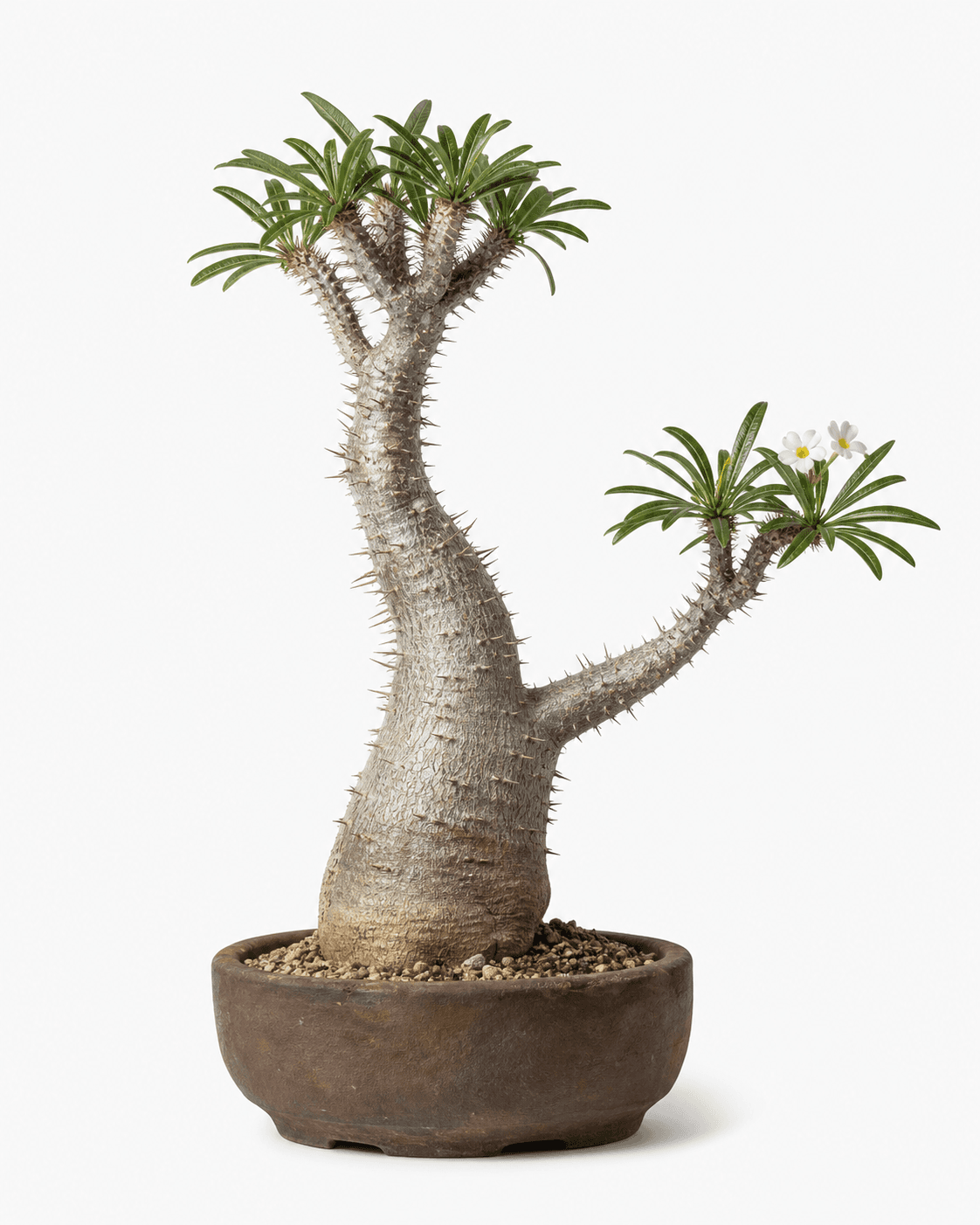
Madagascar palm bonsai care starts with identity: this page covers Pachypodium lamerei, a spiny semisucculent shrub or small tree from southern Madagascar. The palm name is trade language; botanically it belongs in Apocynaceae and behaves like a warm, dry-season succulent.
Grow it as Broadleaf > Succulent material with very bright light, a fast-draining mineral soil column, moderate water only during warm active growth, and a dry winter rhythm. The thick trunk stores water, so cold wet roots are a larger risk than short dry intervals.
The local Mirai corpus has no dedicated Pachypodium lamerei file. This profile transfers Mirai succulent-repotting, succulent-kusamono, propagation, watering, soil, wiring, fertilizer, and design method transparently, while Kew and RHS ground the accepted name, range, morphology, hardiness, culture, and propagation facts.
Updated June 13, 2026. Written by EntGrove Editorial. Last verified June 13, 2026.
Care fingerprint
Read the species through its shared care pattern.
Err on mineral drainage, warm recovery, and conservative watering; many tolerate pruning but not cold wet roots. Use this as the starting point before local conditions and tree strength refine the calendar.
Note: Spiny semisucculent shrub or small tree from seasonally dry southern Madagascar. Grow as a bright, warm, dry-rest succulent bonsai candidate, and verify Pachypodium lamerei before transferring advice to other Pachypodium species.
Read the foliage first
Broadleaf stress usually shows in leaf color, leaf size, wilt, scorch, or delayed hardening before it becomes a branch problem.
Match work to dormancy
Deciduous, evergreen, tropical, succulent, and flowering broadleaf trees recover on different calendars.
Protect fine roots
Root work should preserve enough active fine roots for the tree to rehydrate quickly after the operation.
Care cadence
The calendar starts with the tree's seasonal state.
Placement
Timing: Use the brightest protected site available: full-light greenhouse, conservatory, south or west window, strong grow light, or warm summer bench after cold nights pass.
Watch for: Leaning toward light, long weak leaves, sunburn after a sudden move from indoors, cold glass in winter, and top-heavy pots tipping in wind.
RHS Plant FinderBonsai Mirai LibraryWatering
Timing: From late spring through early autumn, water moderately when the soil has dried. During cool rest, keep the plant dry enough that the trunk stores carry it through low demand.
Watch for: Soft trunk tissue, blackening at the base, yellow leaves with wet soil, leaf drop after cold exposure, and soil that stays damp for many days.
RHS Plant FinderBonsai Mirai LibraryFeeding
Timing: RHS recommends low-nitrogen liquid fertilizer every 4-5 weeks from late spring to early autumn. After root work, wait for clear active growth before feeding.
Watch for: Pushing lush weak leaves in dim light, fertilizing a dry or newly repotted root system, and salt buildup in a shallow pot.
RHS Plant FinderBonsai Mirai LibraryPruning
Timing: Prune only during warm active growth and only when the plant has enough foliage to recover. Most shaping is top selection, leaf exposure, and removing weak or unsafe growth.
Watch for: Large cuts on cold plants, branchless trunks with no backup growth, pruning before a dry winter rest, and cuts that stay damp.
RHS Plant FinderBonsai Mirai LibraryRepotting
Timing: Repot in late spring or early summer warmth when new growth can follow. Anchor the trunk firmly, handle fleshy roots gently, and avoid keeping fresh cuts wet.
Watch for: Cold benches, wet cactus mix after root damage, crushed anchor roots, unstable tall trunks, and aggressive styling in the same recovery window.
RHS Plant FinderBonsai Mirai LibraryWiring
Timing: Use wiring sparingly on young flexible shoots. Structural direction is usually better created by selecting leaders and branches than by forcing old spiny stems.
Watch for: Spine punctures, wire hidden behind spines, cracked succulent tissue, and wire left through a warm swelling period.
Bonsai Mirai LibraryRHS Plant FinderPropagation
Timing: RHS lists seed at 19-24 C and stem-tip cuttings in late spring. For bonsai stock, seed gives the cleanest trunk base; cuttings need warm dry callus and oxygen-rich rooting media.
Watch for: Cold rooting media, wet uncallused cuts, tip cuttings taken from weak plants, and expecting fast trunk character from small seedlings.
RHS Plant FinderBonsai Mirai LibraryWinter rest
Timing: Keep above 15 C where possible, bright, sheltered, and dry. A plant with few leaves in winter should demand less water, not more.
Watch for: Cold windowsills, wet soil, panic watering after leaf drop, drafts, and moving straight from indoor shade to outdoor sun in spring.
RHS Plant FinderBonsai Mirai LibraryPests and disease
Timing: Inspect through indoor winter and during flowering. RHS lists aphids while flowering and says the plant is relatively disease resistant when culture is right.
Watch for: Aphids on flowers, mites or scale hiding around spines, soft basal tissue, sour soil smell, and rot from wet cool media.
RHS Plant FinderBonsai Mirai LibrarySpecies guide
Apply the species profile before copying another tree's calendar.
At a glance
Madagascar palm is spiny succulent material for bright, warm culture.
Apply this page to Pachypodium lamerei. Kew accepts that name and gives south-central and southern Madagascar as the native range. RHS uses Madagascar palm as the common name and describes a succulent shrub or small tree with thick thorny stems. Kew POWORHS Plant Finder
In the EntGrove taxonomy it belongs to Broadleaf > Succulent. That placement matters because the calendar turns on warm recovery, dry rest, stored water, and soil oxygen rather than temperate dormancy or daily broadleaf watering. Bonsai Mirai LibraryKew POWO
The bonsai promise is architectural: a swollen silver trunk, fierce spines, a crown of narrow leaves, and a dry-forest silhouette. The limitation is refinement. Branching can be sparse, leaves are large, and the trunk can look like a houseplant if the pot and crown are not disciplined. RHS Plant FinderBonsai Mirai / Asymmetry
Keep it separate from palms, cycads, desert rose, boojum tree, Pachira money tree, and dwarf jade. Some cultural principles overlap with other succulents, but the spines, height, and Pachypodium growth pattern need separate decisions. RHS Plant FinderKew POWO
Habitat
Seasonally dry Madagascar habitat explains the trunk and winter rest.
Kew places Pachypodium lamerei in a seasonally dry tropical biome in southern Madagascar. The plant stores water in a thick semisucculent trunk and carries leaves near the growing apex, which is a useful clue for bonsai culture. Kew POWORHS Plant Finder
For care, translate that habitat into a pot that drains fast, returns air to the roots after watering, and stays warm during recovery. A drought-adapted trunk can still rot when a shallow container holds cool stagnant water. Bonsai Mirai LibraryRHS Plant Finder
For design, read the tree as an exposed dry-country succulent rather than a leafy tropical canopy. Vertical trunk, sparse branch structure, visible spines, and negative space are strengths when they are presented deliberately. Bonsai Mirai / AsymmetryRHS Plant Finder
Reading the tree
Read trunk firmness, leaf production, and warmth before every intervention.
A strong Madagascar palm has a firm trunk, active leaves at the apex or branch tips, a soil column that dries in a reasonable interval, and no dark soft tissue around the base. RHS Plant FinderBonsai Mirai Library
Development is mostly trunk and line. Give the plant enough root room, light, and warm-season feeding to build mass before asking it to live in a very shallow pot. RHS Plant FinderBonsai Mirai Library
Refinement is conservative. Once the silhouette is set, reduce water in cool seasons, feed lightly only in active growth, keep foliage exposed to light, and avoid stacking pruning, repotting, and wiring into the same window. Bonsai Mirai Library
Pruning
Prune for safety and proportion, then let warm growth rebuild strength.
RHS lists no pruning as required for ordinary culture. Bonsai training can still use selective pruning, but the goal is proportion, leader choice, and reducing unsafe or weak growth rather than constant hedge-style clipping. RHS Plant FinderBonsai Mirai Library
Make cuts only when the plant is warm, bright, and actively growing. Large cuts on a cold resting plant have less recovery momentum and more rot risk. Bonsai Mirai LibraryRHS Plant Finder
Do not remove the entire active crown unless you have a strong backup bud or branch plan. The leaf crown is the engine that rebuilds roots and seals wounds after work. Bonsai Mirai LibraryRHS Plant Finder
Roots
Repot only when warmth can restart fleshy succulent roots.
RHS grows the species under glass in standard cactus compost and keeps it dry outside the active late-spring to early-autumn window. For bonsai, that points to late spring or early summer root work, not cool-season repotting. RHS Plant FinderBonsai Mirai Library
Mirai succulent repotting guidance emphasizes granular media, clean cuts, gentle handling of fleshy roots, firm tie-downs, and light chopstick work. Pachypodium adds leverage: a tall spiny trunk must be immobilized without crushing the root base. Bonsai Mirai Library
After root work, water in deliberately, then allow a meaningful dry interval before returning to regular growth-season watering. Fresh succulent root cuts need oxygen and warmth more than constant moisture. Bonsai Mirai LibraryRHS Plant Finder
Soil and pot
Use a heavy, stable pot and a soil column that dries cleanly.
RHS recommends standard cactus compost, full light, and well-drained conditions. In a bonsai container, start with a gritty succulent mix or a mineral blend that preserves oxygen while holding enough moisture for fine roots. RHS Plant FinderBonsai Mirai Library
A 1:1:1 akadama:pumice:lava development mix is a conservative bonsai baseline when watering is attentive. In cool indoor sites, increase pumice or similar durable aggregate and reduce organic content so winter water cannot linger. Bonsai Mirai Library
Pot mass matters. RHS lists an ultimate height of 2.5-4 m, and even small container plants can become top-heavy. Choose a pot with enough visual and physical weight, strong drainage, and tie-down points that avoid spine contact during handling. RHS Plant FinderBonsai Mirai / Asymmetry
Climate
Treat cold as the hard limit and water as the seasonal dial.
RHS hardiness H1A means under-glass culture all year in UK terms, with minimum temperatures above 15 C. In cold-winter regions, grow it as a protected succulent, not as an outdoor temperate bonsai. RHS Plant Finder
In warm frost-free climates, outdoor summer or year-round culture can work if the plant has full sun, wind protection, and a soil mix that sheds winter rain quickly. In humid climates, the same plant may need more mineral soil and more shelter from prolonged wet weather. RHS Plant FinderBonsai Mirai Library
Winter leaf drop can be normal for a deciduous succulent under lower light or cooler conditions. Read the trunk and soil before reacting: a firm trunk and dry root zone call for patience, while a soft base calls for rot triage. RHS Plant FinderBonsai Mirai Library
Pests
Most failures begin as watering, cold, or handling problems.
RHS lists aphids as a pest while flowering and describes the species as relatively disease resistant. In bonsai culture, scale and mites are still worth checking because spines and crown leaves create hiding places. RHS Plant Finder
The serious disease pattern is rot from cool wet roots or damaged succulent tissue. Mirai watering method frames this as a water and oxygen imbalance, especially after repotting or when soil particles collapse. Bonsai Mirai LibraryRHS Plant Finder
Use gloves, eye protection, and deliberate tool paths. Verified sources here strongly ground the spines and Apocynaceae identity; common sap-toxicity claims are not strong enough to make a precise medical claim, so the practical advice is conservative handling and no pet or child access to clippings. RHS Plant FinderKew POWO
Wiring
Wire lightly, and let leader selection do most structural work.
Old Pachypodium stems are spiny, stiff, and succulent enough to crack under forced bends. Wire young shoots only when they are flexible, growing, and easy to inspect. RHS Plant FinderBonsai Mirai Library
Use aluminum, low pressure, padding where needed, and short setting periods. Spines can hide wire bite and make normal branch handling more dangerous than on smooth-barked succulents. Bonsai Mirai LibraryRHS Plant Finder
For major line changes, grow a new leader or branch rather than bending old trunk sections. The best designs usually make the spiny trunk an asset instead of fighting it. Bonsai Mirai / AsymmetryRHS Plant Finder
Propagation
Seed is the cleanest bonsai route; cuttings are possible but limited.
RHS lists seed propagation at 19-24 C and stem-tip cuttings in late spring. Seed-grown plants usually make better bonsai trunks because the base develops naturally from the start. RHS Plant Finder
Mirai succulent propagation method adds the aftercare: let fresh succulent cuts skin over, then root in a medium that favors oxygen and low excess water. Warmth matters more than constant moisture. Bonsai Mirai Library
Stem-tip cuttings can preserve a branch or cultivar form. They rarely create the swollen trunk base most growers want, so use them for backups, experiments, or multi-trunk material. RHS Plant FinderBonsai Mirai / Asymmetry
Air-layering and grafting are specialist choices for this page. For most growers, seed, careful pot culture, and selective leader changes are more reliable than advanced propagation. RHS Plant FinderBonsai Mirai Library
Buying
Buy nursery-grown plants with firm trunks and honest root conditions.
The best starting material is nursery-grown, seed-grown or well-rooted, with a firm base, clean apex, no soft black areas, and a trunk line that already reads as intentional. RHS Plant FinderKew POWO
Inspect drainage, soil smell, crown vigor, spine damage, aphids, scale, mites, and whether the plant rocks in the pot. A tall trunk in peat-heavy wet media is a root-risk project before it is a styling project. RHS Plant FinderBonsai Mirai Library
Choose small to medium plants with taper and future pot stability. A very tall straight retail specimen can become an awkward houseplant column in a bonsai pot unless the design embraces height and negative space. RHS Plant FinderBonsai Mirai / Asymmetry
Because Kew places the species in southern Madagascar and the genus is collector-valued, favor cultivated nursery stock and documented propagation. Avoid wild-origin claims unless paperwork and ethics are clear. Kew POWO
Troubleshooting
Start diagnosis with root temperature, water, and trunk texture.
Leaves yellow or drop while soil is wet: reduce water, move warmer and brighter, and inspect for cold wet root stress. During cool rest, leaf loss can be seasonal; wet soil makes it dangerous. RHS Plant FinderBonsai Mirai Library
Trunk base softens or darkens: treat it as urgent rot risk. Stop watering, improve warmth and airflow, check drainage, and delay styling until the plant is stable. Bonsai Mirai LibraryRHS Plant Finder
New leaves are long, weak, or pale: increase light gradually, avoid heavy nitrogen, and wait for compact warm-season growth before pruning again. RHS Plant FinderBonsai Mirai Library
Aphids appear around flowers or tender growth: isolate the plant, wash or treat carefully around spines, and correct the indoor stress that made the crown vulnerable. RHS Plant Finder
Tree rocks after repotting: re-anchor immediately. Tall succulent trunks tear new roots when they move, and spines make later adjustments harder. Bonsai Mirai LibraryRHS Plant Finder
Design
Design around a spiny vertical trunk, sparse foliage, and dry-country character.
Start with base, trunk line, defining branch, and apex. Madagascar palm often has one dominant column, so the first design decision is whether that column creates age, tension, or only height. Bonsai Mirai / AsymmetryRHS Plant Finder
Use empty space deliberately. A sparse spiny trunk with a crown of leaves can feel older and more natural when the pot, angle, and apex support the vertical movement. Bonsai Mirai / Asymmetry
Avoid making the plant imitate juniper pads or maple ramification. The species offers trunk mass, spines, apical foliage, summer flowers on mature plants, and a strong desert-tree silhouette. RHS Plant FinderBonsai Mirai / Asymmetry
Pot choice should hold both weight and mood: deeper unglazed, warm-toned, or rugged containers usually support the dry-season image better than tiny shallow trays. Bonsai Mirai / AsymmetryRHS Plant Finder
Forms
Most labels resolve to species-level care, with ramosum needing verification.
Kew lists Pachypodium lamerei var. ramosum and Pachypodium ramosum among synonyms, so ramosum tags should be treated carefully before assigning separate care. Kew POWO
RHS gives the name status as correct for Pachypodium lamerei. For ordinary retail Madagascar palm material, species-level care is the practical baseline. RHS Plant Finder
Collector Pachypodium species can differ in habit, height, cold tolerance, and branching. Confirm lamerei before transferring this page to geayi, saundersii, namaquanum, brevicaule, or other Pachypodium labels. Kew POWO
History
Madagascar palm is a horticultural succulent first, then a niche bonsai subject.
RHS gives Pachypodium lamerei the Award of Garden Merit and frames it as a cactus or succulent conservatory plant. That horticultural status explains why many bonsai candidates begin as houseplants or greenhouse specimens. RHS Plant Finder
In bonsai terms, it is better understood as a specialist succulent study than a default beginner tree. It can teach dry-back watering, trunk-based design, top-heavy pot stability, and warm recovery, while offering less fine branching than classical woody bonsai. Bonsai Mirai LibraryBonsai Mirai / Asymmetry
The strongest specimens look deliberate before they look miniature: firm base, clean vertical movement, stable pot, compact crown, visible negative space, and healthy seasonal leaf rhythm. RHS Plant FinderBonsai Mirai / Asymmetry
Species questions
Answer the beginner questions before styling.
Can Madagascar palm be grown as bonsai?
Yes, but it is a niche succulent bonsai subject. Pachypodium lamerei needs very bright light, warm active growth, fast drainage, dry winter rest, and styling that accepts a spiny vertical trunk with limited fine branching.
Is Madagascar palm a real palm?
The palm name is a trade name. Pachypodium lamerei is a semisucculent shrub or small tree in Apocynaceae, with a thick thorny stem and leaves clustered near the apex.
Can Madagascar palm bonsai live indoors?
Yes, if indoors means a very bright, warm, frost-free site. A sunny south or west window, strong grow light, conservatory, or greenhouse is more realistic than a dim shelf.
How often should I water Madagascar palm bonsai?
Water by season and soil condition. During warm active growth, water moderately after the mix dries. During cool winter rest, keep it much drier and avoid wet soil around a leafless or low-demand plant.
What soil should I use for Madagascar palm bonsai?
Use a sharply draining cactus or succulent bonsai mix. A mineral blend such as akadama, pumice, and lava can work when watering is attentive, while cool indoor sites usually need extra drainage and less organic material.
When should Madagascar palm be repotted?
Repot in late spring or early summer warmth when new growth can restart roots. Avoid cold-season root work, secure the trunk firmly, and give the plant a dry recovery rhythm after the first watering.
Can I prune a Madagascar palm bonsai?
Prune sparingly during warm active growth. Use pruning for leader choice, safety, and proportion rather than constant clipping, and never remove the whole active crown from a weak plant.
Can Madagascar palm be wired?
Wire only young flexible shoots and check often. Old spiny stems crack, puncture hands, and hide wire bite. Most structural work comes from growing or selecting a new leader or branch.
Why did my Madagascar palm drop its leaves?
Leaf drop can follow cool temperatures, dry winter rest, low light, or stress. If the trunk is firm and the soil is dry, wait for warmer brighter growth. If the base is soft or the soil is wet, suspect rot risk.
How do I propagate Madagascar palm for bonsai?
RHS lists seed at 19-24 C and stem-tip cuttings in late spring. Seed is usually better for a natural trunk base, while cuttings need warm callus time and an oxygen-rich rooting medium.
Sources
Species advice needs source discipline.
Next decisions
Plan the operation before copying the calendar.
A good care note for Madagascar palm records the tree's stage, the work done, and the aftercare used. That record matters more than a month-name rule.
Related species
Compare nearby trees before transferring advice.
Dwarf jade / elephant bush
Portulacaria afra
Jade plant
Crassula ovata
Desert rose
Adenium obesum
Operculicarya
Operculicarya decaryi, Operculicarya pachypus
Boojum tree
Fouquieria columnaris