
Species guide
Common Juniper Bonsai Care
Juniperus communis
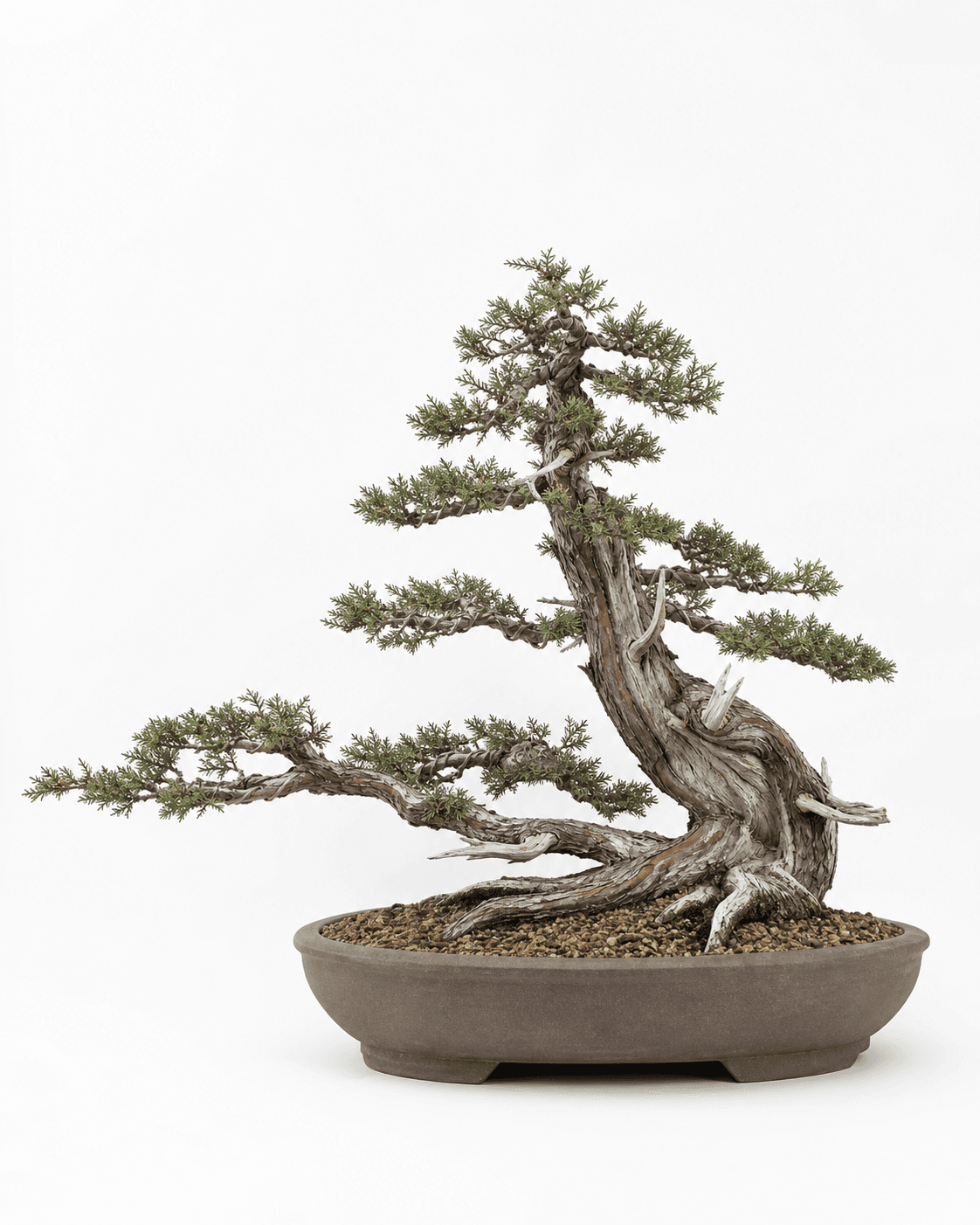
Common juniper is a true needle-foliage juniper with a circumboreal range, cold tolerance, and a bonsai routine that differs sharply from most landscape junipers. Grow confirmed Juniperus communis outdoors, build foliage strength first, use a pumice-only mineral substrate, repot very late after shoot elongation, and give afternoon shade during peak summer heat.
This guide is grounded in Mirai needle-juniper and soil files that name Juniperus communis directly, then checked against Kew, Flora of North America, Oregon State, USDA FEIS, NC State, American Conifer Society, and UC IPM for accepted taxonomy, range, morphology, hardiness, cultivar labels, ecology, and pest context.
Updated June 9, 2026. Written by EntGrove Editorial. Last verified June 9, 2026.
Care fingerprint
Read the species through its shared care pattern.
Avoid scale-juniper pinching assumptions; cut back to viable growth and protect dense, sharp foliage from interior dieback. Use this as the starting point before local conditions and tree strength refine the calendar.
Note: True needle juniper with direct Mirai communis coverage in needle-juniper and soil files; verify against Juniperus rigida, J. squamata, procumbens, eastern red cedar, and upright common-juniper cultivars before applying care.
Keep foliage strong
Junipers recover through active foliage, so styling choices should leave enough healthy tips to power the tree.
Protect live veins
Old junipers often depend on narrow live veins between roots and foliage; root work and carving should respect that path.
Do not stack major work
Heavy bending, major foliage reduction, carving, and repotting belong in a staged plan rather than the same weekend.
Care cadence
The calendar starts with the tree's seasonal state.
Placement
Timing: Grow outdoors with full morning sun, airflow, and afternoon shade during severe summer heat. Strong trees in cool climates can take more direct sun.
Watch for: Hot benches, small dark pots, weak collected roots, indoor display, and using the full-hot-sun rigida rule on common juniper.
Bonsai Mirai LibraryOregon State Landscape PlantsNC State ExtensionWatering
Timing: Water when the upper quarter to half inch dries. Soak the whole rootball, then let pumice restore oxygen quickly.
Watch for: A dry interior core, water running down pot walls, weak trees kept constantly wet, and drought-tolerance assumptions applied to shallow containers.
Bonsai Mirai LibraryFeeding
Timing: Feed healthy, non-repotted trees moderately during active growth. Hold fertilizer 4 to 6 weeks after repotting, then restart lightly when new growth confirms root recovery.
Watch for: Force-feeding weak or newly collected trees, heavy fertilizer on clogged roots, and coarse response after major pruning.
Bonsai Mirai LibraryRepotting
Timing: Repot late, after new shoots physically elongate with visible internodes and multiple active shoots. Bud swell is too early for true needle junipers.
Watch for: Repotting on weak foliage, bare-rooting collected material, rootball movement, and akadama added out of habit.
Bonsai Mirai LibraryPruning
Timing: Avoid heavy pruning until the first flush hardens and warm weather arrives. Preserve foliage until the tree is clearly energy-positive.
Watch for: Spring pinching, pruning soft growth, cutting to bare stems, and removing the interior buds that will become future pads.
Bonsai Mirai LibraryPre-styling cultivation
Timing: Wait for rambunctious elongation and increasing foliar density before first structural work. Recently collected trees may need several seasons before styling.
Watch for: Sparse alpine foliage, dry sandpapery needles, no extension, and eagerness to wire before root recovery is visible.
Bonsai Mirai LibraryWiring
Timing: Wire only hydrated, vigorous trees after growth has hardened. Use enough wire to set branches once and check often because brittle needle-juniper tissue dislikes repeated bending.
Watch for: Tip wiring, flipped foliage, weak live veins, crushed needles under wire, and work during cold or drought stress.
Bonsai Mirai LibraryPests and disease
Timing: Inspect collected and newly repotted material often through the first warm wet period. Keep pads open and foliage dry overnight when possible.
Watch for: Phomopsis tip blight on newly collected trees, cypress scale, spider mites, twig dieback, and wet dense pads.
Bonsai Mirai LibraryUC IPM JuniperUC IPM Juniper Twig BlightsPropagation
Timing: Use seed for genetic material and semi-ripe or hardened cuttings when the tree is growing strongly. Expect slow development.
Watch for: Dioecious plants without compatible pollen, cuttings with excess foliage, and cultivar labels that hide weak root systems.
Flora of North AmericaNC State ExtensionOregon State Landscape PlantsWinter protection
Timing: Keep dormant outdoors and cold, but protect bonsai roots around 25 F with ground placement, grouping, mulch, or a cold frame.
Watch for: Warm indoor overwintering, freeze-dry wind, small pots, wet rootballs before hard freezes, and recently repotted trees.
Oregon State Landscape PlantsBonsai Mirai LibrarySpecies guide
Apply the species profile before copying another tree's calendar.
At a glance
Common juniper is cold hardy, widely distributed, and unusually soil-specific in bonsai.
Kew accepts Juniperus communis L. as a Cupressaceae species, and Flora of North America records Linnaeus as the authority with 1753 publication in Species Plantarum. Common juniper is the name used by FNA, Oregon State, USDA FEIS, and NC State. Kew POWOFlora of North AmericaOregon State Landscape PlantsUSDA Forest Service FEIS
The species carries permanent needle foliage. Mirai groups Juniperus communis with Juniperus rigida and Juniperus oxycedrus as true needle junipers, which means late repotting, post-harden pruning, and foliage-first recovery govern the work. Bonsai Mirai Library
The practical care fingerprint is narrower than the range suggests: 100 percent pumice, complete watering with fast oxygen return, afternoon heat protection, and a long pre-styling period until elongation and density prove strength. Bonsai Mirai LibraryOregon State Landscape Plants
Habitat
Read the tree from circumboreal cold, poor soils, exposed edges, and low alpine forms.
Oregon State calls Juniperus communis the only circumpolar conifer of the Northern Hemisphere. USDA FEIS describes it across North America, Europe, northern Asia, and Japan, with North American occurrence from Alaska and Greenland south into New England, the Carolinas, and western mountain states. Oregon State Landscape PlantsUSDA Forest Service FEIS
FNA describes shrubs or small trees, usually multistemmed, decumbent, or rarely upright, with depressed crowns, fibrous bark, spreading or ascending branches, and two-year bluish black seed cones. Flora of North America
USDA FEIS places common juniper across spruce-fir, lodgepole pine, pinyon-juniper, sagebrush, mountain meadow, grassland, alpine, and forest-edge systems. That breadth explains why labels such as ground juniper, mountain common juniper, and prostrate juniper appear in North American use. USDA Forest Service FEIS
For care, the wild signal is cool exposure and lean oxygenated root zones rather than starvation. In a bonsai pot, the same tree needs full hydration, oxygen, and heat management because shallow roots heat and dry faster than ground roots. Bonsai Mirai LibraryOregon State Landscape Plants
For design, the wild signal is horizontal pressure: low mats, short upright columns, wind-shaped shrub masses, sparse alpine edges, fibrous bark, and small blue-black cones that make the tree feel old without needing dramatic carved deadwood. USDA Forest Service FEISBonsai Mirai / Asymmetry
Reading the tree
Judge readiness from elongation, needle turgidity, density behind tips, and root permeability.
Mirai frames junipers as foliage-powered trees. Roots function as vascular and uptake tissue, while the foliage creates the carbohydrates that rebuild roots, thicken live veins, and support wound response. Bonsai Mirai Library
Common juniper should be styled only after a long cultivation window. The useful signal is rambunctious elongation paired with increasing foliar density, not merely green color. Bonsai Mirai Library
Touch matters. Hydrated juniper foliage feels turgid and slick; dry, sandpapery texture often precedes visible color change. Move a stressed tree back one exposure level before the foliage turns bronze or gray. Bonsai Mirai Library
Root readiness is read through water behavior. A pumice rootball should accept water evenly. If water runs around the root mass or the center stays dry, culture must be corrected before styling. Bonsai Mirai Library
Needle work
Let the first flush harden before pruning, then preserve the interior growth you will need later.
Mirai names needle-foliage junipers such as Juniperus communis as trees that should not be heavily pruned until after the first flush hardens and warmer weather arrives. Their lower photosynthetic surface area demands a clearly energy-positive state before reduction. Bonsai Mirai Library
Avoid spring pinching. Pinching soft elongating needle-juniper shoots removes the same growth that is powering the fine root system and historically causes delayed branch loss. Bonsai Mirai Library
Prune with narrow scissors to living side growth after hardening. Do not cut into bare stems expecting reliable back-budding. Interior density must be cultivated before exterior foliage shades it out. Bonsai Mirai Library
Clean old interior needles enough for light, airflow, and wiring access, but keep useful interior buds and branchlets. On common juniper, sparse alpine habit makes overcleaning especially expensive. Bonsai Mirai Library
A strong refined tree can receive small follow-up pruning after a summer response hardens. Weak, collected, newly repotted, or heat-stressed trees should grow without aesthetic reduction. Bonsai Mirai Library
Roots
Repot very late, preserve foliage, and use timing to protect the fine needle-juniper root system.
True needle junipers are among the last conifers repotted. Mirai ties the timing to low needle surface area, lower photosynthetic efficiency, and weaker transpirational pull compared with scale junipers. Bonsai Mirai Library
Wait for new growth to elongate physically, with visible internodes and multiple active shoots. At that point water movement and carbohydrate production are already underway, giving the tree resources to compartmentalize wounds and form new roots. Bonsai Mirai Library
Work in stages on collected or old nursery material. Preserve the central root mass, correct the periphery, secure the tree tightly, and keep enough foliage to power recovery. Bonsai Mirai Library
After repotting, place the tree in morning sun with afternoon shade, shelter it from wind, and mist foliage lightly once or twice daily for 7 to 10 days. Severe root loss may need 80 to 90 percent relative humidity with airflow until new roots form. Bonsai Mirai Library
Hold fertilizer for 4 to 6 weeks after root work. Fine new roots are easily damaged by ionic load while the water and oxygen balance is being rebuilt. Bonsai Mirai Library
Soil and pot
Use pumice as the species-specific rule, then choose a pot that buffers heat.
Mirai gives Juniperus communis a rare soil exception: 100 percent pumice, screened to about 1/16 to 1/4 in. The same source warns that long-term akadama contact has proved unreliable for otherwise healthy common junipers. Bonsai Mirai Library
The pumice rule should be applied with particle discipline. Too much dust holds water and removes oxygen, while oversized particles dry weak fine roots before they can colonize the container. Bonsai Mirai Library
Container choice matters because common juniper is more heat sensitive than hot-sun rigida. A slightly deeper or less heat-absorbing pot can help stabilize roots during summer, especially while the tree is recovering. Bonsai Mirai Library
Pot pairing should follow the tree form. Low mats and ground-juniper forms suit quiet ovals, slabs, or low rectangles. Upright Compressa or Sentinel-style material can use narrow vertical tension, but the pot must still protect roots. Oregon State Landscape PlantsBonsai Mirai / Asymmetry
Climate
Cold tolerance is real, while container heat and afternoon sun are the main summer limits.
Oregon State lists common juniper hardy to USDA Zone 2, and NC State lists common-juniper varieties in Zones 3a-9b. Landscape hardiness should be converted conservatively for bonsai because fine roots are exposed inside shallow containers. Oregon State Landscape PlantsNC State ExtensionBonsai Mirai Library
In cold climates, keep the tree dormant and outdoors, then protect the container when temperatures fall near 25 F. Ground placement, grouping, mulch, or an unheated cold frame reduces root temperature swings. Bonsai Mirai Library
In warm inland climates, give morning sun and afternoon shade through peak summer. Mirai specifically contrasts common juniper with Juniperus rigida, which tolerates hotter full sun once rooted. Bonsai Mirai Library
In wet maritime climates, pumice helps protect oxygen. Watch for Phomopsis and twig blight after collection, heavy pruning, or long wet spells, then adjust airflow and foliage wetness before disease pressure becomes visible. Bonsai Mirai LibraryUC IPM Juniper Twig Blights
At high elevation or in exposed coastal sites, wind can dehydrate needles while roots are cold. Winter and shoulder-season protection should block drying wind without warming the tree into growth. USDA Forest Service FEISBonsai Mirai Library
Pests and disease
Watch collected trees for Phomopsis and keep common juniper open, dry, and unstressed.
Mirai calls newly collected common juniper especially susceptible to Phomopsis tip blight and recommends proactive attention during recovery. Established specimens face less risk when culture is strong. Bonsai Mirai Library
UC IPM describes juniper twig blights such as Phomopsis and Kabatina as shoot-tip diseases that worsen with wet foliage, dense growth, wounds, and poor airflow. Remove infected tips, dispose of debris, and reduce prolonged wetness. UC IPM Juniper Twig Blights
Cypress scale is a shared risk across rigida and communis in the Mirai needle-juniper discussion. UC IPM also lists scales, spider mites, bark beetles, borers, rusts, cankers, Phytophthora, scorch, nutrient disorders, and water stress among common Juniperus problems. Bonsai Mirai LibraryUC IPM Juniper
Disease prevention is mostly horticultural: stable roots, pumice oxygen, whole-rootball watering, morning sun, airy pads, restrained fertilizer, and no pruning while the tree is weak. Bonsai Mirai LibraryUC IPM Juniper Twig Blights
Wiring
Wire after hardening, respect brittle tissue, and avoid turning branches upside down.
Common juniper is a needle juniper, so wire after growth hardens and only when the tree is hydrated. The goal is one well-supported set, not repeated correction of brittle tissue. Bonsai Mirai Library
Clean enough interior needles before wiring so wire does not crush foliage. Crushed needles and crushed branchlets can cause delayed dieback that appears weeks later. Bonsai Mirai Library
Juniper branches develop a top and bottom once they grow away from vertical. Do not flip foliage upside down during bending; the underside is poorly adapted to sudden full exposure and can fail. Bonsai Mirai Library
Use raffia, guy wires, and rotation for larger bends, then check wire early. Dense upright cultivars and low alpine mats both hide wire bite because needles obscure the branch surface. Bonsai Mirai LibraryOregon State Landscape Plants
Propagation
Use seed, cuttings, or selected cultivars, with patience for slow needle-juniper development.
FNA describes seed cones maturing in two years with two to three seeds. USDA FEIS adds that cones can remain on the plant for at least two years, with dispersal often in the second season. Flora of North AmericaUSDA Forest Service FEIS
NC State lists seed, stem cutting, and layering for Juniperus propagation. In bonsai practice, cuttings are most useful for cultivar material, while seedlings and legal young volunteers give better root starts than old field digs. NC State ExtensionBonsai Mirai Library
Cutting success depends on timing, humidity, and foliage reduction. Keep foliage modest, use a clean inert rooting medium, and avoid fertilizer until roots are formed. Bonsai Mirai Library
Common juniper is dioecious in many references, so seed depends on compatible pollen and fruiting plants. Female cones are also wildlife food, so collection should be modest and legal. Oregon State Landscape PlantsNC State Extension
Sourcing
Confirm the Latin name, then buy roots and recovery evidence before trunk romance.
Confirm Juniperus communis, then record variety or cultivar when the tag provides it. Common labels can also point to dwarf, ground, prostrate, mountain, Compressa, Repanda, Green Carpet, Sentinel, Gold Cone, or Hibernica-style material. Kew POWOOregon State Landscape PlantsUSDA Forest Service FEISAmerican Conifer Society
Good material has firm turgid needles, extension, density behind the tips, a stable rootball, even water penetration, and enough interior growth to build pads. Recently collected material needs recovery records before styling. Bonsai Mirai Library
Red flags include akadama-heavy soil, recent collection with no new growth, Phomopsis history, dry sandpapery foliage, hydrophobic field cores, no interior growth, cypress scale, and labels that confuse common juniper with procumbens or eastern red cedar. Bonsai Mirai LibraryUC IPM Juniper Twig BlightsUC IPM Juniper
Collect only where legal. USDA FEIS notes common juniper can be state-sensitive in some regions, including a species-of-concern listing in South Carolina and rare status for var. depressa in Virginia. USDA Forest Service FEIS
Troubleshooting
Diagnose common juniper by symptom, likely cause, and the correction that restores foliage-powered recovery.
Symptom: tips brown after collection or wet weather. Likely cause: Phomopsis or related twig blight. Fix: remove infected tips, dispose of debris, improve airflow, keep foliage drier, and avoid extra pruning while the tree recovers. Bonsai Mirai LibraryUC IPM Juniper Twig Blights
Symptom: foliage feels dry and sandpapery while color still looks acceptable. Likely cause: root uptake cannot meet transpiration. Fix: reduce afternoon exposure, stabilize water, mist only as recovery support, and inspect the rootball. Bonsai Mirai Library
Symptom: branch loss after early root work. Likely cause: repotting before elongation or on insufficient foliage mass. Fix: shelter the tree, stop work, manage humidity and water carefully, and wait for new extension before any styling. Bonsai Mirai Library
Symptom: water runs around the pot but the center remains dry. Likely cause: hydrophobic old root core or compacted organic pocket. Fix: correct surface percolation now and plan late-season root work into pumice. Bonsai Mirai Library
Symptom: weak pale growth after fertilizer. Likely cause: weak roots being force-fed or oxygen-starved soil. Fix: stop fertilizer, correct water and oxygen, then restart lightly after vigorous foliage confirms recovery. Bonsai Mirai Library
Symptom: sticky foliage, stippling, or small shell-like bumps. Likely cause: cypress scale, spider mites, or other juniper pests. Fix: identify the pest, improve vigor and airflow, then use targeted treatment. Bonsai Mirai LibraryUC IPM Juniper
Design
Let low habit, needles, fibrous bark, and quiet deadwood set the design vocabulary.
Mirai design fundamentals begin with base, trunk line, defining branch, and apex. On common juniper, those decisions should also ask whether the tree wants to be a low alpine shrub, a wind-shaped clump, or a compact cultivar image. Bonsai Mirai / AsymmetryBonsai Mirai Library
The defining branch should carry the tree ecology. A low lateral can express ground-juniper habit; a sparse descending branch can create alpine exposure; a narrow upright cultivar can use vertical tension and compact negative space. Oregon State Landscape PlantsBonsai Mirai / Asymmetry
Deadwood should be modest unless the trunk earned more. Common juniper bark, low age, and weathered branch rhythm can create credibility without copying California or Sierra juniper drama. Bonsai Mirai / AsymmetryUSDA Forest Service FEIS
Design pace is horticultural. Grow density first, establish water and oxygen in pumice, preserve interior needles, then reduce and wire only enough to reveal the line already present. Bonsai Mirai Library
Forms and labels
Common juniper labels cover upright columns, low mats, and regional varieties.
FNA treats three lower taxa in the flora: Juniperus communis var. depressa, var. megistocarpa, and var. montana. It notes that many subspecies and varieties have been described and that taxonomy needs further clarification. Flora of North America
Oregon State lists landscape cultivars and forms including Alpine Carpet, Blueberry Delight, Compressa, Depressa Aurea, Effusa, Gold Cone, Green Carpet, Pioneer, Repanda, and Sentinel or Pencil Point. Oregon State Landscape Plants
American Conifer Society describes Juniperus communis as a highly variable shrub or small tree and notes the large number of horticultural cultivars. Treat cultivar habit as a design clue, not a reason to ignore the species-level soil and timing rules. American Conifer SocietyBonsai Mirai Library
Separate common juniper from Juniperus rigida, procumbens, squamata, eastern red cedar, and shimpaku. Similar needle texture or common-name overlap can hide different soil, heat, pruning, and repotting behavior. Bonsai Mirai Library
History
Common juniper has global cultural familiarity, but bonsai success depends on species-specific restraint.
Common juniper is one of the most familiar northern conifers. Oregon State notes the oil from fleshy cones is used in flavorings such as gin, and FNA also records gin use from the seed cones. Oregon State Landscape PlantsFlora of North America
USDA FEIS describes cone use by wildlife and broad ecological presence across northern and mountain plant communities. NC State also notes cover value and cones eaten by birds and small mammals. USDA Forest Service FEISNC State Extension
The species has strong bonsai potential in the right hands because it naturally carries small scale, rugged habit, cold-country character, and permanent needle foliage. The same traits make it slow and unforgiving under generic juniper routines. Bonsai Mirai LibraryBonsai Mirai / Asymmetry
A credible common juniper bonsai should feel geographically honest: sparse enough to breathe, dense enough to show health, rooted in pumice, protected from heat extremes, and designed from the form the tree already suggests. Bonsai Mirai LibraryUSDA Forest Service FEIS
Species questions
Answer the beginner questions before styling.
Can common juniper be grown as bonsai?
Yes. Juniperus communis can be bonsai when it is grown outdoors, kept in pumice, repotted very late, protected from peak heat, and allowed to build strong foliage before styling.
Can common juniper bonsai live indoors?
No. Common juniper needs outdoor sun, airflow, seasonal temperature change, and winter dormancy. Indoor display should be brief.
What soil is best for common juniper bonsai?
Use 100 percent pumice screened to about 1/16 to 1/4 in. Mirai specifically warns against long-term akadama use for Juniperus communis.
When should common juniper be repotted?
Repot very late for a conifer, after new shoots have elongated and visible internodes prove that water movement and photosynthesis are active.
Should common juniper be pinched?
Avoid spring pinching. Let the first flush harden, then prune with scissors to living side growth while preserving enough foliage to power roots.
Does common juniper need full sun?
It needs strong light, but common juniper often benefits from afternoon shade during peak summer heat, especially in small pots or after collection or repotting.
Why is my collected common juniper browning at the tips?
Newly collected common juniper is especially vulnerable to Phomopsis tip blight and water-stress problems. Improve airflow, remove infected tips, stabilize roots, and avoid more work.
Is common juniper the same as needle juniper?
Common juniper and tosho needle juniper are separate species, Juniperus communis and Juniperus rigida. Both are true needle junipers, but common juniper has different soil and heat-management needs.
How cold hardy is common juniper bonsai?
The species is very cold hardy in the ground, with Oregon State listing USDA Zone 2. Potted roots still need protection around hard freezes because container roots are exposed.
Is common juniper beginner friendly?
It is better for intermediate to advanced growers. The tree can be tough in the wild, but bonsai success depends on exact soil, late timing, patient recovery, and disease-aware aftercare.
Sources
Species advice needs source discipline.
Next decisions
Plan the operation before copying the calendar.
A good care note for Common juniper records the tree's stage, the work done, and the aftercare used. That record matters more than a month-name rule.
Related species
Compare nearby trees before transferring advice.
Needle juniper / tosho
Juniperus rigida
Himalayan / flaky juniper
Juniperus squamata