
Species guide
Himalayan Juniper Bonsai Care
Juniperus squamata
Himalayan or flaky juniper, Juniperus squamata, is a needle-dominant juniper that should be grown outdoors, in strong light, with careful drainage and patient foliage work. Mirai directly separates squamata from true needle junipers such as Juniperus rigida and Juniperus communis, then ties its bonsai handling closely to procumbens juniper technique.
Use squamata as an outdoor juniper with procumbens-style soil, pruning, and staged styling. Avoid applying common-juniper pumice-only soil or very late true needle-juniper repot timing unless the tree in front of you proves that need through roots, foliage, and local professional practice.
This guide is transparent about source depth: the local Mirai corpus has no dedicated Juniperus squamata episode, but procumbens-juniper and needle-juniper-repot name the species directly. Flora of China, The Gymnosperm Database, Missouri Botanical Garden, and UC IPM ground taxonomy, range, morphology, cultivar, hardiness, and pest context.
Updated June 9, 2026. Written by EntGrove Editorial. Last verified June 9, 2026.
Care fingerprint
Read the species through its shared care pattern.
Avoid scale-juniper pinching assumptions; cut back to viable growth and protect dense, sharp foliage from interior dieback. Use this as the starting point before local conditions and tree strength refine the calendar.
Note: Needle-dominant but scale-capable Juniperus squamata. Mirai transfers procumbens-style technique and explicitly excludes it from true needle-juniper timing used for rigida and common juniper.
Keep foliage strong
Junipers recover through active foliage, so styling choices should leave enough healthy tips to power the tree.
Protect live veins
Old junipers often depend on narrow live veins between roots and foliage; root work and carving should respect that path.
Do not stack major work
Heavy bending, major foliage reduction, carving, and repotting belong in a staged plan rather than the same weekend.
Care cadence
The calendar starts with the tree's seasonal state.
Placement
Timing: Grow outdoors with sun, moving air, and cold dormancy. Use afternoon protection in hot summers, during root recovery, and on small dark pots.
Watch for: Indoor display, greenhouse warmth through winter, shaded benches, blue foliage bleaching under reflected heat, and dry wind after root work.
Bonsai Mirai LibraryThe Gymnosperm DatabaseWatering
Timing: Water fully when the upper soil begins to dry. The rootball should wet through, then drain quickly enough that oxygen returns before the next watering.
Watch for: Hydrophobic nursery cores, akadama mud, organic pockets, foliage that feels dry before it changes color, and drought assumptions copied from landscape use.
Bonsai Mirai LibraryFeeding
Timing: Feed healthy, established trees during active growth. Hold fertilizer for 4 to 6 weeks after repotting, then restart lightly after new extension confirms recovery.
Watch for: Force-feeding weak roots, heavy nitrogen on freshly wired branches, and coarse response on already strong Meyeri-style material.
Bonsai Mirai LibraryRepotting
Timing: Repot as procumbens-style juniper in spring movement when roots and foliage are active. Keep enough old core for continuity and remove compacted soil in stages.
Watch for: Using the very late Juniperus rigida schedule, bare-rooting an old nursery plant, combining severe root work with heavy foliage reduction, and unstable tie-downs.
Bonsai Mirai LibraryPruning
Timing: Let growth extend and strengthen, then prune with scissors after the first flush has hardened. Remove downward shoots and congested interior growth gradually.
Watch for: Spring pinching, stripping every tuft, cutting to bare stems, and shaded interiors that lose the branchlets needed for refinement.
Bonsai Mirai LibraryWiring
Timing: Wire hydrated, vigorous branches after growth hardens. Use enough gauge to set the branch once, and avoid wiring the green needle tufts themselves.
Watch for: Torn crotches, crushed prickly foliage, old stiff Meyeri branches, wire hidden under dense blue needles, and bends made during drought stress.
Bonsai Mirai LibraryPests and disease
Timing: Inspect during warm humid weather, after nursery-stock reduction, and when dense foliage blocks airflow. Open pads before pest pressure builds.
Watch for: Spider mites, scale, twig blights, Phomopsis-style tip dieback, root rot from wet soil, and inner browning under dense cultivar foliage.
UC IPM JuniperUC IPM Juniper Twig BlightsBonsai Mirai LibraryPropagation
Timing: Use cuttings for named cultivars and seed only for variable species material. Keep cuttings humid, bright, and well drained until roots establish.
Watch for: Seedlings sold as named cultivars, cuttings stripped too hard, graft unions hidden under soil, and weak blue cultivars on poor root systems.
The Gymnosperm DatabaseMissouri Botanical GardenBonsai Mirai LibraryWinter protection
Timing: Keep dormant outdoors, then protect the pot from repeated hard freezes, desiccating wind, and thaw-refreeze cycles.
Watch for: Warm indoor overwintering, frozen dry roots, small pots exposed below hardiness limits, and recently repotted trees left unprotected.
The Gymnosperm DatabaseBonsai Mirai LibrarySpecies guide
Apply the species profile before copying another tree's calendar.
At a glance
Himalayan juniper sits between the visual world of needle junipers and the technique world of procumbens.
Juniperus squamata is the Himalayan or flaky juniper, a Cupressaceae species from high mountain Asia. In bonsai it usually presents as a prickly, blue to blue-green, needle-dominant juniper, especially in cultivars such as Meyeri and Blue Star. Flora of ChinaThe Gymnosperm DatabaseMissouri Botanical Garden
The most important care distinction is physiological. Mirai names Juniperus squamata as a juniper that can produce scale foliage and should be kept out of the true needle-juniper rule set used for Juniperus rigida and Juniperus communis. Bonsai Mirai Library
The working routine is outdoor sun, oxygen-rich mineral soil, foliage-first recovery, post-harden pruning, staged root work, and cautious refinement. That makes squamata more approachable than common juniper in soil choice, yet less forgiving than many retail tags imply. Bonsai Mirai Library
Habitat
Read the tree from cold Asian mountains, exposed light, and mineral drainage.
The Gymnosperm Database places Juniperus squamata from northeastern Afghanistan across the Himalaya into China, with disjunct populations farther north and east. Flora of China grounds the Chinese side of that range and morphology in the Juniperus treatment. The Gymnosperm DatabaseFlora of China
The habitat signal is high light, cold dormancy, thin mountain air, and root systems that live with drainage rather than constant saturation. In a bonsai pot, that becomes complete watering followed by fast oxygen return. The Gymnosperm DatabaseBonsai Mirai Library
Wild and cultivated forms can be upright, irregular, spreading, or compact. The flaky bark and prickly foliage support rugged mountain designs, while named dwarf cultivars often ask for lower mound, clump, and compact semi-cascade images. The Gymnosperm DatabaseMissouri Botanical GardenBonsai Mirai / Asymmetry
For care, the wild habitat argues against indoor culture, wet organic soil, and warm winter storage. For design, it argues for asymmetry, weathered branch movement, and a restrained deadwood language that fits smaller Asian mountain shrubs. Bonsai Mirai LibraryBonsai Mirai / Asymmetry
Reading the tree
Use foliage texture, extension, and root permeability to decide whether the tree is ready.
Mirai frames junipers as foliage-powered conifers. The foliage produces the resources that rebuild roots and sustain live veins, so reduction follows strength rather than calendar impatience. Bonsai Mirai Library
On squamata, useful strength looks like firm prickly foliage, active extension, density behind the outer shell, and water entering the rootball evenly. Blue color alone is an unreliable health signal. Bonsai Mirai LibraryMissouri Botanical Garden
Read the foliage category before reading the label. Squamata may look like a needle juniper, but Mirai places it with junipers that produce scale foliage. That moves it away from the very late true needle-juniper repot calendar. Bonsai Mirai Library
Read the rootball with water. If water runs down the pot wall or only wets the fresh outer soil, the tree needs root-core correction before major styling. A compacted nursery core can hide decline under still-blue foliage. Bonsai Mirai Library
Foliage work
Prune after growth hardens, preserve active tufts, and build interior branchlets first.
Mirai says procumbens and Juniperus squamata are handled with the same techniques, with squamata usually more upright and slightly coarser. Start each session by finding the branch structure and removing downward-facing shoots that block pad definition. Bonsai Mirai Library
Avoid spring pinching. Let the first push extend and harden, then prune with scissors to living side growth while preserving enough green on every branch to keep it strong. Bonsai Mirai Library
Do not chase a perfect outline by stripping every juvenile or prickly tuft. Squamata refinement depends on building shorter branches close to their origin, then gradually replacing long interior runners that sweep across the canopy. Bonsai Mirai Library
Dense blue cultivars can shade themselves quickly. Open pads enough for light and airflow, keep useful inner growth, and separate cleaning from heavy wiring when the tree is still recovering. Bonsai Mirai LibraryUC IPM Juniper
Roots
Use scale-juniper timing, stage old cores, and keep foliage intact through root recovery.
Mirai explicitly says Juniperus squamata should not be treated under the true needle-juniper rule set. That means the very late post-elongation repot timing used for rigida and communis should not be copied onto squamata by foliage appearance alone. Bonsai Mirai Library
Use spring movement and tree strength as the practical repot cue. Work old nursery material in stages, preserve a functional core, tie the tree firmly, and avoid heavy foliage reduction at the same time. Bonsai Mirai Library
A strong procumbens-style juniper can tolerate more work than many collected western junipers, yet squamata bonsai still depends on foliage to recover. Keep the canopy active so new roots can rebuild quickly. Bonsai Mirai Library
After repotting, provide morning sun, afternoon protection, wind shelter, and careful water. Hold fertilizer 4 to 6 weeks, then restart lightly when new growth confirms recovery. Bonsai Mirai Library
Soil and pot
Choose open mineral soil and pot proportions that cool the roots without flattening the design.
Mirai gives procumbens a standard 1:1:1 akadama:pumice:lava substrate with smaller particles around 1/16 in to encourage fine roots and compact foliage. Because the same source groups squamata with procumbens technique, this is the safer starting mix than common-juniper pumice-only soil. Bonsai Mirai Library
Screen fines and match particle size to stage. Younger development material can use a slightly larger oxygen-rich mix, while refined Blue Star or small Meyeri compositions benefit from finer particles that support compact response. Bonsai Mirai Library
Use pot shape to reinforce habit. Upright Meyeri-style material can take a modest rectangle, oval, or deeper rugged container; Blue Star and prostrate forms often read better in lower ovals, slabs, or semi-cascade pots with enough soil volume to buffer summer heat. Bonsai Mirai / AsymmetryMissouri Botanical Garden
Avoid very shallow hot containers during root conversion. Mountain-origin foliage can still decline when a dark bonsai pot overheats fine roots in humid or reflected urban heat. Bonsai Mirai Library
Climate
Give cold dormancy, then adjust summer exposure to pot heat and humidity.
Himalayan juniper belongs outdoors year-round where winters are within its hardiness envelope. Cold dormancy is part of the growth cycle, while warm indoor overwintering slowly weakens the tree. The Gymnosperm DatabaseBonsai Mirai Library
In cool coastal or mountain climates, strong sun and air movement are usually appropriate. In hot continental, humid, or lowland climates, morning sun with afternoon protection can preserve color and root function through peak heat. The Gymnosperm DatabaseBonsai Mirai Library
Potted roots need more protection than landscape roots. Protect the container during deep freezes, especially after root work, while keeping the tree cold enough to remain dormant. Bonsai Mirai LibraryMissouri Botanical Garden
Rainy climates require more attention to pad density and soil structure. Open foliage, fast drainage, and dry overnight surfaces reduce twig-blight and mite pressure better than routine spraying on a crowded tree. UC IPM JuniperUC IPM Juniper Twig Blights
Pests and disease
Most problems begin where dense foliage, weak roots, and wet surfaces overlap.
UC IPM lists juniper problems including scales, spider mites, bark beetles, borers, twig blights, Phytophthora, rusts, cankers, scorch, nutrient disorders, and water stress. Use diagnosis before treatment. UC IPM Juniper
Spider mites are most likely in hot, dry, dusty, or stressed conditions. Check with a white paper tap test, improve water and airflow, then use targeted treatment appropriate to the pest. UC IPM Juniper
Twig blights exploit dense, wounded, or wet foliage. UC IPM twig-blight guidance emphasizes infected-tip removal, debris disposal, dry foliage, improved air circulation, and avoiding excessive nitrogen. UC IPM Juniper Twig Blights
Root rot is a cultural disease risk in bonsai. If foliage dulls while soil stays wet, stop fertilizing, improve oxygen, check drainage, and plan staged root correction in the next safe window. UC IPM JuniperBonsai Mirai Library
Wiring
Use stronger wire than the fine foliage suggests, then protect crotches and live veins.
Mirai says procumbens often needs thicker wire than many junipers because its short, chunky branches give fewer touch points. Since squamata shares the handling method and tends coarser, underwiring is common. Bonsai Mirai Library
Wire lignified branches rather than green tufts. The density and beauty of squamata foliage come from clustered tips, and wire pushed into the foliage mass crushes needles without improving branch structure. Bonsai Mirai Library
Support narrow crotches and move branches from beneath when possible. Mirai warns that procumbens crotches tear easily, and squamata branches can be stiff, prickly, and harder to read under dense foliage. Bonsai Mirai Library
Check wire frequently during active growth. Blue cultivars can hide swelling until wire bite is already visible, and scar recovery varies by vigor and branch age. Bonsai Mirai Library
Propagation
Use cuttings for cultivars, seed for variability, and grafting only when rootstock solves a problem.
Species material can be raised from seed, though seedling variability is high and bonsai development is slow. Seed cones and seed count are useful identification details but rarely the fastest path to bonsai material. The Gymnosperm DatabaseFlora of China
Named cultivars such as Blue Star and Meyeri need vegetative propagation to stay true. Use clean semi-ripe or firm cuttings with humidity, bottom warmth where available, and modest foliage reduction. Missouri Botanical GardenBonsai Mirai Library
Grafting can solve root or foliage problems in junipers, but it should answer a specific design or horticultural need. Inspect graft unions on nursery cultivars before buying or wiring. Bonsai Mirai Library
Air-layering is possible in the broader juniper toolkit, but squamata is usually sourced more practically from cuttings, nursery stock, or legal field-grown material with recoverable roots. Bonsai Mirai Library
Sourcing
Buy confirmed identity, active roots, and usable interior growth before chasing blue foliage.
Confirm Juniperus squamata first, then record the cultivar. Meyeri, Blue Star, Blue Carpet, Holger, Loderi, Wilsonii, and Prostrata names point to different habits, sizes, and design options. The Gymnosperm DatabaseMissouri Botanical Garden
Good bonsai candidates have firm foliage, extension, interior branchlets, a stable rootball, and water that penetrates the old core. Upright material needs low branches; mounding material needs a visible trunk line or usable raft structure. Bonsai Mirai Library
Red flags include generic blue juniper labels, no Latin name, hydrophobic nursery peat, old wire scars under dense foliage, mite stippling, dead interior growth, fresh severe pruning, and graft unions hidden below the soil line. Bonsai Mirai LibraryUC IPM Juniper
For Blue Star, buy it as a mounding cultivar with very slow development expectations. It can be beautiful in a compact composition, but it is rarely a fast route to a dramatic trunk. Missouri Botanical GardenBonsai Mirai / Asymmetry
Troubleshooting
Match the symptom to roots, foliage timing, pest pressure, and identity.
Symptom: tips brown after pruning. Likely cause: pruning soft growth, cutting to bare stems, or reducing foliage before the tree was energy-positive. Fix: stop styling, stabilize water and light, and wait for hardened extension before more cuts. Bonsai Mirai Library
Symptom: inner foliage browns while outer tips stay blue. Likely cause: dense cultivar foliage shading the interior. Fix: open pads gradually, preserve useful branchlets, and avoid hollowing the tree in one session. Bonsai Mirai Library
Symptom: pale stippling, dust, and weak tips in heat. Likely cause: spider mites or water stress. Fix: confirm the pest, wash foliage if appropriate, improve water consistency, and use targeted mite control only after diagnosis. UC IPM Juniper
Symptom: branch loss after root work. Likely cause: too much root and foliage work combined, weak foliage mass, or an old core that lost contact with water. Fix: shelter the tree, secure the rootball, avoid fertilizer, and rebuild strength for a full season. Bonsai Mirai Library
Symptom: the tree was repotted very late like common juniper and declined. Likely cause: applying true needle-juniper timing to squamata. Fix: recover the tree under scale-juniper aftercare and use confirmed identity before the next root cycle. Bonsai Mirai Library
Symptom: blue color fades in summer. Likely cause: heat, drought, shade, root stress, or cultivar response. Fix: improve morning sun, reduce afternoon heat stress, and inspect roots and mites before fertilizing. Missouri Botanical GardenUC IPM Juniper
Design
Let habit choose the design: upright Meyeri and mounding Blue Star ask for different bonsai.
Mirai design fundamentals start with base, trunk line, defining branch, and apex. With squamata, add cultivar habit as an early design filter because upright and dwarf mounding forms solve different problems. Bonsai Mirai / AsymmetryBonsai Mirai Library
Upright Meyeri-style material can support informal upright, slanting, bunjin, and rugged mountain-shrub designs. Preserve enough lower growth to build a defining branch before reducing the strong upper shell. Bonsai Mirai LibraryThe Gymnosperm Database
Blue Star and prostrate forms often read as mounds, clumps, small cascades, or raft-like images. Their design value comes from compact blue texture, negative space, and scale rather than fast trunk thickening. Missouri Botanical GardenBonsai Mirai / Asymmetry
Deadwood should match scale. A small squamata with fine blue foliage usually benefits from quiet shari, exposed live vein, and aged branch rhythm rather than oversized western-juniper carving. Bonsai Mirai / AsymmetryBonsai Mirai Library
Cultivars
Blue Star is a cultivar, while the species page covers the broader squamata method.
Meyeri is the classic upright blue squamata cultivar in many horticultural references. It tends coarser and more vertical than procumbens, which matches the Mirai note that squamata differs from procumbens mainly by upright habit and slightly coarser foliage. The Gymnosperm DatabaseBonsai Mirai Library
Blue Star is a compact dwarf selection commonly treated separately in landscapes and search demand. Missouri Botanical Garden grounds the cultivar as Juniperus squamata Blue Star and is useful for hardiness and dwarf-habit context. Missouri Botanical Garden
Blue Carpet, Holger, Loderi, Wilsonii, Prostrata, and other trade names should be treated as material notes until the actual plant shows root quality, branch structure, and foliage behavior. The Gymnosperm DatabaseBonsai Mirai Library
Separate squamata from Juniperus rigida, Juniperus communis, procumbens, San Jose juniper, shimpaku, and eastern red cedar. Similar needle-like foliage can hide different repot timing, soil, and refinement behavior. Bonsai Mirai Library
History
Sourcing history is mostly horticultural, so make the bonsai history from the material in front of you.
Juniperus squamata entered Western horticulture through the appeal of blue, compact, cold-hardy conifers. Many bonsai candidates come from landscape cultivars rather than old collected mountain material. The Gymnosperm DatabaseMissouri Botanical Garden
The species sits in a useful teaching role because it reveals the limits of common-name care. Needle-like foliage can make a tree look like tosho or common juniper, while Mirai places squamata outside true needle-juniper timing. Bonsai Mirai Library
Notable squamata bonsai are less famous than shimpaku, California juniper, or Sierra juniper, which makes honest design more important. Use the species for mountain mood, blue texture, compact scale, and patient structure. Bonsai Mirai / AsymmetryBonsai Mirai Library
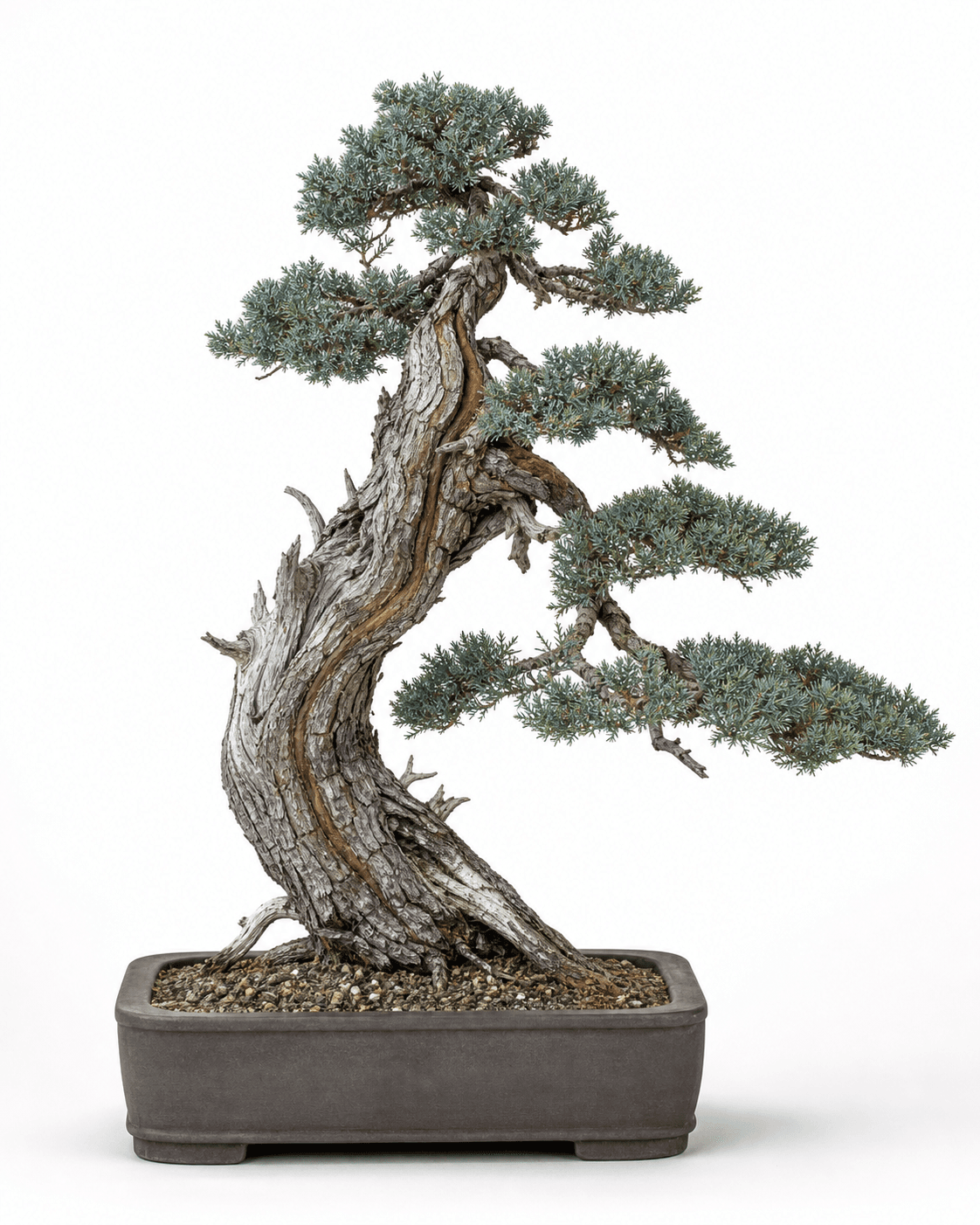
A convincing Himalayan juniper bonsai should feel cold, bright, and weathered: firm foliage, readable live veins, contained deadwood, open negative space, and roots that clearly support the image. Bonsai Mirai / AsymmetryBonsai Mirai Library
Species questions
Answer the beginner questions before styling.
Can Himalayan juniper be grown as bonsai?
Yes. Juniperus squamata can be grown as bonsai outdoors when it has strong light, airflow, winter dormancy, open mineral soil, and staged pruning and root work.
Is Himalayan juniper a true needle juniper?
Mirai separates Juniperus squamata from true needle junipers such as Juniperus rigida and Juniperus communis. Squamata often looks needle-dominant, but it can produce scale foliage and should use procumbens-style handling.
What soil is best for Himalayan juniper bonsai?
Start with procumbens-style open mineral soil, commonly 1:1:1 akadama:pumice:lava screened for the tree stage. Avoid copying the common-juniper 100 percent pumice exception by label alone.
When should Himalayan juniper be repotted?
Repot during spring movement on a vigorous tree, using scale-juniper aftercare. Stage old nursery cores and keep enough foliage to power recovery.
Should Himalayan juniper be pinched?
Avoid spring pinching. Let growth extend and harden, then prune with scissors to living growth while preserving active foliage on every branch.
Can Himalayan juniper live indoors?
No. Himalayan juniper is an outdoor conifer that needs direct light, airflow, seasonal temperature change, and winter dormancy.
Is Blue Star juniper the same as Himalayan juniper?
Blue Star is a compact cultivar of Juniperus squamata. It shares the species identity but behaves as a slow mounding plant, so design and development expectations should be smaller and slower.
Why is my Himalayan juniper browning inside?
Interior browning usually points to dense foliage blocking light and airflow, root stress, or pest pressure. Open pads gradually, inspect for mites or scale, and correct watering and drainage.
How cold hardy is Himalayan juniper bonsai?
Landscape hardiness is often listed around Zone 5 with cultivar variation. Bonsai roots in shallow containers need protection during hard freezes even when the species is hardy in the ground.
Is Himalayan juniper beginner friendly?
It is better for an intermediate beginner with outdoor space. Retail cultivars are easy to find, but correct identity, outdoor culture, root conversion, and patient pruning matter more than the label.
Sources
Species advice needs source discipline.
Next decisions
Plan the operation before copying the calendar.
A good care note for Himalayan / flaky juniper records the tree's stage, the work done, and the aftercare used. That record matters more than a month-name rule.
Related species
Compare nearby trees before transferring advice.
Needle juniper / tosho
Juniperus rigida
Common juniper
Juniperus communis