
Species guide
Procumbens Nana Juniper Bonsai Care
Juniperus procumbens 'Nana'
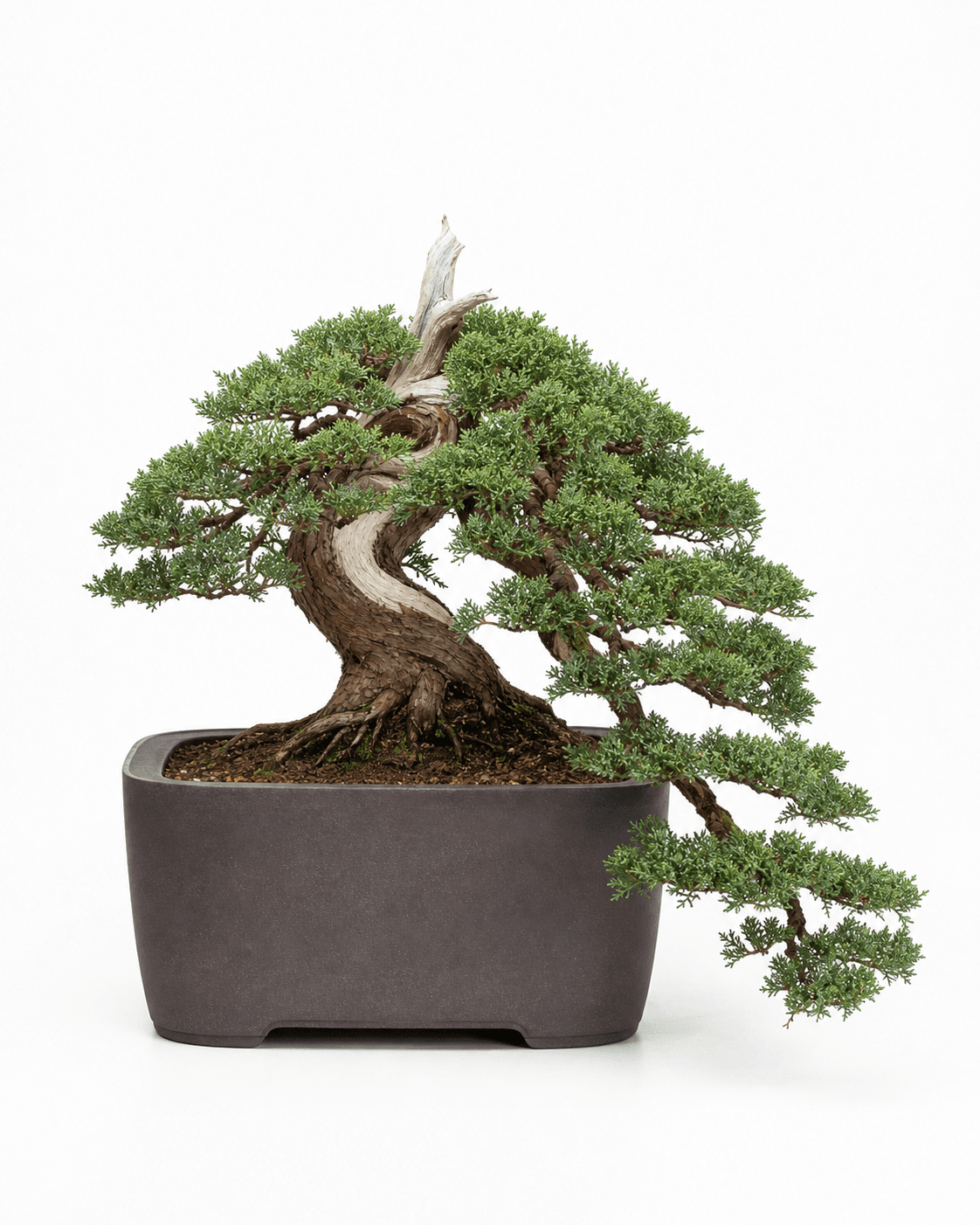
Procumbens Nana is the classic beginner juniper because it is common, durable, low-growing, and inexpensive enough to teach real technique. It succeeds as bonsai only when it lives outdoors with sun, airflow, drainage, and winter dormancy.
The Bonsai Mirai corpus has dedicated Procumbens material, including cleaning, spring refinement, mallsai styling, mounding-juniper timing, winter care, and juniper physiology. The practical rule is simple: keep active foliage strong, solve root-zone oxygen, and separate cleaning, wiring, and repotting into staged work.
This tree can be forgiving, but the delay between root failure and brown foliage makes beginner mistakes look harmless until the damage is advanced. Treat every gift-shop or nursery Procumbens as outdoor conifer material first and a styling project second.
Updated July 5, 2026. Written by EntGrove Editorial. Last verified July 5, 2026.
Care fingerprint
Read the species through its shared care pattern.
Open pads for light, avoid stripping all low growth, and understand that cheap starter junipers still need outdoor recovery. Use this as the starting point before local conditions and tree strength refine the calendar.
Keep foliage strong
Junipers recover through active foliage, so styling choices should leave enough healthy tips to power the tree.
Protect live veins
Old junipers often depend on narrow live veins between roots and foliage; root work and carving should respect that path.
Do not stack major work
Heavy bending, major foliage reduction, carving, and repotting belong in a staged plan rather than the same weekend.
Care cadence
The calendar starts with the tree's seasonal state.
First 30 days
Timing: Place outdoors, confirm drainage, photograph the tag, trunk base, foliage, and root surface, then observe before styling.
Watch for: Gift instructions that imply indoor culture, glued rock, decorative moss hiding old soil, mites, brown interiors, and stale wet roots.
Bonsai Mirai LibraryBonsai EmpireWatering
Timing: Check daily in active weather. Water thoroughly when the upper quarter to half inch begins to dry, then let oxygen return.
Watch for: Water running around a hydrophobic nursery core, soil staying wet for days, tiny pots drying before afternoon, and foliage that stays green after roots fail.
Bonsai Mirai LibraryFeeding
Timing: Feed moderately during development after the tree is actively growing. In refinement, reduce fertilizer after pruning so regrowth stays compact.
Watch for: Heavy feeding after a large reduction, fertilizer on a weak root system, and coarse extension that signals the response is too strong.
Bonsai Mirai LibraryCleaning and pruning
Timing: Clean bottom growth just before spring push or after the first flush hardens. In refinement, wait for mounding growth to spike before pruning.
Watch for: Cuts into bare stems, removal of useful crotch replacement shoots, hedge-sheared domes, and weak interior shoots with no future structure.
Bonsai Mirai LibraryRepotting
Timing: Use spring movement and strong foliage mass as the default signal. Preserve foliage before root work so the tree can regenerate roots.
Watch for: Bare-rooting, root work after a heavy canopy reduction, compact organic cores, and fresh repots exposed to hard heat or wind.
Bonsai Mirai LibraryWiring
Timing: Wire when the tree is hydrated, rooted, and energy-positive. Structural work belongs away from fresh root work and severe weather.
Watch for: Torn crotches, wire over green foliage tufts, overly light wire that cannot hold chunky branches, and wire bite during warm growth.
Bonsai Mirai LibrarySummer heat
Timing: Established Procumbens can take heat in sun, while tiny pots, black containers, weak roots, and recent repots need temporary protection.
Watch for: Hot wind after pruning, soil that dries before the next check, mite pressure, and foliage dulling after root stress.
Bonsai Mirai LibraryNC State ExtensionWinter protection
Timing: Keep dormant outdoors, off exposed benches when freezes deepen, grouped or mulched so frozen roots do not dry in wind.
Watch for: Desiccating wind, warm indoor storage, dry winter soil, and panic over normal yellow-chartreuse or purplish winter color.
Bonsai Mirai LibraryNC State ExtensionOregon State Landscape PlantsPest and disease checks
Timing: Inspect during hot dry weather, after crowding builds inside pads, and whenever new tips brown unevenly.
Watch for: Spider mites, Phomopsis-style tip blight, scale, aphids, bagworms, borers, and browning that starts in shaded interiors.
Bonsai Mirai LibraryNC State ExtensionBonsai EmpireSpecies guide
Apply the species profile before copying another tree's calendar.
At a glance
Procumbens Nana is the outdoor beginner juniper with a delayed-warning problem.
Procumbens Nana is Juniperus procumbens 'Nana', a low evergreen Cupressaceae cultivar documented by NC State and Oregon State as Dwarf Japanese Garden Juniper. Kew accepts Juniperus procumbens and places the species in Korea, southern Japan, and the Nansei-shoto region. Kew POWONC State ExtensionOregon State Landscape Plants
The bonsai spec is clear: outdoor sun, open mineral soil, deliberate watering, winter dormancy, and active foliage before root work. It is a mounding juniper, so dense foliage and low spreading branches are part of the design vocabulary. Bonsai Mirai LibraryNC State Extension
The risk is diagnosis lag. A juniper can stay green after roots are already failing, so a beginner may keep repeating the original mistake. The first care decision is placement and root health, then styling. Bonsai Mirai LibraryBonsai Empire
Wild reading
A low temperate juniper asks for light, oxygen, and compact design.
Kew describes Juniperus procumbens as a subshrub of the temperate biome, native from Korea through southern Japan. NC State and Oregon State describe Nana as a dense, low mat with branches layered into sprays. Kew POWONC State Extension
Care follows that architecture. A landscape groundcover can explore soil and run across rock, while a bonsai pot has limited reservoir and fast temperature swings. The container version needs full light, steady oxygen at the roots, and protection whenever weather outruns the pot. NC State ExtensionOregon State Landscape Plants
Design also follows habitat. Procumbens often reads best as low, rugged, mounded, cascading, raft-like, or compactly windswept. Forcing the tree into a tall sparse silhouette wastes the plant behavior that made it useful starter material. Bonsai Mirai Library
Reading the tree
Foliage mass is the health meter and the root engine.
Mirai juniper method treats strength as foliage-led. Healthy foliage drives root regeneration, so reducing foliage before root work removes the energy source the tree needs to recover. Bonsai Mirai Library
Read a beginner tree from the inside out: live tips, interior buds, weak shaded shoots, branch crotches, mite signs, root-surface water entry, and whether the tree is a dense shell over stale soil. A green dome gives too little evidence by itself. Bonsai Mirai Library
Development trees can grow out to build options. Refinement trees are worked when mounding growth has enough surplus to spike and answer a cut. Weak Procumbens should be grown, watered, and stabilized before it is styled. Bonsai Mirai Library
Pruning
Clean bottoms first and end every cut at live structure.
Dedicated Procumbens material in the Mirai corpus starts with cleaning downward-facing growth from each pad. That reveals branch structure, brings light into the interior, and keeps the natural mat from becoming one shaded shell. Bonsai Mirai Library
Procumbens can produce useful interior shoots, but bare woody stems rarely answer at the exact cut. Prune to a visible shoot, tight interior node, or usable ramification. Keep some crotch growth when it can replace a long leggy tip. Bonsai Mirai Library
Use scissor pruning instead of constant pinching. Large reductions provoke coarse growth, while small strategic cuts maintain compact response. In refinement, clean undersides, remove weak interior shoots, reduce vertical shoots, and cut elongating tips back to stronger interior growth. Bonsai Mirai Library
Roots
Repot when foliage can pay for root regeneration.
Mirai Procumbens method gives the species more work margin than many junipers, including the possibility of a spring repot followed by major summer styling on strong material. That margin is earned by strong foliage, drainage, and aftercare. Bonsai Mirai Library
For valuable or uncertain trees, spring movement is the default root window. The key sequence is foliage first, roots second, styling later. Heavy canopy reduction before root work removes the photosynthetic engine that should rebuild fine roots. Bonsai Mirai Library
A retail root core may be compact, hydrophobic, or stale. Work old soil in stages, secure the tree firmly, protect from hard wind and heat after repotting, and delay heavy pruning or wiring until new root activity is visible through growth response. Bonsai Mirai Library
Soil and pot
Mineral soil should hold water briefly and return oxygen quickly.
Mirai uses 1:1:1 akadama, pumice, and lava for Procumbens, with small particles for finer roots and compact growth. In wet climates, larger particles or less akadama can restore oxygen where the pot stays wet too long. Bonsai Mirai Library
Pot depth should match stage. A new nursery Procumbens often needs a training container or practical bonsai pot that protects roots and keeps enough reservoir for summer. A shallow show pot belongs after roots, design, and watering rhythm are predictable. Bonsai Mirai Library
Unglazed ovals, small rectangles, cascade pots, slabs, and rugged containers usually suit the species better than ornate forms. The pot should reinforce low movement, mounding foliage, or rocky coastal character. Bonsai Mirai Library
Climate
Hardy foliage does not make bonsai roots invulnerable.
NC State lists Zones 4a to 9b for Nana and Oregon State lists Zone 4, but containers expose roots to colder air and faster drying than the ground. In cold regions, set pots on the ground, group trees, mulch containers, and block wind while keeping dormancy intact. NC State ExtensionOregon State Landscape PlantsBonsai Mirai Library
Winter color can shift yellow-chartreuse or slightly purple. Diagnose the whole tree before reacting: wind exposure, soil moisture, root condition, mite pressure, branch dieback, and whether spring growth returns normally. Bonsai Mirai LibraryNC State Extension
In hot dry regions, full sun remains the target for established trees. Recently repotted trees, tiny pots, black containers, and weak root systems may need afternoon shade, wind reduction, and closer watering until roots catch up. Bonsai Mirai LibraryNC State Extension
Pests and disease
Mites, blight, and crowded pads are the problems to inspect early.
NC State flags blight and spider mites for Nana. The Mirai Procumbens corpus highlights Phomopsis tip blight as a serious species issue and treats prevention as protection for new growth rather than a cure for infected needles. NC State ExtensionBonsai Mirai Library
Spider mites are easiest to miss on dense green pads. Check in hot dry weather by tapping foliage over white paper and looking for moving specks, stippling, dust, and dull foliage. Correct dry stress and crowded interiors along with any treatment. Bonsai Mirai LibraryBonsai Empire
Borers, scale, aphids, bagworms, rusts, and other juniper pests should be diagnosed before spraying. Culture still comes first: sun, airflow, drainage, correct watering, and enough foliage to keep the root system active. Bonsai Mirai LibraryBonsai Empire
Wiring
Wire the wood, preserve the foliage tufts, and support crotches.
Procumbens branches are short, chunky, and often rigid enough to need heavier wire than their apparent size suggests. Set primary structural wire first, evaluate the design, then detail-wire only where structure needs it. Bonsai Mirai Library
Do not wire over green foliage tufts. Wire the lignified branch, lift foliage from underneath, and keep the foliage cluster intact. Crushed foliage loses photosynthetic value and slows the recovery the styling requires. Bonsai Mirai Library
Narrow crotches tear easily during major bending. Support the junction, bend from stable fulcrums, and repair minor tears with paste and wrap. Check wire during warm growth because vigorous Procumbens can thicken fast. Bonsai Mirai Library
Propagation
Cuttings and layers are possible; nursery stock is the practical path.
Most owners should start from nursery stock, pre-bonsai, or a verified retail Procumbens rather than raising the plant from seed. The cultivar identity, low habit, and existing branch options matter more than novelty. NC State ExtensionBonsai Mirai Library
Cuttings are the normal way to keep cultivar material consistent. Layers can be useful when a mat or branch has rooted or can be separated into a better base, and Mirai notes that Procumbens often forms layered, turtle-back raft structures. Bonsai Mirai Library
Grafting is possible, but Procumbens is usually chosen as own-root training material rather than as a premium scion. If grafting is considered, use it to solve a specific design or foliage problem and keep the host tree strong first. Bonsai Mirai Library
Buying
Buy health, roots, and useful interior structure before a styled silhouette.
A good Procumbens purchase has outdoor-grown vigor, flexible but lignified branches, useful interior shoots, a visible trunk line or raft option, and a rootball that accepts water. A glued-rock gift tree with moss over stale soil needs triage before design. Bonsai Mirai Library
NC State describes the cultivar as slow, dense, mounding, spreading, and frequently used for bonsai. Those traits are buying signals, not defects. Look for structure that can be cleaned and selected rather than a perfect dome that hides every branch. NC State Extension
The delayed-death signature matters for all beginner junipers. Foliage can stay presentable after roots have failed, so avoid discounted indoor stock, bone-dry cores, stale wet cores, and trees that have just been heavily styled for sale. Bonsai Mirai LibraryBonsai Empire
Troubleshooting
Diagnose by symptom, then correct placement, roots, or timing.
Symptom: the tree browns after weeks indoors. Likely cause: low light, no airflow, no dormancy, and root decline that stayed hidden while foliage remained green. Fix: move future junipers outdoors, inspect roots, and replace indoor-only plans with tropical species. Bonsai Mirai LibraryBonsai Empire
Symptom: tips brown in patches during hot dry weather. Likely cause: spider mites, tip blight, recent root stress, or water stress in a small pot. Fix: inspect foliage, improve airflow, stabilize watering, protect recent repots, and seek local diagnosis for disease. NC State ExtensionBonsai Mirai Library
Symptom: pruning leaves bare dead sections. Likely cause: cuts ended on old stems without visible buds or every interior replacement was removed. Fix: prune to live shoots, preserve useful crotch growth, and redesign around the foliage that remains. Bonsai Mirai Library
Symptom: the rootball sheds water or stays wet for days. Likely cause: compact old nursery soil or poor particle structure. Fix: water in repeated passes for now, protect the tree from stress, and plan staged spring root work into open mineral soil. Bonsai Mirai Library
Symptom: winter foliage shifts yellow, bronze, or purple. Likely cause: normal dormant pigment change or cold exposure. Fix: protect roots and wind exposure, keep the tree dormant outdoors, and judge recovery when spring growth resumes. Bonsai Mirai LibraryNC State Extension
Design
Read the low mounding habit before wiring a formula onto it.
Mirai mallsai Procumbens styling starts by deciding whether the tree is being maintained or redesigned. Maintenance cleaning follows the existing top and bottom of each branch. Redesign begins with trunk line and primary structure before final cleaning commits orientation. Bonsai Mirai Library
Good Procumbens designs often use a low base, compact mounds, short cascading movement, raft hints, or a flexible trunk line that can carry an informal upright. Deadwood can work, but young thin material should first build proportion and branch hierarchy. Bonsai Mirai Library
The defining branch should make the tree wider, lower, or more directional in a way the species naturally supports. The apex can be compact and mounded rather than tall. Negative space should reveal trunk and live vein without starving the foliage mass. Bonsai Mirai Library
Cultivars and labels
Procumbens Nana, Green Mound, and similar low junipers need label discipline.
NC State and Oregon State use Dwarf Japanese Garden Juniper for Juniperus procumbens 'Nana'. Bonsai Empire uses Green Mound and Japanese Garden Juniper as common beginner retail labels. NC State ExtensionOregon State Landscape PlantsBonsai Empire
Separate Procumbens from Shimpaku, Itoigawa, Kishu, San Jose, Foemina, Blaauw, Blue Star, shore juniper, Blue Rug, Andorra, Pfitzer, Savin, Tam, common juniper, and eastern red cedar before copying care or price assumptions. Bonsai Mirai Library
Procumbens often carries persistent juvenile needle foliage under bonsai work. Mature scale foliage may return on areas allowed to grow vigorously and quietly, but a refined silhouette usually accepts juvenile foliage as part of the species expression. Bonsai Mirai Library
History
Its importance is cultural access, not rarity.
Oregon State notes Nana was introduced from Japan in 1922. In bonsai culture, its larger role is as an accessible beginner juniper: easy to find, durable enough for training, and honest enough to expose poor placement and timing. Oregon State Landscape PlantsBonsai Mirai Library
Procumbens rarely carries the prestige signal of collected Sierra juniper or refined Itoigawa, but it can become a strong bonsai when the grower respects the species. Cleaning, staged wiring, root oxygen, and compact foliage management are the real lessons. Bonsai Mirai Library
For EntGrove, this page also serves a public correction. Many beginners are sold a Procumbens as an indoor decoration. The defensible advice is outdoor culture, patient staging, and observation before styling. Bonsai Mirai LibraryBonsai Empire
Species questions
Answer the beginner questions before styling.
Is Procumbens nana a good beginner bonsai?
It is a good beginner bonsai for someone with outdoor growing space, direct sun, drainage, and patience. Indoor-only growers should choose a tropical species instead.
Can Procumbens nana juniper bonsai live indoors?
Keep Procumbens Nana outdoors year-round except for short display. It needs direct sun, airflow, and winter dormancy.
How often should I water a Procumbens nana juniper bonsai?
Check the soil and foliage demand rather than following a fixed schedule. Water thoroughly when the upper quarter to half inch begins to dry, then let oxygen return to the root zone.
When should I repot Procumbens nana juniper bonsai?
Use spring movement and strong foliage mass as the safest general signal, especially for valuable or weak trees. Repot because drainage, roots, or old soil justify it, then protect the tree while new roots form.
Should I pinch Procumbens nana juniper foliage?
Use selective scissor pruning. Constant pinching tears foliage, pushes stress responses, and makes it harder to manage energy cleanly.
Why is my Procumbens nana juniper turning brown?
Common causes include indoor placement, compact old soil, water stress, spider mites, tip blight, root decline, recent heavy work, or too little light. Check roots and pests before treating the foliage alone.
Is Green Mound juniper the same as Procumbens nana?
In bonsai retail, Green Mound usually points to Juniperus procumbens Nana or closely related Japanese garden juniper material. Confirm the plant by low mounding habit, awl-shaped foliage, and a credible tag.
How cold hardy is Procumbens nana?
NC State lists USDA Zones 4a to 9b and Oregon State lists Zone 4, but bonsai roots in shallow pots need extra wind and freeze protection. Protect the container while keeping the tree dormant outdoors.
What soil mix works for Procumbens nana juniper bonsai?
Use open mineral soil. A 1:1:1 akadama, pumice, and lava mix is a sound starting point, adjusted by particle size, climate, pot depth, and how long the root zone stays wet.
Does Procumbens nana need scale foliage to be good bonsai?
Procumbens often stays in juvenile needle foliage after bonsai work, and that compact juvenile growth can be useful for dense refinement.
Sources
Species advice needs source discipline.
Next decisions
Plan the operation before copying the calendar.
A good care note for Procumbens nana records the tree's stage, the work done, and the aftercare used. That record matters more than a month-name rule.
Related species
Compare nearby trees before transferring advice.
Green mound juniper
Juniperus procumbens 'Nana'
Blue Star juniper
Juniperus squamata 'Blue Star'
Shore juniper
Juniperus conferta
Blue Pacific shore juniper
Juniperus conferta 'Blue Pacific'
Common juniper 'Compressa'
Juniperus communis 'Compressa'