
Species guide
Glossy Privet Bonsai Care
Ligustrum lucidum
Glossy privet bonsai should be treated as a vigorous outdoor broadleaf evergreen with strong light, generous water in heat, spring root work, and repeated post-harden pruning. Its large glossy leaves and fast hedge growth make it better for medium and larger bonsai, old landscape removals, and contained training projects than for tiny refinement.
The accepted working name is Ligustrum lucidum. Common labels include glossy privet, tall-glossy privet, broad-leaved privet, tree privet, and sometimes waxleaf privet, although waxleaf privet can also point to Japanese privet in trade, so the Latin tag matters.
The local Mirai corpus has one direct Ligustrum substrate claim and no dedicated glossy-privet file. This page transfers Mirai broadleaf-evergreen method transparently, then grounds identity, hardiness, invasive-region caution, fruit, toxicity, and pest pressure in NC State Extension, Cal-IPC, UF/IFAS, and Kew search workflows.
Updated June 11, 2026. Written by EntGrove Editorial. Last verified June 11, 2026.
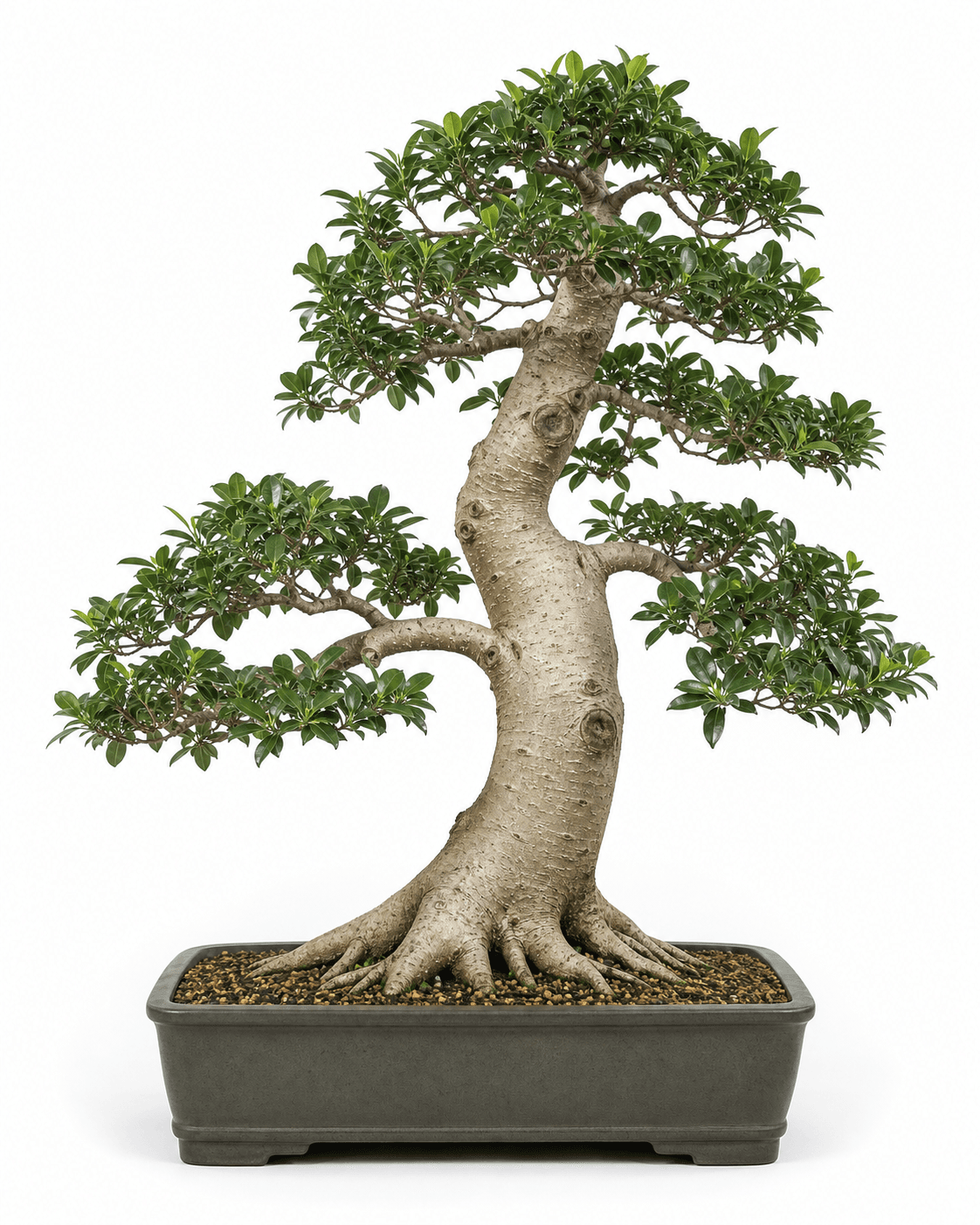
Care fingerprint
Read the species through its shared care pattern.
Protect from hard freezes when species demands it, prune with active foliage in mind, and repot when roots can recover without dormancy cues. Use this as the starting point before local conditions and tree strength refine the calendar.
Note: Large-leaved, rapid broadleaf evergreen Ligustrum used as hedge or screen material. Verify Ligustrum lucidum before applying this page because waxleaf privet can also point to Japanese privet in trade, and remove flower or fruit in invasive-risk regions.
Read the foliage first
Broadleaf stress usually shows in leaf color, leaf size, wilt, scorch, or delayed hardening before it becomes a branch problem.
Match work to dormancy
Deciduous, evergreen, tropical, succulent, and flowering broadleaf trees recover on different calendars.
Protect fine roots
Root work should preserve enough active fine roots for the tree to rehydrate quickly after the operation.
Care cadence
The calendar starts with the tree's seasonal state.
Placement
Timing: Grow outdoors in full sun to partial shade. Give the brightest safe position in spring and fall, then protect recently repotted trees from hard afternoon heat.
Watch for: Long internodes in shade, scorched leaves after abrupt exposure changes, weak interior shoots, and seed-bearing trees near natural areas.
NC State Extension: Ligustrum lucidumBonsai Mirai LibraryWatering
Timing: Water deeply as the surface dries. In hot weather, large leaves and rapid growth can make water demand much higher than landscape drought tolerance suggests.
Watch for: Water bypassing old field soil, sour wet cores, wilt after hot wind, yellow leaves from root stress, and dry pockets under dense surface roots.
NC State Extension: Ligustrum lucidumBonsai Mirai LibraryFeeding
Timing: Feed strongly during trunk and branch development. In refinement, feed lightly after the first flush hardens and again in fall so new growth stays useful.
Watch for: Coarse leaves, long internodes, thick junctions, heavy flower set on weak roots, and fertilizer applied before post-repot growth confirms recovery.
Bonsai Mirai LibraryPruning
Timing: Let shoots extend and harden, then prune back to usable nodes. Development trees can be cut harder in spring, while refined trees need repeated post-harden pruning to control leaf size and internodes.
Watch for: A clipped outer shell, shaded interior buds, swelling at repeated cut points, and flower panicles left on trees in regions where seed spread matters.
Bonsai Mirai LibraryNC State Extension: Ligustrum lucidumFlower and fruit control
Timing: Remove flower panicles before fruit sets where escape risk matters. Preserve a small display only on contained trees away from vulnerable habitats.
Watch for: Bird-attractive blue-black fruit, fallen berries in benches or gravel, dumped garden waste, and root suckers after old landscape removal.
NC State Extension: Ligustrum lucidumCal-IPC: Ligustrum lucidum profileRepotting
Timing: Repot in spring as buds swell. Convert heavy nursery or field soil in stages, secure the tree firmly, and protect from wind until water uptake is stable.
Watch for: Aggressive bare-rooting on a weak evergreen, combining severe root work with severe top reduction, and ignoring an anaerobic core because the outer rim drains.
Bonsai Mirai LibraryNC State Extension: Ligustrum lucidumWiring
Timing: Wire young and semi-hardened shoots after growth firms. Use clip-and-grow for older structure, then wire secondary branches before they thicken.
Watch for: Wire bite hidden by leaves, bark scuffing, brittle old branch shoulders, and over-wired fine twigging that would respond better to pruning.
Bonsai Mirai LibraryPests and disease
Timing: Inspect during warm growth, after heavy pruning, and before bringing nursery stock near a collection. Dense evergreen canopies hide pests well.
Watch for: Whiteflies, Japanese and Ligustrum weevils, white peach scale, privet rust mites, anthracnose, twig blight, cankers, powdery mildew, black root rot, and general root rot.
NC State Extension: Ligustrum lucidumSourcing
Timing: Buy or collect by trunk base, root quality, leaf scale, and containment plan. Old hedges and landscape removals can be useful when legal and clean.
Watch for: Buried bases, suckering root masses, viable berries, variegated cultivars with poor scale, pest-infested hedges, and waxleaf or Japanese privet labels without Latin confirmation.
NC State Extension: Ligustrum lucidumCal-IPC: Ligustrum lucidum profileSpecies guide
Apply the species profile before copying another tree's calendar.
At a glance
Glossy privet is a fast evergreen hedge tree that needs containment and frequent pruning.
Glossy privet is Ligustrum lucidum, a broadleaf evergreen Oleaceae shrub or tree with glossy opposite leaves, creamy white panicles, and blue-black drupes. NC State lists glossy privet, tall-glossy privet, and waxleaf privet as common names. NC State Extension: Ligustrum lucidum
For bonsai, the useful traits are speed, strong roots, pruning tolerance, evergreen foliage, and old hedge-stock availability. The limits are large leaves, coarse internodes, bird-dispersed fruit, toxicity, and invasive behavior in some regions. NC State Extension: Ligustrum lucidumCal-IPC: Ligustrum lucidum profile
The source-depth caveat should stay visible. Mirai has direct Ligustrum substrate evidence and broadleaf-evergreen method, while public horticultural and invasive-plant sources supply the species-specific identity, range, hardiness, fruit, pest, and risk details. Bonsai Mirai LibraryNC State Extension: Ligustrum lucidumCal-IPC: Ligustrum lucidum profile
Habitat
Read the species as a bird-dispersed evergreen from warm temperate Asian edges.
NC State records central and southern China to Hainan and southern Korea as the source region. Cal-IPC records glossy privet in California grasslands, woodlands, riparian areas, and bottomland habitats after introduction. NC State Extension: Ligustrum lucidumCal-IPC: Ligustrum lucidum profile
The wild and escaped growth pattern explains the bonsai calendar. The tree handles sun, partial shade, pruning, alkaline soil, dry periods, and moist disturbed sites, so contained bonsai culture must manage vigor rather than coax survival. NC State Extension: Ligustrum lucidumCal-IPC: Ligustrum lucidum profile
For design, avoid treating the species like a tiny delicate broadleaf. A convincing glossy privet often reads as a cut-back hedge tree, clump, old stump, or broad evergreen crown with visible branch exits and controlled fruit. Bonsai Mirai / AsymmetryNC State Extension: Ligustrum lucidum
For care ethics, fruit matters. NC State says fruits attract birds, and Cal-IPC lists birds, water, root suckers, and dumped garden waste as dispersal routes. Bonsai containment includes flower and fruit removal in sensitive regions. NC State Extension: Ligustrum lucidumCal-IPC: Ligustrum lucidum profile
Reading the tree
Confirm Ligustrum lucidum before borrowing a privet care calendar.
Glossy privet is the larger tree-form privet in this cluster. NC State gives landscape dimensions from 15 to 50 feet high and 8 to 15 feet wide, with rapid growth and broadleaf evergreen leaves. NC State Extension: Ligustrum lucidum
Look for opposite glossy simple leaves, a smooth opaque leaf margin, 6 to 8 lateral vein pairs sunken beneath, conspicuous lenticels on tan stems, terminal panicles, and persistent dark fruit. NC State Extension: Ligustrum lucidum
Separate it from Chinese privet, California privet, Japanese privet, common privet, and waxleaf trade labels before applying the page. Bonsai handling overlaps across Ligustrum, but hardiness, leaf size, growth scale, and invasive risk still depend on the actual species. NC State Extension: Ligustrum lucidumCal-IPC: Ligustrum lucidum profileKew POWO
Then read stage. Development material needs extension, root conversion, branch selection, and containment. Refined material needs lighter feeding, post-harden pruning, leaf-size management, and interior light. Bonsai Mirai Library
Pruning
Use growth, hardening, and light to make a coarse species smaller.
Glossy privet tolerates severe pruning in landscape use, and that makes it a useful bonsai training subject. Severe pruning should serve trunk and branch structure, while repeated shearing should be avoided because it shades the interior. NC State Extension: Ligustrum lucidumBonsai Mirai Library
Mirai broadleaf-evergreen refinement accepts a coarse first flush, waits until that flush is energy-positive, then prunes back to interior buds for a finer second flush. Use that sequence on healthy glossy privet rather than pinching every new tip. Bonsai Mirai Library
Large leaves require honest scale. Selectively cut or remove oversized exterior leaves on vigorous refined trees, keep weak interior leaves working, and use stronger feeding only when trunk or branch thickening is the goal. Bonsai Mirai LibraryNC State Extension: Ligustrum lucidum
Flower pruning is also containment. NC State says next season blossoms appear on new growth, and it recommends removing flowers before fruit sets to keep the plant from spreading. NC State Extension: Ligustrum lucidum
Roots
Repot in spring and convert old hedge roots in stages.
Repot glossy privet in spring as buds swell and weather is moving upward. Mirai places broadleaf-evergreen root work in the spring window, with retained foliage helping the tree rebuild roots. Bonsai Mirai Library
The species is vigorous, but old landscape material can carry dense field soil, cut roots, suckers, and anaerobic pockets. Correct the root mass for water entry and oxygen before making refinement demands. NC State Extension: Ligustrum lucidumBonsai Mirai Library
Avoid full bare-rooting on weak evergreen material. Mirai broadleaf-evergreen guidance preserves root biology and removes compacted or stale zones in stages unless stale soil is the greater immediate risk. Bonsai Mirai Library
After repotting, secure the tree firmly, keep the pot evenly moist, protect from wind, and delay fertilizer until vigorous foliar growth confirms that new roots are functioning. Bonsai Mirai Library
Soil and pot
Use mineral soil that supports fast roots without trapping old water.
NC State lists good drainage with moist, occasionally dry, occasionally wet, very dry, and alkaline-soil tolerance. Bonsai soil should translate that adaptability into stable pore space, not heavy potting soil. NC State Extension: Ligustrum lucidum
Mirai has a direct Ligustrum claim: Ligustrum performs well in 100 percent akadama. That can be a refinement choice where akadama quality, climate, and watering skill support it. Bonsai Mirai Library
For development or hot regions, a 1:1:1 akadama:pumice:lava mix gives a safer balance of moisture and oxygen. Use more pumice when old organic cores, humid summers, or root-rot history make drainage the first priority. Bonsai Mirai LibraryNC State Extension: Ligustrum lucidum
Pot pairing should be quiet and broadleaf. Unglazed or muted glazed ovals, rectangles, and deeper training pots suit the vigorous roots and glossy leaves better than delicate shallow containers during development. Bonsai Mirai / Asymmetry
Climate
Match the winter plan to Zone 7 to 10 roots and local invasive rules.
NC State lists glossy privet for USDA Zones 7a to 10b and notes that it is less cold-hardy than Japanese privet. A bonsai pot narrows that range because shallow roots freeze and dry faster. NC State Extension: Ligustrum lucidumBonsai Mirai Library
In Zone 7 and colder edges, use a cold frame, protected bench, or unheated shelter for roots during severe freezes. Keep enough cold for dormancy and avoid warm low-light indoor storage. NC State Extension: Ligustrum lucidumBonsai Mirai Library
In hot summer regions, give full sun when the pot can stay watered and cool, then shift recently repotted or shallow-potted trees to afternoon protection. Large evergreen leaves can move water quickly. NC State Extension: Ligustrum lucidumBonsai Mirai Library
Regional ethics change the display choices. UF/IFAS tracks Florida assessment data, NC State calls the plant problematic and invasive in North Carolina, and Cal-IPC rates it as Limited in California. Follow local rules and remove fruit where escape risk exists. UF/IFAS Assessment: Ligustrum lucidumNC State Extension: Ligustrum lucidumCal-IPC: Ligustrum lucidum profile
Pests
Dense foliage hides scale, whiteflies, weevils, mites, mildew, and root disease.
NC State lists whiteflies, Japanese and Ligustrum weevils, white peach scale, and privet rust mites as common insect problems. Check leaf undersides, shoot tips, and bark crevices before wiring. NC State Extension: Ligustrum lucidum
The same source lists anthracnose, twig blight, cankers, powdery mildew, black root rot, and root rot. Bonsai diagnosis starts with roots, water pattern, recent pruning, and airflow before treatment. NC State Extension: Ligustrum lucidum
Rapid growth can hide problems until a styling session exposes weak tissue. Thin for light and airflow, wash foliage before pest treatment, and delay heavy work until the tree has clean new growth. NC State Extension: Ligustrum lucidumBonsai Mirai Library
The berries and leaves deserve handling awareness. NC State gives medium poison severity for humans and notes dog risk from berries or leaves, so clippings and fruit should stay out of pet access. NC State Extension: Ligustrum lucidum
Wiring
Wire young shoots, then let pruning build the finished branch.
Glossy privet grows fast enough that wire checks should be frequent. Wire young or semi-hardened shoots for angle, then remove wire before bark swelling turns a training mark into a permanent scar. NC State Extension: Ligustrum lucidumBonsai Mirai Library
Older branches are better built with clip-and-grow, selective replacement, and guy wires when needed. Privet vigor can make clean pruning more reliable than forcing old wood into dramatic bends. Bonsai Mirai LibraryBonsai Mirai / Asymmetry
Before wiring, thin enough leaves to see the branch line without stripping the interior. Leaves that still feed weak twigs should remain in place until stronger shoots can replace them. Bonsai Mirai Library
Use wiring to reveal broadleaf branch logic: branches leave the trunk, divide, and carry foliage in open clusters. Dense hedge pads make glossy privet look unresolved. Bonsai Mirai / Asymmetry
Propagation
Cuttings and layers preserve the tree you selected; seed increases escape risk.
Glossy privet can produce abundant fruit, but seed is a poor bonsai default in regions where the species escapes cultivation. Remove fruit and use vegetative propagation only when local rules allow responsible containment. NC State Extension: Ligustrum lucidumCal-IPC: Ligustrum lucidum profile
Cuttings are the practical way to preserve a useful small-leaved or compact selection. Keep cultivar and source records because variegated forms and yellow-tipped forms can differ in vigor and visual scale. NC State Extension: Ligustrum lucidum
Air-layering can be useful on old hedge branches with better movement than the base. Mirai broadleaf-evergreen layering is an early-to-mid-summer operation after active growth can support new roots. Bonsai Mirai Library
Grafting is rarely the first path for glossy privet bonsai. Nursery stock, cuttings, layers, or legal landscape removals usually give better roots and cleaner labels. Bonsai Mirai / AsymmetryNC State Extension: Ligustrum lucidum
Buying
Buy the base, then decide whether the leaves can scale.
Good glossy privet starter material has a visible base, strong surface roots, low branches, active interior shoots, clean foliage, and no viable fruit. Old hedge removals can be valuable when legal and pest-free. NC State Extension: Ligustrum lucidumCal-IPC: Ligustrum lucidum profile
Leaf size is the main scale filter. NC State gives 3 to 6 inch leaves, so tiny bonsai need unusually compact material and careful refinement. Medium and larger sizes are more honest for typical stock. NC State Extension: Ligustrum lucidumBonsai Mirai Library
Inspect for waxleaf and Japanese privet confusion. NC State lists Ligustrum japonicum among commonly confused plants, and waxleaf language can move between glossy privet and Japanese privet in retail copy. NC State Extension: Ligustrum lucidum
Avoid collecting or trading material where it may spread. Cal-IPC records spread by seeds, root suckers, birds, water, and dumped garden waste, so disposal and aftercare are part of sourcing. Cal-IPC: Ligustrum lucidum profile
Troubleshooting
Diagnose glossy privet by light, water entry, fruit, pests, and roots.
Symptom: long pale shoots and large leaves. Likely cause: low light, heavy feeding during refinement, or repeated exterior shearing. Fix: increase light gradually, reduce spring fertilizer, and prune after hardening to interior buds. NC State Extension: Ligustrum lucidumBonsai Mirai Library
Symptom: yellow leaves with wet soil. Likely cause: root rot, black root rot, compacted old soil, or water bypassing a dry core. Fix: inspect the root mass, improve drainage, and repot in spring when the tree can recover. NC State Extension: Ligustrum lucidumBonsai Mirai Library
Symptom: sticky leaves, white specks, stippling, or distorted tips. Likely cause: whiteflies, scale, rust mites, aphids, or weevils. Fix: isolate, wash, identify the pest, treat at the correct life stage, and postpone styling. NC State Extension: Ligustrum lucidum
Symptom: powdery coating or twig dieback in dense growth. Likely cause: powdery mildew, twig blight, canker, poor airflow, or hidden dead wood. Fix: thin for airflow, remove infected tissue, disinfect tools, and restore vigor. NC State Extension: Ligustrum lucidum
Symptom: blue-black fruit forming on a training tree. Likely cause: flower panicles were left after early-summer bloom. Fix: remove fruit before birds move it, clean the bench, and prune earlier next cycle in invasive regions. NC State Extension: Ligustrum lucidumCal-IPC: Ligustrum lucidum profile
Symptom: spring growth collapses after a cold winter. Likely cause: container root damage that appears only when leaves demand water. Fix: protect roots earlier next winter and delay pruning until the surviving root system proves itself. Bonsai Mirai LibraryNC State Extension: Ligustrum lucidum
Design
Style it as an old evergreen hedge tree with visible branch structure.
Start with base, trunk line, defining branch, and apex. Glossy privet can make a convincing bonsai when an old hedge stump or landscape tree already has trunk age, scars, taper, and low growth. Bonsai Mirai / AsymmetryNC State Extension: Ligustrum lucidum
Use the large leaves as a design constraint. Open branch spacing, larger tree size, and visible negative space make the foliage believable, while tight conifer-style pads exaggerate leaf scale. Bonsai Mirai / AsymmetryNC State Extension: Ligustrum lucidum
Clump and multi-trunk designs can work well because privet naturally forms dense shrub structure and can sucker from roots. Choose the trunks intentionally, remove duplicates, and keep the best lines lit. NC State Extension: Ligustrum lucidumCal-IPC: Ligustrum lucidum profile
Deadwood should stay restrained. Smooth bark, lenticels, glossy leaves, and healed pruning scars carry the broadleaf story better than bright carved features on most material. Bonsai Mirai / AsymmetryNC State Extension: Ligustrum lucidum
Cultivars
Treat cultivar names as visual clues, then inspect the actual leaves.
NC State lists Excelsum Superbum with marbled light green and white leaves, and Howardii with golden yellow leaf tips. These forms can be distinctive but may be harder to scale convincingly. NC State Extension: Ligustrum lucidum
Variegated or yellow foliage can weaken the illusion of age when the tree lacks trunk power. Plain green material is usually easier for development because the design depends on structure before color. Bonsai Mirai / AsymmetryNC State Extension: Ligustrum lucidum
Trade names should be verified against Latin names. Glossy privet, Japanese privet, waxleaf privet, California privet, and Chinese privet can appear near each other in nursery settings. NC State Extension: Ligustrum lucidum
A useful cultivar record includes Latin name, cultivar, source nursery or collection site, fruit history, pest history, and whether the plant has ever been allowed to root into the ground. Cal-IPC: Ligustrum lucidum profileNC State Extension: Ligustrum lucidum
History
Glossy privet is common hedge material, so bonsai value comes from editing.
NC State describes glossy privet as a screening plant, hedge, shrub border plant, and tree-form shrub, while also warning that alternatives should be considered because of weedy tendencies. NC State Extension: Ligustrum lucidum
Cal-IPC records the plant as present in several California regions and assigns a Limited invasive rating. That history makes contained bonsai culture and disposal discipline part of the species story. Cal-IPC: Ligustrum lucidum profile
The accessible bonsai record is less developed than for ficus, boxwood, olive, or holly. The best glossy privet bonsai will come from old trunks, disciplined pruning, and responsible fruit control rather than novelty. Bonsai Mirai / AsymmetryNC State Extension: Ligustrum lucidum
An exhibition-ready glossy privet should show clean roots, pest-free evergreen foliage, controlled leaf size, visible branch exits, no uncontrolled fruit, and a design that admits its hedge-tree origin. Bonsai Mirai LibraryNC State Extension: Ligustrum lucidum
Species questions
Answer the beginner questions before styling.
Is glossy privet good for bonsai?
Yes, when grown as contained outdoor material with strong light, pruning discipline, and fruit control. Its large leaves make medium and larger bonsai more realistic than tiny shohin.
Is glossy privet the same as Chinese privet?
No. Glossy privet is Ligustrum lucidum, while Chinese privet is usually Ligustrum sinense. Care overlaps, but leaf size, hardiness, invasive behavior, and labels should be checked by species.
Can glossy privet bonsai live indoors?
Use outdoor culture as the baseline. Brief indoor display is fine, but long-term dim indoor culture weakens growth, increases pests, and keeps roots too stale.
How much sun does glossy privet bonsai need?
Give full sun to partial shade. Strong light keeps internodes shorter and supports flowers, but recently repotted or shallow-potted trees may need afternoon protection in heat.
When should I prune glossy privet bonsai?
Let shoots extend and harden, then prune back to useful nodes. Remove flower panicles before fruit sets where seed spread matters.
When should I repot glossy privet bonsai?
Repot in spring as buds swell. Fast development trees should be inspected annually, while older refined trees can often wait until drainage, root density, or soil age justifies work.
What soil is best for glossy privet bonsai?
Mirai has direct Ligustrum evidence for 100 percent akadama. A 1:1:1 akadama:pumice:lava mix is a practical development default when heat, old nursery cores, or drainage risk matter.
Is glossy privet invasive?
It can be. NC State calls it problematic and invasive in North Carolina, UF/IFAS tracks Florida assessment data, and Cal-IPC rates it Limited in California. Keep it contained and remove fruit in sensitive regions.
Are glossy privet berries poisonous?
NC State lists medium poison severity for humans and notes dog risk from berries or leaves. Keep fruit and clippings away from children, pets, and compost streams where viable seed could spread.
Sources
Species advice needs source discipline.
Next decisions
Plan the operation before copying the calendar.
A good care note for Glossy privet records the tree's stage, the work done, and the aftercare used. That record matters more than a month-name rule.
Related species
Compare nearby trees before transferring advice.
English boxwood
Buxus sempervirens
Japanese boxwood
Buxus microphylla
Korean boxwood
Buxus sinica var. insularis
English holly
Ilex aquifolium
Japanese holly
Ilex crenata