
Species guide
Green Mound Juniper Bonsai Care
Juniperus procumbens 'Nana'
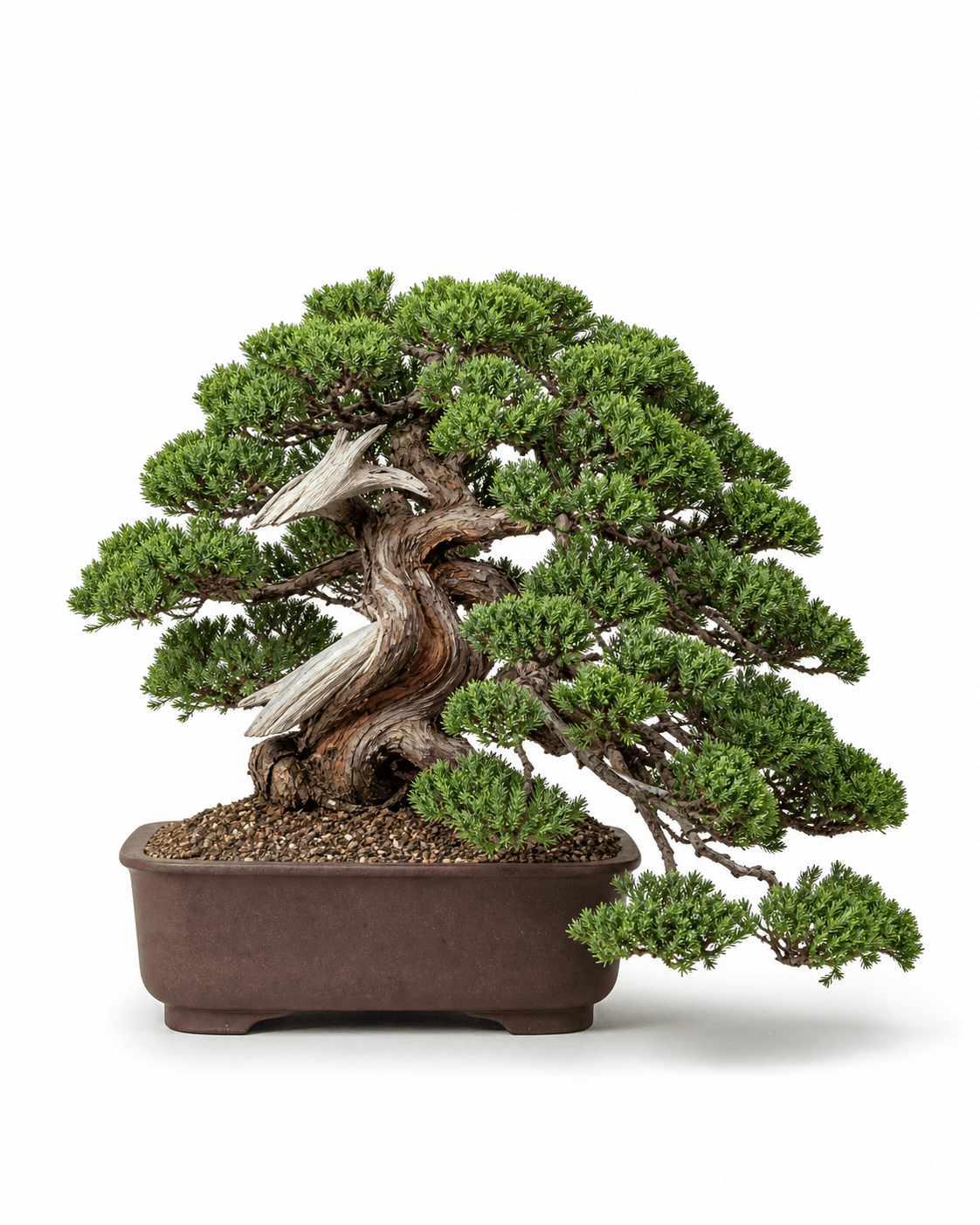
Green Mound juniper is the retail name most beginners see for Juniperus procumbens Nana, a low mounding outdoor juniper. It needs sun, air, drainage, and winter dormancy, so placement comes before pruning.
The local Bonsai Mirai corpus has dedicated Procumbens material, including cleaning, spring refinement, mallsai styling, mounding-juniper refinement, winter care, and juniper physiology. Use that method to stabilize the tree first, then stage cleaning, wiring, root work, and refinement across separate work cycles.
Treat a Green Mound label as a useful starting point with gaps. Confirm the low mat-forming habit, awl-shaped needle foliage, dense sprays, outdoor vigor, and root condition before copying any calendar from a generic juniper guide.
Updated July 4, 2026. Written by EntGrove Editorial. Last verified July 4, 2026.
Care fingerprint
Read the species through its shared care pattern.
Open pads for light, avoid stripping all low growth, and understand that cheap starter junipers still need outdoor recovery. Use this as the starting point before local conditions and tree strength refine the calendar.
Keep foliage strong
Junipers recover through active foliage, so styling choices should leave enough healthy tips to power the tree.
Protect live veins
Old junipers often depend on narrow live veins between roots and foliage; root work and carving should respect that path.
Do not stack major work
Heavy bending, major foliage reduction, carving, and repotting belong in a staged plan rather than the same weekend.
Care cadence
The calendar starts with the tree's seasonal state.
First 30 days
Timing: Place outdoors in strong light, verify drainage, photograph the tag, root flare, foliage, and interior branches, then observe before styling.
Watch for: Gift instructions that say indoor, glued rock, moss hiding compact nursery soil, brittle brown interiors, mites, or stale wet roots.
Bonsai Mirai LibraryBonsai EmpireWatering
Timing: Check daily in active weather. Water thoroughly when the top quarter to half inch begins to dry, then let oxygen return.
Watch for: Water running around a hydrophobic core, soil staying wet for days, or foliage remaining green while roots are failing.
Bonsai Mirai LibraryCleaning and pruning
Timing: Clean bottoms and weak interiors just before spring push or after the first flush has extended and hardened. In refinement, wait for spiking tips before pruning.
Watch for: Cuts into bare stems, stripped crotches that should become replacement growth, and a hedge-sheared dome with no light inside.
Bonsai Mirai LibraryWiring
Timing: Wire when the tree is strong and hydrated, usually after foliage has hardened or during a planned styling window away from fresh root work.
Watch for: Torn crotches, wire crossing foliage tufts, overly tight copper, and summer wire bite on vigorous young branches.
Bonsai Mirai LibraryRepotting
Timing: Use spring movement and strong foliage mass as the default window. Protect the tree from hard heat and wind while new roots form.
Watch for: Bare-rooting, reducing foliage before root work, or repotting after the tree has already pushed and partially hardened spring growth.
Bonsai Mirai LibraryWinter
Timing: Keep dormant outdoors, off exposed benches when freezes deepen, grouped and wind-protected so roots do not dry while frozen.
Watch for: Desiccating wind, warm indoor storage, dry winter soil, and panic over normal yellow-chartreuse or purplish winter color.
Bonsai Mirai LibraryNC State ExtensionBonsai EmpireSpecies guide
Apply the species profile before copying another tree's calendar.
At a glance
Green Mound is the beginner retail label for Procumbens Nana.
Green Mound juniper is best read as Juniperus procumbens 'Nana' in bonsai retail. Kew accepts Juniperus procumbens, NC State and Oregon State document the Nana cultivar as Dwarf Japanese Garden Juniper, and Bonsai Empire names Green Mound as a common large-store juniper label. Kew POWONC State ExtensionOregon State Landscape PlantsBonsai Empire
The plant is a low, dense, mat-forming evergreen conifer with prickly awl-shaped foliage in whorls of three, slow landscape growth, and a mounding or cascading habit. That physical identity matters more than the sales tag because many low junipers are sold with loose names. NC State ExtensionOregon State Landscape Plants
For bonsai, Green Mound belongs in Juniper > Mounding. The practical care formula is outdoor sun, open mineral soil, deliberate watering, strong foliage before root work, selective cleaning, and staged wiring. Indoor culture is the failure path. Bonsai Mirai LibraryBonsai Empire
Wild reading
A low coastal and temperate habit explains both care and design.
Kew places Juniperus procumbens in a temperate biome from Korea through southern Japan and the Nansei-shoto region. NC State adds the useful horticultural clue: procumbens means low-growing or prostrate, and Nana spreads as a dense compact mat. Kew POWONC State Extension
Care follows that image. A shallow bonsai pot has less root volume than a groundcover, so the tree needs full sun, strong airflow, fast drainage, and root protection when cold wind or heat outruns the container. Drought tolerance in the landscape becomes careful water management in a small pot. NC State ExtensionBonsai Mirai Library
Design should respect the plant as low, compact, dense, and coastal. Cascades, rafts, informal uprights built from a flexible young trunk, and compact deadwood designs fit the species better than tall sparse silhouettes with weak foliage mass. Bonsai Mirai Library
Reading the tree
Foliage mass is the health meter.
Mirai juniper method starts from a different energy model than pine care. Junipers rebuild roots through active foliage, so the foliage mass is the engine. Reducing foliage before root work asks the tree to heal with less photosynthetic capacity. Bonsai Mirai Library
A newly bought Green Mound often has a dense green shell and weak shaded interiors. Read the tree from the inside out: healthy tips, interior buds, root drainage, mite pressure, branch crotches, and the amount of usable foliage close to the trunk. A round green dome gives too little proof that the structure is ready. Bonsai Mirai Library
Development trees can grow out to build strength and options. Refinement trees are worked when mounding growth begins to spike and the tree has enough surplus to respond. That timing cue keeps pruning proportional instead of forcing a calendar onto a weak plant. Bonsai Mirai Library
Pruning
Clean for light first, then prune with interior buds in mind.
Dedicated Procumbens material in the Mirai corpus starts cleaning from the underside of pads. Removing downward-facing growth reveals branch structure, improves light and air, and prevents the natural mat from becoming one shaded mass. Bonsai Mirai Library
Avoid cutting bare stems and hoping for a bud. Procumbens can rebuild, but cuts should end at a visible shoot, compact interior junction, or piece of useful ramification. Some tight crotch shoots are future replacements for long leggy tips. Bonsai Mirai Library
Do not hedge shear the shell. The safe pattern is bottom cleaning, weak interior removal, selective vertical-shoot reduction, and tip pruning back to strong interior growth. Major reductions create coarse regrowth and reduce cold tolerance until the tree recovers. Bonsai Mirai Library
Roots
Repot when foliage can pay for root regeneration.
For Green Mound juniper, root work belongs after the tree has enough foliage and before hot weather or wind creates recovery stress. Mirai method treats spring movement as the most predictable window for procumbens and most scale-capable junipers. Bonsai Mirai Library
The main beginner error is sequence. Styling first, reducing foliage heavily, then repotting removes the energy source and injures the system that must rebuild. Stabilize the tree, fix drainage in a planned window, and keep the canopy strong enough to pull water through the new root tips. Bonsai Mirai Library
Do not bare-root a weak retail juniper. Work the old soil in stages, secure the tree firmly, protect it from hard sun and wind after repotting, and wait for new root evidence before heavy pruning or wiring. If the root core is hydrophobic, solve water entry without turning the operation into a total root reset. Bonsai Mirai Library
Soil and pot
Use mineral soil and enough pot volume for a living outdoor conifer.
Mirai Procumbens notes support a standard juniper mix of akadama, pumice, and lava. Fine particles support fine roots and compact foliage, while larger particles or a lower akadama share can restore oxygen in wet climates, shaded benches, or containers that stay wet too long. Bonsai Mirai Library
Pot choice should serve the stage. A recently purchased Green Mound often needs a training pot, box, or practical container that protects roots and gives enough reservoir for summer. A shallow show pot should wait until the root pad is dense, drainage is reliable, and the design is stable. Bonsai Mirai Library
For design, low ovals, quiet rectangles, cascade pots, slab-like compositions, and rugged unglazed containers usually suit the species. The pot should reinforce the low mounding, coastal, or raft-like character and avoid pretending a cheap starter trunk is older than it is. Bonsai Mirai Library
Climate
Hardy foliage still needs protected roots.
NC State lists Zones 4a to 9b and Oregon State lists Zone 4 for Nana, but bonsai roots are exposed by the container. In cold regions, move the pot off benches, group trees, mulch or heel in containers, and protect from desiccating wind while keeping the tree dormant outdoors. NC State ExtensionOregon State Landscape PlantsBonsai Mirai Library
In hot dry regions, full sun remains the goal for a healthy established juniper, while black pots, tiny containers, fresh repots, and weak root systems may need afternoon protection. Use shade as recovery protection and return to stronger light as roots improve. Bonsai Mirai LibraryNC State Extension
Winter color can alarm beginners. Mirai and Bonsai Empire both describe seasonal foliage shifts as part of cold response on junipers. Read the whole tree before diagnosing: root moisture, wind exposure, mites, branch dieback, and whether new growth returns as temperatures rise. Bonsai Mirai LibraryBonsai Empire
Pests and disease
Most pest problems start with weak roots or crowded foliage.
NC State lists blight and spider mites as possible problems for Nana. Bonsai Empire also names spider mites, scale, aphids, needle miners, webworms, and rust concerns across junipers. On a bonsai bench, dense pads and drought stress make those problems easier to miss. NC State ExtensionBonsai Empire
The Mirai corpus flags Phomopsis tip blight as a serious Procumbens issue and treats fungal prevention as protection for new growth. Already infected needles need sanitation, airflow, and local extension guidance before chemical controls. Bonsai Mirai LibraryNC State Extension
Spider mite checks should be routine in hot dry weather. Tap foliage over white paper, look for moving specks and streaks, then correct the stress pattern: dust, dry wind, weak roots, dense interiors, and over-warm benches. Bonsai Mirai LibraryBonsai Empire
Wiring
Wire lignified structure and preserve foliage tufts.
Green Mound branches are short, chunky, flexible, and often stiff enough to need more leverage than their size suggests. Mirai Procumbens work uses strong structural wire first, evaluates the design, then adds detail only where the branch structure needs it. Bonsai Mirai Library
Do not wire over green foliage tufts. Wire the lignified branch, keep the foliage cluster intact, and avoid crushing the photosynthetic mass. The tree needs those tips to recover from the very work that is shaping it. Bonsai Mirai Library
Expect crotches to tear if bends are careless. Support junctions, bend from stable fulcrums, and repair minor tears immediately with paste and wrap. Inspect wire often during warm growth because vigorous procumbens can thicken quickly. Bonsai Mirai Library
Propagation
Cuttings, grafts, and layered mats are possible; nursery stock is simpler.
Juniperus procumbens can be propagated from seed or cuttings in general horticultural terms. Bonsai owners usually start with nursery stock or pre-bonsai because the cultivar, trunk movement, and branch placement are already visible. Bonsai EmpireNC State Extension
Mirai notes that procumbens grafts well and can function as useful foliage or scion material in juniper work. Reserve grafting for advanced work with a clear design purpose and healthy material. Bonsai Mirai Library
The species can form layered raft-like structures where branches contact the ground and root. In bonsai, that behavior supports raft, clump, and ground-hugging designs when the grower plans the root and trunk relationships instead of fighting them. Bonsai Mirai Library
Buying
The tag matters less than roots, light history, and recoverable structure.
Green Mound is often bought as a gift, big-box starter, or nursery groundcover. Before valuing the tag, inspect the trunk line, root flare, tie-down, drainage holes, soil core, mites, interior foliage, and whether the plant has been kept indoors. Bonsai Mirai LibraryBonsai Empire
Red flags include glued rock, decorative moss over sour soil, no drainage, a loose trunk, dry hydrophobic peat, brown interior pads, heavy wire already biting, and a perfect green dome with no visible branch structure. A cheap starter can be excellent material only if the roots and foliage still function. Bonsai Mirai Library
For better stock, choose a plant with low movement, usable interior branches, measured foliage strength, and roots that can be transitioned in stages. A landscape mat can become a raft or cascade, while a mallsai S-curve may need restraint so the first design stays within the tree capability. Bonsai Mirai Library
Troubleshooting
Diagnose by sequence: placement, roots, foliage, then technique.
Symptom: foliage stays green but the tree stops responding. Likely cause: root decline hidden by juniper lag. Fix: move outdoors, verify drainage, reduce heat and wind stress, keep foliage intact, and wait for new growth evidence before pruning. Bonsai Mirai LibraryBonsai Empire
Symptom: brown tips inside dense pads. Likely cause: shaded weak interiors, mites, tip blight, or stale wet soil. Fix: inspect with magnification, clean dead material, open light and air gradually, and correct watering before spraying. Bonsai Mirai LibraryNC State Extension
Symptom: yellow-chartreuse or purplish winter foliage. Likely cause: normal cold-season pigment shift when the rest of the tree is firm and hydrated. Fix: protect roots and wind exposure, keep dormant outdoors, and confirm green return in spring. Bonsai Mirai LibraryNC State ExtensionBonsai Empire
Symptom: coarse flush after pruning. Likely cause: the reduction was too large for refinement. Fix: reduce fertilizer strength and frequency, keep water appropriate to the smaller canopy, then prune the strong response when it begins to harden. Bonsai Mirai Library
Design
Use the low mounding habit as the design grammar.
A Green Mound design should start with base, trunk movement, useful low branches, and the natural direction of the mat. Many pieces become stronger when the grower accepts a low cascade, raft, clump, or compact informal upright instead of forcing height. Bonsai Mirai Library
Mirai Procumbens work emphasizes cleaning before design clarity, then wiring primary structure and preserving foliage tufts. Negative space should reveal the trunk and live vein without starving the tree of the dense foliage that powers it. Bonsai Mirai Library
Deadwood is possible, including jin and shari, but young thin material rarely has deadwood that can carry the whole design. Build proportion first: trunk line, primary branch hierarchy, compact pads, and a stable apex or cascade line. Bonsai Mirai Library
Forms
Most Green Mound pages are really about one cultivar.
The core plant is Juniperus procumbens 'Nana'. Public labels include Dwarf Japanese Garden Juniper and Green Mound, and Kew's broader species record uses creeping juniper as an English common name. Keep those labels together unless a specialist identifies a different Juniperus. Kew POWONC State ExtensionOregon State Landscape PlantsBonsai Empire
Transfer this page only after confirming the plant is procumbens. Blue Star, shore juniper, Blue Pacific, Andorra, Blue Rug, Pfitzer, San Jose, Foemina, and shimpaku can look low or juvenile while carrying different growth habits, scale potential, disease patterns, and timing. Bonsai Mirai Library
Record the exact tag and photograph the foliage. If the plant is truly Green Mound or Procumbens Nana, the care path is low mounding procumbens. If the tag is vague, use the mounding juniper hub and compare morphology before acting. Bonsai Mirai LibraryNC State Extension
History
Its modern role is the first-juniper gateway.
NC State notes that the Nana cultivar was introduced in Japan in 1922 and is frequently used for bonsai. Oregon State likewise records the dwarf Japanese garden juniper label and Japanese introduction context. NC State ExtensionOregon State Landscape Plants
In North American beginner culture, Green Mound became familiar because mass retailers and gift sellers could offer a compact evergreen that already looked like a tiny tree. That accessibility is useful, but it also created the indoor-juniper problem that kills many first trees. Bonsai EmpireBonsai Mirai Library
The notable standard for this species is disciplined conversion of ordinary nursery material into an outdoor bonsai with interior light, proportional pads, staged root work, and a design that keeps the low Japanese garden juniper character visible. Bonsai Mirai Library
Species questions
Answer the beginner questions before styling.
Is Green Mound juniper the same as Procumbens Nana?
In bonsai retail, Green Mound usually refers to Juniperus procumbens Nana, also sold as Dwarf Japanese Garden Juniper. Confirm the low mounding habit and awl-shaped needle foliage before applying this guide.
Can Green Mound juniper bonsai live indoors?
No. Green Mound juniper is an outdoor evergreen conifer. It needs direct sun, airflow, and winter dormancy, with indoor display limited to short periods.
How often should I water a Green Mound juniper bonsai?
Check the soil before following a fixed schedule. Water thoroughly when the upper quarter to half inch begins to dry, then let oxygen return to the root zone.
When should I prune Green Mound juniper?
Clean and prune when the tree is strong, commonly just before spring push or after the first flush has extended and hardened. In refinement, wait for spiking mounding growth before cutting back.
Should I pinch Green Mound juniper foliage?
Use selective scissor pruning and skip constant pinching. Preserve useful interior buds and enough foliage on every branch to keep the tree strong.
When should I repot Green Mound juniper?
Use spring movement and strong foliage mass as the default signal. Do not bare-root a weak retail juniper, and avoid heavy foliage reduction before root work.
Why is my Green Mound juniper turning brown?
Common causes include indoor placement, too little sun, mites, tip blight, overwatering, underwatering, compacted old soil, root decline, or heavy work before recovery.
What soil mix works for Green Mound juniper bonsai?
Use open mineral juniper soil. Mirai Procumbens method supports akadama, pumice, and lava, adjusted by particle size and climate so the roots stay moist enough but never stale.
Is Green Mound juniper good for beginners?
It suits beginners with outdoor growing space and patience. Indoor-only care and immediate pruning, wiring, and repotting make it a high-risk first tree.
Sources
Species advice needs source discipline.
Next decisions
Plan the operation before copying the calendar.
A good care note for Green mound juniper records the tree's stage, the work done, and the aftercare used. That record matters more than a month-name rule.
Related species
Compare nearby trees before transferring advice.
Procumbens nana
Juniperus procumbens 'Nana'
Blue Star juniper
Juniperus squamata 'Blue Star'
Shore juniper
Juniperus conferta
Blue Pacific shore juniper
Juniperus conferta 'Blue Pacific'
Common juniper 'Compressa'
Juniperus communis 'Compressa'