
Species guide
Blue Star Juniper Bonsai Care
Juniperus squamata 'Blue Star'
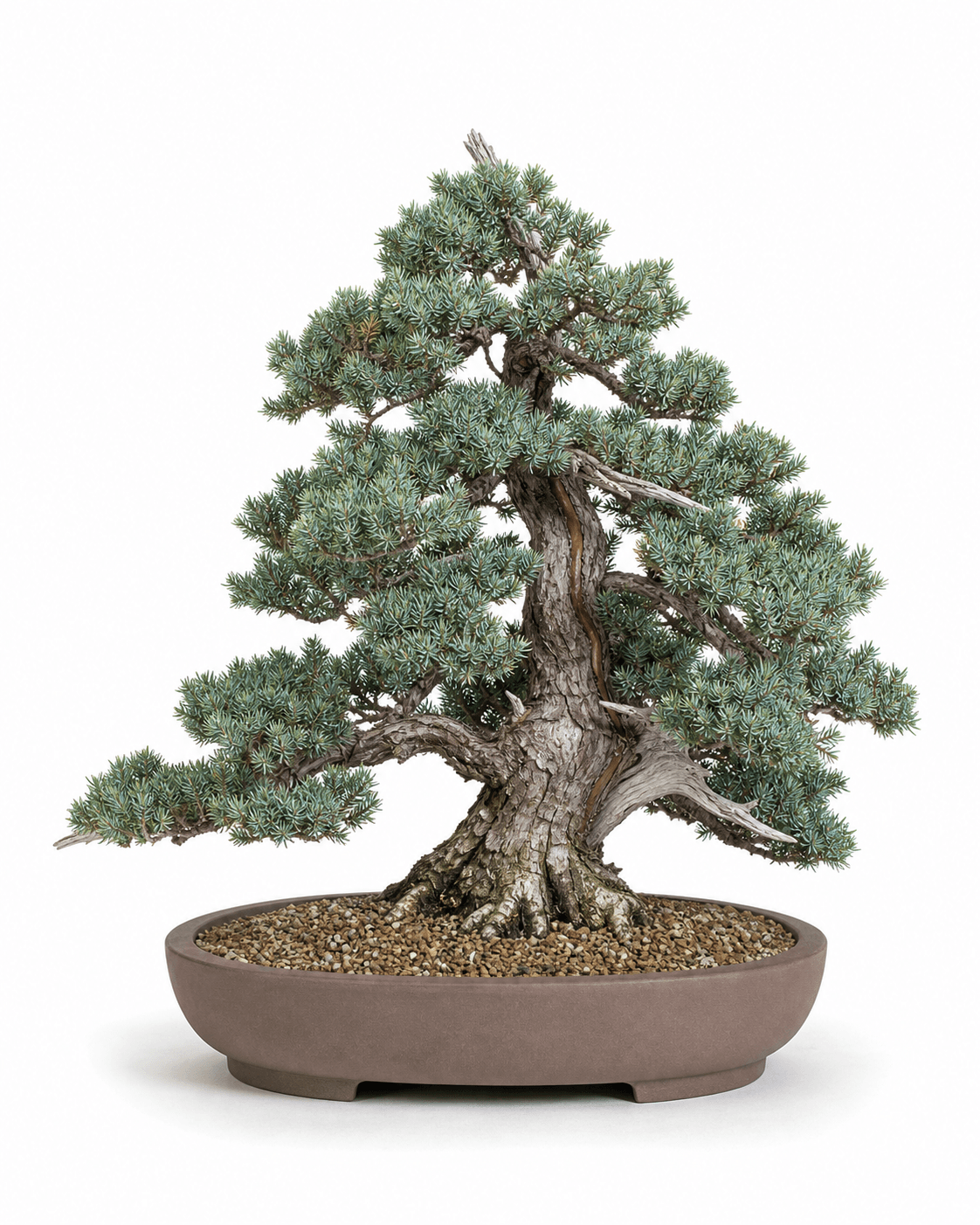
Blue Star juniper is a compact, slow, blue-foliage cultivar of Juniperus squamata that can work as outdoor bonsai when expectations stay small and patient. Treat it as a mounding squamata cultivar: strong light, moving air, mineral soil, staged root work, and scissor pruning after growth hardens.
The local Mirai corpus has no dedicated Blue Star episode. This guide uses the direct Mirai Juniperus squamata notes from procumbens-juniper and needle-juniper-repot, transferred procumbens and mounding-juniper method, and public horticultural sources for cultivar identity, hardiness, morphology, and pest context.
Separate Blue Star from upright Meyeri-style squamata, procumbens nana, common juniper, needle juniper, San Jose, Blaauw, Foemina, Pfitzer labels, and eastern red cedar before applying timing. Similar prickly or blue foliage can hide different root work, soil, and refinement behavior.
Updated June 10, 2026. Written by EntGrove Editorial. Last verified June 10, 2026.
Care fingerprint
Read the species through its shared care pattern.
Open pads for light, avoid stripping all low growth, and understand that cheap starter junipers still need outdoor recovery. Use this as the starting point before local conditions and tree strength refine the calendar.
Note: Compact cultivated Juniperus squamata selection with no dedicated local Mirai file; use the broader squamata and procumbens transfer method, then verify against Meyeri, Blue Carpet, procumbens, common juniper, needle juniper, San Jose, Blaauw, Foemina, Pfitzer labels, and eastern red cedar.
Keep foliage strong
Junipers recover through active foliage, so styling choices should leave enough healthy tips to power the tree.
Protect live veins
Old junipers often depend on narrow live veins between roots and foliage; root work and carving should respect that path.
Do not stack major work
Heavy bending, major foliage reduction, carving, and repotting belong in a staged plan rather than the same weekend.
Care cadence
The calendar starts with the tree's seasonal state.
Placement
Timing: Grow outdoors year round in sun and moving air. Use morning sun and afternoon protection after repotting, hard pruning, or during severe heat.
Watch for: Indoor display, shaded porches, hot pavement, dry wind after root work, and blue foliage that masks weak roots.
Missouri Botanical GardenBonsai Mirai LibraryWatering
Timing: Water in repeated passes until the whole rootball drains, then wait for the upper soil to begin drying before watering again.
Watch for: Hydrophobic nursery peat, old akadama mud, water running around the core, and withholding water because the cultivar is drought tolerant in the ground.
Bonsai Mirai LibraryFeeding
Timing: Feed healthy development trees during active growth. Use lighter feeding on small refined trees or recently stressed foliage.
Watch for: Soft pest-prone growth, coarse outer tufts, fertilizer on weak roots, and starvation during the years when structure should be built.
Bonsai Mirai LibraryFoliage maintenance
Timing: Let spring growth harden, then clean bottoms, remove selected crotch congestion, and shorten long tips back to living interior growth.
Watch for: Pinching, shearing the surface into a ball, cutting to bare wood, and removing every low shoot before a trunk line is chosen.
Bonsai Mirai LibraryRepotting
Timing: Repot during spring movement on a strong tree. Keep foliage mass, tie the tree down firmly, and convert old nursery cores over staged cycles.
Watch for: Bare-rooting, root work after a major pruning session, loose tie-downs, and an oversized wet pot around a small active root system.
Bonsai Mirai LibraryWiring
Timing: Wire lignified branches after growth hardens and when the tree is hydrated. Use enough wire to set the branch in one calm operation.
Watch for: Wire hidden in dense blue tufts, crushed foliage, torn crotches, old brittle branches, and wire bite during strong recovery.
Bonsai Mirai LibraryPropagation
Timing: Use cuttings to preserve the Blue Star cultivar. Seedlings from Juniperus squamata will not be dependable Blue Star clones.
Watch for: Seed-grown plants sold as named cultivar stock, weak cuttings with too much foliage removed, and undocumented graft unions.
Missouri Botanical GardenBonsai Mirai LibraryPests and disease
Timing: Inspect dense foliage in hot dry weather, humid spells, winter shelter, and after nursery-stock reduction.
Watch for: Spider mites, scale, aphids, twig blights, Phomopsis-style tip dieback, rust, root rot, wet-soil stress, and interior browning from shade.
UC IPM JuniperUC IPM Juniper Twig BlightsBonsai Mirai LibraryWinter protection
Timing: Keep dormant outdoors and protect the pot from repeated hard freezes, drying wind, and thaw-refreeze cycles.
Watch for: Warm indoor overwintering, frozen dry roots, recently cut roots left exposed, and heavy late-season pruning before cold rain.
The Gymnosperm DatabaseBonsai Mirai LibrarySpecies guide
Apply the species profile before copying another tree's calendar.
At a glance
Blue Star is a small mounding squamata cultivar, not a fast trunk project.
Blue Star should be recorded as Juniperus squamata 'Blue Star'. The parent species is Himalayan or flaky juniper, and Missouri Botanical Garden grounds the cultivar as a dwarf Blue Star selection. Missouri Botanical GardenThe Gymnosperm DatabaseFlora of China
For bonsai, the practical headline is compact growth. Blue Star is valuable for texture, color, small scale, and accessible nursery stock, while trunk size and branch girth usually require long development or starting with older material. Missouri Botanical GardenBonsai Mirai / Asymmetry
The Mirai method signal comes through Juniperus squamata and procumbens comparison. Squamata follows procumbens-style technique and should stay outside the very late true needle-juniper timing used for rigida and common juniper. Bonsai Mirai Library
Wild habitat
The wild parent is a high-mountain Asian juniper; the cultivar is a nursery selection.
The Gymnosperm Database places Juniperus squamata across high mountain Asia, including Afghanistan, the Himalaya, China, India, Myanmar, Nepal, Pakistan, and Tibet. Flora of China supplies the Chinese treatment and morphology. The Gymnosperm DatabaseFlora of China
That parent habitat gives the care logic: bright outdoor light, cold dormancy, wind, and mineral drainage. A bonsai pot should translate that into complete watering, fast oxygen return, and winter root protection. The Gymnosperm DatabaseBonsai Mirai Library
Blue Star itself is a cultivated dwarf mound rather than a wild ecological form. Design should therefore blend parent-species mountain cues with the honest nursery habit: low mass, blue texture, compact branchlets, and a smaller image. Missouri Botanical GardenBonsai Mirai / Asymmetry
For care, that means avoiding indoor warmth, stagnant wet soil, and styling that exposes more bare structure than the tree can support. For design, it favors quiet scale, visible live paths, and negative space inside a compact silhouette. Bonsai Mirai LibraryBonsai Mirai / Asymmetry
Reading the tree
Read Blue Star by color, firmness, extension, interior light, and root behavior.
Healthy Blue Star foliage should feel firm and active, with enough extension to show energy beyond static blue color. Color alone is a weak health measure because dense juniper foliage can stay blue while roots decline. Bonsai Mirai Library
Read density before pruning. A nursery mound can have a green outer shell and a shaded interior with few usable branchlets. Open the tree enough to see branch structure before deciding the first design. Bonsai Mirai LibraryUC IPM Juniper
Read the rootball with water. If water runs around the root mass, beads on old peat, or drains from only one side, root-core correction should come before heavy styling. Bonsai Mirai Library
Read identity with humility. A blue prickly juniper tag can hide Blue Star, Meyeri, Blue Carpet, common juniper, procumbens, Pfitzer, or a juvenile Chinese juniper. Care from the observed tree first, then record the best label evidence. The Gymnosperm DatabaseBonsai Mirai Library
Foliage work
Prune Blue Star like a compact mounding juniper with squamata caveats.
Avoid pinching. Mirai consistently warns against juniper pinching as a stress practice; Blue Star should build strength, extend, harden, and then receive selective scissor cuts. Bonsai Mirai Library
Begin cleaning from the underside of pads and congested crotches. This reveals branch structure, improves light, and keeps useful top and side growth available for design decisions. Bonsai Mirai Library
Do not hollow the mound in one session. Blue Star is slow, and excessive interior stripping leaves bare wood that will not reliably produce a new branch where you want it. Bonsai Mirai Library
Shorten long or awkward tips back to living lateral growth after hardening. Keep green on every branch that must remain part of the design, and build replacement growth before removing an old exterior branch. Bonsai Mirai Library
A first nursery-stock session should often stop after cleaning, branch selection, and light structure work. The compact habit makes repeated smaller sessions more reliable than one dramatic reveal. Bonsai Mirai LibraryBonsai Mirai / Asymmetry
Roots
Repot during spring movement and keep foliage available for recovery.
Mirai directly separates Juniperus squamata from the true needle-juniper repot rule set. Use spring movement and scale-juniper aftercare for Blue Star unless local expert practice and the tree response prove otherwise. Bonsai Mirai Library
Preserve enough active foliage to power new roots. Heavy root reduction and heavy foliage reduction in one cycle can remove the photosynthetic engine that funds recovery. Bonsai Mirai Library
Convert old nursery soil gradually. Open compacted pockets, remove circling roots, protect functional roots, and refill cavities with fresh mineral soil so water moves through the center rather than around it. Bonsai Mirai Library
Tie down carefully. A small mound with a shallow root system can rock in wind or during watering, and moving roots lose the fine tips that Blue Star needs for recovery. Bonsai Mirai Library
After repotting, use quiet aftercare: wind protection, morning sun, accurate watering, no additional pruning, and no fertilizer until new growth confirms recovery. Bonsai Mirai Library
Soil and pot
Use open mineral soil and a pot scaled to a low blue mound.
A 1:1:1 akadama:pumice:lava mix is the safest starting point because Mirai groups Juniperus squamata with procumbens technique. Screen particle size to the pot, usually fine enough for small roots while still leaving air. Bonsai Mirai Library
Hot dry climates may need smaller particles, more akadama, pot shade, or better wind control. Wet humid climates may need faster drainage, stronger airflow, and more attention to twig blights. Bonsai Mirai LibraryUC IPM Juniper Twig Blights
Use development containers before display pots when the trunk and roots need work. A shallow finished pot can make a slow cultivar weaker if it arrives before the root system is ready. Bonsai Mirai Library
Display containers should be restrained: small unglazed ovals, soft rectangles, crescent forms, slabs, or quiet earth-tone pots that let the blue foliage and trunk line carry the composition. Bonsai Mirai / Asymmetry
Climate
Translate landscape hardiness into bonsai root protection and heat management.
The parent species is a cold-climate mountain juniper, and The Gymnosperm Database gives Zone 5 hardiness context. In a bonsai pot, root protection starts sooner because shallow containers freeze and dry faster than ground soil. The Gymnosperm DatabaseBonsai Mirai Library
Cold regions should keep the tree dormant outdoors, then protect the pot in mulch, an unheated cold frame, or another cold bright shelter during severe freezes and drying wind. Bonsai Mirai Library
Hot regions should prioritize morning sun, pot shade, moving air, and complete watering. Blue foliage can bleach, dull, or dry at the tips when root heat and water stress combine. Missouri Botanical GardenUC IPM Juniper
Humid regions should thin gradually for airflow, keep foliage from staying wet overnight, and avoid fertilizer-heavy soft growth before disease-prone weather. UC IPM Juniper Twig BlightsBonsai Mirai Library
Pests
Dense blue foliage hides mites, scale, blight, and root stress.
Spider mites are a leading risk on dense junipers during hot dry conditions and winter shelter. Tap foliage over white paper and inspect weak interior tufts before damage spreads. UC IPM Juniper
Scale, aphids, borers, bark beetles, foliage miners, and sawflies can affect Juniperus. Confirm the pest and correct stress from weak light, poor airflow, drought, wet roots, or excessive nitrogen. UC IPM Juniper
Twig blights show as browning tips, dieback, and branchlet decline. UC IPM emphasizes sanitation, infected-tip removal, debris disposal, dry foliage, and avoiding conditions that keep junipers lush and wet. UC IPM Juniper Twig Blights
Root rot and Phytophthora risk rise when old organic cores stay wet, when a pot is oversized for the active foliage, or when heavy pruning sharply lowers water use. UC IPM JuniperBonsai Mirai Library
Interior browning also comes from shade and natural old-foliage loss. Diagnose before spraying: open pads, check roots, look for mites, then treat only a confirmed pest or disease. Bonsai Mirai LibraryUC IPM Juniper
Wiring
Wire the branch structure, not the blue tufts.
Wire only hydrated, strong material after growth has hardened. Small Blue Star branches can be stiff at the base and dense at the tips, so work slowly from branch structure outward. Bonsai Mirai Library
Use enough gauge to set the branch once. Underwiring a compact juniper leads to repeated bending, torn crotches, and wire hidden under foliage. Bonsai Mirai Library
Avoid running wire into prickly green tufts where it crushes productive foliage. Set the lignified branch, then shape the foliage through later cleaning and pruning. Bonsai Mirai Library
Check wire often after feeding, repot recovery, or summer growth. Dense blue foliage can hide bite until the mark is already deep. Bonsai Mirai Library
Propagation
Cuttings preserve Blue Star; seed produces variable squamata.
A named cultivar should be propagated vegetatively. Cuttings preserve Blue Star identity more reliably than seed, which creates variable Juniperus squamata seedlings. Missouri Botanical GardenBonsai Mirai Library
Use healthy source material, moderate foliage reduction, humidity, and well-drained media. Overstripping a small cutting removes the foliage that powers rooting. Bonsai Mirai Library
Grafting Blue Star onto another root system should answer a clear problem: weak roots, a needed branch, or a design that benefits from its compact blue texture. It is rarely the first choice for fine shimpaku refinement. Bonsai Mirai LibraryBonsai Mirai / Asymmetry
Air layers can be part of the broader juniper toolkit, but Blue Star is usually easier to source as a cutting-grown or nursery-grown plant with recoverable roots. Bonsai Mirai Library
Sourcing
Buy for roots, visible trunk, and interior growth before blue color.
Good Blue Star material has documented cultivar identity, firm active foliage, a visible base, useful low branches, interior growth, and water that penetrates the existing rootball. Missouri Botanical GardenBonsai Mirai Library
Red flags include a generic blue juniper label, no Latin name, a perfect ball with no visible trunk, dead interior twigs, mite stippling, hydrophobic peat, buried graft unions, and fresh severe pruning. Bonsai Mirai LibraryUC IPM Juniper
Expect slow trunk development. A young Blue Star is useful for shohin, clumps, raft-like starts, and learning mounding-juniper timing, while dramatic aged deadwood usually needs older material or another juniper. Bonsai Mirai / AsymmetryBonsai Mirai Library
Separate the label from similar plants before paying more. Meyeri, Blue Carpet, procumbens, common juniper, San Jose, Blaauw, Pfitzer, and eastern red cedar can all appear in blue or prickly nursery contexts. The Gymnosperm DatabaseBonsai Mirai Library
Troubleshooting
Diagnose Blue Star by recent work, root contact, density, pests, and identity.
Symptom: tips brown after pruning. Likely cause: cutting soft growth, cutting to bare stems, or removing too much foliage before the tree was strong. Fix: stop work, improve sun and water, and wait for hardened extension. Bonsai Mirai Library
Symptom: interior foliage dies while the outside stays blue. Likely cause: dense shade, normal old-foliage shedding, mites, or twig blight. Fix: inspect first, then open pads gradually and correct the confirmed cause. Bonsai Mirai LibraryUC IPM JuniperUC IPM Juniper Twig Blights
Symptom: water runs around the soil. Likely cause: hydrophobic nursery core, compact roots, or collapsed organic media. Fix: refresh the surface, test percolation, and schedule staged spring repotting. Bonsai Mirai Library
Symptom: blue color fades or foliage dulls. Likely cause: heat, drought, shade, root stress, mite pressure, or seasonal cultivar response. Fix: adjust light and pot temperature, check roots, and confirm pests before treatment. Missouri Botanical GardenUC IPM Juniper
Symptom: the tree was repotted very late like true needle juniper and declined. Likely cause: applying rigida or common-juniper timing to squamata. Fix: recover under scale-juniper aftercare and verify identity before the next root cycle. Bonsai Mirai Library
Design
Design Blue Star as a small textured tree with deliberate voids.
Start with base, trunk line, defining branch, and apex, even when the plant arrives as a round mound. Remove just enough foliage to reveal structure before choosing the final front. Bonsai Mirai / AsymmetryBonsai Mirai Library
Blue Star suits compact images: shohin informal upright, low clump, small cascade, raft, root-over-rock, and accent-scale compositions. Its blue texture can be the feature when the design leaves enough negative space. Missouri Botanical GardenBonsai Mirai / Asymmetry
Deadwood should be restrained. A small mounding cultivar often looks stronger with one clear live vein, small jin, or quiet shari than with oversized carving copied from old western junipers. Bonsai Mirai / AsymmetryBonsai Mirai Library
The pot should reinforce scale. A quiet low oval, small rectangle, slab, or crescent can make the mound read intentional, while a large deep pot can make the slow tree look unfinished. Bonsai Mirai / Asymmetry
Cultivars
Blue Star is one squamata cultivar among several blue nursery labels.
Blue Star is the compact dwarf cultivar this page covers. The broader Juniperus squamata species page covers Meyeri, Blue Carpet, Holger, Loderi, Wilsonii, Prostrata, and generic flaky or Himalayan juniper labels. Missouri Botanical GardenThe Gymnosperm Database
Meyeri-style material is generally more upright and coarser, aligning with the Mirai note that squamata can be more upright and slightly coarser than procumbens. Blue Star should be read as lower, smaller, and slower. The Gymnosperm DatabaseBonsai Mirai Library
Procumbens nana is another mounding starter juniper, but it is a different species with a different landscape origin and stronger beginner retail history. Compare both before transferring assumptions. Bonsai Mirai Library
Common juniper and needle juniper can look similar because of sharp foliage, yet true needle-juniper timing and soil are specialized. Blue Star should follow squamata and procumbens-style handling unless the actual plant proves otherwise. Bonsai Mirai Library
History
Blue Star is a practical nursery cultivar, so the bonsai value comes from patient development.
The public history for Blue Star is horticultural rather than exhibition-centered. The Gymnosperm Database notes Blue Star as a popular horticultural cultivar, and Missouri Botanical Garden treats it as a named landscape selection. The Gymnosperm DatabaseMissouri Botanical Garden
That modest history is useful for beginners with outdoor space. Blue Star teaches root conversion, mounding-juniper cleaning, interior-light management, and design proportion without the cost of premium shimpaku material. Bonsai Mirai LibraryBonsai Mirai / Asymmetry
The exhibition standard should be honest scale: clean roots, visible trunk line, compact foliage, blue texture, open negative space, and deadwood or stone only where the material supports it. Bonsai Mirai / Asymmetry
A strong Blue Star bonsai usually reads as a small deliberate composition rather than a compressed old tree. That is a valid design lane when the grower accepts the cultivar pace. Bonsai Mirai / AsymmetryBonsai Mirai Library
Species questions
Answer the beginner questions before styling.
Can Blue Star juniper be used for bonsai?
Yes. Blue Star juniper can be used for outdoor bonsai, especially small mounding, clump, shohin, raft-like, or root-over-rock designs. It is slow, so patience matters.
Can Blue Star juniper live indoors?
No. Blue Star needs outdoor sun, airflow, seasonal temperature change, and winter dormancy. Indoor display should be brief.
Is Blue Star juniper the same as Himalayan juniper?
Blue Star is a compact cultivar of Juniperus squamata, the Himalayan or flaky juniper. Use the Blue Star page for cultivar habit and the Himalayan page for broader species context.
Should Blue Star juniper be pinched?
Avoid pinching. Let growth strengthen and harden, then prune with sharp scissors to living side growth while preserving enough foliage on each branch.
When should Blue Star juniper be repotted?
Repot during spring movement on a strong tree. Keep active foliage, stage old nursery-core removal, and tie the rootball down firmly.
What soil is best for Blue Star juniper bonsai?
Start with open mineral soil such as 1:1:1 akadama:pumice:lava, with particle size matched to the pot and root system. Adjust for climate and watering skill.
Why is my Blue Star juniper turning brown inside?
Common causes include dense foliage blocking light, mites, twig blight, root stress, or natural old-foliage shedding. Inspect before spraying and open pads gradually.
How fast does Blue Star juniper grow as bonsai?
Slowly. Expect compact growth, gradual root improvement, and small-scale design work rather than rapid trunk thickening.
Is Blue Star juniper beginner friendly?
It is beginner friendly only for someone with outdoor growing space and patience. The tree is accessible, but credible bonsai development is slow and root work must be staged.
How is Blue Star different from procumbens nana?
Both can be low mounding starter junipers, but Blue Star is a Juniperus squamata cultivar with blue, compact, slow growth. Procumbens nana is Juniperus procumbens Nana and has its own retail history and species identity.
Sources
Species advice needs source discipline.
Next decisions
Plan the operation before copying the calendar.
A good care note for Blue Star juniper records the tree's stage, the work done, and the aftercare used. That record matters more than a month-name rule.
Related species
Compare nearby trees before transferring advice.
Procumbens nana
Juniperus procumbens 'Nana'
Green mound juniper
Juniperus procumbens 'Nana'
Shore juniper
Juniperus conferta
Blue Pacific shore juniper
Juniperus conferta 'Blue Pacific'
Common juniper 'Compressa'
Juniperus communis 'Compressa'