
Species guide
Bishop Pine Bonsai Care
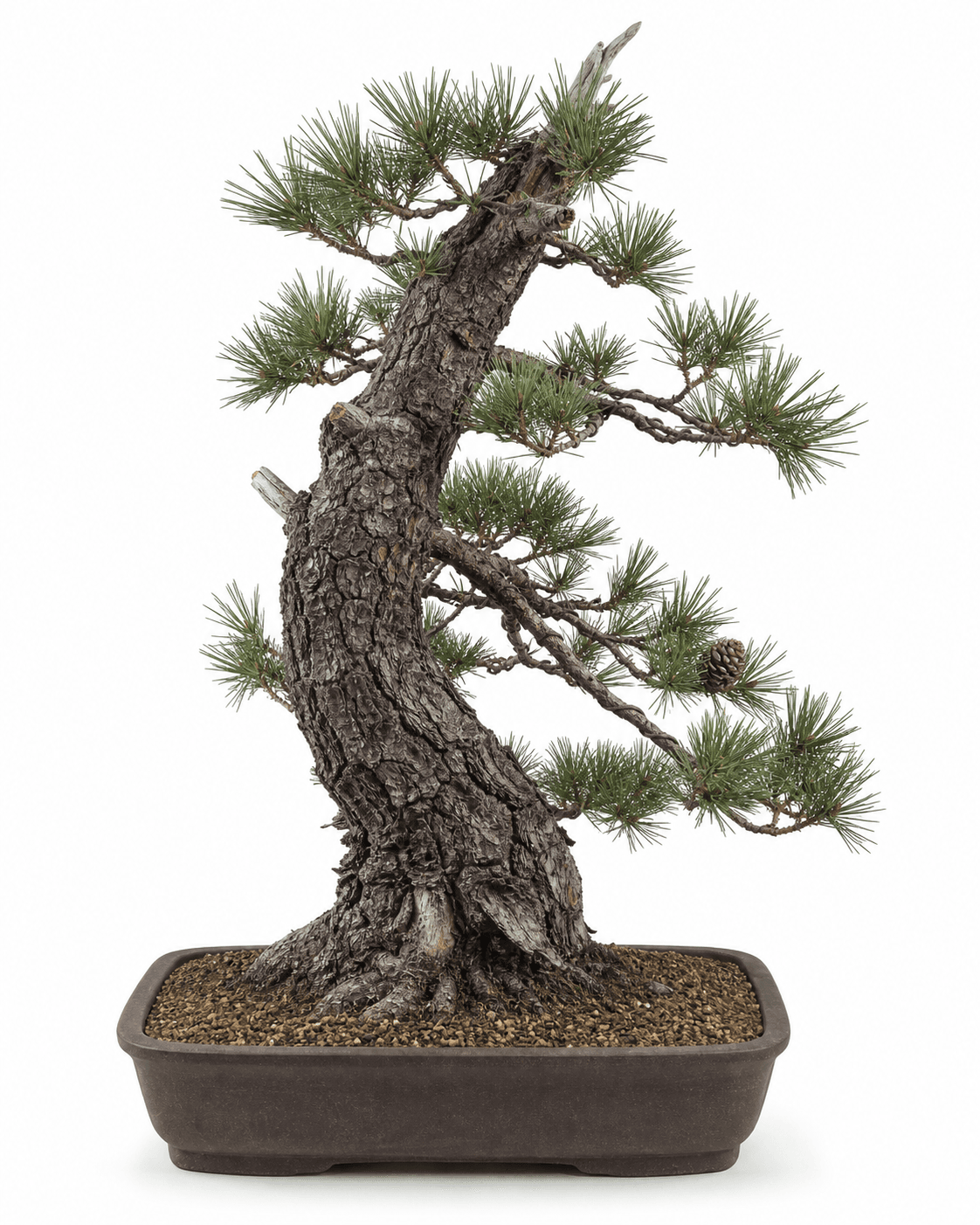
Pinus muricata
Bishop pine is a coastal, closed-cone California and northern Baja pine that belongs outdoors in full sun, moving air, and an oxygen-rich root zone. Treat it as a long-needle single-flush pine: build vigor, preserve productive needles, avoid black-pine decandling, and let the tree recover between major operations.
The local Mirai corpus has no dedicated Bishop pine file, so this profile states the source depth plainly. Bonsai method is transferred from Mirai long-needle single-flush pine, unknown-pine, Monterey pine, Ponderosa, repotting, wiring, and design files; Kew, Calflora, USDA FEIS, NPS, RHS, and UC IPM ground the species facts.
Updated June 6, 2026. Written by EntGrove Editorial. Last verified June 6, 2026.
Care fingerprint
Read the species through its shared care pattern.
Do not default to Japanese black pine decandling; manage vigor through timing, needle balance, light, and conservative pruning. Use this as the starting point before local conditions and tree strength refine the calendar.
Identify flush behavior
Single-flush, multiflush, white pine, and compact pine groups have different pruning windows and different risk levels.
Avoid default decandling
Japanese black pine methods do not transfer safely to every pine, especially slow, weak, collected, or five-needle trees.
Use needles as strength data
Needle length, color, age, and density help show where vigor is strong, weak, or becoming shaded.
Care cadence
The calendar starts with the tree's seasonal state.
Placement
Timing: Grow outdoors in full sun with steady airflow. In hot inland gardens, protect the pot during extreme heat while keeping the foliage bright.
Watch for: Indoor culture, stagnant patios, reflected heat, dry hot wind without root moisture, and warm winter storage that weakens a coastal pine rhythm.
RHSNational Park ServiceBonsai Mirai LibraryWatering
Timing: Water until the whole root mass is wet, then let air return. During dry summer heat, check the root zone directly because the native fog signal is absent in many gardens.
Watch for: Dry pockets in old soil, compact wet cores, water stress used as needle reduction, and drought immediately after wiring, repotting, or collection.
National Park ServiceBonsai Mirai LibraryDevelopment feeding
Timing: Feed strongly once the tree is clearly growing. Long-needle pines need foliage mass and sugars before they can back bud or tolerate structural work.
Watch for: Trying to miniaturize too early, removing sacrifice growth before interior buds exist, and cutting fertilizer while the tree still needs vigor.
Bonsai Mirai LibraryUSDA Forest Service FEISRefinement feeding
Timing: After branch structure and bud count are adequate, reduce spring strength and support recovery later in the season so energy spreads across more growing points.
Watch for: Coarse shoots from overfeeding a finished crown, weak fall reserves after pruning, and confusing refinement restraint with starving the tree.
Bonsai Mirai LibraryPruning and needle work
Timing: Use single-flush pine timing. Let spring candles extend, prune only after the flush hardens where needle bases can set buds, and clean old needles when they release naturally.
Watch for: Black-pine decandling, spring candle removal, stripping productive needles, and cutting current shoots after the bud-setting window has passed.
Bonsai Mirai LibraryRepotting
Timing: Repot at spring bud movement, then protect from extremes. Separate major root work from heavy foliage work unless the tree has exceptional vigor.
Watch for: Bare-rooting, loose tie-downs, old nursery cores, sour soil, drying coastal roots after reduction, and styling hard in the same season.
Bonsai Mirai LibraryWiring
Timing: Wire structural branches when the tree is energy-positive, often late summer to fall or in the final pre-push window. Check fast-thickening branches frequently.
Watch for: Wire bite, cracked older bark, hidden tears under raffia, sunburn after branch rotation, and bending branches that have too little foliage.
Bonsai Mirai LibraryPests and disease
Timing: Inspect through foggy, humid, wounded, or drought-stressed periods, and after acquiring coastal California material.
Watch for: Pitch canker resin, branch tip dieback, engraver beetles, twig beetles, cone beetles, deathwatch beetles, needle cast, sawfly larvae, adelgids, aphids, and pine shoot moth.
UC IPMNational Park ServiceRHSWinter rest
Timing: Keep outdoors with cool seasonal rest. Protect potted roots from hard freezes, especially outside the species coastal comfort zone.
Watch for: Warm indoor overwintering, frozen dry roots, wet frozen soil, and assuming landscape H5 hardiness protects an exposed bonsai pot.
RHSBonsai Mirai LibrarySpecies guide
Apply the species profile before copying another tree's calendar.
At a glance
Bishop pine is a coastal closed-cone pine with a narrow comfort zone.
Kew accepts Pinus muricata D.Don in Pinaceae and gives the native range as western California, including the Channel Islands, to northwestern Baja California. Calflora records it as accepted by Jepson, USDA PLANTS, and POWO. Kew POWOCalflora
For bonsai, EntGrove places Bishop pine in Pine > Long-Needle Single-Flush Pines. That grouping is practical rather than decorative: it tells the grower to avoid multiflush black-pine decandling and to build work around one spring push, post-flush pruning, old-needle release, and health-first back-budding. Bonsai Mirai Library
The species-specific care theme is coastal restraint. Give sun, air, winter rain rhythm, high root oxygen, and enough water to replace summer fog. Then design around sparse coastal forms, persistent cones, fire history, and wind rather than dense black-pine pads. National Park ServiceUSDA Forest Service FEISBonsai Mirai / Asymmetry
Wild habitat
Its wild image is maritime fog, closed cones, fire, and coastal exposure.
USDA FEIS describes Bishop pine as disjunct coastal populations from Curry County, Oregon, into California from Humboldt County to Santa Barbara County, plus Santa Cruz Island, Santa Rosa Island, and Baja California. NPS describes the Point Reyes population as part of a limited relict coastal distribution. USDA Forest Service FEISNational Park Service
The climate is Mediterranean, with winter precipitation and dry summers. NPS emphasizes summer fog as an important moisture source, and FEIS notes elevation from near sea level to about 1,320 ft, or 0 to 400 m. National Park ServiceUSDA Forest Service FEIS
Soils vary more than a simple coastal label suggests. FEIS records shallow or poorly drained sites, low-pH pygmy-forest hardpan, dry gravelly sands, peat bogs, serpentine and clay germination contexts, and diatomaceous shale that can support stronger growth. USDA Forest Service FEIS
Care follows that ecology. A bonsai pot cannot provide a coastal terrace, fog belt, and deep wild root system, so the grower supplies even moisture, fast oxygen return, airflow, and root-zone protection during inland heat. National Park ServiceBonsai Mirai Library
Design follows the same ecology. FEIS and NPS describe closed-cone forests, pure stands, redwood and Douglas-fir associations in the north, chaparral and coastal sage scrub mosaics in the south, and fire-origin even-aged stands. Those images support sparse crowns, wind-shaped trunks, and forest compositions. USDA Forest Service FEISNational Park ServiceBonsai Mirai / Asymmetry
Reading the tree
Read vigor, candle hardening, and old needles before making pine work.
The local Mirai corpus has no dedicated Bishop pine file. The strongest evidence path is transferred method from long-needle single-flush pines and the Mirai unknown-pine guidance: when flush behavior is uncertain, default to single-flush post-harden pruning because it preserves the safest bud response. Bonsai Mirai Library
Development-stage Bishop pine should be allowed to grow. FEIS calls the species rapid-growing, and Mirai pine method treats needle mass as the battery that creates interior buds, branch strength, and recovery capacity. USDA Forest Service FEISBonsai Mirai Library
Refinement begins only after the tree has enough shoots to distribute energy. A long-needle pine with too few growing points will stay coarse no matter how hard it is pinched, and a weak tree will decline if foliage is removed to chase small needles. Bonsai Mirai Library
Old needles matter as a timing signal. FEIS says Bishop pine needles persist 2 to 3 years, which matches the practical single-flush pine habit of using natural old-needle release and branch strength rather than spring defoliation habits. USDA Forest Service FEISBonsai Mirai Library
Pruning
Let the flush harden, then prune with needle bases and buds in mind.
Mirai single-flush pine guidance says post-flush pruning happens after spring candles elongate and needles harden. The visible signals are darker color, firmer texture, and sharper needle tips. Bonsai Mirai Library
When shortening current growth, leave several pairs of new needles at the cut site. The meristematic tissue at the needle base is the source of buds after the cut, and that response weakens once the tissue hardens beyond the early-summer window. Bonsai Mirai Library
Use shoot selection before blanket cutting. On a fork with one coarse shoot and finer shoots, Mirai pine method often favors removing the dominant shoot and leaving finer options intact so next year energy is spread more evenly. Bonsai Mirai Library
Do not decandle Bishop pine like Japanese black pine. A long-needle single-flush pine needs existing needles to photosynthesize, set buds, and recover after pruning. Bonsai Mirai Library
Cones can be beautiful but costly. FEIS notes that Bishop pine starts producing seed young and can produce good seed crops every 2 to 3 years. On bonsai, remove cones when the tree needs strength for roots, buds, or branch development. USDA Forest Service FEISBonsai Mirai Library
Roots
Repot Bishop pine as a staged pine root system, not as a washable broadleaf.
Use spring bud movement as the safest general repot signal. Mirai pine repotting method emphasizes stable tie-down, high oxygen, staged old-soil conversion, and aftercare that protects the tree while new roots rebuild water flow. Bonsai Mirai Library
Bishop pine can grow in difficult wild soils, but wild tolerance does not make the container rootball casual. FEIS records acidic hardpan, shallow or poorly drained soils, dry sands, peat, serpentine, clay, and shale. A purchased tree may therefore hide a root core that behaves very differently from the surface soil. USDA Forest Service FEIS
For nursery or collected material, reduce old soil over multiple repots. Avoid bare-rooting, cutting every structural root in one session, or styling heavily before the tree proves new root function. Bonsai Mirai Library
Tie-down is part of root care. A pine that rocks in the pot breaks new roots each time the trunk moves, so secure the tree before filling soil and water until the mix settles evenly around the roots. Bonsai Mirai Library
Soil and pot
Use mineral drainage with enough water capacity to replace coastal fog.
A practical Bishop pine bonsai mix starts with akadama, pumice, and lava, then shifts by climate. Coastal growers can keep more akadama and water retention; hot inland growers often need larger particle size, pot shading, and more frequent checks rather than a drier mix. Bonsai Mirai LibraryNational Park Service
RHS says Bishop pine grows in any well-drained soil and tolerates acid, neutral, or alkaline pH. FEIS makes the deeper point: wild trees occupy several soil chemistries, but the container priority remains oxygen after full watering. RHSUSDA Forest Service FEISBonsai Mirai Library
Pot choice should respect the species character. Unglazed oval, rectangle, crescent, slab, or rock-planting containers can support coastal forest, windswept, and fire-origin designs better than a delicate glazed deciduous pot. Bonsai Mirai / Asymmetry
Size the pot to the stage. Development trees need room to extend roots and shoots; refinement trees can move smaller only after enough buds and branches divide the energy. Bonsai Mirai Library
Climate
The further you grow from the fog belt, the more root-zone management matters.
NPS describes a maritime distribution dominated by summer fog, and FEIS describes winter-rain, dry-summer Mediterranean climate. A coastal California bench may match that rhythm naturally; an inland bench must compensate with root cooling, steady watering, and airflow. National Park ServiceUSDA Forest Service FEIS
Cold adaptation is milder than Scots or Ponderosa pine. RHS rates the species H5, and potted roots are more exposed than landscape roots. Protect containers from hard freezes while preserving outdoor winter rest. RHSBonsai Mirai Library
Hot dry interiors are also a risk. Keep the crown in strong light, but prevent the container from becoming a baked, dry root block during heat waves. National Park ServiceBonsai Mirai Library
Humid coastal disease pressure cuts the other direction. UC IPM notes that pitch canker disease severity can be higher near the coast where fog and mild conditions support infection after wounds. UC IPM
Pests and diseases
Pitch canker is the pest section you read before buying the tree.
UC IPM identifies pitch canker as Fusarium circinatum and says the most recent severe California outbreak was in native Bishop pine at Point Reyes. Its table lists Bishop pine as susceptible in greenhouse and field conditions. UC IPM
NPS says the disease was discovered in a Point Reyes Bishop pine forest around 2006. Symptoms include tan branch tips, pitch at lesions, branch dieback from blocked water flow, and eventual crown decline in severe cases. National Park Service
UC IPM names insect vectors that can carry the pathogen, including engraver beetles, twig beetles, cone beetles, and deathwatch beetles. In bonsai terms, wound hygiene, local-source caution, and avoiding movement of suspect material matter more than routine spraying. UC IPM
RHS lists possible adelgids, conifer aphid, sawfly larvae, pine shoot moth, honey fungus, and needle cast diseases. Use local extension or IPM diagnosis before treatment because pine symptoms overlap heavily. RHS
Prevention is practical: buy healthy material, quarantine suspect trees, sterilize tools after cankered branches, improve airflow, avoid unnecessary wounds during humid periods, and dispose of infected wood locally where regulations require it. UC IPMNational Park Service
Wiring
Wire for coastal movement, then check before fast pine thickening scars the branch.
Bishop pine can carry strong coastal movement: slanted trunks, wind-swept crowns, broken branch angles, and sparse silhouettes. Wire should clarify those lines rather than forcing every branch into compact formal pads. Bonsai Mirai / AsymmetryUSDA Forest Service FEIS
Use strong, healthy branches for structural bends. Long-needle pine method protects foliage as the engine for recovery, so avoid bending a branch after stripping the needles it needs to heal. Bonsai Mirai Library
For heavier bends, support with raffia, guy wires, rebar, or staged movement, but keep tear signals visible. A branch that turns white at the outside of a bend or loses water flow should be released and stabilized. Bonsai Mirai Library
Check wire often during active growth. Rapid-growing young Bishop pine can swell quickly, while older bark can mark permanently if wire is left until the branch bites hard. USDA Forest Service FEISBonsai Mirai Library
Propagation
Seed is the natural path, but provenance is a real conservation issue.
RHS recommends seed propagation. FEIS says Bishop pine can begin producing seed at 5 to 6 years and that good seed crops recur every 2 to 3 years. RHSUSDA Forest Service FEIS
The cones are often serotinous. FEIS reports that cones can remain closed for several years, then open after fire or hot days; heat up to 203 F, or 95 C, did not seriously reduce seed germination in the study it cites. USDA Forest Service FEIS
Seedlings are the most ethical way to learn the species. They allow trunk building, forest planting, and timing practice without removing scarce coastal material. USDA Forest Service FEISBonsai Mirai Library
Seed is the beginner path for Bishop pine. Advanced Pinus grafting may be possible; treat compatibility, vigor, and disease movement as research questions rather than assumptions. Bonsai Mirai LibraryUC IPM
Provenance matters. FEIS warns that planting seed or trees from unknown sources can compromise genetic and evolutionary study value where distinct Bishop pine populations overlap. USDA Forest Service FEIS
Sourcing
Buy verified, disease-free, legally sourced material with a climate story.
A good candidate has a confirmed Pinus muricata label, paired needles, persistent spiny cones if mature, strong terminal buds, live old needles, clean branch tips, and a root system that can be staged safely. USDA Forest Service FEISRHSBonsai Mirai Library
Ask where it came from. A Point Reyes, Mendocino, Channel Islands, San Luis Obispo, nursery seedling, or unknown landscape tree can differ in hardiness, disease exposure, cone behavior, and growth habit. USDA Forest Service FEISNational Park ServiceCalflora
Avoid material with pitch canker symptoms, tan branch tips, cankered wounds, beetle boring dust, weak candles, compact sour soil, unclear legal collection, or a seller who treats Bishop, Monterey, knobcone, shore, and Ponderosa pines as interchangeable. UC IPMNational Park ServiceUSDA Forest Service FEIS
Collected material should be rare and documented. Seedlings, nursery-grown coastal natives, and restoration-overflow material from legitimate sources are better fits for most growers. USDA Forest Service FEISBonsai Mirai Library
Troubleshooting
Start with root oxygen, climate mismatch, pitch canker, and copied black-pine technique.
Symptom: long coarse needles. Likely cause: development strength, too few growing points, too much spring fertilizer in refinement, or an oversized container. Fix: build more interior buds before reducing vigor. Bonsai Mirai Library
Symptom: no buds after cutback. Likely cause: pruning after the single-flush bud-setting window, cutting without basal needles, or a weak branch. Fix: grow the branch for a season and cut only where needles can make buds. Bonsai Mirai Library
Symptom: tan branch tips with pitch at lesions. Likely cause: pitch canker or wound-associated disease. Fix: isolate the tree, prune only limited infections when appropriate, sterilize tools, and consult local IPM guidance. UC IPMNational Park Service
Symptom: sudden decline after summer heat. Likely cause: root-zone overheating, dry pockets, or a stale wet core that shut down roots before the heat arrived. Fix: cool the pot, restore even watering, and delay styling until candles prove recovery. National Park ServiceBonsai Mirai Library
Symptom: weak response after repotting. Likely cause: too much root removal, poor tie-down, old soil left waterlogged, or aftercare that dried fine roots. Fix: stabilize, protect from extremes, and wait for strong growth before more work. Bonsai Mirai Library
Symptom: crown thinning after decandling. Likely cause: applying Japanese black pine technique to a single-flush pine. Fix: stop decandling, rebuild foliage, and return to post-flush or late-season single-flush timing. Bonsai Mirai Library
Design
Design from closed-cone coastal forest, fire, fog, and sparse light.
Bishop pine has a strong design identity even without a deep public bonsai record. Its native story is coastal exposure, summer fog, persistent cones, relict stands, fire openings, and trees that can be stunted or twisted on difficult sites. National Park ServiceUSDA Forest Service FEISBonsai Mirai / Asymmetry
Use the trunk line first. A slanting trunk, hard bend, low defining branch, broken top, or exposed-root terrace can carry the species better than a symmetrical triangle. Bonsai Mirai / Asymmetry
Foliage should be sparse enough to read as pine. Long paired needles and persistent cones need visual room, so one healthy tuft can carry more weight than a dense short-needle pad. Bonsai Mirai LibraryUSDA Forest Service FEIS
Deadwood should be restrained and pine-like: broken stubs, old branch scars, fire-killed tips, and weathered exposed roots. Avoid importing highly shredded juniper deadwood where the tree history does not support it. Bonsai Mirai / Asymmetry
Forest plantings are especially credible. FEIS describes even-aged stands after fire, and NPS describes Point Reyes Bishop pine forest acreage and burn history. A group can show post-fire regeneration better than a single formal tree. USDA Forest Service FEISNational Park Service
Forms
Varietal labels and local forms are more important than nursery cultivars.
Kew lists Pinus muricata as accepted and includes several heterotypic synonyms, including var. borealis, var. remorata, var. stantonii, and Pinus remorata. Calflora records similar alternate names from Jepson, USDA PLANTS, and POWO. Kew POWOCalflora
USDA FEIS lists var. borealis, var. stantonii, var. muricata, and Pinus remorata, then warns about genetics where unknown-source seed was planted in a region with distinct Bishop pine populations. USDA Forest Service FEIS
For bonsai, keep the form note practical. Record source, seed origin, cone behavior, needle color, branch density, coastal or inland provenance, disease history, and winter response before treating a local form as a care shortcut. USDA Forest Service FEISBonsai Mirai Library
Named ornamental cultivars are not central to current Bishop pine bonsai sourcing. Health, legal origin, disease-free branches, usable trunk movement, and roots matter more than novelty. RHSUC IPM
History
Bishop pine has a rich ecological record and a quieter bonsai record.
Kew records the species as first published in 1836, and FEIS records Bishop pine as Pinus muricata D. Don with common names including prickle-cone pine and California swamp pine. Kew POWOUSDA Forest Service FEIS
NPS describes Bishop pine as a relict species once believed to have been more widespread in western North America more than 3 million years ago. Today its native stands are limited and biologically important. National Park ServiceNational Park Service
Fire history is central. FEIS says Bishop pine stands are typically even-aged after fire, and that serotinous cones release seed after intense heat. NPS records that about 35 percent of the Point Reyes Bishop pine forest acreage burned in the 1995 Vision Fire. USDA Forest Service FEISNational Park Service
The public bonsai record is thinner than for Ponderosa, Japanese black pine, or Scots pine. EntGrove therefore treats this page as a careful native-pine guide: strong on ecology, transparent about transferred Mirai method, and conservative about advanced technique. Bonsai Mirai LibraryBonsai Mirai / Asymmetry
Species questions
Answer the beginner questions before styling.
Can Bishop pine be grown as bonsai?
Yes. Bishop pine can be grown as outdoor bonsai when it has strong light, moving air, high root oxygen, complete watering, and conservative single-flush pine timing.
Can Bishop pine bonsai live indoors?
No. Bishop pine is an outdoor pine. Brief indoor display is fine, but the tree needs outdoor light, airflow, and seasonal rest.
Should Bishop pine be decandled?
Do not use routine Japanese black pine decandling on Bishop pine. Treat it as a long-needle single-flush pine and use post-flush pruning or late-season cleanup only when the tree is strong.
When should Bishop pine be pruned?
Let spring candles extend and harden, then prune selectively where new needle bases can still set buds. Heavier structural work should wait until the tree is strong and seasonally stable.
What soil works for Bishop pine bonsai?
Use a fast-draining mineral pine mix, often akadama, pumice, and lava adjusted to climate. The goal is full watering followed by quick oxygen return.
How much sun does Bishop pine need?
Give full sun with airflow. In hot inland gardens, protect the pot from overheating while keeping the foliage bright.
How cold hardy is Bishop pine bonsai?
Bishop pine is a mild coastal pine. RHS rates landscape plants H5; bonsai roots need protection from hard freezes because containers expose roots to colder air.
Why are my Bishop pine branch tips turning tan with pitch?
Pitch canker is a serious possibility, especially for coastal California material. Isolate the tree, sterilize tools, avoid moving suspect wood or soil, and use local IPM or extension diagnosis.
How do Bishop pine cones behave?
Bishop pine has persistent, spiny cones that can remain closed for years and open after fire or hot days. On bonsai, remove cones when the tree needs strength for roots or buds.
Is Bishop pine good for small bonsai?
Usually it is better for medium and larger bonsai because the needles are long and the species character is sparse, coastal, and rugged.
Sources
Species advice needs source discipline.
Next decisions
Plan the operation before copying the calendar.
A good care note for Bishop pine records the tree's stage, the work done, and the aftercare used. That record matters more than a month-name rule.
Related species
Compare nearby trees before transferring advice.
Ponderosa pine
Pinus ponderosa
Jeffrey pine
Pinus jeffreyi
Sugar pine
Pinus lambertiana
Eastern white pine
Pinus strobus
Western white pine
Pinus monticola