
Species guide
Blaauw Juniper Bonsai Care
Juniperus chinensis 'Blaauw'
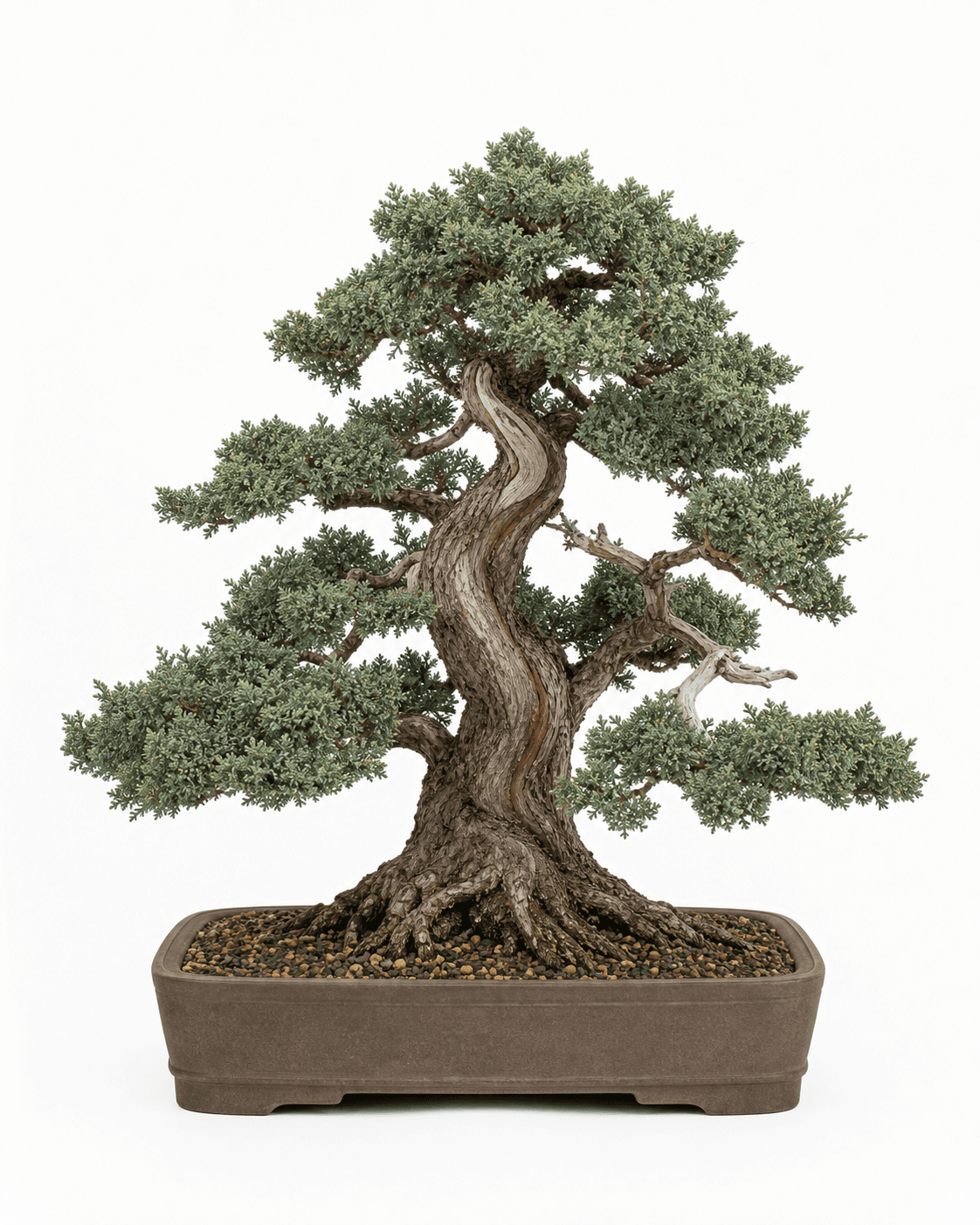
Blaauw juniper is best treated as a cultivated Juniperus chinensis selection with outdoor Chinese-juniper care: strong light, moving air, open mineral soil, staged work, and scissor pruning instead of pinching. The name is useful for records, but the actual foliage habit should decide whether you use mounding or running juniper timing.
The reviewed Mirai corpus has no dedicated Blaauw file. This profile therefore uses shared Juniperus chinensis, shimpaku, mounding-juniper, running-juniper, nursery-stock, root-grafting, and juniper design method, with Kew, NC State, RHS, and UC IPM grounding the botanical and public horticultural facts.
Separate Blaauw from Foemina, San Jose, Toyama, Hokkaido, Tohoku, Kishu, Itoigawa, generic Shimpaku, procumbens, squamata, Pfitzer labels, and eastern red cedar before pricing or pruning. Similar green foliage can hide different recovery speed, juvenile-reversion behavior, grafting value, and refinement ceiling.
Updated June 10, 2026. Written by EntGrove Editorial. Last verified June 10, 2026.
Care fingerprint
Read the species through its shared care pattern.
Maintain strong scale foliage, preserve interior light, and avoid overcleaning or pinching weak tips. Use this as the starting point before local conditions and tree strength refine the calendar.
Note: Cultivated Juniperus chinensis ornamental selection with no dedicated local Mirai file; treat as Chinese juniper material, verify actual mounding or running habit, and separate from Foemina, San Jose, Shimpaku, procumbens, squamata, Pfitzer labels, and eastern red cedar.
Keep foliage strong
Junipers recover through active foliage, so styling choices should leave enough healthy tips to power the tree.
Protect live veins
Old junipers often depend on narrow live veins between roots and foliage; root work and carving should respect that path.
Do not stack major work
Heavy bending, major foliage reduction, carving, and repotting belong in a staged plan rather than the same weekend.
Care cadence
The calendar starts with the tree's seasonal state.
Placement
Timing: Keep outdoors year round with sun, airflow, and dormancy. Shift recently repotted, recently reduced, or weak trees into morning sun or bright shade during heat.
Watch for: Indoor decline, overheated shallow pots, winter wind after root work, and nursery labels hiding a different juniper habit.
Bonsai Mirai LibraryNC State ExtensionWatering
Timing: Check the top 1/4 to 1/2 in of soil, then water in repeated passes until the whole rootball drains. Test old organic cores separately from fresh outside soil.
Watch for: Hydrophobic peat, compacted akadama, foliage reduction that lowers water use, and dry centers inside apparently wet pots.
Bonsai Mirai LibraryFeeding
Timing: Feed healthy development trees through active growth. Reduce feeding when refinement needs shorter extension, when heat stress is high, or when juvenile foliage is stabilizing.
Watch for: Coarse long growth, salt stress, pest-prone soft tissue, and fertilizer used to compensate for poor root oxygen.
Bonsai Mirai LibraryFoliage maintenance
Timing: Let the tree show its habit first. If it mounds and then runs, wait for spiking tips before mounding-juniper cleaning. If it runs first, prune after the first flush hardens.
Watch for: Pinching, shearing the surface, cutting back to bare stems, and forcing a Blaauw tag into a shimpaku schedule without observing the tree.
Bonsai Mirai LibraryRepotting
Timing: Repot in spring movement before the flush partly hardens. Keep active foliage, tie the tree down tightly, and convert compact nursery cores over more than one repot when needed.
Watch for: Reducing roots and foliage in the same session, dry exposed roots, loose tie-downs, and old soil that water bypasses.
Bonsai Mirai LibraryWiring
Timing: Wire major structure after growth hardens and cambium re-adheres. For spring work, stop before visible green tips make bark and live vein slip easily.
Watch for: Spring bark slip, wire buried inside dense pads, crushed juvenile foliage, and branch movement that breaks live-vein continuity.
Bonsai Mirai LibraryPropagation
Timing: Use cuttings, air layers, or grafts when clone identity matters. Seedlings produce variable Juniperus chinensis offspring, not a dependable Blaauw clone.
Watch for: Weak scion foliage, unclear labels, buried graft unions, and premium pricing without documented vegetative propagation.
Bonsai Mirai LibraryPests and disease
Timing: Inspect dense foliage, shaded interiors, winter storage, and nursery stock regularly.
Watch for: Spider mites, scale, aphids, bagworms, webworms, borers, cedar-apple rust, twig blights, Phytophthora, root rot, drought scorch, and wet-soil stress.
UC IPM JuniperUC IPM Juniper Twig BlightsBonsai Mirai LibraryWinter protection
Timing: Keep dormant outdoors and insulate roots during hard freezes, dry wind, or the first winter after root work. RHS H6 and NC State zone data describe landscape hardiness, not unprotected bonsai rootballs.
Watch for: Warm indoor storage, frozen dry roots, fresh cuttings left exposed, and heavy late-fall styling followed by wet winter soil.
RHS AGM ornamentals listNC State ExtensionBonsai Mirai LibrarySpecies guide
Apply the species profile before copying another tree's calendar.
At a glance
Blaauw is a Chinese juniper cultivar, so the tree must prove its habit.
Blaauw juniper should be recorded as Juniperus chinensis 'Blaauw'. Kew supplies the accepted parent species, RHS confirms Blaauw as an established ornamental cultivar, and the reviewed Mirai corpus supplies shared Chinese-juniper bonsai method rather than a dedicated Blaauw file. Kew POWORHS AGM ornamentals listBonsai Mirai Library
The grower should start with outdoor Chinese-juniper basics: sun, air, drainage, winter dormancy, active foliage before root work, and clean scissor pruning. The cultivar label then becomes a recordkeeping detail until the tree reveals how it grows. Bonsai Mirai LibraryNC State Extension
If Blaauw behaves like a mounding juniper, wait for dense growth to begin spiking before refinement. If it behaves like running landscape stock, prune after the first flush hardens so coarse spring energy does not dominate the pads. Bonsai Mirai Library
This page is deliberately conservative. It does not treat Blaauw as Itoigawa, Kishu, Toyama, San Jose, or Foemina. Those labels have different source signals in the reviewed corpus and different bonsai expectations. Bonsai Mirai LibraryBonsai Mirai juniper identification
Habitat
Use Chinese juniper ecology, then account for cultivated landscape selection.
Blaauw is a cultivated selection, so there is no wild Blaauw habitat to imitate directly. Kew places Juniperus chinensis from the Russian Far East to northern Myanmar and temperate East Asia, where it grows as a shrub or tree in temperate biome conditions. Kew POWO
For care, that means outdoor light, seasonal weather, mineral soil, and a root zone that can hold water without losing oxygen. A bonsai pot intensifies both drought and cold, so landscape hardiness should be translated into root protection rather than indoor storage. Bonsai Mirai LibraryNC State ExtensionRHS AGM ornamentals list
For design, treat Blaauw as landscape-derived Chinese juniper material first. The strongest trees usually come from honest nursery-stock decisions: expose the base, find the live vein, choose a trunk line, select a defining branch, and preserve enough foliage to keep the roots alive. Bonsai Mirai / AsymmetryBonsai Mirai Library
The cultural lesson is proportion. A Blaauw with broader, coarser, or more upright foliage can still become a convincing bonsai if the trunk, pot, pad size, and negative space match that foliage instead of chasing a fine shimpaku image. Bonsai Mirai / AsymmetryBonsai Mirai Library
Reading the tree
Read Blaauw through habit, foliage state, roots, and label evidence.
First read habit. Mirai separates junipers into running types that elongate before building density and mounding types that build density before running. A Blaauw tag does not replace that diagnosis. Bonsai Mirai Library
Then read foliage. Scale foliage with strong color and extending tips is the engine. Prickly juvenile growth, yellow-green interiors, or weak tips usually signal recent stress, shade, root problems, hard reduction, or poor timing. Bonsai Mirai LibraryBonsai Mirai juniper identification
Then read roots. Many Blaauw candidates will be nursery stock with compact organic cores, circling roots, or soil that sheds water around the center. Water behavior and tie-down stability matter more than the surface label. Bonsai Mirai Library
Finally read provenance. A documented rooted cutting, air layer, or graft from known Blaauw material has more identity value than a faded landscape pot tag. Photograph the foliage, base, bark, and rootball during the first work cycle. Bonsai Mirai LibraryRHS AGM ornamentals list
Foliage work
Choose mounding or running timing from the actual growth.
Avoid pinching Blaauw. Mirai consistently treats pinching scale junipers as a stress signal that tears tissue, weakens tips, and can push juvenile foliage. Use sharp scissors and preserve productive tips until the tree has enough strength to answer. Bonsai Mirai Library
If the tree mounds before it runs, wait until elongating shoots spike out of the dense foliage. Then clean pad bottoms, remove selected crotch growth, remove spent weak interiors, and prune long tips back to strong ramified growth. Bonsai Mirai Library
If the tree runs before it fills, use the running-juniper window after the first flush hardens. That timing lowers the coarse spring response and keeps strong exterior tips from starving interior growth. Bonsai Mirai Library
Never cut to bare wood expecting deciduous-style back budding. Junipers need preserved lateral growth, interior shoots, and live foliage paths. Build replacement branches before removing the old exterior branch. Bonsai Mirai Library
Hide cuts inside the foliage mass when possible because cut juniper tips brown. The goal is a pad that looks grown and edited, not sheared flat. Bonsai Mirai Library
Roots
Repot Blaauw with foliage-powered recovery in mind.
Use spring movement as the default repot window for Blaauw. The tree should be active enough to make roots, but the spring flush should not be so advanced that cambium, foliage, and water demand are unstable. Bonsai Mirai Library
Keep enough foliage to drive root regeneration. Mirai teaches that juniper strength is held in foliage mass, so heavy root reduction and heavy foliage reduction in one session can remove the engine of recovery. Bonsai Mirai Library
Convert nursery roots in stages. Open the rootball, remove the worst compacted media, protect functional roots, and refill every cavity with fresh mineral soil so water does not bypass the center. Bonsai Mirai Library
Tie down hard. New juniper roots are damaged by movement, and upright landscape-derived material can rock in wind while looking stable from above. Bonsai Mirai Library
Aftercare should be quiet: wind protection, careful watering, no pinching, no additional styling, and proof of extension before the next major operation. Bonsai Mirai Library
Soil and pot
Use open mineral soil and match the pot to the foliage scale.
A 1:1:1 akadama:pumice:lava mix is the safest starting point for Blaauw. It gives predictable water retention, oxygen return, and root contact while old landscape roots adapt to bonsai culture. Bonsai Mirai Library
Screen particles around 1/16 to 1/4 in for small to medium bonsai. Very fine, stale, or organic-heavy soil can hold water around weak roots; overly coarse media can leave new roots without steady moisture. Bonsai Mirai Library
A more akadama-forward mix can suit a strong refined tree with reliable watering. Pumice-heavy or lava-forward mixes can help hot, wet, or recovery situations where oxygen and structural stability are priorities. Bonsai Mirai Library
Choose the pot after reading the tree. Compact upright Blaauw can use quiet rectangles, soft ovals, or deeper containers during development. Root-over-rock or semicascade work needs enough depth and tie-down strength for the root system. Bonsai Mirai / AsymmetryBonsai Mirai Library
Avoid styling a coarse young landscape cultivar in a tiny refined pot too early. Root capacity, recovery room, and watering control often matter more than display proportion during the first bonsai cycles. Bonsai Mirai Library
Climate
Translate landscape hardiness into bonsai root protection.
RHS lists Blaauw as H6, and NC State lists Chinese-juniper Shimpaku context through USDA Zones 4a to 9b. In a bonsai pot, protect roots sooner than a landscape plant because a shallow container freezes and dries faster. RHS AGM ornamentals listNC State Extension
Cold regions should keep Blaauw dormant outdoors, then heel the pot into mulch, place it in an unheated cold frame, or protect it from dry wind during hard freezes. Avoid warm indoor storage. Bonsai Mirai LibraryNC State Extension
Hot dry regions should use full morning sun, careful afternoon protection for small pots, and more frequent water checks during wind. Heat-stressed roots can show foliage symptoms weeks later. Bonsai Mirai LibraryUC IPM Juniper
Humid regions should emphasize airflow, dry foliage overnight, and soil oxygen. Dense juniper pads, overfertilization, and wet interiors increase twig blight and mite problems. UC IPM Juniper Twig BlightsUC IPM JuniperBonsai Mirai Library
After heavy styling or more than light foliage reduction, reduce winter water and protect from saturated cold rain. A tree with less foliage moves less water through the pot. Bonsai Mirai Library
Pests
Most Blaauw problems start with dense foliage, stale roots, or stress.
Spider mites are the most common hidden threat in dense juniper foliage. Tap-test over white paper, inspect dusty interiors, and check after hot dry spells or winter shelter. UC IPM JuniperBonsai Mirai Library
Scale, aphids, bagworms, webworms, and borers can appear on Juniperus. Treat confirmed pests and correct the cultural cause: weak light, poor airflow, drought, excessive nitrogen, or stressed roots. UC IPM Juniper
Twig blights show as browning tips, dieback, and weak interior growth. UC IPM emphasizes sanitation, infected-tip removal, dry foliage, and avoiding cultural conditions that keep foliage wet or overly lush. UC IPM Juniper Twig Blights
Cedar-apple rust and related rusts can affect junipers, especially where alternate hosts are nearby. Identify before treating because orange galls, twig blights, mite damage, and drought scorch call for different responses. UC IPM Juniper
Root rot and Phytophthora risk increase when organic cores stay wet, pots are oversized for the active foliage, or heavy foliage reduction sharply lowers transpiration. Correct drainage and watering before adding more fertilizer. UC IPM JuniperBonsai Mirai Library
Wiring
Wire after hardening and keep the live vein continuous.
Major Blaauw wiring is safest after growth hardens and the cambium re-adheres. Mirai uses a small bark test on unwanted tissue: stripping bark signals danger, while chipping bark suggests safer timing. Bonsai Mirai Library
Support branch shoulders before bending. Juniper branches can be flexible, but abrupt torsion can tear vascular tissue and separate live vein from xylem. Bonsai Mirai Library
Wire should create usable branch lines, not force a landscape shrub into tiny pads at once. Preserve interior shoots and leave enough foliage to feed the branch after the bend. Bonsai Mirai Library
On scale foliage, stop detail wire short of dense tufts when possible. Later cleaning cycles can shape the cloud without crushing productive foliage. Bonsai Mirai Library
Check wire frequently. Recovery feeding, new extension, and vigorous nursery roots can thicken branches faster than expected inside dense green masses. Bonsai Mirai Library
Propagation
Use vegetative propagation if the Blaauw name matters.
Named cultivar identity depends on vegetative propagation. Cuttings, air layers, and grafts preserve a Blaauw clone more reliably than seed, which produces variable Juniperus chinensis offspring. Bonsai Mirai Library
Mirai describes Juniperus chinensis cultivars as relatively willing to root, layer, and graft because adventitious sites occur along the bark. That supports Blaauw starts when the source plant is known and healthy. Bonsai Mirai Library
Approach grafting Blaauw foliage onto another trunk should answer a design problem. If maximum fine foliage is the goal, compare Kishu, Itoigawa, or Toyama before selecting Blaauw as the scion. Bonsai Mirai Library
Root grafting with Blaauw should be cautious. The reviewed corpus directly names Kishu, Itoigawa, Toyama, Prostrata, and San Jose as suitable root-graft scion stock; it does not make that direct claim for Blaauw. Bonsai Mirai Library
Record propagation date, source plant, rooting method, and first mature foliage behavior. Those notes become more valuable than the label when future pruning choices are disputed. Bonsai Mirai LibraryBonsai Mirai juniper identification
Buying
Buy Blaauw by roots, foliage, and evidence.
Good Blaauw material has firm roots, clear drainage, documented vegetative propagation, useful trunk movement, visible interior growth, and enough active foliage to survive staged conversion. Bonsai Mirai LibraryBonsai Tonight shimpaku vigor note
Red flags include a generic Chinese juniper sold as rare Blaauw, mostly juvenile foliage after recent pruning, no source history, buried graft unions, mite stippling, dead interiors, and compact peat hidden under fresh bonsai soil. Bonsai Mirai LibraryUC IPM Juniper
Compare the plant with Foemina, San Jose, Pfitzer, procumbens, squamata, eastern red cedar, and generic Shimpaku labels. The first-year care may overlap, but value, pruning timing, and design ceiling can differ. Bonsai Mirai juniper identificationBonsai Mirai Library
For nursery-stock candidates, inspect the lower trunk before buying. A usable base, taper, live-vein direction, and flexible branch placement are worth more than a blue-green foliage tag. Bonsai Mirai / AsymmetryBonsai Mirai Library
Avoid collected-material romanticism with ordinary landscape junipers. If the tree is nursery-grown, design from nursery-grown strengths: affordable repetition, root improvement, branch selection, and patient structure building. Bonsai Mirai Library
Troubleshooting
Diagnose Blaauw through habit, foliage, roots, pests, and identity.
Symptom: prickly juvenile foliage after work. Likely cause: pruning stress, pinching, shade, root disruption, or immature growth. Fix: stop refinement, improve sun and airflow, fertilize lightly, and wait for scale foliage to stabilize. Bonsai Mirai Library
Symptom: long coarse runners. Likely cause: running habit, spring reduction, or too much fertilizer. Fix: shift pruning later after hardening, reduce nitrogen, and preserve interior replacement shoots. Bonsai Mirai Library
Symptom: water runs around the rootball. Likely cause: hydrophobic nursery peat, compacted akadama, or root matting. Fix: refresh the surface, test percolation, and plan staged spring repotting. Bonsai Mirai Library
Symptom: interior browning. Likely cause: shade, natural shedding, mites, twig blight, stale wet roots, or overgrown exterior pads. Fix: inspect first, clean gradually, improve airflow, and treat confirmed pests or disease. Bonsai Mirai LibraryUC IPM JuniperUC IPM Juniper Twig Blights
Symptom: the tree does not match the Blaauw label. Likely cause: generic Chinese juniper, Foemina, San Jose, Pfitzer, procumbens, squamata, eastern red cedar, or shimpaku-type material. Fix: care for observed foliage and roots first, then relabel only with evidence. Bonsai Mirai juniper identificationBonsai Mirai Library
Design
Design Blaauw from the trunk and foliage it actually has.
Start with base, trunk line, defining branch, apex, and live-vein direction. Those decisions should set the design before pad detail or cultivar reputation enters the conversation. Bonsai Mirai / AsymmetryBonsai Mirai Library
Blaauw can work as informal upright, slanting, compact upright, root-over-rock, or semicascade material when the branch line supports it. The design should use its foliage scale instead of pretending it is a finer shimpaku clone. Bonsai Mirai / AsymmetryBonsai Mirai Library
Deadwood should be proportionate. Chinese junipers can carry jin and shari, but young nursery bark and forced carving can feel theatrical. Let live-vein movement, bark age, and branch structure justify the deadwood. Bonsai Mirai / AsymmetryBonsai Mirai Library
If foliage repeatedly reverts after compression, use broader pads, more recovery time, and less detail wiring. A convincing Blaauw bonsai can be more architectural and less delicate than Itoigawa. Bonsai Mirai Library
For grafting decisions, preserve native Blaauw foliage when its proportion works. Choose a different scion only when the existing foliage or branch behavior cannot deliver the design. Bonsai Mirai Library
Cultivars
Separate Blaauw from shimpaku clones, Foemina, San Jose, and starter junipers.
Blaauw belongs under cultivated Juniperus chinensis language. Keep it separate from Shimpaku, Itoigawa, Kishu, Toyama, Tohoku, and Hokkaido because those labels carry different foliage expectations and price signals. Kew POWOBonsai Mirai LibraryBonsai Mirai juniper identification
San Jose is better documented in the reviewed corpus as vigorous Chinese-juniper stock, a root-graft option, and a juvenile-reversion caution. Blaauw has RHS cultivar evidence, but no dedicated Mirai file. Bonsai Mirai LibraryRHS AGM ornamentals list
Foemina has direct Mirai support for returning from juvenile foliage to mature scale under stable care. Blaauw should not inherit that exact cultivar claim without observation. Bonsai Mirai Library
Pfitzer-type junipers are hybrid landscape material under Juniperus x pfitzeriana or Juniperus x media labels. Keep them separate from Blaauw even when retail plants share similar sprawling or blue-green habit. Bonsai Mirai juniper identificationBonsai Mirai Library
Procumbens, squamata, and eastern red cedar can confuse beginners because juvenile or scale foliage may overlap visually. Repot timing, soil response, disease pressure, and refinement behavior still differ. Bonsai Mirai juniper identificationBonsai Mirai Library
History
Blaauw is best understood as landscape Chinese juniper material.
The reliable public record for this page is modest: RHS lists Juniperus chinensis Blaauw as an established ornamental AGM selection, and Kew anchors the parent species. That supports a landscape-cultivar profile, not a myth-heavy bonsai origin story. RHS AGM ornamentals listKew POWO
Chinese juniper has a major bonsai history through shimpaku, grafting, live veins, deadwood, and cultivated foliage selections. Blaauw sits adjacent to that history as practical material, especially when sourced from nursery stock. Bonsai Mirai / AsymmetryBonsai Mirai LibraryBonsai Mirai juniper identification
That practical status is useful. Blaauw can teach root conversion, foliage habit diagnosis, pruning timing, live-vein reading, and design proportion without the cost or pressure attached to premium shimpaku clones. Bonsai Mirai Library
The best Blaauw work is evidence-led: document the clone, build roots, observe adult foliage, preserve useful interior growth, and design from the actual tree. Bonsai Mirai LibraryBonsai Mirai / Asymmetry
Species questions
Answer the beginner questions before styling.
Is Blaauw juniper good for bonsai?
Yes, if it is grown outdoors and selected for useful roots, trunk movement, branch placement, and healthy foliage. Treat it as practical Chinese juniper material rather than a premium shimpaku substitute.
Can Blaauw juniper live indoors?
No. Blaauw needs outdoor sun, airflow, seasonal temperature change, and winter dormancy. Indoor display should be brief.
Is Blaauw juniper a shimpaku?
Blaauw is best handled as a cultivated Juniperus chinensis selection. Keep it separate from Shimpaku, Itoigawa, Kishu, Toyama, Tohoku, and Hokkaido unless a source documents the exact clone and the foliage proves the claim.
Should Blaauw juniper be pinched?
Avoid constant tip pinching. Let foliage strengthen, then prune with sharp scissors according to the tree habit: later spiking-tip work for mounding behavior, or post-harden pruning for running behavior.
When should Blaauw juniper be repotted?
Repot during spring movement before the spring flush partly hardens. Keep enough active foliage to power root recovery and convert old nursery soil in stages.
What soil works for Blaauw juniper?
Use open mineral soil, commonly 1:1:1 akadama:pumice:lava screened around 1/16 to 1/4 in. Adjust for climate, pot size, and root health.
Why is my Blaauw juniper making juvenile foliage?
Juvenile foliage often follows stress, shade, pinching, hard reduction, root disruption, or immature growth. Stabilize light, airflow, water, and roots before returning to refinement.
How is Blaauw different from San Jose juniper?
Both are cultivated Chinese juniper labels, but San Jose has clearer Mirai evidence for root-graft use and juvenile reversion after hard reduction. Blaauw has public ornamental cultivar evidence and should be managed from observed habit.
What pests affect Blaauw juniper bonsai?
Watch for spider mites, scale, aphids, bagworms, webworms, borers, cedar-apple rust, twig blights, root rot, and stress from poor drainage or drought.
Is Blaauw good grafting foliage?
Use Blaauw for grafting only when its foliage fits the design and the source plant is strong. For fine refinement, compare Kishu, Itoigawa, or Toyama before choosing a scion.
Sources
Species advice needs source discipline.
Next decisions
Plan the operation before copying the calendar.
A good care note for Blaauw juniper records the tree's stage, the work done, and the aftercare used. That record matters more than a month-name rule.
Related species
Compare nearby trees before transferring advice.
Shimpaku
Juniperus chinensis var. sargentii
Itoigawa shimpaku
Juniperus chinensis 'Itoigawa'
Kishu shimpaku
Juniperus chinensis 'Kishu'
Tohoku shimpaku
Juniperus chinensis 'Tohoku'
Hokkaido shimpaku
Juniperus chinensis 'Hokkaido'