
Species guide
Mountain Hemlock Bonsai Care
Tsuga mertensiana
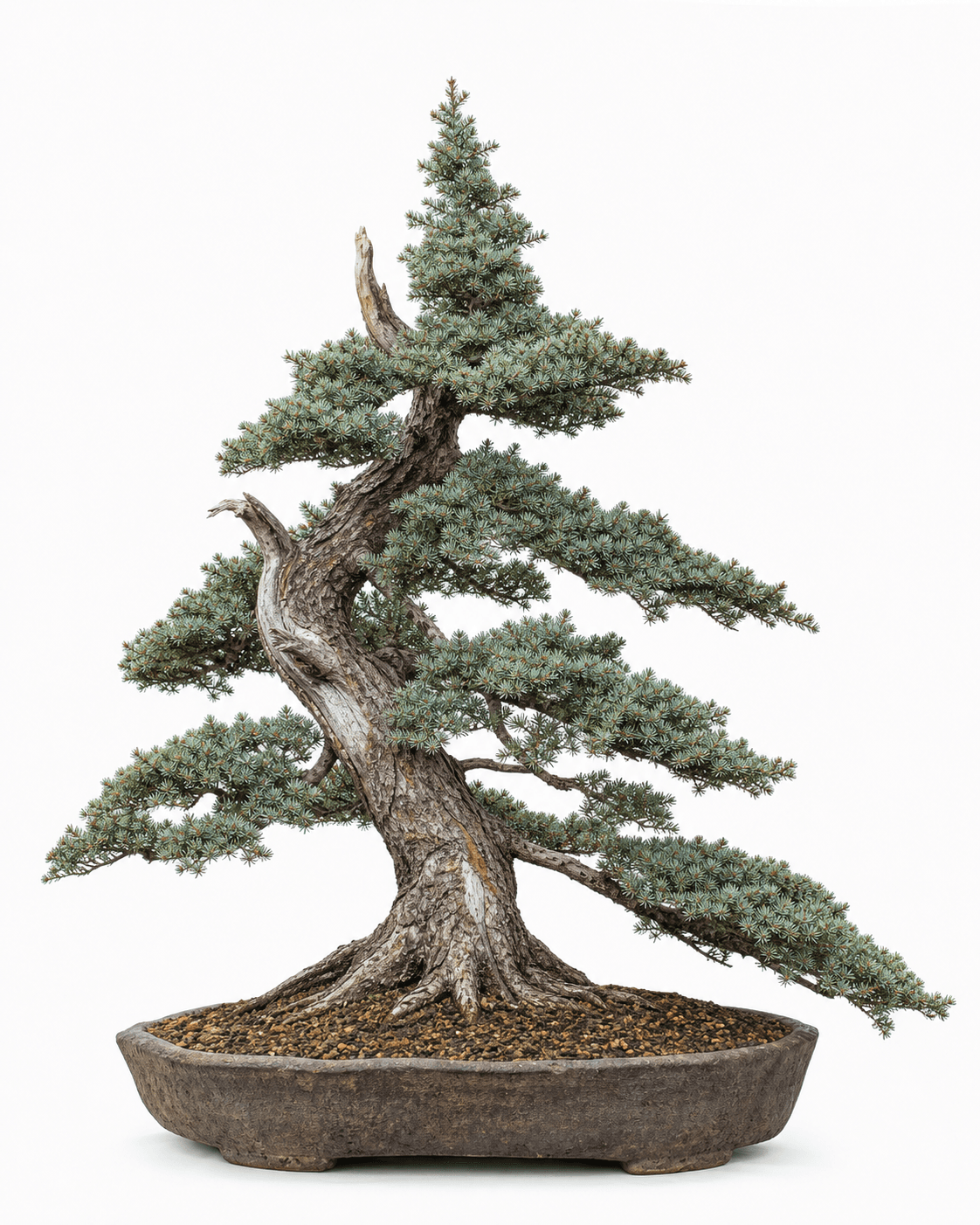
Mountain hemlock bonsai is an outdoor alpine conifer that succeeds when roots stay cool, moist, and oxygenated. Tsuga mertensiana can become dense and refined, but it should be worked around visible buds, spring root timing, and the early fall vascular window.
The species rewards precise pruning more than heavy-handed styling. It back-buds within needled zones, tolerates selective cutback to chosen buds, and quickly loses its character when pads are hedged into rounded masses.
This guide is built from dedicated Bonsai Mirai mountain hemlock creation, design, pruning, and cascade-potting corpus files, then cross-checked with Kew, Oregon State, NC State, USDA Silvics, and USDA FEIS for taxonomy, range, hardiness, ecology, morphology, and pests.
Updated June 3, 2026. Written by EntGrove Editorial. Last verified June 3, 2026.
Care fingerprint
Read the species through its shared care pattern.
Strong light, cool-root management, conservative root work, and post-extension pruning dominate the care calendar. Use this as the starting point before local conditions and tree strength refine the calendar.
Note: Kew accepts Tsuga mertensiana and recognizes subsp. mertensiana plus subsp. grandicona. Oregon State, NC State, and USDA sources use mountain hemlock, black hemlock, hemlock spruce, and alpine hemlock labels; verify exact Tsuga species before applying this page to western, eastern, Carolina, or Japanese hemlock.
Do not prune like a pine
Elongating conifers extend from buds and shoots, so candle-cutting assumptions can remove the exact growth the tree needs.
Preserve interior growth
Spruce, fir, hemlock, cedar, redwood, cypress, and larch all become harder to design when interior buds are shaded out.
Keep recovery cool and steady
Many elongating conifers respond best when roots stay evenly moist, oxygenated, and protected from hot dry swings.
Care cadence
The calendar starts with the tree's seasonal state.
Placement
Timing: Keep outside all year. Give full sun in cool conditions, then shift to dappled shade, morning sun, a windbreak, or pot shading when summer heat and dry wind rise.
Watch for: Warm nights without cooling, dry wind, dull gray foliage, heat above 85-90 F, and containers that stay hot after sunset.
Bonsai Mirai LibraryOregon State Landscape PlantsWatering
Timing: Water deeply before the root mass dries to a pine-like threshold. Let water move through the pot and keep a visible rim so repeated watering does not wash soil away.
Watch for: Hydrophobic old organic cores, water channels beneath structural roots, dry foliage tips, sour wet pockets, and moss or fertilizer raising the soil surface.
Bonsai Mirai LibraryUSDA Forest Service SilvicsFertilizer
Timing: Feed heavily only during development when building trunk, roots, and branch mass. In refinement, use lighter feeding so shoots stay compact and wire can hold.
Watch for: Uncontrollable vascular expansion, coarse apical push, weak lower branches, and fertilizer applied before post-repot water uptake is steady.
Bonsai Mirai LibrarySpring pinching
Timing: Pinch soft new growth in spring only on dense, healthy trees that need silhouette control. Leave enough foliage to keep photosynthesis and avoid stripping weak shoots.
Watch for: Missed timing, indiscriminate tip removal, weak interior buds, and rounded pad growth that later forces aggressive fall correction.
Bonsai Mirai LibraryFall pruning
Timing: Use early fall after summer heat breaks as the main corrective pruning window. Cut each shoot to an interior bud, swollen node bud, or a chosen tip.
Watch for: Hedging, pruning too early in summer and exposing bark to sunburn, cuts past the last viable bud, and repeating cuts that create chunky tips.
Bonsai Mirai LibraryRepotting
Timing: Repot as buds open and show white or green needle tips. The aggressive root-reduction window can be only 7-10 days, so prepare soil, tie-downs, and aftercare before starting.
Watch for: Late root work, loose spaghetti-like bog roots, yellowing fine roots, weak tie-downs, and heavy top work immediately after a root disturbance.
Bonsai Mirai LibraryWiring
Timing: Wire established trees near spring bud movement or at the early fall vascular window. Use enough gauge to hold elastic branches, then inspect often for bite.
Watch for: Under-gauged wire, hidden swelling in dense pads, needle crush, hard cranking, and wire left into the next fall vascular push.
Bonsai Mirai LibraryWinter protection
Timing: Keep dormant and cold, but protect the root system from exposed freeze-thaw and dry wind. Mulch beds, cold frames, snow cover, or ground contact are safer than warm indoor storage.
Watch for: Warm storage, dry frozen roots, pots lifted off insulating snow or soil, and spring work before buds identify the true timing window.
Bonsai Mirai LibraryUSDA Forest Service SilvicsSpecies guide
Apply the species profile before copying another tree's calendar.
At a glance
Mountain hemlock is dense, water-loving, and timing-sensitive.
Tsuga mertensiana is a western North American hemlock with radial blue-green to silver foliage, a pointed conifer crown, and a natural habit shaped by snow, wind, and short alpine growing seasons. Kew POWOOregon State Landscape PlantsUSDA Forest Service Silvics
In bonsai, it behaves like an alpine elongating conifer with unusual refinement potential. The tree can hold tight pads and fine interior detail, but the grower has to protect cool roots, work to visible buds, and respect the spring and early fall windows. Bonsai Mirai Library
The practical care target is moist without stagnation, bright without heat collapse, and refined without rounded hedging. When that balance is present, mountain hemlock can become one of the most expressive North American collected conifers. Bonsai Mirai / AsymmetryBonsai Mirai Library
Wild range
Design and care start with snowpack, cool air, and shallow roots.
USDA Silvics describes a range from Sequoia National Park through the Sierra Nevada, Cascade Range, Olympic Mountains, northern Idaho and western Montana, British Columbia mountains, and southern Alaska. Kew compresses that to Alaska through the western United States. USDA Forest Service SilvicsKew POWO
The habitat is cool to cold and often maritime, with moderate to high precipitation, deep snowpack, and a short growing season. Elevation rises southward, from near sea level in Alaska to high Sierra Nevada elevations. USDA Forest Service SilvicsOregon State Landscape Plants
Roots are often shallow and concentrated in forest-floor organic layers. Mirai repotting guidance translates that ecology into two bonsai rules: secure the tree firmly and build a root zone that holds water while keeping oxygen spaces open. USDA Forest Service SilvicsBonsai Mirai Library
The design implication is equally direct. Alpine mountain hemlock should suggest snow load, directional wind, short branches near the base, pointed tops, and triangular foliage masses rather than generic soft conifer domes. Bonsai Mirai / AsymmetryBonsai Mirai Library
Reading the tree
Judge recovery by roots and buds, not by a flush of green alone.
Mountain hemlock can produce abundant foliage while the roots remain weak. Mirai warns that elongating conifers such as hemlock, spruce, and Abies may show top growth before the root system is ready for styling. Bonsai Mirai Library
A tree in development needs foliage mass, root correction, and strong water movement. Use heavier feeding, preserve useful lower foliage, and avoid refinement pruning until the tree can respond with reliable interior buds. Bonsai Mirai Library
A refined tree is read by interior detail. Strong mountain hemlock work keeps secondary and tertiary branching visible, prunes to chosen buds, and controls apical dominance before one dense mound shades the whole composition. Bonsai Mirai Library
Species identification matters. Mountain hemlock holds needles radially around the shoot, while western hemlock has a softer lateral arrangement and more weeping habit. That difference changes both design and climate tolerance. Bonsai Mirai LibraryOregon State Landscape Plants
Pruning
Use spring pinching lightly and fall pruning deliberately.
Spring pinching is for healthy dense trees whose new growth is still soft. Pinch to direct early strength and keep pads from thickening uncontrollably, then stop once the flush hardens so the tree can rebuild reserves. Bonsai Mirai Library
Early fall is the primary correction window. Mirai pruning guidance cuts mountain hemlock shoots to interior dormant buds, alternating swollen-node buds, or selected tips, which lets the grower place each future shoot intentionally. Bonsai Mirai Library
Avoid hedging. The species can tolerate hard cutback within needled zones, but exterior shearing creates chunky tips, weak interior light, and rounded pads that erase the alpine character. Bonsai Mirai Library
The defining branch should set the direction of the pad. From there, prune for long pointed triangular masses, remove under-hanging clutter where it hides branch lines, and reduce top-side branches that flatten the tree into a fan. Bonsai Mirai LibraryBonsai Mirai / Asymmetry
Roots
The root-work window is short, visible, and worth waiting for.
The safest serious repotting window is when buds begin to open and show white or green needle tips. Mirai cascade-potting guidance describes the strongest root-reduction window as roughly 7-10 days from bud-break. Bonsai Mirai Library
Collected hemlocks can have loose spaghetti-like roots in soft organic soil. Reduce those roots slowly, preserve living white fine roots, and do not mistake red dead structural roots for active support. Bonsai Mirai Library
After collection, pure pumice can build a fine compressed root system when aftercare and watering are strong. For established bonsai, Mirai hemlock files repeatedly favor a 3:1:1 akadama, pumice, and lava style mix adjusted for climate. Bonsai Mirai Library
Tie-down is not optional. USDA Silvics describes shallow rooting, and a bonsai pot magnifies that problem. A mountain hemlock that rocks after repotting loses fine roots before the new root pad can organize. USDA Forest Service SilvicsBonsai Mirai Library
Soil and pot
Build a cool, wet, oxygen-rich root environment.
Use aggregate that catches water, stays open, and does not turn into a stagnant organic block. Akadama supplies water and nutrient retention, while pumice and lava preserve oxygen as the tree stays in the container for years. Bonsai Mirai Library
In dry or windy climates, use deeper pots, more water-retentive particle sizing, surface moss, and afternoon protection before increasing organic matter heavily. In cool humid climates, emphasize drainage and airflow so the root zone does not sour. Bonsai Mirai LibraryOregon State Landscape Plants
Keep a water-catching rim above the soil surface. Mirai cascade-potting guidance calls this out because moss, fertilizer, and root growth can raise the surface over time, and water-loving hemlock needs each irrigation to penetrate rather than run off. Bonsai Mirai Library
Pot pairing should support alpine character: rugged ovals, textured rectangles, crescent or slab-style settings, and cascade containers can all work when they echo snow, stone, shallow roots, and directional movement. Bonsai Mirai / AsymmetryUSDA Forest Service Silvics
Climate
Cool nights matter as much as daytime light.
Oregon State notes best growth in moist air and cool summer temperatures, and NC State says the tree struggles in the southeastern United States because of heat intolerance. Bonsai culture should treat hot nights as a serious risk signal. Oregon State Landscape PlantsNC State ExtensionBonsai Mirai Library
In the Pacific Northwest and similar maritime climates, mountain hemlock can take more sun if soil moisture is steady. In inland or low-humidity regions, use dappled shade, windbreaks, mulch around pots, and careful morning watering. Bonsai Mirai LibraryOregon State Landscape Plants
In cold regions, root protection replaces the missing mountain snowpack. Keep the tree dormant, but shelter the pot from repeated hard freeze-thaw, exposed benches, and drying winter wind. Bonsai Mirai LibraryUSDA Forest Service Silvics
In warm-winter climates without consistent dormancy, choose a coastal conifer or tropical species instead. Mirai hemlock guidance is clear that mountain hemlock requires winter rest and cool seasonal cycling. Bonsai Mirai Library
Pests
Watch adelgid, dwarf mistletoe, rots, sunburn, and root stress.
NC State lists hemlock woolly adelgid as a possible insect problem, seen as white cotton-like tufts on foliage. Bonsai trees should be isolated, identified carefully, and treated only with locally labeled methods. NC State Extension
USDA Silvics lists heart rots, needle diseases, snow mold, defoliating insects, bark beetles, wood borers, and the mountain-hemlock race of hemlock dwarf mistletoe as relevant pressures in the wild. USDA Forest Service Silvics
Most bonsai problems begin before a pest is visible. Heat, stagnant wet cores, dry wind, and sudden exposure after summer pruning weaken foliage and roots, then secondary insects or fungi become harder to manage. Bonsai Mirai LibraryUSDA Forest Service Silvics
Sunburn is a common diagnostic trap. If damage appears on the newly exposed sun-facing side after pruning, adjust shade and timing before assuming a pathogen. Non-directional discoloration deserves a closer root and pest inspection. Bonsai Mirai Library
Wiring
Use enough wire to hold elastic branches, then remove it early.
Mountain hemlock branches are flexible because they evolved under snow and wind, but that flexibility creates memory. Mirai recommends heavier-than-instinct wire because under-gauged wire lets branches drift back quickly. Bonsai Mirai LibraryNC State Extension
Wire gently. Aggressive cranking can damage moisture-dependent vascular tissue, and raffia is rarely needed because it hides stress points on a species whose branches already bend well. Bonsai Mirai Library
Dense pads do not need every tip wired. Plan one wire path to control multiple branches, concentrate heavier wire where the apex and defining branches need direction, and prune to create light rather than wiring a cluttered mass. Bonsai Mirai Library
Watch fall swelling. Hemlock can callus rapidly in the vascular window, and wire that starts to mark should be removed before the next strong thickening phase. Bonsai Mirai Library
Propagation
Seed, layering, and legal collected material are realistic paths.
NC State lists seedlings, cuttings, and layering as propagation routes. For bonsai, seedlings and young nursery material give the cleanest root control, but they require patience before the species reads as old alpine material. NC State Extension
Seed work should respect provenance. Mountain hemlock is highly climate-specific, so seed from cold maritime or high-elevation stock should not be assumed to perform in hot lowland gardens. USDA Forest Service SilvicsOregon State Landscape Plants
Air-layering and cuttings are secondary options compared with nursery stock and legal yamadori. When a layer or cutting succeeds, do not rush refinement until the root system can support consistent water demand. NC State ExtensionBonsai Mirai Library
Collected material needs permits, ethical site selection, and recovery years. Mirai mountain hemlock creation material styled a tree after a long recovery period, which is the correct model for valuable alpine conifers. Bonsai Mirai Library
Buying
Buy roots, buds, and climate fit before dramatic shape.
Good mountain hemlock candidates have compact interior buds, useful trunk movement, flexible low branches, healthy radial foliage, and a recoverable root mass. A perfect landscape cone is usually less valuable than asymmetry and low branch options. Bonsai Mirai LibraryOregon State Landscape Plants
Inspect the soil. Old decomposed organic cores, loose bog roots, and water-channeling around structural roots can be corrected, but they make the first years horticultural rather than stylistic. Bonsai Mirai Library
Match the tree to your climate. Mountain hemlock is a poor beginner purchase for hot lowland gardens, warm nights, and dry wind unless you can provide shade, cool roots, and reliable watering. Bonsai Mirai LibraryNC State Extension
Label confusion is common. Hemlock spruce, black hemlock, alpine hemlock, western hemlock, eastern hemlock, and Japanese hemlock labels should be verified before applying this page. NC State ExtensionUSDA Forest Service SilvicsKew POWO
Troubleshooting
Most failures trace to heat, water imbalance, missed timing, or pad shape.
Symptom: tips dull, crisp, or fatigue during summer. Likely cause: hot roots, warm nights, too much direct sun, or dry wind. Fix: cool the pot, reduce afternoon sun, add wind protection, and water before the root mass dries deeply. Bonsai Mirai LibraryOregon State Landscape Plants
Symptom: foliage grows but the tree declines after styling. Likely cause: roots were underdeveloped despite visible top growth. Fix: stop styling, stabilize water movement, feed modestly, and wait for old-wood buds and consistent uptake. Bonsai Mirai Library
Symptom: a branch dies back after pruning. Likely cause: the cut went past the last viable bud or the branch was weak. Fix: prune only to visible buds, leave weak shoots longer, and rebuild density from needled zones. Bonsai Mirai Library
Symptom: dense pads become round and lifeless. Likely cause: hedging and exterior-only pruning. Fix: select a defining branch, open interior light, and cut each shoot to intentional buds in early fall. Bonsai Mirai Library
Symptom: white cottony tufts appear on foliage. Likely cause: hemlock woolly adelgid or a similar sap-feeding insect. Fix: isolate, identify, reduce stress, and use extension-backed treatment labels for your region. NC State Extension
Symptom: old deadwood softens quickly. Likely cause: hemlock deadwood is softer and more snow-shaped than desert juniper or pine deadwood. Fix: keep deadwood rounded, preserve bark where appropriate, and avoid deep decorative carving. Bonsai Mirai LibraryUSDA Forest Service Silvics
Design
Make the tree read as alpine, pointed, and directional.
Begin with base, trunk line, defining branch, and apex. Mountain hemlock can sustain a powerful first styling on a recovered tree, but the design should still reveal why each branch remains. Bonsai Mirai / AsymmetryBonsai Mirai Library
The apex should run and point. Mirai repeatedly treats the triangular pointed top as a key mountain hemlock identifier, while rounded dome apices weaken the species story. Bonsai Mirai Library
Foliage pads should be elongated and directional, with a long point and a narrower trailing side. This echoes wind, snow, and alpine exposure while avoiding standard fan-shaped conifer pads. Bonsai Mirai LibraryUSDA Forest Service Silvics
Deadwood belongs, but the character is rounded, softened, and snow-worn. Shari and hollow areas can fit old trunks, while artificial jin should usually stop at broken tips and bark-preserving transitions. Bonsai Mirai Library
Cultivars
Track subspecies, dwarf selections, and hemlock lookalikes carefully.
Kew recognizes Tsuga mertensiana subsp. mertensiana and subsp. grandicona. Keep that distinction in notes when source material comes from the Sierra Nevada, because regional form can affect climate behavior. Kew POWOUSDA Forest Service Silvics
Oregon State and NC State both list Elizabeth as a spreading dwarf cultivar. Dwarf selections can be useful for smaller compositions, but they still need outdoor dormancy and cool-root culture. Oregon State Landscape PlantsNC State Extension
Western hemlock, eastern hemlock, and Japanese hemlock are separate care subjects. Mountain hemlock is denser and more upright in Mirai comparison, with radial foliage and stronger alpine identity. Bonsai Mirai LibraryOregon State Landscape Plants
Older synonym labels such as Abies mertensiana, Picea mertensiana, Pinus mertensiana, and Hesperopeuce mertensiana should resolve back to Tsuga mertensiana only after the foliage arrangement and source label are checked. Kew POWONC State Extension
History
Mountain hemlock carries a North American alpine story.
The species name honors Franz Karl Mertens, and Oregon State notes the species was discovered by Karl Heinrich Mertens in 1827. Its common-name cluster reflects the way early observers saw spruce-like traits in a hemlock. Oregon State Landscape PlantsNC State Extension
USDA Silvics emphasizes watershed protection, snow conservation, scenic subalpine landscapes, and slow dense growth as major values. Those same traits make mountain hemlock persuasive as bonsai when the design reads from place. USDA Forest Service Silvics
In contemporary North American bonsai, the species is strongly tied to collected alpine material and Pacific Northwest methodology. Mirai mountain hemlock demonstrations show the species as a design subject in its own right, not only a generic conifer. Bonsai Mirai / AsymmetryBonsai Mirai Library
A credible exhibition tree should show firm buds, cool-root vigor, intentional interior pruning, pointed alpine foliage masses, clean wire removal, and deadwood that feels weathered by snow rather than carved for spectacle. Bonsai Mirai LibraryUSDA Forest Service Silvics
Species questions
Answer the beginner questions before styling.
Can mountain hemlock be grown as bonsai?
Yes. Tsuga mertensiana is an excellent advanced bonsai species when it is grown outdoors with cool roots, moist oxygenated soil, seasonal dormancy, and pruning timed to visible buds.
Can mountain hemlock bonsai live indoors?
No. Mountain hemlock needs cold dormancy, outdoor light, air movement, and cool seasonal timing. Indoor rooms are too warm and too dim for long-term health.
How often should I water mountain hemlock bonsai?
Water before the root mass dries as much as a pine or juniper would tolerate. The mix should stay evenly moist while still draining freely and pulling oxygen into the pot.
When should I repot mountain hemlock bonsai?
Repot as buds begin to open and show white or green needle tips. The strongest root-work window can last only about 7-10 days, so prepare before bud-break.
Should I pinch mountain hemlock?
Pinch soft spring growth only on strong dense trees that need compact growth. If the shoot hardens long, wait for early fall and prune back to a chosen bud.
Why is my mountain hemlock turning brown in summer?
Common causes are hot roots, warm nights, too much afternoon sun, dry wind, or stale wet soil. Cool the pot, reduce afternoon exposure, check the core, and avoid additional styling.
Does mountain hemlock back-bud on old wood?
It can build density inside needled zones, but older bare bark is unreliable. Preserve interior buds and prune to visible targets rather than expecting new branches from old bare wood.
What soil mix works for mountain hemlock bonsai?
A common refined-tree target is 3 parts akadama, 1 part pumice, and 1 part lava, adjusted for climate. The goal is moisture retention with stable oxygen spaces.
What styles suit mountain hemlock bonsai?
Alpine informal upright, literati, cascade, semi-cascade, forest, raft, and exposed-root designs work well when the apex stays pointed and pads remain directional.
Is mountain hemlock the same as western hemlock?
No. Mountain hemlock is Tsuga mertensiana, with radial foliage and a denser alpine habit. Western hemlock is Tsuga heterophylla and usually has softer, more lateral foliage.
Sources
Species advice needs source discipline.
Next decisions
Plan the operation before copying the calendar.
A good care note for Mountain hemlock records the tree's stage, the work done, and the aftercare used. That record matters more than a month-name rule.
Related species
Compare nearby trees before transferring advice.
Subalpine fir
Abies lasiocarpa
Balsam fir
Abies balsamea
White fir
Abies concolor
Noble fir
Abies procera
Eastern hemlock
Tsuga canadensis