
Species guide
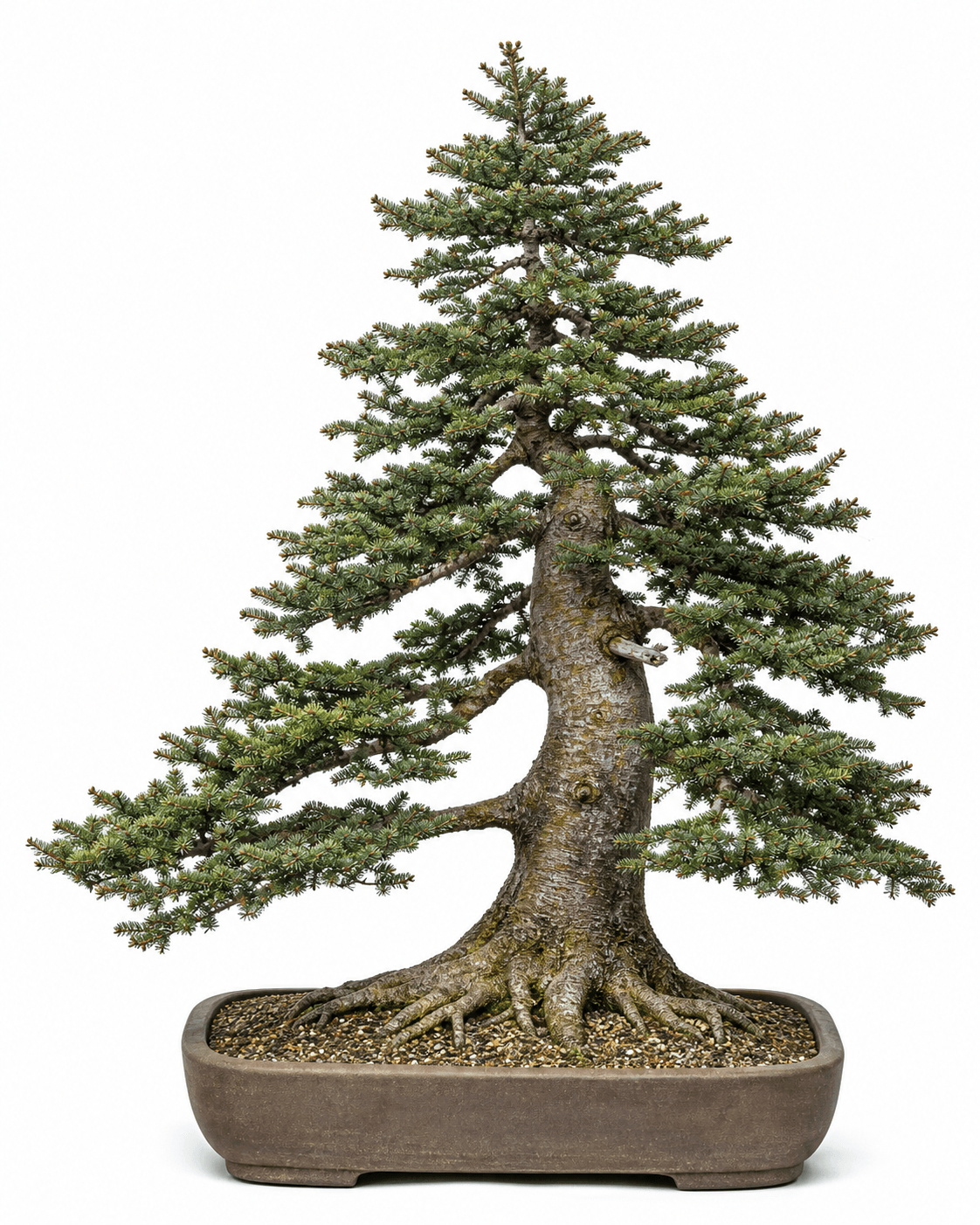
Balsam Fir Bonsai Care
Abies balsamea
Balsam fir bonsai belongs outdoors in a cool, moist, bright climate rhythm. Treat Abies balsamea as an alpine or northern elongating conifer: protect the roots from heat, water thoroughly without suffocating the pot, and time pruning around visible buds.
The most important technique is restraint. Abies shoots do not respond like spruce tips or pine candles, so spring pinching is only for strong refined shoots that already have interior buds or replacement shoots behind them.
The local Bonsai Mirai corpus has no dedicated Abies balsamea file. This guide uses Mirai direct Balsam fir mention from nursery-stock material plus genus-level Abies pinching, elongating-conifer fall work, watering, soil, repotting, wiring, energy, and design files, then grounds taxonomy and ecology in Kew, NC State, Oregon State, USDA Silvics, FEIS, and USDA NRCS.
Updated June 3, 2026. Written by EntGrove Editorial. Last verified June 3, 2026.
Care fingerprint
Read the species through its shared care pattern.
Strong light, cool-root management, conservative root work, and post-extension pruning dominate the care calendar. Use this as the starting point before local conditions and tree strength refine the calendar.
Note: Kew accepts Abies balsamea and recognizes var. balsamea plus var. phanerolepis. USDA FEIS / Silvics note Fraser fir relationship and possible subalpine fir hybridization where ranges meet; verify exact Abies label before applying this page to Fraser fir, subalpine fir, or white fir.
Do not prune like a pine
Elongating conifers extend from buds and shoots, so candle-cutting assumptions can remove the exact growth the tree needs.
Preserve interior growth
Spruce, fir, hemlock, cedar, redwood, cypress, and larch all become harder to design when interior buds are shaded out.
Keep recovery cool and steady
Many elongating conifers respond best when roots stay evenly moist, oxygenated, and protected from hot dry swings.
Care cadence
The calendar starts with the tree's seasonal state.
Placement
Timing: Grow outside year-round. Use full morning sun or bright filtered sun in hot-summer regions, with the pot shaded or insulated before the root zone overheats.
Watch for: Dry afternoon wind, hot black containers, weak interior buds from excessive shade, and needles that dull or crisp during heat events.
NC State ExtensionOregon State Landscape PlantsBonsai Mirai LibraryWatering
Timing: Water deeply when the upper aggregate begins to dry while the core still carries moisture. In summer, check often because flat needles and shallow pots lose water fast.
Watch for: Water bypassing old nursery soil, peat pockets that stay wet, a sour smell after watering, or tips drying while the pot surface still looks damp.
USDA NRCS Plant Fact SheetBonsai Mirai LibraryFertilizer
Timing: Feed established trees through active growth, then taper before winter hardening. After root work or collection, keep feeding light until new buds and water uptake prove recovery.
Watch for: Coarse apical push, weak lower branches, fertilizer on newly cut roots, and lush late growth that enters freezing weather soft.
Bonsai Mirai LibrarySpring pinching
Timing: In refinement, pinch only strong elongating tips after confirming smaller interior buds or replacement shoots behind the sacrificed tip.
Watch for: Pinching a weak shoot, removing every soft tip, shortening before interior buds exist, and copying spruce pinching without checking Abies response.
Bonsai Mirai LibraryPost-harden pruning
Timing: After the flush hardens, reduce extensions back to visible buds or smaller shoots. Vary cut positions so branch ends do not swell into repeated knots.
Watch for: Cuts past the last bud, repeated cuts to the same collar, and removal of bottom foliage while the tree is still in development.
Bonsai Mirai LibraryFall structural work
Timing: Early fall is a useful window for established elongating conifers because vascular production supports pruning, wiring, and wound response.
Watch for: Work too late into freezing weather, wire left through swelling, and styling a freshly collected or recently repotted tree before recovery is obvious.
Bonsai Mirai LibraryRepotting
Timing: Use spring bud movement as the normal repot window. For nursery stock, correct the oversized soil volume before large foliar reductions whenever possible.
Watch for: Bare-rooting old conifer cores, leaving peat that cannot be watered evenly, weak tie-downs, and heavy styling immediately after root disturbance.
Bonsai Mirai LibraryUSDA NRCS Plant Fact SheetWiring
Timing: Wire spring or early fall on strong established trees. Loosen turns around needles and check frequently because fir bark and young shoots mark under pressure.
Watch for: Crushed needles, wire hidden under dense shoots, brittle old branches, and bends that ask more than the live vein can support.
Bonsai Mirai LibraryWinter protection
Timing: Keep the tree dormant, cold, and protected from root-killing freeze-thaw cycles. Use mulch beds, cold frames, or ground contact in severe climates.
Watch for: Warm indoor storage, repeated thawing and refreezing, dry winter wind, and rodents around soft bark and low branches.
NC State ExtensionUSDA NRCS Plant Fact SheetSpecies guide
Apply the species profile before copying another tree's calendar.
At a glance
Balsam fir is a cold-climate true fir with precise bud rules.
Abies balsamea is a northern and Appalachian true fir with aromatic needles, resin blisters, upright cones, and a naturally symmetrical spire. In a pot, those traits translate into upright structure, dense but delicate shoot management, cool-root culture, and careful pest inspection. Kew POWONC State ExtensionUSDA NRCS Plant Fact Sheet
The species is best approached as an outdoor alpine elongating conifer. It can grow from seedling or Christmas-tree nursery stock, but a credible bonsai depends on shrinking the root environment, protecting interior buds, and allowing stages of development rather than forcing refinement too early. Bonsai Mirai LibraryOregon State Landscape Plants
Source depth matters for this page. Mirai does not have a dedicated Balsam fir file in the local corpus, so species-specific claims about range, hardiness, morphology, pests, and cultivars come from public botanical and forestry sources, while bonsai method comes from Abies and elongating-conifer files. Bonsai Mirai LibraryKew POWOUSDA Forest Service Silvics
Wild range
Read the tree from cold spruce-fir forests, wet soils, and a narrow spire.
Kew places balsam fir from central and eastern Canada to Virginia. USDA FEIS expands that into the practical North American picture: Newfoundland through Canada to Alberta, then south into the Lake States, New England, Pennsylvania, West Virginia, and northern Virginia. Kew POWOUSDA Forest Service FEIS
USDA NRCS describes the species on silt loams, stony glacial till, gravelly sands, and peat bogs, usually in cold moist climates with at least 30 inches of annual precipitation. The bonsai translation is simple: moisture is welcome only when oxygen remains available. USDA NRCS Plant Fact SheetBonsai Mirai Library
Design should echo that ecology. A balsam fir can read as a young northern spire, a compact Christmas-tree remnant transformed into bonsai, a clump or forest, or an exposed-root composition that suggests erosion and shallow boreal soil. Bonsai Mirai / AsymmetryUSDA NRCS Plant Fact Sheet
The species has thin bark, shallow roots, and high windthrow susceptibility on wet shallow soils. For bonsai, that argues for secure tie-downs, careful wound placement, modest deadwood, and root work that fixes water movement before it chases a shallow display pot. USDA NRCS Plant Fact SheetUSDA Forest Service Silvics
Reading the tree
Separate development from refinement before you pinch.
In development, balsam fir needs foliage mass, root recovery, and branch options. Let useful shoots extend, feed the tree, and preserve lower and interior growth so the roots and trunk keep building capacity. Bonsai Mirai Library
In refinement, the goal changes to bud redistribution. Mirai Abies guidance pinches the strongest elongating tips only after shorter interior buds or replacement shoots already exist behind the point being removed. Bonsai Mirai Library
Visible top growth can mislead on elongating conifers. Mirai warns that spruce, hemlock, and Abies can produce foliage while roots remain underdeveloped, so a recent repot or collection should be judged by old-wood buds, water uptake, and full-season stability. Bonsai Mirai Library
NC State calls the landscape growth rate medium, while forestry sources show balsam fir as a shade-tolerant, often short-lived forest species. Bonsai work should therefore build vigor before asking for density, especially on shaded or nursery-bound material. NC State ExtensionUSDA Forest Service Silvics
Pinching
Pinch Abies only when the replacement bud already exists.
The genus-level Abies rule is strict: a pinched tip should be considered sacrificed. The remaining design has to be carried by an interior bud, a shorter side shoot, or an existing branch behind the pinch. Bonsai Mirai Library
Work strong tips first and leave weak tips alone. The first spring pass should be minimal because energy is concentrated in fewer shoots, and later passes can be more active as the silhouette produces more elongating tips. Bonsai Mirai Library
Structural pruning belongs after the flush hardens or in early fall on established trees. Every shortening cut should land at a visible bud or smaller shoot, since cuts beyond the last bud can kill the remaining tip. Bonsai Mirai Library
For raw nursery stock, Mirai nursery-stock method starts by exposing structure, removing weak interior pieces and obvious bottoms, then letting final design decide which paired branches stay. Avoid stripping the tree to a finished outline in the first session. Bonsai Mirai Library
Roots
Correct the nursery soil before heavy styling asks too much.
Spring bud movement is the normal repotting window. Balsam fir naturally has shallow roots and is windthrow-prone on wet shallow soils, so the bonsai root system must be tied firmly, oxygenated, and watered through the whole core. USDA NRCS Plant Fact SheetBonsai Mirai Library
Mirai nursery-stock guidance recommends moving oversized conifer stock into a smaller bonsai-sized container before major styling when possible. Foliar mass drives root regeneration, and heavy foliage removal while the tree sits in a large wet soil mass can leave too little transpiration to move water. Bonsai Mirai Library
Do root work in stages. Remove circling roots, correct perched peat or field soil, and preserve enough functioning fine roots to keep the canopy hydrated through summer. Old conifer cores are rarely improved by bare-root washing. Bonsai Mirai LibraryUSDA NRCS Plant Fact Sheet
After repotting, secure the tree, protect from hot wind, water by need rather than schedule, and postpone styling until the tree proves recovery with firm buds and reliable water uptake. Bonsai Mirai Library
Soil and pot
Use acidic moisture without sacrificing oxygen.
A practical starting mix is akadama-heavy aggregate with pumice and lava, adjusted by climate. Cooler wet regions can use more structure and drainage, while hotter summer benches may need more water buffering and pot shading. Bonsai Mirai LibraryUSDA NRCS Plant Fact Sheet
USDA NRCS gives a natural pH range of 4.0 to 6.0, and NC State lists acidic soil with good drainage and moisture. Avoid alkaline water buildup, compacted organics, and peat pockets that swing between hydrophobic and saturated. USDA NRCS Plant Fact SheetNC State Extension
Pot choice should support the design stage. Development trees need enough depth for even moisture and secure roots; refined forest, spire, and exposed-root designs can move gradually into quieter unglazed or muted glazed containers once the root pad is stable. Bonsai Mirai / AsymmetryBonsai Mirai Library
Because the species has resinous bark, aromatic needles, and a northern forest character, a restrained pot usually reads better than a decorative container. Let texture, root line, and silhouette carry the composition. Bonsai Mirai / AsymmetryNC State Extension
Climate
Cold is useful. Heat and stale wet soil are the harder problems.
Balsam fir is hardy in cold landscape zones, but a pot changes the risk. Protect container roots before severe freeze-thaw cycles, and keep the tree dormant rather than warm indoors. NC State ExtensionOregon State Landscape Plants
In the Northeast, upper Midwest, eastern Canada, and cool mountain gardens, the main bonsai risks are winter drying, shallow wet root zones, spruce budworm or adelgid pressure, and wire left too long. USDA Forest Service SilvicsUSDA Forest Service FEIS
In warmer Zone 7 regions and humid southern edges, give afternoon shade, strong airflow, cool pot placement, and careful summer watering. NC State specifically notes that balsam fir is poorly suited to southeastern heat and humidity. NC State Extension
In dry western or Mediterranean summers, treat the species as a specialty cool-root conifer. Shade the pot, water before dry wind dehydrates the root pad, and consider whether subalpine fir, spruce, or local conifers are better adapted. Bonsai Mirai LibraryUSDA NRCS Plant Fact Sheet
Pests
Watch budworm, adelgid, wounds, and rot before styling damage compounds.
USDA Silvics identifies spruce budworm as the most important balsam fir insect enemy. Despite the name, budworm prefers fir over spruce and can defoliate or kill mature fir in outbreaks. USDA Forest Service Silvics
Balsam woolly adelgid is another major pest in southeastern Canada and the northeastern United States. USDA Silvics describes twig and bud attack that causes swelling, bud loss, top dieback, and severe regeneration damage. USDA Forest Service Silvics
For bonsai, inspect buds, shoot tips, bark crevices, and old wounds. White wool, swollen tips, stalled buds, sticky residue, or sudden top decline deserve isolation, identification, and locally labeled treatment guidance from extension sources. USDA Forest Service SilvicsBonsai Mirai Library
Disease pressure centers on wounds and roots. USDA Silvics notes red heart fungus through trunk and branch injuries plus important root and butt rots. Keep roots oxygenated, avoid unnecessary large wounds, and protect live veins after bends or carving. USDA Forest Service SilvicsUSDA NRCS Plant Fact Sheet
Wiring
Wire selectively and protect soft needles, bark, and branch bases.
Young balsam fir shoots can be flexible, especially in nursery-stock stages. Wire enough to establish trunk line, defining branches, and negative space, then leave some tips unforced so the species keeps a natural northern softness. Bonsai Mirai / AsymmetryBonsai Mirai Library
When wiring fine conifer foliage, Mirai warns against crushing needles under the wire. Pre-shape the wire, slide it between needle masses, and keep turns loose enough that needles continue photosynthesizing during recovery. Bonsai Mirai Library
Heavy trunk bending is a young vigorous tree technique, not a routine mature-fir move. If trunk splitting or raffia work is considered, spring bud swell is the preferred window, and protected aftercare is mandatory in freezing climates. Bonsai Mirai Library
Check wire often in spring and early fall. Conifers can swell under the wire during vascular production, and Balsam fir bark will not improve if old scars interrupt the clean spire line. Bonsai Mirai LibraryUSDA NRCS Plant Fact Sheet
Propagation
Seedlings and dwarf nursery selections are the realistic entry points.
USDA NRCS says natural regeneration works well on open and disturbed sites when seed source is present, and the species can be readily grown in nurseries. For bonsai, seedlings offer patience and clean roots. USDA NRCS Plant Fact Sheet
Seed is a long-term route. USDA NRCS notes about 60,000 seeds per pound, and true fir cones stand upright and disintegrate as they release seeds. Use local seed handling guidance for cold stratification and provenance. USDA NRCS Plant Fact SheetUSDA Forest Service Silvics
Cuttings are not the normal path for serious balsam fir bonsai. Dwarf and ornamental forms are usually purchased as nursery selections, and any graft union should be inspected before design decisions are made. Oregon State Landscape PlantsNC State Extension
Collected material requires permission, cool aftercare, and restraint. Even when a conifer shows new shoots, root recovery may still be incomplete, so styling should wait until old-wood buds and water movement prove stability. Bonsai Mirai Library
Buying
Choose compact buds and recoverable roots over instant Christmas-tree shape.
Good candidates come from seedlings, regional conifer nurseries, dwarf selections, legal collected stock, and seasonal nursery material. Look for low buds, a useful trunk base, non-girdling roots, and branches that can become structure rather than a uniform cone. Bonsai Mirai LibraryOregon State Landscape Plants
Mirai nursery-stock guidance favors the unusual plant with exposed roots, twisted base, asymmetric movement, or character that the standard landscape buyer rejects. Balsam fir nursery stock can work when those features exist. Bonsai Mirai Library
Inspect the soil before buying. Field soil, peat-heavy cans, circling roots, or old compacted cores should be treated as a multi-year horticultural project before the tree is asked to hold a finished design. Bonsai Mirai LibraryUSDA NRCS Plant Fact Sheet
Keep labels precise. Balsam fir overlaps in conversation with Canadian balsam, eastern fir, bracted balsam fir, subalpine fir hybrids at the western edge, and Fraser fir or phanerolepis material in Appalachian contexts. USDA Forest Service FEISUSDA Forest Service SilvicsKew POWO
Troubleshooting
Most failures trace to hot roots, weak buds, wet cores, or pest pressure.
Symptom: summer tips brown while the pot feels wet. Likely cause: hot roots, stale nursery soil, or a saturated core with poor oxygen. Fix: cool the pot, improve airflow, water only after checking the core, and plan staged root correction. USDA NRCS Plant Fact SheetBonsai Mirai Library
Symptom: a pinched branch fails to replace the tip. Likely cause: the shoot was pinched before an interior bud or shorter replacement existed. Fix: stop pinching that branch, rebuild strength, and prune only to visible buds later. Bonsai Mirai Library
Symptom: lower branches weaken every year. Likely cause: excessive shade, apical dominance, or over-cleaning lower foliage during development. Fix: protect lower shoots, improve light, and manage the top first in refinement. Bonsai Mirai Library
Symptom: woolly residue, swollen shoots, or dying tops. Likely cause: adelgid or similar sap-feeding pressure. Fix: isolate the tree, confirm the pest, reduce heat stress, and follow local extension treatment labels. USDA Forest Service Silvics
Symptom: old wounds soften or decay. Likely cause: fungal entry through trunk or branch injuries, especially in a humid or stagnant setting. Fix: protect live tissue, improve airflow, avoid unnecessary carving, and keep the root zone healthy. USDA Forest Service SilvicsBonsai Mirai / Asymmetry
Symptom: the whole tree loosens in the pot after wind or winter. Likely cause: shallow roots, weak tie-downs, and windthrow tendency translated into a container. Fix: resecure at the next safe window and shelter from rocking wind. USDA NRCS Plant Fact SheetBonsai Mirai Library
Design
Let balsam fir read as northern, aromatic, compact, and wind-aware.
Start with base, trunk line, defining branch, apex, and environment. A strong balsam fir design should suggest a cold forest tree compressed by climate and container, with individual structure beyond a generic conifer triangle. Bonsai Mirai / AsymmetryUSDA NRCS Plant Fact Sheet
The natural habit is symmetrical, narrow, pyramidal, and spire-like. Use that as a reference, then introduce asymmetry through root exposure, trunk lean, branch selection, negative space, and variation between left and right mass. NC State ExtensionBonsai Mirai / Asymmetry
Forests and clumps suit the species because small trees share an ecological story: shade tolerance, boreal regeneration, shallow roots, and vertical leaders competing for light. Keep trunks varied in size and spacing. USDA Forest Service SilvicsBonsai Mirai / Asymmetry
Deadwood should stay restrained. Balsam fir has thin bark and decay-prone wounds in forestry sources, so bright sculptural deadwood is less credible than subtle scars, broken tips, and aged bark transitions. USDA Forest Service SilvicsBonsai Mirai / Asymmetry
Cultivars
Dwarf forms are useful, but taxonomy labels need care.
Kew recognizes Abies balsamea var. balsamea and var. phanerolepis. USDA FEIS lists bracted balsam fir among common names and discusses phanerolepis distribution in northeastern and Appalachian high-elevation areas. Kew POWOUSDA Forest Service FEIS
NC State lists Nana as a dwarf cultivar or variety association, and Oregon State notes Nana and Piccolo as popular dwarf selections. These can be useful for smaller bonsai if the root system is healthy. NC State ExtensionOregon State Landscape Plants
Fraser fir and balsam fir are closely related, and some authorities have treated Fraser fir inside balsam fir variation. Keep Fraser, phanerolepis, and balsam labels separate in records because hardiness, disease pressure, and provenance can differ. USDA Forest Service FEISUSDA Forest Service Silvics
Subalpine fir may hybridize with balsam fir where ranges meet in Alberta, according to USDA FEIS and Silvics. That reinforces the practical rule: verify Abies labels before applying a species page to trade material. USDA Forest Service FEISUSDA Forest Service Silvics
History
Balsam fir brings Christmas-tree familiarity into serious conifer bonsai.
USDA Silvics describes balsam fir as one of the important conifers of the northern United States and Canada, used for pulp, light construction, wildlife cover, and Christmas trees. USDA Forest Service Silvics
That familiarity can be an advantage in bonsai. Seasonal nursery material teaches selection, root correction, and the difference between a uniform landscape cone and a tree with usable asymmetry. Bonsai Mirai Library
The species has a real northern identity: resin blisters, fragrant flat needles, upright cones, shade tolerance, shallow roots, and a spire that reads instantly as spruce-fir forest. A strong bonsai preserves that identity instead of forcing a tropical or pine vocabulary. NC State ExtensionUSDA NRCS Plant Fact SheetBonsai Mirai / Asymmetry
A credible exhibition balsam fir should show health first: firm buds, hydrated needles, clean pest-free tips, secure roots, no active wire bite, and a design that makes the cold-climate source legible. Bonsai Mirai / AsymmetryUSDA Forest Service Silvics
Species questions
Answer the beginner questions before styling.
Can balsam fir be grown as bonsai?
Yes. Abies balsamea can be trained as bonsai when it receives outdoor dormancy, cool roots, moist but oxygenated soil, and pruning timed to visible buds.
Can balsam fir bonsai live indoors?
Balsam fir belongs outdoors. It needs cold dormancy, bright outdoor light, airflow, and seasonal temperature changes to keep its roots and buds synchronized.
How often should I water balsam fir bonsai?
Water when the upper aggregate begins to dry while the inner root ball still holds moisture. In summer, check often and avoid both dry pockets and stagnant wet peat.
When should I repot balsam fir bonsai?
Repot in spring as buds begin to move. Established trees often need inspection every 3-5 years, while nursery stock may need staged correction sooner if the soil is oversized or compacted.
Should I pinch balsam fir like spruce?
Use Abies pinching rules. Pinch only strong refined shoots when interior buds or shorter replacement shoots already exist behind the tip being removed.
What pests attack balsam fir bonsai?
Spruce budworm and balsam woolly adelgid are the major forestry pests to know. In bonsai, also watch for scale-like residue, woolly patches, stalled tips, root rot, and wound decay.
Is balsam fir the same as Fraser fir?
They are closely related, and older authorities have treated Fraser fir within balsam fir variation. Keep labels separate because provenance, pest pressure, and climate response matter in bonsai.
What soil does balsam fir bonsai need?
Use a free-draining aggregate conifer mix that remains evenly moist and slightly acidic. Akadama, pumice, and lava can be adjusted by climate and pot depth.
Can I make bonsai from a Christmas-tree balsam fir?
Sometimes. Choose compact, vigorous, rooted nursery stock with usable low branches, a recoverable root system, and unusual trunk or root character rather than a uniform cone.
What styles suit balsam fir bonsai?
Upright spires, forests, clumps, exposed-root nursery-stock designs, raft-like northern compositions, and subtle wind-influenced forms suit balsam fir best.
Sources
Species advice needs source discipline.
Next decisions
Plan the operation before copying the calendar.
A good care note for Balsam fir records the tree's stage, the work done, and the aftercare used. That record matters more than a month-name rule.
Related species
Compare nearby trees before transferring advice.
Subalpine fir
Abies lasiocarpa
White fir
Abies concolor
Noble fir
Abies procera
Mountain hemlock
Tsuga mertensiana
Eastern hemlock
Tsuga canadensis