
Species guide
Torrey Pine Bonsai Care
Pinus torreyana
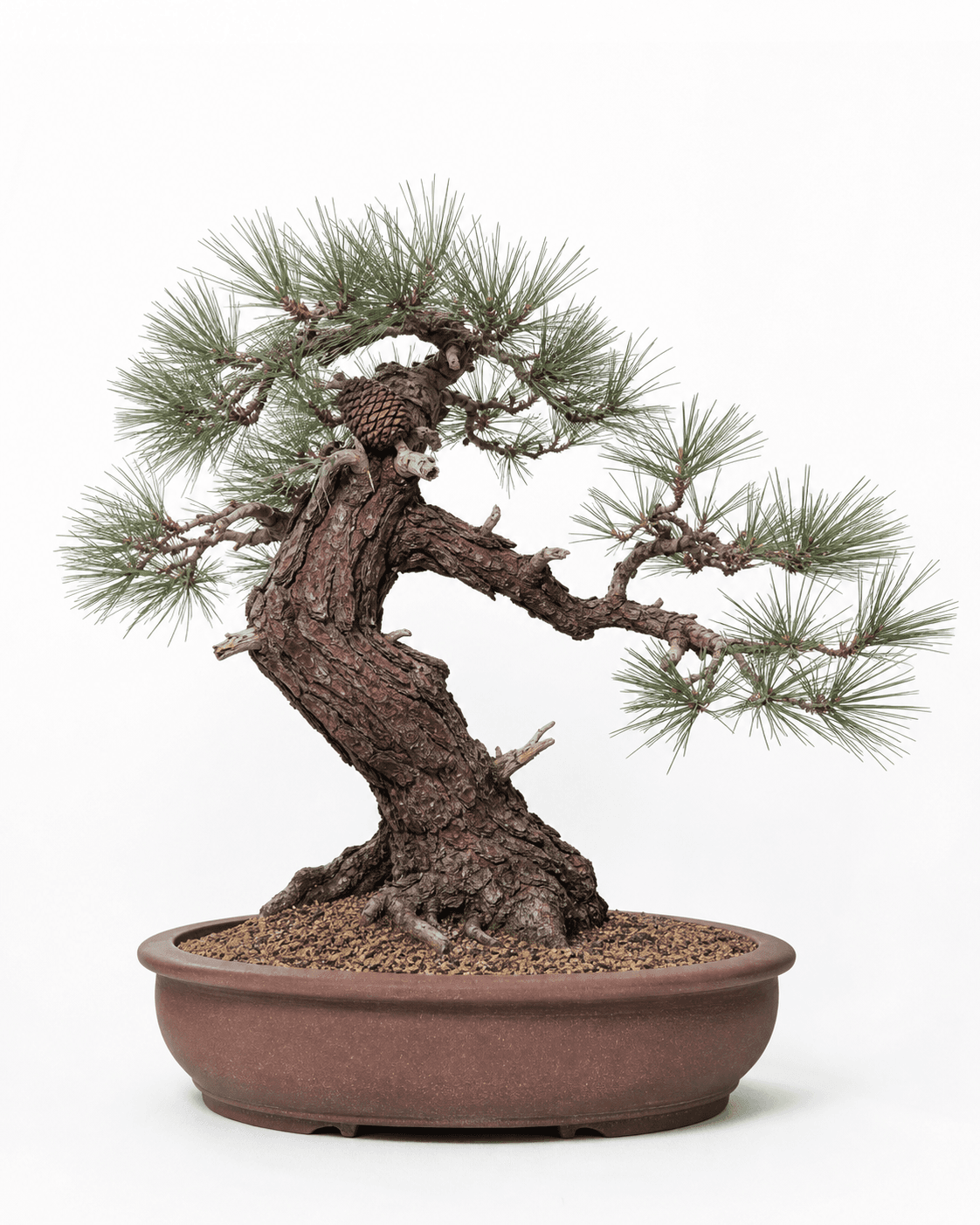
Torrey pine is a rare outdoor California pine with very long five-needle foliage, heavy cones, rough bark, and a natural range reduced to coastal San Diego County and Santa Rosa Island. As bonsai, treat confirmed Pinus torreyana as a conservation-aware, medium-to-large, long-needle single-flush pine with no routine decandling.
The local Mirai corpus has only one direct Torrey pine hit, in the outlier-pines file, so this page is transparent about method transfer. Bonsai technique comes from Mirai pine fundamentals and long-needle single-flush pine practice, while Kew, RHS, Flora of North America, USDA FEIS, NPS, California State Parks, UC IPM, and the Gymnosperm Database ground identity, range, conservation, disease, and climate facts.
Updated June 6, 2026. Written by EntGrove Editorial. Last verified June 6, 2026.
Care fingerprint
Read the species through its shared care pattern.
Do not default to Japanese black pine decandling; manage vigor through timing, needle balance, light, and conservative pruning. Use this as the starting point before local conditions and tree strength refine the calendar.
Identify flush behavior
Single-flush, multiflush, white pine, and compact pine groups have different pruning windows and different risk levels.
Avoid default decandling
Japanese black pine methods do not transfer safely to every pine, especially slow, weak, collected, or five-needle trees.
Use needles as strength data
Needle length, color, age, and density help show where vigor is strong, weak, or becoming shaded.
Care cadence
The calendar starts with the tree's seasonal state.
Placement
Timing: Grow outdoors year-round in full sun and moving coastal or coastal-like air. In hot inland gardens, shade the pot and protect roots during heat spikes while keeping foliage bright.
Watch for: Indoor culture, warm still corners, hot black benches, reflected-wall heat, heavy shade that weakens buds, and winter storage that removes the seasonal signal.
USDA Forest Service FEISCalifornia State ParksBonsai Mirai LibraryWatering
Timing: Water the entire root mass, then let the mineral soil breathe. Seedlings, recent transplants, and old root cores need slower soaking because dry sandy or organic pockets can shed water.
Watch for: Dry cores, stale wet cores, fog-season overconfidence, drought used as needle control, and weak candles after a hot week.
USDA Forest Service FEISBonsai Mirai LibraryDevelopment feeding
Timing: Feed during active growth to build root strength, buds, and enough needle mass to support future cuts. Long needles during development are a sign of stored energy, not a failure.
Watch for: Trying to refine before branches exist, reducing fertilizer to force short needles, and removing the foliage battery needed for back budding.
Bonsai Mirai LibraryRefinement feeding
Timing: After the tree has many growing points, reduce spring strength and feed more carefully through late summer and fall so buds mature without forcing coarse extension.
Watch for: Applying refinement feeding to a sparse young tree, overfeeding a nearly finished crown, and using cone production as proof of bonsai readiness.
Bonsai Mirai LibraryPruning and needle work
Timing: Use conservative post-flush pruning after the single flush hardens and after old needles begin to release. Keep strong interior buds and avoid routine decandling.
Watch for: Copying Japanese black pine schedules, spring candle cutting, heavy needle plucking, cutting below viable buds, and styling during root recovery.
Bonsai Mirai LibraryRepotting
Timing: Repot in spring as buds move. Preserve active root zones, secure the tree tightly, and convert dense nursery or field soil over multiple cycles.
Watch for: Bare-rooting, loose tie-downs, compacted nursery cores, old sandy soil that will not rewet, and major pruning in the same season as root reduction.
Bonsai Mirai LibraryUSDA Forest Service FEISWiring
Timing: Wire when branches can be watched closely and the tree is strong. Long needles and stout twigs make branch selection more important than wiring every shoot.
Watch for: Needle damage, bark compression, old-branch cracks, wire bite on active shoots, and forcing tight pads on a species with naturally open structure.
Flora of North AmericaBonsai Mirai LibraryPests and disease
Timing: Inspect during drought stress, after pruning wounds, in coastal pitch-canker regions, and whenever pitch tubes, boring dust, flagging, or resinous branch dieback appears.
Watch for: Pitch canker symptoms, bark beetles, twig beetles associated with pitch canker transmission, dry-season stress, and fresh pine wounds during beetle flight season.
UC IPMUC IPMCalifornia State ParksSourcing
Timing: Favor nursery-grown or documented seedling material. Wild Torrey pine populations are protected and conservation-significant, so provenance and legality matter as much as trunk character.
Watch for: Collected wild material, vague California pine labels, mainland or island provenance hidden by the seller, weak roots, and diseased coastal stock moved into clean collections.
Kew POWO general informationCalifornia State ParksNational Park ServiceSpecies guide
Apply the species profile before copying another tree's calendar.
At a glance
Torrey pine is a rare coastal California pine for large, conservation-aware bonsai.
Kew accepts Pinus torreyana Parry ex Carriere in Pinaceae and recognizes two accepted infraspecifics, subsp. torreyana and subsp. insularis. RHS lists Soledad pine and Torrey pine as common names, while USDA FEIS adds Del Mar pine and Santa Rosa Island Torrey pine. Kew POWOKew POWORHSUSDA Forest Service FEIS
The short care spec is outdoor full sun, oxygen-rich mineral soil, thorough watering, mild coastal root protection, conservative long-needle single-flush pruning, no routine decandling, and verified nursery or seed origin. Bonsai Mirai LibraryUSDA Forest Service FEIS
Its scale sets expectations. FNA gives mostly five needles per fascicle, usually 15 to 30 cm long, with massive 10 to 15 cm cones. That points toward medium and large bonsai rather than shohin. Flora of North America
Wild habitat
Its wild design language is coastal bluff, island woodland, fog, poor soil, and wind.
FNA describes present natural range as two small southern California areas: near Del Mar in San Diego County and the northeastern shore of Santa Rosa Island. Kew summarizes the species range as southwestern California. Flora of North AmericaKew POWO general information
USDA FEIS describes a maritime climate with low winter rainfall and frequent fog. Wild trees occur on ridgetops, slopes, gullies, coastal highlands, canyons, and mesas in open shallow sandy soils poor in humus. USDA Forest Service FEIS
Channel Islands National Park describes Santa Rosa Island Torrey pine as confined to two groves on the northeastern side of Santa Rosa Island, where single-species stands can mix with island chaparral. National Park Service
Translate that into care by keeping roots airy, using complete watering, protecting the pot from inland heat, and avoiding the assumption that a drought-tolerant wild tree wants a dry bonsai rootball. USDA Forest Service FEISBonsai Mirai Library
Translate it into design through wind-shaped trunks, sparse crowns, exposed branch bases, rugged bark, heavy cone memory, and the deliberate emptiness of a tree growing on a bluff rather than in a dense forest. Flora of North AmericaCalifornia State ParksBonsai Mirai / Asymmetry
Reading the tree
Read roots, candle strength, old needles, and whether provenance is known.
The local Mirai corpus only names Pinus torreyana in the outlier-pines material. That matters: the safe bonsai stance is to observe this individual tree first, then apply pine principles conservatively. Bonsai Mirai Library
For long-needle pines, Mirai pine fundamentals place strength in the coarse root system and stored carbohydrates. Strong candles, firm buds, hydrated needles, and old needles that persist several years indicate the tree has resources. Bonsai Mirai LibraryFlora of North America
Old collected-looking bark is not proof that the root system is ready. USDA FEIS records native Torrey roots reaching deep taproots and very long lateral roots in sandstone, which makes bonsai root conversion a staged project. USDA Forest Service FEIS
The first identification fork is provenance. Mainland and Santa Rosa Island trees are both Torrey pine, but Kew and FNA recognize the two accepted subspecies. Record the source rather than flattening all material to a generic coastal pine label. Kew POWOFlora of North AmericaNational Park Service
Technique
Use long-needle single-flush timing and keep decandling out of the default plan.
EntGrove places Torrey pine in Long-Needle Single-Flush Pines because the public evidence points to one main flush and long foliage, and the Mirai corpus offers no dedicated Torrey decandling instruction. Bonsai Mirai LibraryFlora of North America
The working rhythm is extension, hardening, then selective cutback to visible buds or useful shoots. Preserve interior growth because long-needle pines need more foliage mass to fuel back-budding and root recovery. Bonsai Mirai Library
Avoid spring candle removal as a length-control habit. Cutting a weak single-flush candle can remove the year's growth and leave no reliable second flush to rebuild the branch. Bonsai Mirai Library
Use needle reduction as an outcome of health and ramification, not as the first technique. More active buds distribute energy across more growing points, which can reduce the visual weight of each needle cluster over time. Bonsai Mirai Library
Cone load should be managed on bonsai. USDA FEIS notes cones mature over two and a half years and can retain seeds for long periods, so remove excessive cones when a tree needs root or branch strength. USDA Forest Service FEIS
Roots
Repot to build oxygen, not to force a rare pine into a tiny pot quickly.
Mirai pine fundamentals emphasize coarse roots, starch storage, mycorrhizal activity, and oxygen-rich soil. Those principles matter more with Torrey pine because public sources describe very large natural root systems. Bonsai Mirai LibraryUSDA Forest Service FEIS
Repot in spring as buds move, then keep the tree stable. Preserve enough old root environment to maintain function while gradually replacing compacted nursery, field, or sandy soil with a mineral bonsai mix. Bonsai Mirai Library
Do not bare-root or combine major root reduction with major branch reduction. A long-needle pine needs foliage to rebuild roots, and root loss makes long needles or weak candles more likely in the next cycle. Bonsai Mirai Library
Seedling-grown Torrey pine is the cleanest bonsai path. The grower can train roots early, document provenance, and avoid pressure on protected natural populations. USDA Forest Service FEISCalifornia State Parks
Soil and pot
Use mineral pine soil and a pot that respects long needles and coastal character.
Start with a pine soil such as 1:1:1 akadama:pumice:lava. In wetter coastal or cool gardens, sift out the smallest fines and lean sharper; in hot dry gardens, preserve enough water-holding capacity to avoid repeated dry cores. Bonsai Mirai Library
USDA FEIS describes wild Torrey pine on open, shallow, humus-poor sandy soils. A bonsai pot can echo that oxygen and mineral structure without copying low fertility so literally that the tree starves. USDA Forest Service FEIS
Choose pot scale after the tree has branch density. Long five-needle tufts and large cones ask for visual room, so a slightly deeper or broader unglazed pot often reads better than a shallow refined tray too early. Flora of North AmericaBonsai Mirai / Asymmetry
Pot color should recede: warm gray, muted clay, iron brown, volcanic red, or quiet unglazed earth. Let bark, needle mass, trunk line, and coastal negative space carry the image. Bonsai Mirai / Asymmetry
Climate
Build a coastal California pine climate around the roots.
Kew places Pinus torreyana primarily in a subtropical biome, while USDA FEIS describes low winter rainfall and frequent fog. Bonsai growers outside coastal California must supply the missing root-zone moderation. Kew POWO general informationUSDA Forest Service FEIS
In coastal mild climates, the main risk is complacency: fog does not water a bonsai rootball, and cool air does not fix compacted soil. Check the full soil column before assuming the tree is hydrated. USDA Forest Service FEISBonsai Mirai Library
In hot inland climates, prioritize morning sun, afternoon pot protection, airflow, and complete watering. Avoid repeated shallow sprinkling because it leaves the deep core dry and the surface stale. UC IPMBonsai Mirai Library
In cold climates, give winter dormancy but protect the pot from temperatures below the mild coastal hardiness envelope. The Gymnosperm Database Zone 8 estimate is a landscape clue, not permission to freeze a shallow container hard. The Gymnosperm Database
Do not move diseased or suspect coastal pine material casually. UC IPM pitch-canker and bark-beetle guidance makes sanitation, wound timing, and local diagnosis part of regional adaptation. UC IPMUC IPM
Pests and diseases
Pitch canker, bark beetles, and drought stress are the main red flags.
UC IPM identifies pitch canker as a pine disease caused by Fusarium circinatum. Watch for resinous branch lesions, wilting tips, dieback, and repeated infections after wounds or insect activity. UC IPM
UC IPM bark-beetle guidance says drought, disease, and injuries reduce a tree's ability to defend itself. Signs include pitch tubes, boring dust, small exit holes, yellowing needles, and flagging. UC IPM
California State Parks reported removal of bark-beetle-infested Torrey pines after drought and higher temperatures reduced resistance. That is a landscape event, but the bonsai lesson is direct: protect roots from heat and drought before pests arrive. California State Parks
Avoid fresh pruning during high beetle activity when possible, keep tools clean, isolate suspect trees, and get local diagnosis before moving pine material among collections. UC IPMUC IPM
Needle browning can also come from root failure, heat, salt, or water stress. Start diagnosis at the rootball and recent work history before assuming a named pathogen. USDA Forest Service FEISBonsai Mirai Library
Wiring
Wire for trunk line and branch hierarchy, then let the open crown breathe.
FNA describes irregular spreading-ascending branches and stout twigs. The natural model is candelabra-like structure, open space, and a crown shaped by exposure. Flora of North America
Wire fewer branches more intentionally. Choose the trunk line, defining branch, and apex first, then place secondary branches only where long needle tufts can read clearly. Bonsai Mirai / AsymmetryBonsai Mirai Library
Protect bark and needles while bending. Rough flaky bark and long needles make hidden pressure easy to miss, and branch thickening can mark quickly when the tree is vigorous. Flora of North AmericaBonsai Mirai Library
Avoid over-wiring the crown into tight pads. Torrey pine should hold a sparse coastal silhouette with room between branch planes. California State ParksBonsai Mirai / Asymmetry
Propagation
Seed is the ethical and horticulturally clean route.
USDA FEIS says Torrey pine regenerates sexually and does not reproduce naturally by vegetative methods. It begins producing seed at about 12 to 18 years old. USDA Forest Service FEIS
The same FEIS account recommends cold stratification for rapid and complete germination, with 30 to 90 days at 33 to 41 F. Record seed source, because mainland and island provenance matter. USDA Forest Service FEISKew POWO
Seedlings allow early root training, trunk movement, and legal provenance. They also avoid taking material from a species whose wild populations are under protection and conservation concern. Flora of North AmericaCalifornia State Parks
Cuttings and air layers should not be assumed. No public source reviewed for this page supports them as ordinary Torrey pine propagation, and FEIS describes natural reproduction as sexual. USDA Forest Service FEIS
Grafting may exist in pine horticulture, but the bonsai value of Torrey pine is usually its own bark, long needles, and native character. Confirm compatibility and purpose before building a grafted project. Bonsai Mirai Library
Sourcing
Buy documentation before drama.
A good Torrey pine candidate has a confirmed Pinus torreyana label, documented nursery or seed origin, strong terminal buds, healthy five-needle foliage, stable roots, and no active pitch canker or beetle signs. RHSFlora of North AmericaUC IPM
Ask whether it is mainland subsp. torreyana, Santa Rosa Island subsp. insularis, or cultivated material of unknown provenance. Kew accepts both subspecies, and NPS treats the Santa Rosa Island groves as extremely rare. Kew POWONational Park Service
Avoid wild-dug material unless documentation is explicit and legal. California State Parks describes the reserve as protecting the nation's rarest pine tree, and FNA notes the species is under protection. California State ParksFlora of North America
Avoid vague coastal pine labels, weak seedlings in peat, recently trunk-chopped pines, trees with pitch tubes or boring dust, and sellers who recommend annual black-pine decandling without observing Torrey pine behavior. UC IPMBonsai Mirai Library
Troubleshooting
Most failures trace to identity, root oxygen, heat, drought, or copied black-pine technique.
Symptom: candles extend but needles stay very long. Likely cause: normal species scale, development feeding, and too few active growing points. Fix: build ramification over years and design at medium or large scale. Flora of North AmericaBonsai Mirai Library
Symptom: weak or absent back buds after cutback. Likely cause: insufficient root strength, too little interior foliage, or cutting before buds were ready. Fix: rebuild growth and delay additional pruning. Bonsai Mirai Library
Symptom: branch tips wilt with resin. Likely cause: pitch canker or wound-associated disease. Fix: isolate, prune only with clean technique if advised locally, and avoid moving suspect material. UC IPM
Symptom: pitch tubes, boring dust, or sudden flagging. Likely cause: bark beetles on a stressed pine. Fix: diagnose early, reduce stress, remove infested dead material promptly, and seek local IPM advice. UC IPMCalifornia State Parks
Symptom: decline after repotting. Likely cause: too much root removal, poor tie-down, old dry core, or cold wet aftercare. Fix: stabilize the tree, water by root response, and wait for strong candles before styling. Bonsai Mirai Library
Symptom: summer yellowing after hot inland weather. Likely cause: root-zone heat, drought, or salt stress. Fix: shade the pot, water deeply, improve airflow, and keep the soil oxygen-rich. USDA Forest Service FEISUC IPM
Design
Let the tree read as a rare coastal pine rather than a small black-pine copy.
FNA describes wild trees as crooked and leaning, with rounded to flattened or irregular crowns, deeply furrowed red-brown to purple-red bark, and irregular spreading branches. Flora of North America
California State Parks describes stands of wind-sculpted pines on cliffs and ravines. That supports slanting trunks, windward compression, leeward extension, and sparse open crowns. California State Parks
Long needles and heavy cones require generous negative space. A few strong branch planes can look better than many small pads, especially if the trunk has bluff or island character. Flora of North AmericaBonsai Mirai / Asymmetry
Deadwood should stay pine-like: broken stubs, weathered branch ends, subtle shari, and bark transitions. Avoid bright carved juniper-style deadwood unless the tree itself already explains it. Bonsai Mirai Library
Design history and conservation ethics should stay visible in the page and in the tree. The best Torrey pine bonsai image says rare California coastal pine first, technique second. Kew POWO general informationFlora of North AmericaCalifornia State Parks
Forms
The meaningful forms are provenance and subspecies, not bonsai cultivars.
Kew accepts Pinus torreyana subsp. torreyana and Pinus torreyana subsp. insularis. Kew treats Pinus torreyana var. insularis as a synonym of the accepted Santa Rosa Island subspecies. Kew POWOKew POWO
FNA separates the subspecies by crown, cone breadth, umbo shape, and seed width. Those details matter for documentation, but bonsai care still starts with observed vigor and root behavior. Flora of North America
The Gymnosperm Database notes that wild trees are often contorted or sparse while cultivated trees can grow cleaner and taller. A cultivated seedling may therefore need design work to regain coastal character. The Gymnosperm Database
Named bonsai cultivars were not central in the sources reviewed. Prioritize legal provenance, root quality, branch placement, and health over novelty names. Bonsai Mirai LibraryCalifornia State Parks
History
Torrey pine is a rare North American relic with strong public conservation identity.
Kew records Pinus torreyana as first published in 1855. FNA describes it as a rare local Tertiary relic whose older distribution, or near ancestor, extended north to Oregon. Kew POWOFlora of North America
FNA states that Pinus torreyana is the rarest North American pine in terms of wild individuals and occupied area. Kew general information carries the IUCN Critically Endangered status. Flora of North AmericaKew POWO general information
California State Parks frames Torrey Pines State Natural Reserve as the home of the nation's rarest pine tree and notes that Pinus torreyana now grows only there and on Santa Rosa Island. California State Parks
NPS describes Santa Rosa Island Torrey pine groves as extremely rare and possibly among the rarest pine species in the world, with recent seedling expansion around grove perimeters. National Park Service
Public bonsai documentation is thin in the accessible sources reviewed for this page. That makes a conservative, ecology-led guide more useful than pretending Torrey pine has settled exhibition technique. Bonsai Mirai LibraryBonsai Mirai / Asymmetry
Species questions
Answer the beginner questions before styling.
Can Torrey pine be grown as bonsai?
Yes. Torrey pine can be grown as outdoor bonsai when it has full sun, oxygen-rich mineral soil, careful root work, and enough scale to carry very long five-needle foliage.
Can Torrey pine bonsai live indoors?
No. Torrey pine is an outdoor pine. Keep indoor display brief, then return the tree to outdoor sun, airflow, and seasonal conditions.
Should Torrey pine be decandled?
Routine decandling is not recommended. The local Mirai corpus has no dedicated Torrey decandling guidance, so manage it as a conservative long-needle single-flush pine.
How do you reduce Torrey pine needle length?
Start with health and ramification. More active buds and branchlets divide energy better than stress, drought, or spring candle cutting.
What soil works for Torrey pine bonsai?
Use a mineral pine mix such as akadama, pumice, and lava, adjusted to climate. The goal is full watering followed by strong oxygen return around coarse pine roots.
How rare is Torrey pine?
Kew lists Pinus torreyana as Critically Endangered through IUCN data, FNA calls it the rarest North American pine by wild population and occupied area, and California State Parks calls it the nation's rarest pine tree.
Is Santa Rosa Island Torrey pine different from mainland Torrey pine?
Yes. Kew accepts Pinus torreyana subsp. insularis for Santa Rosa Island and subsp. torreyana for the mainland. Record provenance when buying or growing seedlings.
Can I collect wild Torrey pine for bonsai?
Treat wild collection as off limits unless explicit legal documentation exists. The natural populations are protected and conservation-significant.
What pests and diseases matter most for Torrey pine bonsai?
Pitch canker and bark beetles are the main named risks in the sources reviewed. Drought, heat, pruning wounds, and weak roots increase vulnerability.
Is Torrey pine good for small bonsai?
Usually no. The needles and cones are large, so Torrey pine is better suited to medium and large bonsai where coastal pine character can read clearly.
Sources
Species advice needs source discipline.
Next decisions
Plan the operation before copying the calendar.
A good care note for Torrey pine records the tree's stage, the work done, and the aftercare used. That record matters more than a month-name rule.
Related species
Compare nearby trees before transferring advice.
Ponderosa pine
Pinus ponderosa
Jeffrey pine
Pinus jeffreyi
Bishop pine
Pinus muricata
Sugar pine
Pinus lambertiana
Eastern white pine
Pinus strobus