
Species guide
Amur Maple Bonsai Care
Acer tataricum subsp. ginnala
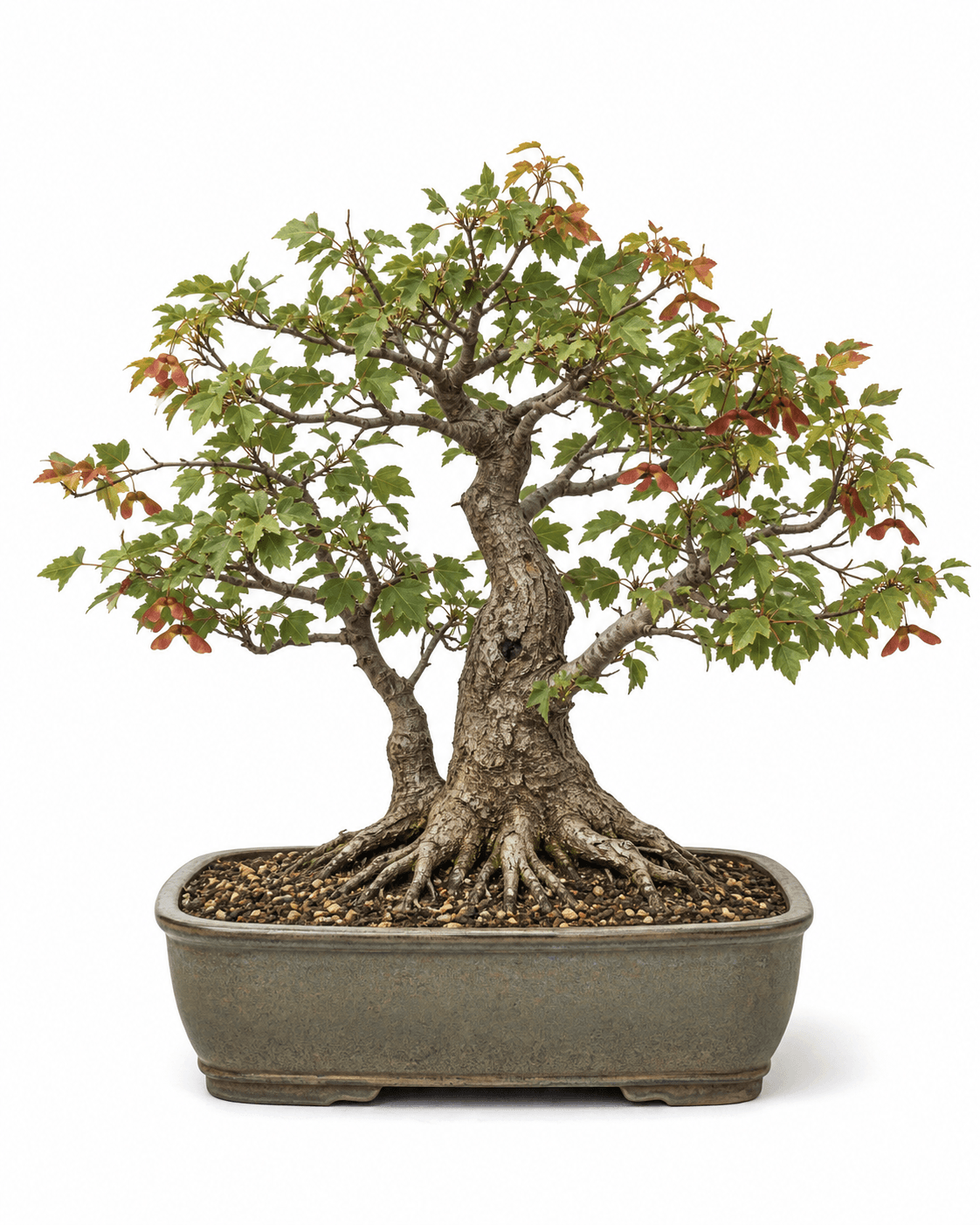
Amur maple is a hardy outdoor deciduous bonsai candidate with strong cold tolerance, small-tree proportions, red samaras, and dependable autumn color. The main care decisions are seasonal timing, water with oxygen, restrained Acer refinement, and seed control where Amur or Tatarian maple is regulated.
Use this page for confirmed Acer tataricum subsp. ginnala material and older nursery tags labeled Acer ginnala. Kew accepts the subspecies name in Sapindaceae and lists Acer ginnala as a synonym, so both labels point to the same care profile.
The species suits outdoor growers who want vigorous maple practice material and can check local invasive-species rules. Mirai has limited direct Amur coverage, but its Acer and deciduous-method corpus gives clear guidance on strength-based pruning, pinching, root work, wiring, and design pacing.
Updated June 18, 2026. Written by EntGrove Editorial. Last verified June 18, 2026.
Care fingerprint
Read the species through its shared care pattern.
Repot and structural prune around dormant-to-active transitions; protect new leaves; time refinement work after growth hardens. Use this as the starting point before local conditions and tree strength refine the calendar.
Note: Hardy introduced maple with useful bonsai traits, but regional invasive or regulated status matters; do not treat Tatarian maple labels as identical without checking the plant.
Read the foliage first
Broadleaf stress usually shows in leaf color, leaf size, wilt, scorch, or delayed hardening before it becomes a branch problem.
Match work to dormancy
Deciduous, evergreen, tropical, succulent, and flowering broadleaf trees recover on different calendars.
Protect fine roots
Root work should preserve enough active fine roots for the tree to rehydrate quickly after the operation.
Care cadence
The calendar starts with the tree's seasonal state.
Placement
Timing: Grow outside year-round with winter dormancy, bright light, airflow, and root protection when container size or recent work lowers cold tolerance.
Watch for: Warm indoor wintering, dry frozen pots, late-pruned trees entering hard freezes, and relying on landscape Zone 2 or Zone 3 ratings for a shallow container.
Kew POWONC State ExtensionOregon State Landscape PlantsBonsai Mirai LibraryLight requirement
Timing: Use full sun in cool or moderate weather for compact growth and color. Shift toward afternoon shade when heat, wind, or recent work raise water demand.
Watch for: Long internodes in shade, weak fall color, sun scorch after canopy opening, and hot dry exposure before roots have recovered.
NC State ExtensionUSDA NRCS Plant GuideUF/IFAS ExtensionBonsai Mirai LibraryWatering
Timing: Water when foliage load, pot size, and weather say the upper mix is drying. Water thoroughly, then let oxygen return before the next pass.
Watch for: Dry nursery cores, heat-scorched margins, reduced water use after pruning, stagnant soil after repotting, and windy days that outpace the pot.
Bonsai Mirai LibraryUSDA NRCS Plant GuideUF/IFAS ExtensionFertilizer
Timing: Feed strongly in primary development, moderately while building secondary scaffolding, and lightly after first-flush hardening in tertiary refinement.
Watch for: Coarse shoots from overfeeding, fertilizer too soon after repotting, late soft growth before cold, and weak response after repeated cutback.
Bonsai Mirai LibraryPruning
Timing: Use development cutback after the first flush hardens or in the leaf-drop window. Refined trees can use strength-based pinching only when bud push is even and strong.
Watch for: Opposite buds making bar branches, coarse hedge growth, dieback after abrupt regional reduction, and spring bleeding on vigorous maples.
Bonsai Mirai LibraryUSDA NRCS Plant GuideWiring
Timing: Wire hydrated, vigorous young branches while they can still move. Inspect weekly after growth hardens or during fall vascular thickening.
Watch for: Thin bark, wire approaching tightness, swelling around paired buds, brittle older wood, and branches that need pruning or guy wires instead of a hard bend.
Bonsai Mirai LibraryUF/IFAS ExtensionRepotting
Timing: Inspect around late winter to spring bud swell, or earlier only when winter protection is available. Repot for root evidence, percolation, soil decay, or design need.
Watch for: Old organic cores, weak post-repot water supply, root work after leaves expand, heavy top work stacked on heavy root work, and loose tie-downs.
Bonsai Mirai LibraryPest, disease, and seed checks
Timing: Inspect during spring flush, summer heat, and fruit maturation. Remove unwanted samaras before they disperse where escape is a concern.
Watch for: Aphids, scale, borers on weak trees, Verticillium wilt, tar spot, leaf scorch, seedlings around the bench, and local sale or planting rules.
USDA NRCS Plant GuideUF/IFAS ExtensionMinnesota DNR invasive species noteSpecies guide
Apply the species profile before copying another tree's calendar.
At a glance
Amur maple is a cold-hardy outdoor maple with a real seed-escape obligation.
The botanical target is Acer tataricum subsp. ginnala, a temperate Sapindaceae tree accepted by Kew. Older nursery stock and bonsai discussions often use Acer ginnala; Oregon State also lists Acer ginnala as a synonym, so both labels are handled here. Kew POWOOregon State Landscape Plants
The practical spec is outdoor deciduous culture: full sun to partial shade, moist well-drained root conditions, a granular bonsai mix, spring root work by evidence, post-flush and leaf-drop pruning, light bark-safe wiring, and winter dormancy. Landscape sources list hardiness from Zone 2 or 3 through Zone 8, but Mirai hardiness guidance lowers that expectation for bonsai roots in shallow containers. NC State ExtensionOregon State Landscape PlantsUSDA NRCS Plant GuideBonsai Mirai Library
Its strengths are cold tolerance, strong young growth, red fall color, red winged fruit, and easy sourcing as shrub or small-tree nursery stock. Its constraints are opposite buds, thin bark, medium leaves, potential dieback after abrupt cuts, and regional invasive risk from wind-dispersed samaras. UF/IFAS ExtensionMinnesota DNR invasive species noteBonsai Mirai Library
Wild context
Its native ecology points to cool-summer outdoor culture and shrub-tree design.
Kew places the accepted subspecies from the Russian Far East to northern and east-central China and Korea, growing primarily in the temperate biome. Oregon State describes the plant as a broadleaf deciduous tree or shrub, 10-20 feet high in landscape settings, with opposite three-lobed leaves and red to brown samaras. Kew POWOOregon State Landscape Plants
USDA gives the most useful care translation: Amur maple grows best in colder climates with cool summers, tolerates a range of soils and pH, and can be grown hotter if dehydration is prevented. In bonsai, that means generous light in cool weather, afternoon relief during dry heat, and root systems that stay moist without losing oxygen. USDA NRCS Plant GuideBonsai Mirai Library
The wild and landscape form is variable, from multistemmed shrub to single-trunk tree. Use that honestly in design: clumps, informal uprights, low multi-trunks, and small grove images can look more native to the species than a forced miniature Japanese maple silhouette. NC State ExtensionUF/IFAS ExtensionBonsai Mirai / Asymmetry
Reading the tree
Decide first whether the Amur maple is in development, secondary building, or refinement.
Mirai separates broadleaf deciduous work into primary structure, secondary scaffolding, and tertiary ramification. Amur maple development should grow enough foliage and root mass to thicken, heal, and build taper; refined trees ask for smaller cuts, steadier energy distribution, and restraint. Bonsai Mirai Library
Opposite buds make the species readable and risky at the same time. Each node can create paired branches and local swelling, so branch selection should remove one side early unless the fork is deliberate. Mirai also notes Acer ginnala can die back when a major cut abruptly reduces water flow to a region, so leave enough living growth to keep vascular paths active. Bonsai Mirai LibraryNC State ExtensionUSDA NRCS Plant Guide
Energy balance should follow the actual tree rather than the label. A coarse nursery shrub can take stronger development pruning than a refined tree in a shallow pot. A stressed, recently repotted, or drought-scorched Amur maple needs leaf mass and root recovery before pinching, defoliation, or heavy wiring. Bonsai Mirai LibraryUF/IFAS Extension
Pruning
Use post-flush cutting, leaf-drop decisions, and cautious pinching on strong refined trees.
NC State says Amur maple withstands heavy pruning in landscape use, but bonsai pruning has to preserve water flow and branch hierarchy. Mirai timing favors major high-water-mobility maple cuts after the first flush hardens or during the narrow leaf-drop window when resources are moving back through the tree. NC State ExtensionBonsai Mirai Library
The post-flush cue is visible: leaves darken, firm up, and extension slows. At that point, a strong development tree can be cut back to useful nodes, while weak branches should keep more foliage to build energy. Large cuts should be clean, shoulder-aware, and sealed where the goal is controlled callus. Bonsai Mirai Library
Pinching belongs only on robust refinement material. The local Mirai corpus directly says Amur maples can be pinched, but should be treated like weaker Acer palmatum cultivars and pinched only when the specimen is strong. Use pinching to redirect stored energy into interior buds, not to fix already-long internodes. Bonsai Mirai Library
Partial defoliation should be selective. Amur maple has opposite leaves, so one-of-two leaf removal and larger-leaf reduction can help light and energy distribution on strong refined areas, while development branches, weak interior shoots, and heat-stressed trees should keep their leaf mass. Bonsai Mirai Library
Roots
Repot by evidence and treat the first nursery transition as the important root-setting moment.
Mirai gives three valid reasons to repot: intentional aesthetic change, poor water percolation, or water-oxygen imbalance from soil breakdown. For Amur maple, add nursery-core transition and seedling root correction to that list during development. Bonsai Mirai Library
The conservative window is visible bud swell in late winter or spring. Mirai says aggressive Japanese maple root work is strongest as buds swell and before leaves open, and that deciduous root work can begin earlier only when winter aftercare is available. Use the same timing logic for Amur maple, then scale the operation to vigor. Bonsai Mirai Library
Acer roots should be organized for radial spread early. Work the surface first, expose the nebari, remove circling roots, cut coarse roots back to finer forks, and open old soil interfaces so new roots cross into the fresh medium. Avoid slip-potting an intact nursery ball into bonsai soil because the old and new media can behave as separate water systems. Bonsai Mirai Library
After repotting, stabilize the tree and water for oxygen as much as moisture. Mirai emphasizes that callus and new roots form after a lag, so a post-repot tree depends on the remaining water-conductive roots. Stagnant wet soil, loose tie-downs, and immediate fertilizer are common recovery problems. Bonsai Mirai Library
Soil and pot
Use an oxygen-rich deciduous mix and a pot large enough for the stage.
In development, a 1:1:1 akadama, pumice, and lava mix is a reliable beginner default while the tree is being transitioned from nursery soil. For refined broadleaf deciduous trees, Mirai repeatedly favors solid akadama because it scales into fine roots, shorter internodes, and smaller leaves when the rest of the horticulture is strong. Bonsai Mirai Library
USDA and Oregon State both describe Amur maple as adaptable in soil, but bonsai pots are less forgiving than the ground. Heavy organic nursery media can hold water and exclude oxygen, while overly dry aggregate can scorch foliage in hot weather. The right mix should percolate quickly and still retain enough moisture for a leafy maple canopy. USDA NRCS Plant GuideOregon State Landscape PlantsBonsai Mirai Library
Pot choice should match the work. Use boxes, flats, or training containers to build roots, trunk, and scars; move to a bonsai container after primary development and major wound closure are underway. In refinement, a glazed oval, soft rectangle, or shallow but generous container can support the fall color and shrub-tree character. Bonsai Mirai LibraryBonsai Mirai / Asymmetry
Climate
Cold hardiness is strong, but heat, pot size, and refinement stage set the real limits.
Amur maple is one of the hardier maples in landscape culture. NC State lists Zones 3a-8b, Oregon State lists Zone 2, and UF/IFAS lists Zones 3-8 for Red Fruit Amur maple. In bonsai, roots are above ground and more exposed, so apply Mirai hardiness factors: species origin, container volume, and tree health. NC State ExtensionOregon State Landscape PlantsUF/IFAS ExtensionBonsai Mirai Library
Winter protection should be practical rather than tropical. Keep the tree dormant, protect the pot from hard freeze-thaw and drying wind, and be more cautious with shohin, recently pruned trees, recently repotted trees, and refined trees with dense twigging but lower stored reserves. Bonsai Mirai Library
Heat is the other regional limit. USDA says Amur maple grows best with cool summers and needs dehydration prevention in hotter areas; UF/IFAS notes leaf scorch in dry full-sun summers, especially when roots are inadequate or diseased. In warm regions, keep root systems uniform, avoid late-day reflected heat, and shift to afternoon shade during stress. USDA NRCS Plant GuideUF/IFAS ExtensionBonsai Mirai Library
Regional invasive rules matter as much as horticulture. NC State flags invasive status in parts of the Midwest and Northeast, Oregon State warns about invasive traits, and Minnesota DNR treats Amur and Tatarian maple as terrestrial invasive concerns. Remove samaras before dispersal or choose a lower-risk species where rules or habitat sensitivity call for it. Minnesota DNR invasive species noteNC State Extension
Pests and disease
Most problems start with stress, then show up as aphids, scale, scorch, wilt, or leaf spots.
USDA describes Amur maple as usually pest free but sometimes needing aphid control. UF/IFAS gives the bonsai-useful diagnostic frame: aphids can cause honeydew and leaf drop, scale can occur on maples, and borers usually signal a tree that is already growing poorly. USDA NRCS Plant GuideUF/IFAS Extension
Disease triage should separate root stress from pathogens. UF/IFAS lists Verticillium wilt susceptibility, scorch, tar spot, and leaf spots. Scorch can come from dry soil, sun and wind exposure, or inadequate roots; watering alone may not fix scorch caused by a damaged root system. UF/IFAS Extension
Bonsai prevention is mostly vigor management: avoid stale wet cores, prevent summer dehydration, rotate the tree for even light, avoid leaving wire to bite, and clean fallen infected leaves. Confirm persistent wilt, borers, or regional maple disease questions with a local extension source before treating. Bonsai Mirai LibraryUF/IFAS Extension
Wiring
Wire lightly, early, and with calendar reminders before thin bark records the work.
UF/IFAS says Amur maple bark is thin and easily damaged. Mirai wiring guidance for deciduous trees therefore favors aluminum or padded wire on soft bark, frequent checks, and removal as soon as wire approaches tightness. UF/IFAS ExtensionBonsai Mirai Library
Work with hydrated, vigorous growth. Mirai rejects the idea that dry branches bend better; drought makes tissue brittle. Young Amur maple shoots can accept movement, while older wood is better redirected with pruning, guy wires, replacement shoots, or layered design changes. Bonsai Mirai Library
Timing changes the risk. Early fall wiring can set movement before vascular thickening, but Mirai warns that deciduous wire may need inspection within weeks. Post-flush summer checks are also important because the same energy return that supports ramification can swell wood against wire. Bonsai Mirai Library
Propagation
Seed, cuttings, air layers, and root grafts all have a place, but seed control comes first.
Seed is easy to understand and risky to ignore. USDA gives stratification guidance for stored seed and notes that seed harvested too early can produce weak plants or fail. Minnesota DNR describes wind-dispersed samaras and easy resprouting, so collect seed deliberately and remove unwanted fruit where escape is sensitive. USDA NRCS Plant GuideMinnesota DNR invasive species note
Cuttings are documented by USDA: young shoots in June or July, with two to three leaf pairs and a basal bud pair, can root in two to three weeks under protected moisture. Cuttings preserve a selected cultivar or compact habit, but they still need years of root and trunk building before refined bonsai work. USDA NRCS Plant GuideBonsai Mirai Library
Air layers are useful when nursery stock has a flawed base but a good trunk section. Mirai places the prime deciduous air-layering window after the first flush hardens. Root grafting is a later refinement technique for established maples with base flaws, and it should use genetically compatible Acer material whenever possible. Bonsai Mirai Library
Sourcing
Buy the base, internodes, and legal fit before the fall-color label.
Amur maple often appears as landscape shrub stock, small specimen trees, hedge material, or named fall-color cultivars. NC State explicitly notes container and bonsai use, while UF/IFAS lists bonsai and patio use for Red Fruit Amur maple. NC State ExtensionUF/IFAS Extension
Inspect the base before the label sells the tree. Look for visible radial roots, a recoverable nursery core, low buds, short internodes, a trunk line that already fits clump or informal upright work, and a first branch position that avoids paired swelling. Reject buried grafts, severe inverse taper, straight pole trunks, wire scars, and root balls that cannot be transitioned safely. Bonsai Mirai Library
Regional fit is part of sourcing. Minnesota DNR says Amur maple is a prolific seed producer and becoming invasive in the northern United States, and NC State points to native alternatives. Where escape is a real concern, choose a native maple, hornbeam, elm, or another deciduous broadleaf instead of buying a problem to manage. Minnesota DNR invasive species noteNC State Extension
Troubleshooting
Diagnose Amur maple by water flow, root oxygen, leaf heat, and recent work.
Symptom: one region dies back after a hard cut. Likely cause: water flow was reduced too abruptly in a species Mirai flags for Acer ginnala dieback after major cuts. Fix: preserve live shoots across the region during reductions, cut in stages, seal large wounds, and rebuild with adventitious buds or grafts if the line is valuable. Bonsai Mirai Library
Symptom: tan or brown scorch between veins or on the exposed side of the tree. Likely cause: dry soil, hot wind, full dry-summer sun, or roots too weak to supply the canopy. Fix: water the full root mass, reduce afternoon exposure, check for a dry or diseased core, and delay refinement work until leaves are stable. UF/IFAS ExtensionUSDA NRCS Plant Guide
Symptom: sticky leaves, curled tender growth, or small insects in spring. Likely cause: aphids, with scale also possible on maples. Fix: improve vigor and airflow, remove heavy localized colonies, and use extension-guided controls when natural predators or washing are insufficient. USDA NRCS Plant GuideUF/IFAS Extension
Symptom: persistent wilt or branch death with no watering explanation. Likely cause: Verticillium wilt, borer stress, girdling roots, or a failing root system. Fix: isolate the cause before pruning hard, remove dead tissue cleanly, improve culture, and use local extension diagnosis for wilt or borer confirmation. UF/IFAS ExtensionBonsai Mirai Library
Symptom: long internodes, swollen opposite nodes, and a green ball canopy. Likely cause: hedge-style growth, heavy feeding, too few timely cuts, and paired buds retained at every node. Fix: move the tree back into development or secondary building, select one branch at each opposite pair, and make smaller repeated cuts rather than one severe reduction. Bonsai Mirai LibraryNC State Extension
Symptom: seedlings around the bench or near natural areas. Likely cause: ripe samaras dispersed by wind. Fix: remove fruit before seed drop, collect fallen samaras, dispose of seedlings responsibly, and follow local invasive-species rules. Minnesota DNR invasive species note
Design
Style it as a hardy shrub-tree maple, not as a borrowed template.
Start with the tree in front of you: base, trunk movement, branch distribution, and whether the best image is single trunk, clump, multi-trunk, or grove. Mirai design reading prioritizes species character and existing material over forcing every deciduous tree into the same silhouette. Bonsai Mirai / AsymmetryBonsai Mirai Library
Broadleaf deciduous design should read as upward, outward, and billowing, with broken masses rather than conifer pads. Amur maple can also lean into its shrub history: multiple trunks, compact crowns, red fruit, and autumn color are legitimate design features when they are kept in scale. Bonsai Mirai LibraryNC State ExtensionUF/IFAS Extension
The apex needs discipline because maples gather strength there. Keep the primary, secondary, and tertiary hierarchy clear; remove knuckle clusters; vary branch lengths at forks; and keep lower branches useful without forcing them to match the power of the top. Bonsai Mirai Library
Deadwood should be limited and honest. Mirai allows hollow character on old deciduous trees, but jin and shari made by sacrificing living branches are poor long-term features on most broadleaf deciduous material. Natural scars, hollows, and repaired wounds should support the age story rather than dominate it. Bonsai Mirai LibraryBonsai Mirai / Asymmetry
Cultivars and forms
Cultivar names help only after structure, roots, and regional fit are right.
Cultivar names are usually landscape promises: color, compactness, or fruit. Oregon State lists Embers, Flame, and Emerald Elf. USDA lists Red Fruit, Bailey Compact, Flame, Compactum, and Durand Dwarf, with Red Fruit used for brilliant red fruit forms and Durand Dwarf described as a smaller shrubby type. Oregon State Landscape PlantsUSDA NRCS Plant Guide
For bonsai, inspect the actual plant before valuing the name. Flame color cannot repair a bad base, Compactum does not guarantee short internodes in a pot, and Red Fruit only helps if seed management is acceptable where the tree will live. Bonsai Mirai LibraryMinnesota DNR invasive species note
Separate Amur maple from other Acer choices before transferring care assumptions. Trident maple usually handles heat and repeated cutback with more power; Japanese maple often refines more elegantly in cool maritime conditions; vine maple and red maple may be better ecological choices in parts of North America. Bonsai Mirai LibraryKew POWO
History
The species came through shelterbelts and landscape trade before bonsai growers adopted it as hardy maple stock.
USDA and Minnesota DNR both frame Amur maple as an introduced ornamental, wildlife, and windbreak plant in North America. Oregon State notes that winter hardiness helped make it useful in rural shelter belts in the northern plains and Canadian prairies. USDA NRCS Plant GuideMinnesota DNR invasive species noteOregon State Landscape Plants
That origin story explains both its bonsai appeal and its caution label. Durable, compact, colorful landscape material can become good training stock, but the same adaptability and seed production can make the species inappropriate near vulnerable habitats. Minnesota DNR invasive species noteNC State Extension
As a display tree, Amur maple is strongest when seasonal cues are visible: winter twig structure, spring bud movement, summer ramification, red fruit, and autumn color. It has less elite exhibition history than Japanese maple or trident maple, so the best work should lean into local character, not borrowed prestige. Bonsai Mirai / AsymmetryUF/IFAS ExtensionOregon State Landscape Plants
Species questions
Answer the beginner questions before styling.
Is Amur maple a good beginner bonsai?
Yes, for an outdoor grower in a suitable climate who wants vigorous deciduous material and can manage pruning, winter dormancy, and seed escape. Start with nursery stock that has usable roots and short internodes.
Can Amur maple bonsai live indoors?
Long-term indoor culture fails because Amur maple is a temperate deciduous tree. It needs outdoor light, airflow, seasonal change, and winter dormancy.
Is Acer ginnala the same as Amur maple?
Usually yes in nursery and bonsai trade. Kew accepts Acer tataricum subsp. ginnala and lists Acer ginnala as a synonym, so both labels point to this care profile.
How much sun does Amur maple bonsai need?
Use full sun to partial shade. Full sun helps compactness and fall color in mild conditions, while hot dry weather may require afternoon protection.
How often should I water Amur maple bonsai?
Water when the upper mix starts to dry. The goal is evenly moist and well-aerated roots, not a fixed weekly schedule.
When should I prune Amur maple bonsai?
Use post-flush pruning after spring growth hardens for many development cuts, and use the leaf-drop window for clear structural decisions. Pinch only strong refined trees with even bud push.
When should I repot Amur maple bonsai?
Inspect around bud swell in late winter or spring. Repot when percolation, root density, soil decay, nursery-core correction, or container fit requires it, often about every two to three years for vigorous maple material.
Should I defoliate Amur maple bonsai?
Use selective partial defoliation only on strong refined areas after the first flush hardens. Keep full leaves on weak branches, development branches, heat-stressed trees, and recently repotted trees.
Why did my Amur maple branch die back after pruning?
The local Mirai corpus flags Acer ginnala as prone to dieback when major cuts abruptly reduce water flow to a region. Cut in stages, leave enough live growth nearby, seal important wounds, and avoid stacking heavy pruning with root stress.
Is Amur maple invasive?
It can be invasive or regulated in parts of North America. Check local rules, remove unwanted fruit and seedlings, and choose a local alternative where escape is a concern.
Sources
Species advice needs source discipline.
Next decisions
Plan the operation before copying the calendar.
A good care note for Amur maple records the tree's stage, the work done, and the aftercare used. That record matters more than a month-name rule.
Related species
Compare nearby trees before transferring advice.
Japanese maple
Acer palmatum
Trident maple
Acer buergerianum
Field maple
Acer campestre
Korean hornbeam
Carpinus turczaninovii
Japanese hornbeam
Carpinus japonica