
Species guide
Hinoki Cypress Bonsai Care
Chamaecyparis obtusa
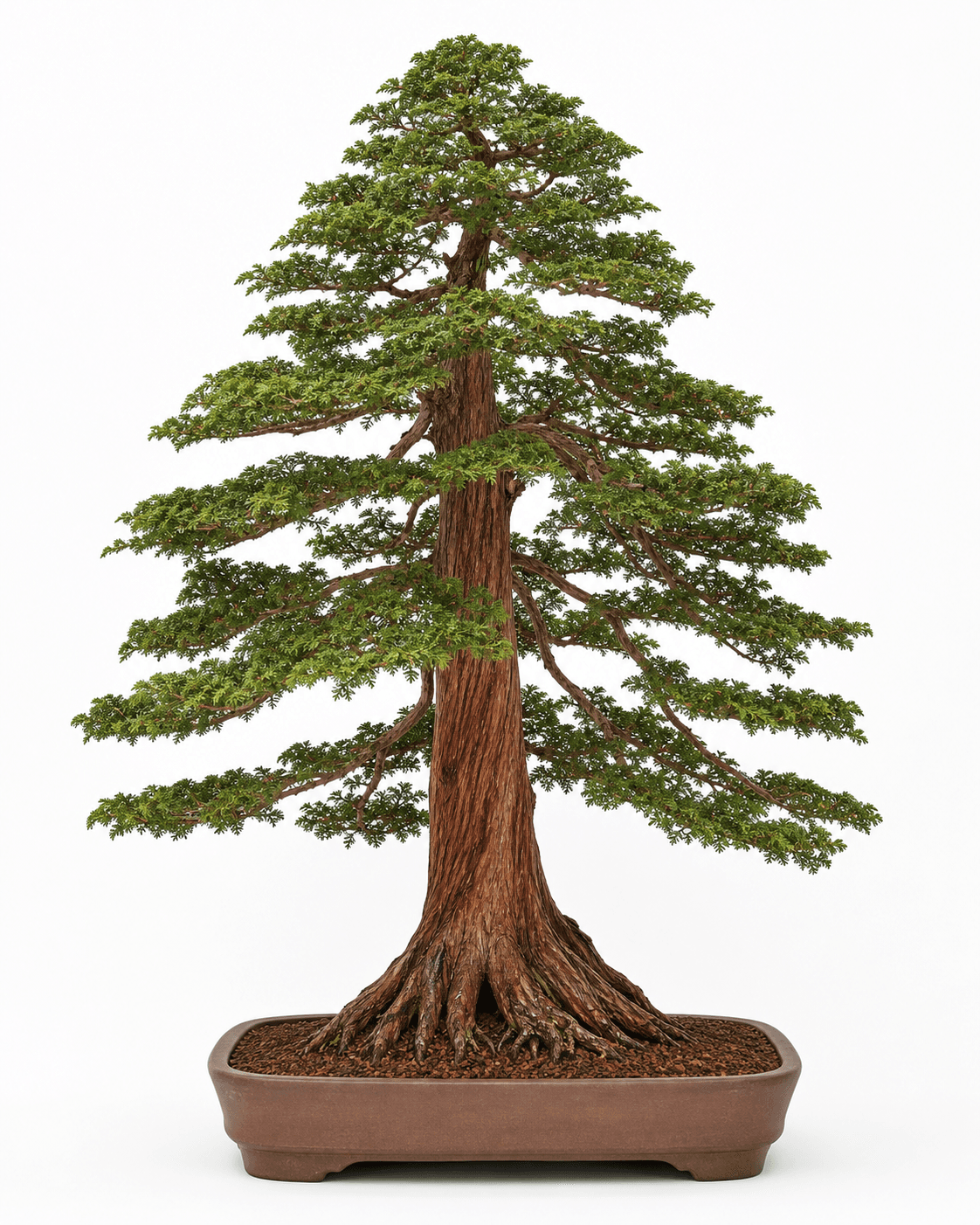
Hinoki cypress bonsai is an outdoor evergreen conifer for bright benches, even moisture, oxygenated roots, and careful frond-by-frond pruning. The central rule is simple: keep live interior foliage in light, because bare old wood is a poor recovery plan on mature Chamaecyparis obtusa.
Treat Hinoki as Elongating Species > Coastal in the EntGrove taxonomy. The Mirai corpus frames it as a low-elevation, high-rainfall, humidity-loving conifer that stores strength in vascular tissue, responds to timed directional pruning, and declines when roots, foliage, heat, and styling are pushed in the same season.
The beginner answer is conditional. Hinoki can be a good first conifer when the tree already has interior branch options, a recoverable rootball, and a grower who will water consistently; it is a poor match for indoor display, dry patios, instant compact silhouettes, or first-year heavy styling.
Updated July 12, 2026. Written by EntGrove Editorial. Last verified July 12, 2026.
Care fingerprint
Read the species through its shared care pattern.
Avoid dry-wind stress, preserve interior growth, and distinguish cypress-style pad work from juniper refinement. Use this as the starting point before local conditions and tree strength refine the calendar.
Do not prune like a pine
Elongating conifers extend from buds and shoots, so candle-cutting assumptions can remove the exact growth the tree needs.
Preserve interior growth
Spruce, fir, hemlock, cedar, redwood, cypress, and larch all become harder to design when interior buds are shaded out.
Keep recovery cool and steady
Many elongating conifers respond best when roots stay evenly moist, oxygenated, and protected from hot dry swings.
Care cadence
The calendar starts with the tree's seasonal state.
Placement
Timing: Grow outdoors in bright light with airflow and wind moderation. Use full sun in cool humid climates, and morning sun with afternoon shade after pruning, during heat, or in dry inland exposure.
Watch for: Indoor display, dark benches, hot dry wind, foliage bleaching, newly exposed undersides, and shallow pots facing hard freeze.
Bonsai Mirai LibraryNC State ExtensionOregon State Landscape PlantsWatering
Timing: Water when the surface begins drying while particles just below still hold moisture. After heavy foliage reduction, lower frequency slightly because transpiration mass has dropped.
Watch for: Burnt tips, yellowing, dull foliage, compact wet cores, saturated rain periods, and roots that dry fully between irrigations.
Bonsai Mirai LibraryFeeding
Timing: Feed through active growth and especially around recovery from structural work. Refined trees get measured feeding so strength supports interior ramification without forcing coarse spikes.
Watch for: Weak pale foliage, underfed recovery trees, excessive coarse apical growth, and fertilizing hard while roots are compromised.
Bonsai Mirai LibraryPruning
Timing: Use early to midsummer refinement pruning after strong spike growth elongates, or late summer to early fall for larger reductions. Trunk chops belong at spring bud swell.
Watch for: Pinching dwarf foliage, shearing a green shell, blind cuts, cutting all interior pieces at once, and exposing shaded foliage to hard sun.
Bonsai Mirai LibraryWiring
Timing: Reserve full wiring for initial structure. During refinement, use small wires only where secondary or tertiary placement needs help, and work from beneath the fronds.
Watch for: Shoulder tears, twisted undersides facing sun, wire left into thin bark, branch yellowing months after heavy work, and rough spreading from above.
Bonsai Mirai LibraryRepotting
Timing: Repot as buds swell and just begin to push in spring. Keep some intact root mass, tie down firmly, and leave new foliage growth intact after major root reduction.
Watch for: Initial styling and repotting in the same spring, bare-root resets, pure akadama breaking down in reservoir pots, and drainage loss.
Bonsai Mirai LibraryWinter
Timing: Keep dormant outdoors with wind protection, hydrated roots, and light. Heavily reduced fall trees may need stronger winter shelter because foliage mass also supports hardiness.
Watch for: Frozen dry rootballs, winter sun plus wind, late reductions that lowered reserves, and mistaking normal old interior shedding for whole-tree collapse.
Bonsai Mirai LibraryNC State ExtensionPests and disorders
Timing: Inspect dense foliage, branch forks, undersides, and stressed trees through active growth. Healthy Hinoki is durable, while weak shaded branches invite secondary pests and disease.
Watch for: Spider mites, scale, bagworms, borers on weakened tissue, root rot, juniper blight, branch flagging, mustard-yellow dieback, and off-color tips after under-watering.
Bonsai Mirai LibraryNC State ExtensionSpecies guide
Apply the species profile before copying another tree's calendar.
At a glance
Define Hinoki as a moist-rooted coastal elongating conifer before scheduling any work.
Chamaecyparis obtusa is an accepted Cupressaceae species native to Japan and Taiwan. Public horticulture sources call it Hinoki cypress, Hinoki false-cypress, and Japanese cypress; bonsai labels often add cultivar names such as Nana, Nana Gracilis, Chirimen, Kosteri, and Gracilis. Kew POWONC State ExtensionOregon State Landscape Plants
In bonsai, Hinoki belongs with coastal elongating conifers. Its work calendar follows bud swell, spike growth, vascular recovery, late-summer or early-fall structural work, and the preservation of active green interior pieces. Bonsai Mirai Library
Landscape hardiness is broad, with NC State listing Zones 4a to 8b and Oregon State listing Zone 4. Bonsai culture narrows that promise because shallow containers lose water, heat, and cold-buffering capacity faster than landscape roots. NC State ExtensionOregon State Landscape PlantsBonsai Mirai Library
The beginner filter is practical: buy a tree with live interior branches, compact foliage, good root stability, and a design that can use what already exists. Avoid material whose future image depends on buds appearing from mature bare wood. Bonsai Mirai Library
Wild habit
Its native image is humid, low-elevation, layered, and upright.
Kew places Hinoki in the temperate biome of Japan and Taiwan. Oregon State describes it as an evergreen conifer with horizontal branch planes, reddish brown stringy bark, dense scale foliage, and globose cones about 1 cm across. Kew POWOOregon State Landscape Plants
The Mirai corpus describes Hinoki as a low-elevation, high-rainfall, humidity-loving species with maritime care logic. Its wild logic points toward steady water, high humidity, protected roots, and layered lateral fronds that gather light without forming a solid hedge. Bonsai Mirai Library
For care, that ecology means moisture and oxygen must be managed together. Strong light helps compact growth, while hot dry wind, full dry-downs, and freshly exposed interior foliage in direct afternoon sun create problems faster than the broad Zone 4 to 8 landscape range suggests. Bonsai Mirai LibraryNC State Extension
For design, the same ecology argues for elongated upright, forest, clump, raft, and layered crown images. Dramatic alpine deadwood and compact ball silhouettes fight the natural habit; thin frond layers, visible undercarriages, and rounded-corner containers usually read more honestly. Bonsai Mirai LibraryBonsai Mirai / Asymmetry
Reading
Read strength through spike growth, interior green, and water movement.
A strong Hinoki shows dense deep green foliage, bright green tips, and elongated spike growth whose stems transition from skinny green to thicker, shinier, lignifying tissue. That thickened growth is a readiness signal for structural or refinement work. Bonsai Mirai Library
Energy is concentrated in vascular tissue and active foliage. After a major initial styling, leave the tree roughly a full growing season to rebuild density before refinement pruning. The page should record what work happened, how much foliage remained, and whether new growth strengthened the following season. Bonsai Mirai Library
Development trees need foliage mass. Refinement trees can be reduced selectively, with enough density left to feed the tree. Direct strength by removing verticals, crotch growth, and downward-hanging pieces. Bonsai Mirai Library
Back-budding expectations must stay conservative. Hinoki can redirect sap to small interior green pieces, but mature bark buries adventitious buds over time. Preserve interior growth before it disappears; old bare wood rarely becomes future structure. Bonsai Mirai Library
Pruning
Prune directionally to preserve lateral fronds and interior ramification.
The defining Hinoki aesthetic is a thin, layered, laterally oriented frond habit. Vertical, intermeshed, and downward growth should be edited so each pad reads as a flat spray with light and air underneath. Bonsai Mirai Library
Start by cleaning crotch growth, removing downward-hanging bottom pieces, and cutting strong vertical shoots back to laterally oriented tertiary shoots. In weak or sparse areas, leave selected crotch growth temporarily if it contributes needed photosynthesis and density. Bonsai Mirai Library
Avoid routine pinching on dwarf Hinoki. Mirai repeatedly warns that pinching produces dense ball-like knuckles and disordered growth. One or two selective annual pruning passes on elongating shoots usually preserves character better than pinching every tip. Bonsai Mirai Library
Timing depends on intensity. Early to midsummer refinement works after strong apical spikes elongate and density begins to blur; late summer to early fall is better for larger reductions because heat is falling and vascular recovery is active; spring bud swell is the safer window for a trunk chop. Bonsai Mirai Library
After heavy pruning, shade the tree for two to three weeks until recovery growth appears, then transition through morning sun and afternoon shade before returning to stronger sun. Newly exposed interior foliage has thin cuticles and burns easily. Bonsai Mirai Library
Roots
Repot at bud swell and keep root continuity intact.
Hinoki should be repotted as buds swell and just begin to push in spring, matching the broader elongating-conifer root window. That timing lets stored energy and new foliage rebuild roots through the growing season. Bonsai Mirai Library
Major root reduction and initial styling should be separated. Mirai is direct on this sequencing rule: doing both severe operations in the same spring invites failure because both roots and foliage are recovery engines. Bonsai Mirai Library
If heavy root reduction is necessary, leave the new season foliage intact. If the repot is routine and root continuity remains strong, same-season summer refinement can still be appropriate because the tree has not lost the transport capacity needed to support pruning. Bonsai Mirai Library
Avoid bare-root resets. Retain part of the existing root mass, correct old soil in stages, secure the tree firmly, and water by the actual moisture difference between old core and new aggregate. Bonsai Mirai Library
NC State notes that Hinoki is difficult to transplant in landscape context. Bonsai growers should treat nursery conversion with the same caution: protect fine roots, preserve foliage, and avoid cosmetic repots on weak material. NC State ExtensionBonsai Mirai Library
Soil and pot
Use a water-favoring mineral mix without creating a stagnant reservoir.
Hinoki likes a slightly water-favoring balance. Mirai favors 3:1:1 akadama:lava:pumice for pots with a water reservoir because akadama holds moisture and nutrients while lava and pumice keep oxygen moving. Bonsai Mirai Library
Pure akadama has a narrower role. Mirai reserves it for slab plantings or temporary raft-rooting contexts where no container reservoir exists; in a normal pot, slow Hinoki root occupation can allow akadama to break down before roots fill the space. Bonsai Mirai Library
NC State says Hinoki prefers moist, fertile loams but adapts to other soils if drainage is good. The bonsai translation is mineral soil that keeps a consistent moisture band without trapping a sour organic core. NC State ExtensionBonsai Mirai Library
Pot pairing should support the species character. Rounded-corner rectangles, ovals, bellied forms, and shallow unglazed containers often suit craggy bark and deep green fans better than hard angular rectangles. Bonsai Mirai LibraryBonsai Mirai / Asymmetry
Very shallow slabs are high-risk for delicate Hinoki over time. Mirai slab guidance says fine-needled or high-water-mobility species often decline on slabs unless moisture and oxygen are managed with unusual precision. Bonsai Mirai Library
Climate
Shift the bench by heat, humidity, wind, and container depth.
In cool humid regions, Hinoki can take stronger sun and build compact growth when the pot stays evenly moist and interior foliage remains lit. Full sun can bleach color to a paler green while increasing strength. Bonsai Mirai Library
In hot, dry, low-humidity, high-wind climates, Mirai recommends 50 to 70 percent shade cloth as compensation for high water demand and shade preference. Use that as heat protection, then return to brighter conditions when the tree can use them. Bonsai Mirai Library
In tropical or subtropical climates, heat alone is an incomplete suitability test. The limiting question is whether the tree receives a dormancy trigger strong enough to complete its seasonal cycle. Bonsai Mirai Library
Cold gardens need dormancy with root protection. Translate landscape Zone 4 hardiness through thin bonsai trays, winter wind, and root moisture. Protect from frozen dry rootballs, late heavy reductions, and winter sun that dehydrates foliage while roots are locked. NC State ExtensionOregon State Landscape PlantsBonsai Mirai Library
Rainy periods require oxygen management. Tilting a container during heavy rain can move saturated water out faster, provided drainage holes sit on the low side and the tree remains securely tied into the pot. Bonsai Mirai Library
Pests
Healthy Hinoki is durable, while stressed tissue invites ordinary conifer problems.
The Mirai corpus treats Hinoki as generally disease-resistant, with spider mites and borers occurring mostly as stress or weakness problems. The practical prevention is steady water, light, airflow, and avoiding over-pruning. Bonsai Mirai Library
NC State lists bagworms, root rot, and juniper blight as possible problems. Bonsai containers make root rot most likely when old organic cores stay wet, akadama has collapsed, or drainage paths bypass the actual root mass. NC State ExtensionBonsai Mirai Library
Spider mites and scale should be checked inside dense pads, especially after heat, drought, or a period in shade. Inspect before spraying because natural old-foliage shedding and shaded interior decline can look similar from a distance. Bonsai Mirai LibraryNC State Extension
Borers are a weakened-tissue risk. Branches that turn mustard yellow months after heavy work often indicate vascular damage near the branch base; remove additional stress before deciding whether the branch is salvageable. Bonsai Mirai Library
Sanitation is simple: remove confirmed dead twigs, improve pad airflow, avoid overhead wetness late in the day where disease is active, and keep records of any pesticide or oil use because fine scale foliage can be sensitive when already stressed. Bonsai Mirai LibraryNC State Extension
Wiring
Wire from beneath, preserve underside orientation, and let the tree recover.
Hinoki branches can stretch, tear, and split before they snap, which gives more structural movement than many growers expect. That tolerance depends on strength, foliage mass, hydration, and careful support at branch shoulders. Bonsai Mirai Library
Full wiring belongs to initial structural work. In refinement, wire only the secondary or tertiary pieces that need a placement splice, then rely on directional pruning for most shape control. Bonsai Mirai Library
Support the fronds from beneath. Fine shoulder tissue is delicate, and rough handling from above can trigger branch dieback. Bonsai Mirai Library
Keep the white-marked underside from facing the sun. Mirai warns that Hinoki undersides are highly sun-sensitive and can burn fatally if flipped upward after wiring. Bonsai Mirai LibraryNC State Extension
On older bark, slight wire bite can help branches hold and may disappear as bark expands, but this is a developed-tree judgment. Young smooth bark, thin tertiary shoots, and dwarf foliage should be checked frequently. Bonsai Mirai Library
Propagation
Cuttings are the main path, with air layers possible on strong material.
NC State lists propagation by cuttings, and Mirai identifies hardwood cuttings as the most reliable Hinoki method. Semi-hardwood and softwood spike-growth cuttings can also work when the seasonal energy and moisture environment are right. NC State ExtensionBonsai Mirai Library
The broader Mirai propagation method uses a fresh razor cut, small-particle akadama, high humidity, and careful watering so the middle of the container holds the best water-to-oxygen balance for root initiation. Bonsai Mirai Library
Air layering is possible, especially with a ring cut plus tourniquet wire and rooting hormone. For larger conifer layers, retain live foliage below the layer line so water continues moving through the top while roots form. Bonsai Mirai Library
Rafts and ground-contact rooting are plausible because Hinoki tolerates moister rooting environments. Mirai notes that raft-style Hinoki can root well in 2:1:1 or 3:1:1 mixes, with pure akadama viable during the early rooting phase. Bonsai Mirai Library
Grafting is mainly a cultivar-preservation or repair tool. Mirai taxonomy notes that Hinoki grafting typically uses Chamaecyparis obtusa Nana as scion material, so record the exact cultivar before assuming compatibility. Bonsai Mirai Library
Buying
Buy the interior branch structure before the label romance.
The best Hinoki bonsai material has a stable rootball, live green close to the trunk, compact fan structure, branch choices on multiple vertical tiers, and a design that can use existing green pieces. Bonsai Mirai Library
Inspect nursery stock under the outer shell. Dense, pretty exterior foliage can hide bare branch bases, weak interior pads, old organic soil, a loose trunk, or a graft union that will dominate the base. Bonsai Mirai LibraryNC State Extension
Dwarf cultivars solve scale problems but can create maintenance traps. Nana, Nana Gracilis, Chirimen, Kosteri, Gracilis, Fernspray Gold, Snowflake, and other selections should be judged by health, branch options, root quality, and foliage orientation before name value. NC State ExtensionOregon State Landscape PlantsBonsai Mirai Library
Pass on newly imported or recently dug material that has not completed a full vigorous growing season. Mirai recovery logic for elongating conifers asks for evidence of old-wood bud production, strong extension, and root stability before styling. Bonsai Mirai Library
Kew records Near Threatened status for the species. Prefer nursery-grown, legally sourced material and keep cultivar records, especially when propagating or grafting named forms. Kew POWO
Troubleshooting
Most Hinoki failures trace to water swings, over-pruning, sunburn, or vascular damage.
Symptom: burnt tips, yellowing, browning, or desiccated fans. Likely cause: under-watering, dry wind, a compact root core, or heavy foliage loss that changed the water rhythm. Fix: rehydrate evenly, shelter from wind, and check old core moisture before more work. Bonsai Mirai Library
Symptom: interior branches die while the outside stays green. Likely cause: shaded interior foliage, overgrown exterior tips, or a shell-pruned pad with no light inside. Fix: rebuild slowly through directional pruning and preserve all useful green pieces. Bonsai Mirai Library
Symptom: dense ball-like knuckles form at tips. Likely cause: routine pinching, especially on dwarf cultivars. Fix: stop pinching and return to cutting verticals, crotch growth, and strong exterior tips back to lateral tertiary shoots. Bonsai Mirai Library
Symptom: newly exposed inner foliage scorches after pruning. Likely cause: shaded foliage with thin cuticle moved into strong sun. Fix: shade for two to three weeks, then transition through morning sun and afternoon shade. Bonsai Mirai Library
Symptom: one wired branch turns mustard yellow months later. Likely cause: vascular damage at the branch base, shoulder tearing, or underside sunburn after rotation. Fix: reduce stress, remove wire if needed, shelter the branch, and delay more bending. Bonsai Mirai Library
Symptom: water sits on the surface or drains down the pot wall while foliage dulls. Likely cause: collapsed akadama, hydrophobic old soil, or poor tie-down. Fix: stabilize watering now and schedule spring bud-swell root correction. Bonsai Mirai Library
Design
Use layered lateral fronds, vertical age, and restrained deadwood.
Start with base, trunk line, defining branch, and apex, then decide whether the tree wants formal upright, informal upright, forest, clump, raft, or a slender multi-apex form. Hinoki usually gains age from vertical dignity and layered green before dramatic compression. Bonsai Mirai / AsymmetryBonsai Mirai Library
Build multiple vertical tiers of secondary branches: high pad, low pad, and lateral spread. This manufactures the impression of interior structure and compensates for weak old-wood back budding. Bonsai Mirai Library
Pad design should reveal undercarriages. A continuous green sheet hides the branch architecture, while excessive thinning removes the photosynthetic mass that keeps interior growth alive. Bonsai Mirai LibraryBonsai Mirai / Asymmetry
Deadwood should be restrained. Hinoki comes from moist habitat where exposed deadwood would rot, so small scars, aged bark, hollowing, and subtle weathering usually suit the species better than large carved jin and shari. Bonsai Mirai LibraryBonsai Mirai / Asymmetry
Choose containers with softened geometry. Oval or rounded-corner pots, muted unglazed surfaces, and enough water reservoir support the refined character while keeping the horticulture realistic. Bonsai Mirai Library
Cultivars
Cultivar choice changes scale, branch density, and graft risk.
NC State lists many forms including Gracilis, Kosteri, Nana, Nana Gracilis, Chirimen, Fernspray, Fernspray Gold, Verdoni, and others. Oregon State also notes that the species is more commonly grown as selections than as the straight species in ornamental use. NC State ExtensionOregon State Landscape Plants
Nana and Nana Gracilis are common bonsai labels because their foliage scale is naturally compact. They still need interior light, lateral frond maintenance, and root stability; branch placement still carries the design. Bonsai Mirai LibraryNC State ExtensionOregon State Landscape Plants
Chirimen, Kosteri, Fernspray Gold, Snowflake, Torulosa, and golden or variegated forms can be useful when the design accepts their texture and color. Variegated and yellow forms often demand more careful sun and heat observation. NC State ExtensionOregon State Landscape Plants
Grafted nursery plants should be inspected before purchase. A swelling rootstock, mismatched bark, or high graft can become the defining flaw of an otherwise fine-textured dwarf tree. Bonsai Mirai Library
For EntGrove taxonomy, keep cultivar-specific pages deferred until search demand or care divergence justifies the split. This parent page covers Nana, Nana Gracilis, Chirimen, Kosteri, Gracilis, Fernspray, Snowflake, and similar Hinoki selections. NC State ExtensionOregon State Landscape Plants
History
Hinoki carries Japanese timber, shrine, and cultivated dwarf-conifer history.
NC State notes that Hinoki cypress has been widely used in Japanese architecture. Oregon State describes it as an important Japanese timber tree and sacred in the Shinto faith. NC State ExtensionOregon State Landscape Plants
Kew records the species as Near Threatened, with accepted-name data from the World Checklist of Vascular Plants. That context matters because bonsai material should come from nursery propagation, legal collection, or documented cultivar lines. Kew POWO
In bonsai, Hinoki has value because its natural traits already resemble refined tree language: old reddish bark, horizontal fans, layered sprays, compact dwarf selections, and a calm upright presence. Bonsai Mirai LibraryBonsai Mirai / Asymmetry
A mature Hinoki bonsai should be judged by clarity: visible base, coherent trunk line, alive interior foliage, thin lateral fronds, protected branch undersides, clean undercarriages, and container depth that supports moisture. Bonsai Mirai LibraryBonsai Mirai / Asymmetry
Species questions
Answer the beginner questions before styling.
Can Hinoki cypress be grown as bonsai?
Yes. Hinoki cypress, Chamaecyparis obtusa, can be grown as outdoor bonsai when it has bright light, steady moisture, oxygenated roots, and careful directional pruning that preserves interior foliage.
Can Hinoki cypress bonsai live indoors?
Only for brief display. Hinoki cypress is an outdoor conifer that needs strong light, airflow, seasonal cooling, and winter dormancy.
How often should I water Hinoki cypress bonsai?
Water when the surface begins to dry while moisture remains just below it. Keep the root zone evenly moist with oxygen return, and avoid full dry-downs or stale saturation.
Does Hinoki cypress back-bud on old wood?
Treat mature bare wood as unreliable. Hinoki can strengthen small interior green pieces, but old bark buries bud potential over time, so preserving live interior foliage is the safer strategy.
When should Hinoki cypress be pruned?
Use early to midsummer refinement pruning after strong spike growth extends, late summer to early fall for larger foliage reductions, and spring bud swell for trunk chops or major structural responses.
Should Hinoki cypress be pinched?
Avoid routine pinching, especially on dwarf cultivars. Mirai guidance favors directional pruning of verticals, crotch growth, and strong exterior tips back to laterally oriented tertiary shoots.
When should Hinoki cypress be repotted?
Repot as buds swell and just begin to push in spring. Preserve part of the root system, tie the tree firmly, and separate heavy root work from heavy foliage reduction.
What soil mix works for Hinoki cypress bonsai?
For reservoir pots, Mirai favors 3:1:1 akadama:lava:pumice. Adjust particle size and watering for climate, pot depth, root age, and whether any old nursery core remains.
Which Hinoki cypress cultivars are useful for bonsai?
Common bonsai-relevant labels include Nana, Nana Gracilis, Chirimen, Kosteri, Gracilis, Fernspray, Fernspray Gold, Snowflake, and other compact forms. Judge each by health, roots, interior branches, and graft quality.
Why is my Hinoki cypress turning brown inside?
Common causes include shaded interior foliage, overgrown exterior tips, under-watering, mites, scale, old-foliage shedding, or root stress. Inspect first, stabilize water and light, then prune only to live green growth.
Sources
Species advice needs source discipline.
Next decisions
Plan the operation before copying the calendar.
A good care note for Hinoki cypress records the tree's stage, the work done, and the aftercare used. That record matters more than a month-name rule.
Related species
Compare nearby trees before transferring advice.
Coast redwood
Sequoia sempervirens
Sitka spruce
Picea sitchensis
Western hemlock
Tsuga heterophylla
Coastal Douglas-fir
Pseudotsuga menziesii var. menziesii
Monterey cypress
Hesperocyparis macrocarpa