
Species guide
Brazilian Rain Tree Bonsai Care
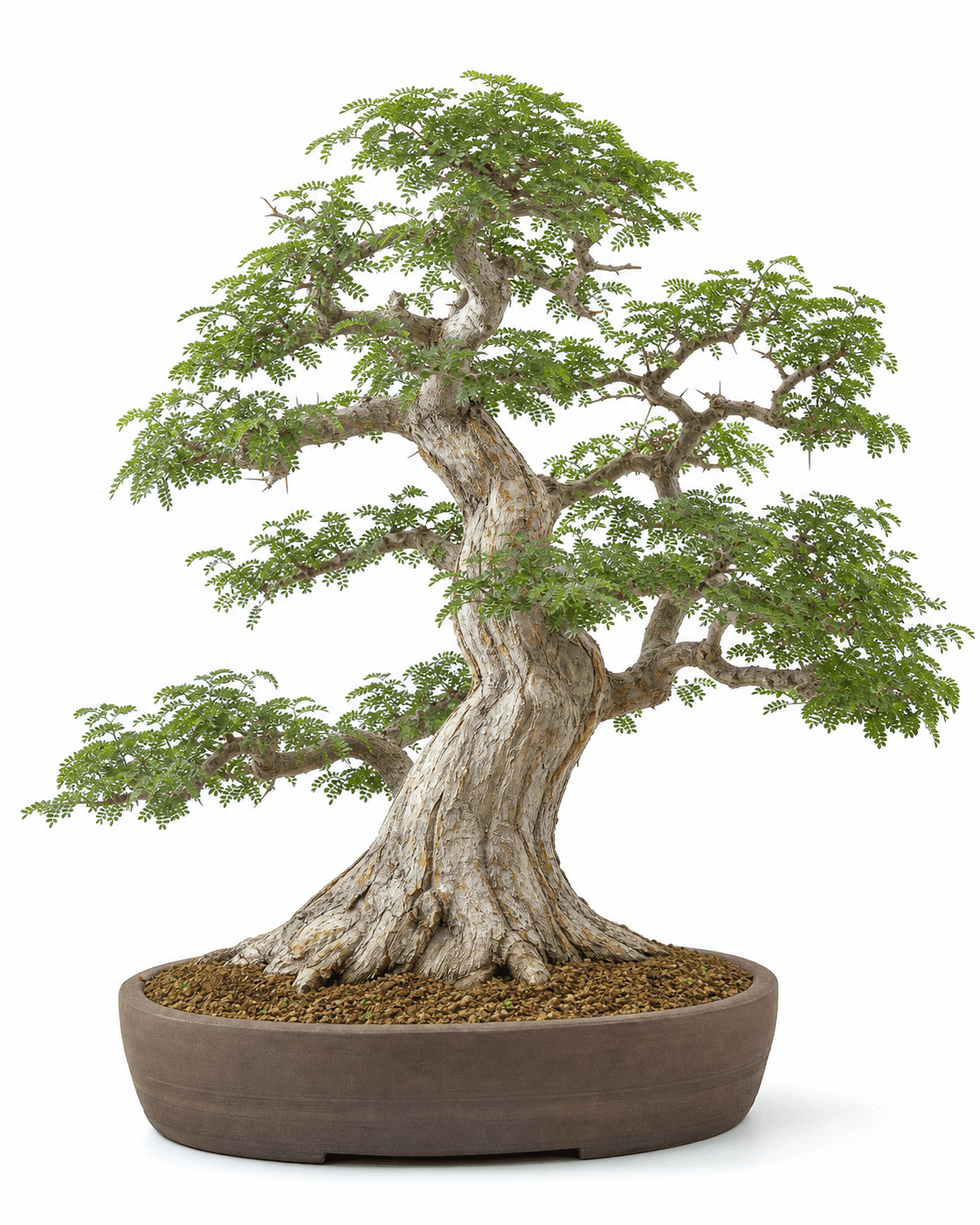
Chloroleucon tortum
Brazilian rain tree is a warm-climate thorny legume with fine compound foliage, fluted bark, and strong bonsai character. It needs bright light, warm roots, oxygenated moisture, and pruning decisions made while the tree is actively growing.
The local Bonsai Mirai corpus has dedicated Brazilian rain tree coverage. The core method is clip-and-grow refinement, one-internode dieback allowance, cautious primary wiring only, warm work above 60 F nights, and recovery before fertilizer or repotting.
Treat Chloroleucon tortum as Broadleaf > Tropical. It can be protected indoors through winter under strong light, but the best culture uses outdoor sun in warm weather, shelter before cold nights, and root work only when heat and foliage can support recovery.
Updated July 12, 2026. Written by EntGrove Editorial. Last verified July 12, 2026.
Care fingerprint
Read the species through its shared care pattern.
Treat indoor culture as a light-management problem first; prune and repot when the tree is actively growing and warm enough to recover. Use this as the starting point before local conditions and tree strength refine the calendar.
Read the foliage first
Broadleaf stress usually shows in leaf color, leaf size, wilt, scorch, or delayed hardening before it becomes a branch problem.
Match work to dormancy
Deciduous, evergreen, tropical, succulent, and flowering broadleaf trees recover on different calendars.
Protect fine roots
Root work should preserve enough active fine roots for the tree to rehydrate quickly after the operation.
Care cadence
The calendar starts with the tree's seasonal state.
Placement
Timing: Grow in sun and heat when nights are warm. Protect when nights approach 40 to 45 F, and use 50 F as the conservative move-inside cue for valuable trees.
Watch for: Cold glass, dim winter rooms, leaf drop after a chill, and heat-stressed folding after major work.
Bonsai Mirai LibraryChicago Botanic GardenBonsai Clubs InternationalWatering
Timing: Water when the upper soil particles begin to dry while the tree is leafy and warm. Reduce frequency after heavy leaf or branch reduction.
Watch for: Waterlogged organic cores, root-bound pots, folded leaves read without context, and slow drying after top reduction.
Bonsai Mirai LibraryFertilizer
Timing: Feed only after the tree is actively growing. After heavy reduction, wait 2 to 4 weeks or until strong new growth confirms recovery.
Watch for: Fertilizer on a stressed tree, fertilizer salts in a low-light winter room, and coarse growth on a refined silhouette.
Bonsai Mirai LibraryPruning
Timing: Build with extension, then cut to a directional internode while leaving at least one internode beyond the final target.
Watch for: Flush concave cuts, dull tools tearing thin cambium, full defoliation before wound work, and removal of every terminal leaf.
Bonsai Mirai LibraryWiring
Timing: Wire only primary or secondary structure when needed, then check often. Use guy wires, tie-downs, or pruning for most refinement.
Watch for: Wire cutting in almost immediately, brittle set wood, thin cambium, permanent scars, and branch loss after forced bends.
Bonsai Mirai LibraryRepotting
Timing: Repot in warm active growth after nights are consistently above 60 F, and choose the work because percolation, soil condition, or design requires it.
Watch for: Bare-rooting a leafy tree, burying the crown, mixing heavy root work with heavy top work, or moving into cold after fresh roots are cut.
Bonsai Mirai LibraryAftercare
Timing: After major structural reduction, give roughly two weeks of reduced light with morning sun, adjust water to lower foliage demand, and delay fertilizer.
Watch for: Afternoon scorch, wet soil after defoliation, fertilizer too soon, and styling again before the tree pushes clean growth.
Bonsai Mirai LibraryPests
Timing: Inspect before bringing the tree indoors, during warm indoor wintering, and after any stress that slows growth.
Watch for: Common greenhouse pests, honeydew, webbing, leaf yellowing, root rot, fungal decline, and branch dieback from stale soil.
Bonsai Clubs InternationalBonsai Mirai LibrarySpecies guide
Apply the species profile before copying another tree's calendar.
At a glance
Brazilian rain tree is a warm, thorny, clip-and-grow tropical.
Brazilian rain tree is Chloroleucon tortum, a Fabaceae shrub or tree still widely labeled Pithecellobium tortum in bonsai. Kew places it in Curacao and Brazil in a seasonally dry tropical biome, and Chicago Botanic Garden lists it as a Zone 10 to 11 tree for full sun to partial shade. Kew POWOChicago Botanic Garden
For bonsai, the species is defined by fluted live veins, exfoliating bark, fine bipinnate foliage, thorns at every internode, and a branch system that responds better to pruning than to late bending. It suits small and medium tropical broadleaf bonsai where the trunk character can stay visible. Bonsai Mirai LibraryBonsai Clubs International
The beginner fit depends on environment. A grower with outdoor summer heat, winter grow lights, and careful watering can do well. A dim room, cold window, stale organic soil, or rough first styling quickly exposes the species weaknesses. Bonsai Mirai Library
Wild habitat
Seasonally dry tropical habitat explains the bonsai contradictions.
Kew describes Chloroleucon tortum as a shrub or tree from Curacao and Brazil that grows primarily in a seasonally dry tropical biome. BCI adds bonsai-source context from sandy Brazilian environments, while Chicago Botanic Garden records full sun to partial shade and moderate soil. Kew POWOBonsai Clubs InternationalChicago Botanic Garden
The care implication is balanced moisture. In a bonsai pot, the tree should never sit in stale wet soil, yet it also resents a root ball that is bone dry or root-bound. Water, oxygen, and warmth have to stay in balance. Bonsai Mirai LibraryBonsai Clubs International
The design implication is equally direct. Fluting, thorns, and exfoliating bark belong to a hard-grown tropical legume rather than a soft indoor houseplant. Show the live veins, keep the canopy airy enough to reveal the trunk, and let the branch structure look clipped, angular, and sun-built. Bonsai Mirai Library
Reading the tree
Read vigor through elongation, foliage movement, thorns, and live veins.
Mirai treats stopped elongation as a major health warning. A rain tree that is warm, rooted, and bright should extend. A tree that keeps leaves but stops growing may be sacrificing reproduction and growth to stay alive. Bonsai Mirai Library
Leaf folding is a signal, not a command. The fine compound leaves close at night and may fold under heat or high UV to manage transpiration. Daytime folding should be checked against sun, temperature, soil moisture, root condition, and recent moves. Bonsai Mirai Library
Thorns appear at internodes, which are also the places where stored energy can support bud break. Fluted trunk ridges correspond to live branches above them, so every retained branch can shape the future live-vein map. Bonsai Mirai Library
Pruning
Prune by internodes and preserve foliage for recovery.
The core rain tree pruning rule is to leave at least one internode beyond the final target. Mirai notes that branches reliably die back to the previous internode, so a clean final cut at the desired point can retreat farther than intended. Bonsai Mirai Library
Use very sharp tools. Thin cambium tears easily, and torn bark extends dieback beyond the cut. Directional pruning is powerful on this species: cut to the internode that points where the next section of branch should go. Bonsai Mirai Library
Full defoliation belongs only on a healthy tree with a clear purpose. Mirai warns that major cuts on a fully defoliated tree heal poorly because the tree lacks foliage-driven transpiration through the wound. Terminal leaves and live tips are part of the recovery engine. Bonsai Mirai Library
Thorn removal is optional. Mirai notes that stripped thorns do not regenerate from the same location, so removing them can make styling safer without changing the underlying branch plan. New growth can still produce new thorns. Bonsai Mirai Library
Roots
Repot for root function, and avoid stacking major work.
Mirai gives three valid reasons to repot: lost percolation, decomposed substrate, or a design change. Calendar intervals are only inspection prompts. A Brazilian rain tree with fast drainage and active growth can wait; a stale root core needs intervention when the tree can recover. Bonsai Mirai Library
Warm timing matters. Dedicated rain tree guidance starts major structural work only once nights stay above 60 F, and tropical repotting guidance uses the same warm active-growth threshold. In temperate regions, early to midsummer often provides the safer recovery window. Bonsai Mirai Library
Do one end of the tree at a time. After heavy structural reduction, Mirai returns the tree to its existing container and waits for new growth before considering a repot. During root work, avoid bare-rooting a leafy tropical and leave enough root mass to keep foliage hydrated. Bonsai Mirai Library
Soil and pot
Build a root zone that stays moist and breathes.
Brazilian rain tree tolerates dry-season ecology in nature, yet container culture asks for even moisture. The solution is fast-draining aggregate soil with enough retention to avoid hard dry-outs and enough pore space to restore oxygen after watering. Bonsai Mirai LibraryBonsai Clubs International
Dense organic soil is the common failure point. BCI warns that too much organic matter can create wet conditions that lead to root rot, fungus, and branch dieback. Mirai soil method treats bonsai soil as a water, oxygen, structure, and nutrient-retention system. Bonsai Clubs InternationalBonsai Mirai Library
Pot choice should lag behind root and branch readiness. Use a training container when the tree still needs recovery, branch building, or old-soil transition. Use a shallower or more refined pot when watering rhythm, root density, and canopy scale are stable. Bonsai Mirai Library
Climate
Use warmth as the calendar.
Chicago Botanic Garden lists Zones 10 to 11, and Mirai protects rain trees when temperatures approach 40 to 45 F, with 50 F as a conservative threshold. A container tree loses heat faster than an in-ground landscape tree, so protect the pot early. Chicago Botanic GardenBonsai Mirai Library
In cold-winter regions, the tree usually spends winter under protection with supplemental light. Warm roots and weak light create soft growth, so water less, fertilize less, and judge work by new extension rather than by the month. Bonsai Mirai Library
In hot climates, the tree can use strong sun, but post-work trees and shallow pots may need morning sun, afternoon shade, and wind reduction. After heavy reduction, Mirai gives roughly two weeks of reduced light before full exposure returns. Bonsai Mirai LibraryBonsai Clubs International
Pests and disease
Indoor protection shifts risk toward pests and stale-root decline.
BCI describes Brazilian rain tree as mostly pest and disease free but advises checking for common greenhouse pests when grown indoors. For a protected tropical, inspect new growth, leaf undersides, branch crotches, and thorny interiors before problems spread. Bonsai Clubs International
The bigger bonsai disease pattern is cultural. Wet organic soil, a buried crown, and a cold low-light room can lead to root rot, fungus, and branch dieback. Restore water and oxygen balance before adding fertilizer or styling stress. Bonsai Mirai LibraryBonsai Clubs International
Large tropical wounds need protection. Mirai seals tropical cuts because warm wet conditions promote rot, and warns against opposing large cuts that can connect through the core. Keep live branches near wounds when possible so sap flow supports closure. Bonsai Mirai Library
Wiring
Wire for primary decisions, then let pruning do the refinement.
Mirai is direct on wiring: Brazilian rain tree wood snaps easily, the cambium is thin, and wire on vigorous tropical growth can cut in almost immediately. Wire scars tend to stay visible, and forced bends can cost branches. Bonsai Mirai Library
Use wire sparingly for primary and secondary structure when pruning cannot solve the line. BCI preserves the same public-facing caution by recommending nylon strips, loose wire, or tie-downs on green branches, with clip-and-grow as the main method after the initial shape exists. Bonsai Mirai LibraryBonsai Clubs International
Check every wire frequently in warm growth. If a branch needs sharp movement, consider replacing that section through directional pruning and regrowth. The species rewards deliberate angular branching more than late heroic bends. Bonsai Mirai Library
Propagation
Air layering is the reliable bonsai route.
Mirai states that Brazilian rain trees air layer reliably at sizes from pencil-thick material to very large sections, while cuttings root poorly. BCI also notes mame and shohin possibilities from air layers. Bonsai Mirai LibraryBonsai Clubs International
Start layers only when nights stay consistently above 60 F. The general Mirai air-layer method places the wound at the center of an even sphagnum bundle, blocks light, keeps the layer stable, and avoids repeated inspection. Bonsai Mirai Library
Treat a separated layer as a collected tree. Mirai recommends avoiding additional work or root disturbance for 2 to 3 years after separation, because the new tree has root age zero even when the trunk section looks mature. Bonsai Mirai Library
Buying
Buy trunk character, warm-grown vigor, and recoverable roots.
The best material usually comes from tropical bonsai growers, warm-climate nurseries, air layers, and field-grown stock rather than mass-market indoor displays. Prioritize a wide base, visible fluting, active tips, and branches that already feed useful live veins. Bonsai Mirai LibraryBonsai Clubs International
Inspect old cuts. Soft pockets, sunken opposing wounds, blackened dieback, or sealed scars with no live branch nearby can signal future rot problems. Normal exfoliating bark is different from punky dead wood. Bonsai Mirai Library
Check identity before paying a premium. Chloroleucon tortum, Pithecellobium tortum, Brazilian rain tree, Texas ebony, tamarind, acacia, and powderpuff are all compound-leaf tropical legumes or lookalikes in trade photos, but their growth and styling rules differ. Kew POWOBonsai Mirai Library
Troubleshooting
Diagnose by symptom, then correct warmth, roots, foliage, or timing.
Symptom: leaves fold during the day. Likely causes: heat, high UV, dry roots, root stress, or a recent move. Fix: check soil particles, root-zone temperature, sun exposure, and new growth before watering again by reflex. Bonsai Mirai Library
Symptom: a branch dies back after pruning. Likely cause: the cut was made at the desired final point or with torn cambium. Fix: leave one internode beyond future targets, use sharper tools, and refine the dry stub only after dieback stops. Bonsai Mirai Library
Symptom: yellowing, sour smell, fungus, or branch decline. Likely cause: dense organic soil, saturation, or a root-bound core. Fix: improve light and warmth, adjust watering, and plan warm-season root work when the tree has enough foliage to rebuild roots. Bonsai Mirai LibraryBonsai Clubs International
Symptom: wire marks or a cracked branch. Likely cause: wire left through warm growth or set wood forced past its limit. Fix: remove pressure early, use guy wires or looser supports next time, and rebuild small structure through pruning. Bonsai Mirai Library
Symptom: no flowering indoors. Likely cause: the tree is surviving with limited light or energy. Fix: treat flowers as secondary, improve outdoor warm-season strength, and judge health by extension and root response. Bonsai Mirai LibraryChicago Botanic Garden
Design
Design from the base, live veins, and clip-grown branch language.
Use Mirai design fundamentals first: base, trunk line, defining branch, and apex. Brazilian rain tree often has enough bark, fluting, and thorny texture that a harmonious or softly dynamic design can feel stronger than an overworked silhouette. Bonsai Mirai LibraryBonsai Mirai / Asymmetry
Fluting is a design asset and a care record. Branches above feed vertical ridges below, so sacrifice branches and retained branches can strengthen the live-vein story. Removing the wrong branch can weaken the very trunk feature the tree was purchased for. Bonsai Mirai Library
Reverse taper can be species-appropriate on rain trees. Rather than flattening every irregularity into a generic deciduous image, use the base, exfoliating bark, and angular clip-and-grow branches to show a hard tropical tree from a dry-season landscape. Bonsai Mirai Library
Forms
There is no major cultivar maze, but old labels matter.
Use one parent page for Brazilian rain tree. Kew accepts Chloroleucon tortum and preserves Pithecellobium tortum as synonymy, which explains why older books, BCI material, and nursery tags may still use Pithecellobium. Kew POWOBonsai Clubs International
Separate Brazilian rain tree from Texas ebony, tamarind, dwarf powderpuff, acacia, and other warm compound-leaf legumes before copying advice. The shared visual language can hide different thorn, wound, leaf, root, and propagation behavior. Bonsai Mirai Library
Within Chloroleucon tortum, choose by trunk and health rather than cultivar name. Fine leaves, active extensions, clean old cuts, stable roots, and a believable fluted base matter more than a marketing label. Bonsai Mirai Library
History
Its bonsai role is tropical character and accessibility.
Brazilian rain tree is a modern tropical-bonsai favorite rather than a classical Japanese canon species. Public bonsai references under the older Pithecellobium name show how the tree moved through warm-climate grower networks and tropical bonsai education. Bonsai Clubs International
The species appeal is immediate: old-looking fluted trunks, fine leaflets, thorny branch character, and a canopy that can be built by repeated small pruning decisions. Those traits make it useful as a teaching tree for tropical timing and wound behavior. Bonsai Mirai Library
For EntGrove, Brazilian rain tree sits beside ficus, tamarind, dwarf black olive, buttonwood, and powderpuff as a warm-protected tropical broadleaf. Its strongest lesson is patience after work: let foliage and roots recover before asking for the next operation. Bonsai Mirai LibraryBonsai Mirai / Asymmetry
Species questions
Answer the beginner questions before styling.
Is Brazilian rain tree a good beginner bonsai?
It can be a good beginner tropical for someone with strong light, warmth, fast drainage, and careful pruning habits. Ficus or dwarf jade is usually safer for a dim indoor setup.
Can Brazilian rain tree bonsai live indoors?
It can be protected indoors through cold months under very bright light or grow lights. Outdoor warm-season culture usually builds better strength, and cold glass or dim rooms quickly weaken it.
When should I bring Brazilian rain tree indoors?
Protect it as nights approach 40 to 45 F, and use 50 F as the conservative threshold for valuable trees. Chicago Botanic Garden lists the species for USDA Zones 10 to 11.
How often should I water Brazilian rain tree bonsai?
Water by soil and foliage demand. Keep the root zone evenly moist in active growth, then let oxygen return after each watering. Reduce frequency after heavy leaf or branch reduction.
When should I repot Brazilian rain tree bonsai?
Repot during warm active growth, ideally after nights are consistently above 60 F. Repot because percolation, soil breakdown, root congestion, or design requires it.
Why do Brazilian rain tree leaves fold?
The fine compound leaves naturally fold at night and can also fold under heat, strong UV, dryness, or stress. Use the whole context before changing watering.
Should I wire Brazilian rain tree branches?
Wire only when primary or secondary structure needs it, then check often. Clip-and-grow, guy wires, tie-downs, and directional pruning are usually safer for refinement.
Why did a branch die back after pruning?
Brazilian rain tree reliably retreats to the previous internode. Leave at least one internode beyond the final target, use very sharp tools, and refine dry stubs after dieback stops.
Can I fully defoliate Brazilian rain tree?
Use full defoliation only on a healthy tree with a clear styling purpose. Foliage drives transpiration and wound healing, so heavy cuts on a fully defoliated or weak tree recover poorly.
How do I propagate Brazilian rain tree for bonsai?
Air layering is the reliable bonsai route. Start layers in warm weather after nights stay above 60 F, and treat separated layers as young-rooted trees for several years.
Sources
Species advice needs source discipline.
Next decisions
Plan the operation before copying the calendar.
A good care note for Brazilian rain tree records the tree's stage, the work done, and the aftercare used. That record matters more than a month-name rule.
Related species
Compare nearby trees before transferring advice.
Ficus retusa / Indian laurel
Ficus microcarpa
Tigerbark ficus
Ficus microcarpa 'Tigerbark'
Willow-leaf ficus
Ficus salicaria
Benjamin fig
Ficus benjamina
Ginseng ficus
Ficus microcarpa 'Ginseng'