
Species guide
Italian Cypress Bonsai Care
Cupressus sempervirens
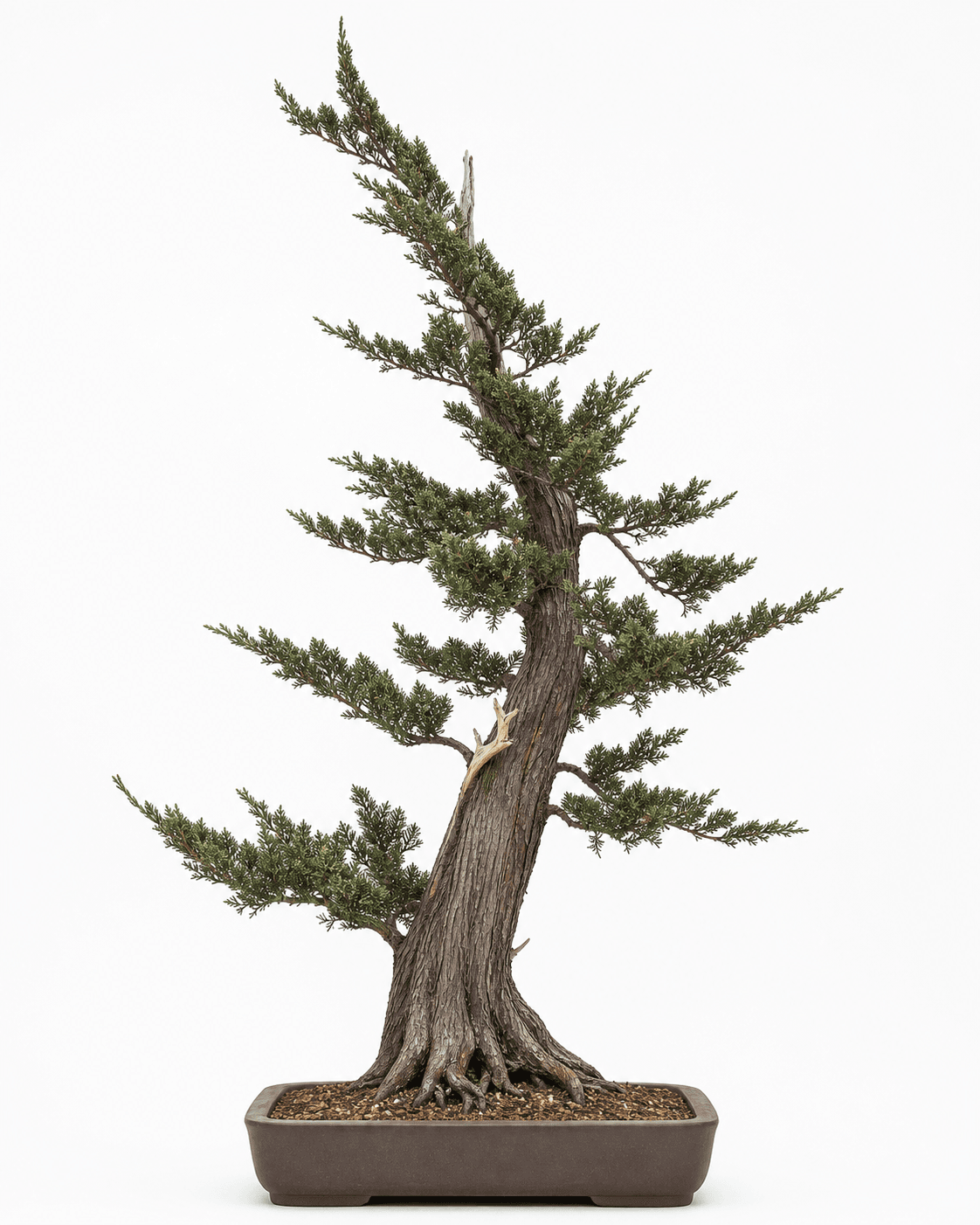
Italian cypress bonsai are outdoor Mediterranean conifers, best handled under the accepted name Cupressus sempervirens. Give them full sun, fast drainage, consistent container water, and a root schedule that respects the Cupressus early-year growth rhythm.
The design strength is vertical Mediterranean character: old bark, compressed apex, elongated upper lines, restrained deadwood, and enough negative space to avoid turning a columnar tree into a generic green cone.
Updated June 5, 2026. Written by EntGrove Editorial. Last verified June 5, 2026.
Care fingerprint
Read the species through its shared care pattern.
Avoid dry-wind stress, preserve interior growth, and distinguish cypress-style pad work from juniper refinement. Use this as the starting point before local conditions and tree strength refine the calendar.
Note: Kew accepts Cupressus sempervirens and places it from the eastern Mediterranean to Iran. Mirai has direct Mediterranean collected cypress coverage plus Cupressus repotting method, so the species page grounds design and root timing in Mirai, then uses Kew, NC State, Oregon State, RHS, UF/IFAS, and UC IPM for identity, hardiness, cultivar, and disease context.
Do not prune like a pine
Elongating conifers extend from buds and shoots, so candle-cutting assumptions can remove the exact growth the tree needs.
Preserve interior growth
Spruce, fir, hemlock, cedar, redwood, cypress, and larch all become harder to design when interior buds are shaded out.
Keep recovery cool and steady
Many elongating conifers respond best when roots stay evenly moist, oxygenated, and protected from hot dry swings.
Care cadence
The calendar starts with the tree's seasonal state.
Watering
Timing: Check daily during active growth, summer wind, and post-work recovery. Water deeply enough to wet the full root mass, then let air return before watering again.
Watch for: Dry interior cores, compacted nursery peat, hot black pots, salt buildup, foliage dulling, and root rot from wet soil that cannot breathe.
NC State ExtensionUF/IFAS ExtensionBonsai Mirai LibrarySun and heat
Timing: Grow in full sun through the main season. Use temporary shade after heavy pruning, heavy wiring, repotting, or when hot dry wind follows recent work.
Watch for: Interior foliage burn after opening the canopy, spider mites in hot dry conditions, and weak loose growth from too little light.
RHSUF/IFAS ExtensionBonsai Mirai LibraryRepotting
Timing: Use the early Cupressus root window for significant work, with January as the strongest Mirai timing in the Northern Hemisphere.
Watch for: Avoid removing most of the old soil in one session. Keep fresh root work warm, stable, and protected from freezing.
Bonsai Mirai LibraryRoot conversion
Timing: On nursery or collected material, convert the root ball over several repots instead of bare-rooting.
Watch for: Thick perimeter roots, inaccessible cavities, torn white feeder roots, decomposed field soil, and sharp interfaces between old soil and new aggregate.
Bonsai Mirai LibraryPruning
Timing: Prune after the tree has enough vigor to respond, then reduce to visible laterals or young green growth that can keep the branch alive.
Watch for: Sheared green shells, bare old wood, three-branch junctions, rounded fan pads, and over-shortened shoots that remove the Mediterranean line.
Bonsai Mirai LibraryUF/IFAS ExtensionStructural work
Timing: Set primary branch movement before detail wiring, preferably when roots are established and the tree has active vascular strength.
Watch for: Branch shoulders, old bark, guy-wire bite, twisting tears, and fast swelling around contact points during the growing season.
Bonsai Mirai LibraryFertilizing
Timing: Feed healthy development trees through active growth and fall recovery. Hold fertilizer after severe root work until new growth confirms recovery.
Watch for: Fertilizing sick roots, pushing weak interior foliage too hard, or starving a tree that needs growth to rebuild branch options.
Bonsai Mirai LibraryPest and disease checks
Timing: Inspect through hot dry weather, after pruning, during humid spells, and whenever a branch flags brown or yellow.
Watch for: Mites, bagworms, cypress aphid, honey fungus, root rot, coryneum or Seiridium canker, resinous lesions, and sudden branch dieback.
NC State ExtensionRHSUF/IFAS ExtensionUC IPMWinter protection
Timing: Keep outdoors and seasonal, then protect bonsai roots from hard freeze, dry wind, and freezing immediately after root work.
Watch for: Landscape hardiness numbers applied too literally to shallow pots, small shohin containers, and freshly repotted Mediterranean material.
NC State ExtensionOregon State Landscape PlantsBonsai Mirai LibrarySpecies guide
Apply the species profile before copying another tree's calendar.
At a glance
Italian cypress is a true Cupressus with Mediterranean timing and a vertical design problem.
Kew accepts Cupressus sempervirens and places it in Cupressaceae. Kew lists Italian cypress and Mediterranean cypress as common names, while NC State and Oregon State also use the Italian cypress label in horticultural profiles. Kew POWONC State ExtensionOregon State Landscape Plants
As bonsai, it belongs with EntGrove Elongating Species > Coastal because it shares true cypress root timing, scale foliage, vascular swelling, and design logic with Monterey cypress and other maritime Cupressaceae subjects. Bonsai Mirai Library
Direct Mirai coverage is strong enough for a canonical page. The dedicated Mediterranean collected cypress file treats Cupressus sempervirens directly, and the cypress repotting file supplies Cupressus-specific root timing, soil, and aftercare. Bonsai Mirai LibraryBonsai Mirai / Asymmetry
The horticultural caution is simple: landscape Italian cypress is sold as a narrow drought-tolerant screen, but a bonsai pot changes the equation. Root oxygen, water movement, canker prevention, and interior green become the actual care levers. UF/IFAS ExtensionBonsai Mirai Library
Wild habitat
The wild image comes from eastern Mediterranean mountains, rocky coasts, and old wind-shaped trees.
Kew gives the native range as the eastern Mediterranean to Iran, with Cyprus, East Aegean Islands, Iran, Crete, Lebanon-Syria, Libya, Palestine, and Turkey listed as native areas. Oregon State describes native mountain habitat in northern Iran, Turkey, Crete, and Cyprus, with ancient introduction into Italy. Kew POWOOregon State Landscape Plants
NC State summarizes the native habitat as rocky mountainous locations, typically near a coastline in Europe and Asia. That is the design clue: exposure, stone, dry summers, winter rain, narrow roots searching crevices, and old trunks holding a vertical line against wind. NC State ExtensionBonsai Mirai Library
Oregon State separates the wild horizontal form from the cultivated columnar form. The wild form has spreading branches, while var. sempervirens, Stricta, and Fastigiata forms are the narrow plants most often seen in gardens. Oregon State Landscape Plants
Care follows the Mediterranean signal. The tree wants sun and drainage, yet Mirai treats Cupressus as a high-water-mobility species in a container. It can be drought tolerant in the ground and still need precise watering in a shallow pot. UF/IFAS ExtensionBonsai Mirai Library
Reading
Read the form, root history, interior green, and old bark before choosing work.
Start with form. A Stricta-style column suggests slender upright, formal upright, or literati work. A horizontalis or older spreading form can carry a more wind-shaped Mediterranean image with elongated side branches and a compressed apex. Oregon State Landscape PlantsBonsai Mirai Library
Then read the interior. Mirai cypress method depends on preserving live interior growth and cutting to young viable foliage. A sheared nursery column with green only on the outside has fewer future branch options than a looser plant with small interior laterals. Bonsai Mirai Library
Read roots before styling. Cupressus can show strong top growth while hiding compacted organic soil, thick perimeter roots, damaged white feeder roots, or inaccessible cavities below the trunk. Bonsai Mirai Library
Finally read bark and deadwood. On old cypress, bark plates and reduced branches can supply age. Mirai keeps cypress deadwood restrained, using it as an accent that supports the live line instead of making deadwood the whole design. Bonsai Mirai LibraryBonsai Mirai / Asymmetry
Pruning
Prune cypress to create elongated pads, not clipped cones.
Mirai describes cypress pruning as the tool for breaking a vigorous globular growth pattern into elongated lateral forms with intentional negative space. That principle is especially important on Italian cypress because nursery material often arrives as a tight column. Bonsai Mirai Library
Keep length where it defines the Mediterranean line. Mirai warns against shortening every slightly long shoot; the defining tip may be the branch that gives the tree its windward or upward movement. Bonsai Mirai Library
Reduce three-branch junctions to two. Cypress naturally produces triadic branching, and Mirai uses reduction at those junctions to prevent swelling and to make the remaining structure read as intentional rather than congested. Bonsai Mirai Library
Landscape sources say Italian cypress needs little pruning or no pruning to keep a garden column. Bonsai pruning has a different goal: retain enough tips to feed the tree while selecting direction, thinning congestion, and preserving interior foliage. UF/IFAS ExtensionRHSBonsai Mirai Library
Repotting
Treat roots as the highest-risk operation.
Mirai Cupressus repotting is unusually specific: root growth begins as daylight lengthens in January, so severe work belongs as early in the new year as possible in the Northern Hemisphere. February, March, and April carry progressively more risk. Bonsai Mirai Library
Cupressus is also broadly sensitive. Mirai advises against removing a majority of the soil in one session, especially on collected or old container trees with unknown root history. Bonsai Mirai Library
Before extraction, settle front, rotation, and inclination. Changing the angle after the tree is loose destabilizes roots. If the angle must change, plane the bottom to the new reference line while preserving the high side of the root mass. Bonsai Mirai Library
Good root work improves water and oxygen movement without tearing the fine white feeder roots. Break the compact bottom mat, cut damaged root tips cleanly, avoid cavities that cannot be refilled, and let new aggregate intermix with existing roots. Bonsai Mirai Library
After repotting, keep the tree stable, warm, and protected from freezing. Water by flooding and draining the soil column several times so fines flush and particles settle around roots without hand-compacting the surface. Bonsai Mirai Library
Soil and pot
Use fast drainage with enough akadama to support fine roots.
For established Cupressus with a clean root system, Mirai uses 3 parts akadama, 1 part lava, and 1 part pumice at roughly 1/16 inch to 1/4 inch particle size. The mix keeps moisture and nutrient exchange available while preserving oxygen. Bonsai Mirai Library
For partially converted nursery or collected roots, use a transitional 2 parts akadama, 1 part lava, and 1 part pumice. Lower akadama helps balance water and oxygen while pockets of field soil or nursery peat remain. Bonsai Mirai Library
Public horticultural sources agree on the drainage theme. NC State lists good drainage, moist to occasionally dry conditions, and broad pH tolerance; RHS says moist but well-drained soil in full sun; UF/IFAS lists clay, sand, loam, acidic, alkaline, and well-drained tolerance. NC State ExtensionRHSUF/IFAS Extension
Pot choice should amplify vertical strength. Tall narrow trees often suit ovals, soft rectangles, literati containers, forest slabs, and restrained unglazed pots that support the trunk line without making the tree look like a clipped garden screen. Bonsai Mirai / AsymmetryBonsai Mirai Library
Climate
Mediterranean tolerance does not remove bonsai-root risk.
NC State lists USDA Zones 7a to 10b, UF/IFAS lists 7B through 11, Oregon State lists Zone (7) 8, and RHS rates the species H5. Those figures describe planted landscape trees more than shallow bonsai containers. NC State ExtensionUF/IFAS ExtensionOregon State Landscape PlantsRHS
In mild Mediterranean or coastal California climates, Italian cypress can take strong sun and winter rain if the soil drains. In humid warm climates, root rot, canker, mites, aphids, and stale interiors become more important. UF/IFAS ExtensionRHSUC IPM
In colder zones, keep the tree outdoors and dormant but protect the pot from deep freezes and dry wind. Fresh January root work needs extra protection because Mediterranean Cupressus roots are stress-sensitive after repotting. Bonsai Mirai LibraryOregon State Landscape Plants
In hot inland gardens, do not translate landscape drought tolerance into dry-pot bonsai culture. Shade the pot, water thoroughly, and use afternoon protection after heavy work so the remaining foliage can keep the vascular system hydrated. UF/IFAS ExtensionBonsai Mirai Library
Pests and diseases
Watch mites, bagworms, aphids, root rot, honey fungus, and canker.
NC State lists mites as common, bagworms as occasional, root rot in poor drainage, and honey fungus plus canker as serious issues. UF/IFAS also flags mites, bagworms, root rot, and canker. NC State ExtensionUF/IFAS Extension
RHS adds possible cypress aphid, coryneum canker, and honey fungus. In bonsai, dense foliage and poor air movement make aphid, mite, and canker scouting more important than it is on a full-size open landscape tree. RHS
UC IPM describes cypress canker as a disease with resinous lesions and yellowing or browning branches. The practical bonsai response is to isolate suspect material, sanitize tools, avoid stress pruning in harsh weather, and seek local diagnosis when canker is suspected. UC IPM
Root rot prevention is mostly cultural. Use draining soil, avoid sour nursery cores, keep the pot from sitting in runoff, and let oxygen return between waterings. A wet pot that still looks thirsty often has roots that cannot function. UF/IFAS ExtensionBonsai Mirai Library
Wiring
Wire for vertical movement, bark preservation, and restrained pad shape.
Mirai cypress styling starts with primary structure. Set trunk line, defining branch, and apex direction before detail wiring, because later pruning decisions depend on the structural movement already chosen. Bonsai Mirai LibraryBonsai Mirai / Asymmetry
Old bark deserves protection. Apply wire decisively, avoid scrubbing wire along the trunk, and spread bending force across the branch instead of concentrating pressure at one shoulder. Bonsai Mirai Library
Detail wiring should produce triangular or tapered cypress pads rather than rounded fans. The goal is directional foliage with negative space, not a symmetrical series of green shelves. Bonsai Mirai Library
Check wire and guy wires often during active thickening. Mirai coastal-cypress method flags May and June swelling on contact points, and fall vascular production can also make wire bite appear quickly on elongating conifers. Bonsai Mirai Library
Propagation
Seed, cuttings, layering, and cultivar selection all matter.
RHS lists propagation by seed or semi-hardwood cuttings. UF/IFAS lists propagation by cuttings or layering. Seed can produce variable forms; cuttings and layers preserve narrow, blue, gold, or horizontal cultivar traits. RHSUF/IFAS Extension
NC State notes that cones may remain on the tree for years and often open with heat, releasing seed after fire-like conditions. That ecology helps explain why seed-grown plants may vary from the strict garden column. NC State ExtensionOregon State Landscape Plants
Grafting is possible across Cupressus in Mirai method, but for Italian cypress bonsai it is usually a material-improvement tool rather than routine care. Use it for branch replacement or cultivar work when root health and aftercare are strong enough. Bonsai Mirai Library
Air-layering a usable column or branch should preserve strong foliage above the layer. The foliage above the ring powers callus and new roots, while pruning below the layer can reduce stress without starving the layer itself. Bonsai Mirai Library
Buying
Buy for base, interior foliage, clean roots, and a usable form.
Good Italian cypress material has a visible root flare, a trunk that already suggests vertical age or wind movement, live interior foliage, clean bark, and a root mass that can be converted gradually. Bonsai Mirai Library
Avoid tight sheared columns with brown interiors, plants with canker lesions or resinous dead branches, wet compacted peat, severe circling roots, obvious mite damage, and material sold only because it is narrow. NC State ExtensionUF/IFAS ExtensionBonsai Mirai Library
Cultivars matter. Oregon State lists Glauca, Stricta, Swane's Golden, and Tiny Tower, while NC State adds Horizontalis and Wichita Blue. Stricta gives the classic column, Horizontalis gives a spreading branch clue, and smaller forms can solve scale. Oregon State Landscape PlantsNC State Extension
Collected Mediterranean material should be legal, documented, and already recovered before heavy design. A tree with old bark and a poor root ball is still a root project first. Bonsai Mirai LibraryKew POWO
Troubleshooting
Failures usually start with old soil, bare interiors, heat, mites, or canker.
Symptom: a branch yellows or browns with resinous bark lesions. Likely cause: cypress canker. Fix: isolate the tree, sanitize tools, remove infected tissue only with local diagnostic guidance, and reduce drought or heat stress. UC IPMUF/IFAS Extension
Symptom: foliage bronzes or stipples in hot dry weather. Likely cause: mites. Fix: inspect undersides and inner sprays, increase root-zone stability, improve air movement, and use locally appropriate mite control. NC State ExtensionUF/IFAS Extension
Symptom: the tree wilts or dulls while the soil is wet. Likely cause: compacted organic soil or root rot. Fix: improve drainage and oxygen, stop keeping the pot wet, and plan staged root conversion at the next safe window. UF/IFAS ExtensionBonsai Mirai Library
Symptom: pruning leaves a permanent bare hole. Likely cause: cutting behind young green growth or using hedge-shearing habits. Fix: preserve live interior laterals, grow replacement tips, graft if the tree warrants it, or redesign around open space. Bonsai Mirai Library
Symptom: a narrow column keeps getting wider and rounder. Likely cause: all shoots are being shortened equally. Fix: select one directional continuation, reduce trios to two, and keep controlled length where the Mediterranean form needs it. Bonsai Mirai Library
Symptom: roots decline after spring work. Likely cause: Cupressus root work happened too late or removed too much soil. Fix: protect from cold, use gentle light, stabilize moisture, and delay styling until new growth confirms recovery. Bonsai Mirai Library
Design
Style from Mediterranean age rather than garden-screen neatness.
Mirai frames Italian cypress as one of the iconic Mediterranean bonsai species, strongest when the design references ancient coastal wind-shaped trees rather than a generic conifer silhouette. Bonsai Mirai Library
The main design elements are trunk line, defining branch, and apex. On Italian cypress, the defining branch may be a high elongated branch rather than the lowest branch, because Mediterranean cypress often reads through upward and horizontal lines. Bonsai Mirai LibraryBonsai Mirai / Asymmetry
Older cypress apices are often compressed by environmental forces, especially wind. A laterally shifted compressed apex can unify the design and justify longer detail lines below it. Bonsai Mirai Library
Deadwood should be coherent and quiet. Mirai recommends simple bark stripping on cypress jins and consistent treatment across reduced branches so deadwood reads as evidence of past structure. Bonsai Mirai Library
Good Italian cypress bonsai often need less foliage than the nursery plant suggests. Sparse foliage, asymmetry, old bark, restrained deadwood, and deliberate negative space make the tree read older and more place-specific. Bonsai Mirai LibraryBonsai Mirai / Asymmetry
Cultivars
Columnar and horizontal forms point toward different bonsai decisions.
Oregon State describes two forms: var. horizontalis with spreading branches, which is the wild form, and var. sempervirens, also tied to Stricta and Fastigiata labels, with ascending columnar branches common in cultivation. Oregon State Landscape Plants
NC State lists Glauca, Horizontalis, Stricta, Swane's Golden, Tiny Tower, and Witchita Blue. Oregon State lists Glauca, Stricta, Swane's Golden, and Tiny Tower, with notes on blue, gold, narrow, and smaller columnar selections. NC State ExtensionOregon State Landscape Plants
Stricta and Fastigiata-style plants are useful when the trunk already has age, lean, or subtle rhythm. Otherwise they can look like a miniature landscape screen with no branch story. Oregon State Landscape PlantsBonsai Mirai / Asymmetry
Horizontalis-style or older spreading material can be more immediately expressive because the branches already invite wind, line, and negative-space decisions. Verify the label and judge the actual tree before assigning style. Oregon State Landscape PlantsBonsai Mirai Library
History
Italian cypress carries a long Mediterranean cultural image.
Oregon State notes that the species was introduced into Italy in ancient times and is common in the Italian countryside, southern California, and stylized gardens. That cultural image is a major reason the tree reads so quickly to viewers. Oregon State Landscape Plants
RHS describes Cupressus sempervirens as a medium-sized, long-lived evergreen tree that can reach 45 m. In bonsai, that height should translate as vertical presence, narrow mass, and scale control rather than literal compactness. RHSBonsai Mirai / Asymmetry
UF/IFAS describes the landscape tree as a strong architectural accent and screen. Bonsai can borrow that architectural strength while replacing repetition with asymmetry, old bark, selected branch lines, and a clear apex decision. UF/IFAS ExtensionBonsai Mirai Library
There are no universal Italian cypress bonsai standards comparable to Japanese black pine or Shimpaku. A credible exhibition tree should make the species legible through Mediterranean ecology, vertical age, and thoughtful restraint. Bonsai Mirai LibraryBonsai Mirai / Asymmetry
Species questions
Answer the beginner questions before styling.
Can Italian cypress be grown as bonsai?
Yes. Italian cypress can be grown as outdoor bonsai when it gets full sun, draining soil, careful Cupressus root timing, interior foliage preservation, and disease-aware aftercare.
Can Italian cypress bonsai live indoors?
No. It needs outdoor light, moving air, seasonal temperature change, and dormancy. Brief display indoors is fine if the tree returns outside quickly.
When should I repot Italian cypress bonsai?
Use the early Cupressus window for significant root work. Mirai places the strongest Northern Hemisphere timing in January as daylight lengthens, with more risk from February through April.
What soil works for Italian cypress bonsai?
For an established clean root system, use 3 parts akadama, 1 part lava, and 1 part pumice. Use 2 parts akadama, 1 part lava, and 1 part pumice while old field soil remains.
How much sun does Italian cypress bonsai need?
Full sun is the baseline. Use temporary afternoon protection after heavy work, fresh repotting, or extreme hot wind so newly exposed foliage and roots can recover.
Should Italian cypress bonsai be pinched?
Use directional pruning rather than routine pinching. Cut to visible young growth or laterals, reduce congested junctions, and keep the long lines that define the design.
Does Italian cypress back-bud on old wood?
Do not count on reliable back-budding behind bare old wood. Preserve interior green, grow replacement shoots from live zones, or graft when the tree is valuable enough.
Why is my Italian cypress turning brown inside?
Common causes include shearing, low light inside the canopy, mites, dry root pockets, compacted soil, canker, or root rot. Check for live interior tips, lesions, and water movement first.
Is Italian cypress the same as Mediterranean cypress?
Yes. Italian cypress and Mediterranean cypress commonly refer to Cupressus sempervirens. Stricta, Fastigiata, Glauca, Horizontalis, Swane's Golden, and Tiny Tower are form or cultivar labels.
What bonsai styles suit Italian cypress?
Slender upright, formal upright, literati, windswept, slanting, group, forest, and restrained old-tree forms suit Italian cypress when the design emphasizes vertical Mediterranean age.
Sources
Species advice needs source discipline.
Next decisions
Plan the operation before copying the calendar.
A good care note for Italian cypress records the tree's stage, the work done, and the aftercare used. That record matters more than a month-name rule.
Related species
Compare nearby trees before transferring advice.
Coast redwood
Sequoia sempervirens
Sitka spruce
Picea sitchensis
Western hemlock
Tsuga heterophylla
Coastal Douglas-fir
Pseudotsuga menziesii var. menziesii
Monterey cypress
Hesperocyparis macrocarpa