
Species guide
Lawson Cypress Bonsai Care
Chamaecyparis lawsoniana
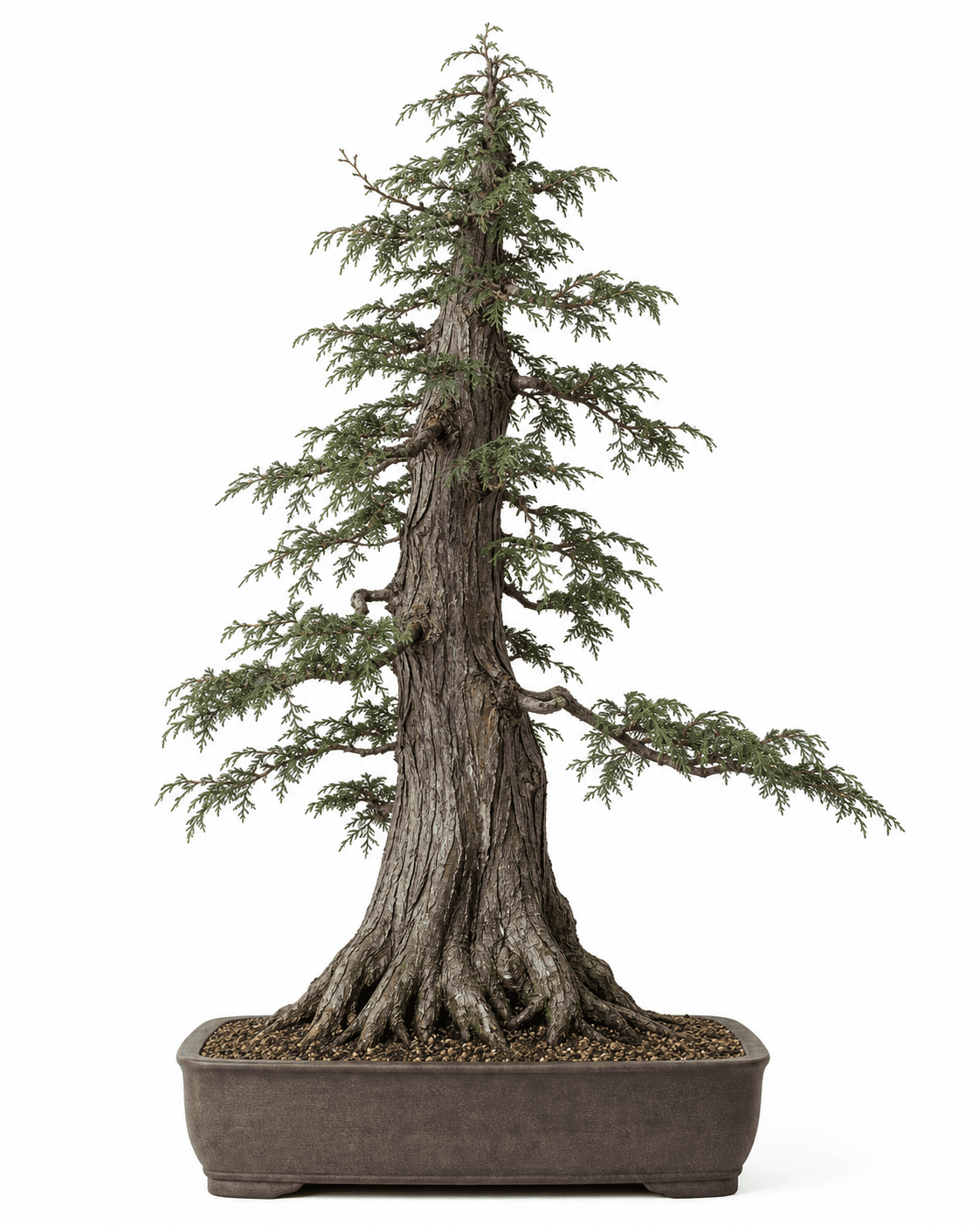
Lawson cypress bonsai are outdoor Chamaecyparis lawsoniana, the Port-Orford-cedar of southwest Oregon and northwest California. Treat the tree as a coastal false-cypress: moist oxygenated roots, strong light with wind and heat moderation, directional frond pruning, and no routine shearing.
The local Mirai corpus has no dedicated Lawson cypress file, so this guide applies transparent Chamaecyparis and coastal-conifer method from Hinoki, Sawara, Thuja, Cupressus, and elongating-species material. The public-source caveat is equally important: Phytophthora lateralis root disease shapes sourcing, sanitation, and long-term risk more than it does for most bonsai conifers.
Updated June 5, 2026. Written by EntGrove Editorial. Last verified June 5, 2026.
Care fingerprint
Read the species through its shared care pattern.
Avoid dry-wind stress, preserve interior growth, and distinguish cypress-style pad work from juniper refinement. Use this as the starting point before local conditions and tree strength refine the calendar.
Note: Kew accepts Chamaecyparis lawsoniana and places it from southwest Oregon to northwest California. Mirai direct Lawson coverage was not found, so the species page transparently transfers Chamaecyparis and coastal-conifer method from Hinoki, Sawara, Thuja, cypress, and elongating-species files, then grounds hardiness, cultivar, and Phytophthora lateralis risk in Kew, NC State, Oregon State, RHS, Oregon Encyclopedia, and USDA Forest Service sources.
Do not prune like a pine
Elongating conifers extend from buds and shoots, so candle-cutting assumptions can remove the exact growth the tree needs.
Preserve interior growth
Spruce, fir, hemlock, cedar, redwood, cypress, and larch all become harder to design when interior buds are shaded out.
Keep recovery cool and steady
Many elongating conifers respond best when roots stay evenly moist, oxygenated, and protected from hot dry swings.
Care cadence
The calendar starts with the tree's seasonal state.
Watering
Timing: Check daily in active growth, warm wind, recent repot aftercare, and shallow containers. Water thoroughly, then let the soil column breathe.
Watch for: Burnt tips, yellowing, dry interior foliage, stale peat, compacted old nursery cores, black pots overheating, and runoff that misses the root ball.
NC State ExtensionOregon State Landscape PlantsBonsai Mirai LibraryRepotting
Timing: Use spring bud swell for severe Chamaecyparis root work. If the repot is routine and roots remain strong, same-season light foliage refinement is possible.
Watch for: Separate repotting from initial styling. Heavy root reduction plus heavy top reduction in one spring is the classic false-cypress failure pattern.
Bonsai Mirai LibraryPruning
Timing: Prune directionally in early to midsummer after strong extension, or in late summer to early fall when the tree is vigorous and heat has eased.
Watch for: Cut back to visible lateral fronds or small shoots. Avoid mid-internode stubs, bare older wood, and exterior shearing that hollows the interior.
Bonsai Mirai LibraryStructural work
Timing: Major styling belongs at spring bud swell on established roots or at the front edge of the fall vascular phase after summer heat.
Watch for: Protect newly exposed foliage with temporary shade, and keep the following winter conservative after a large fall reduction.
Bonsai Mirai LibraryWiring checks
Timing: Inspect wire and guy-wire contact points through late spring and early summer as vascular tissue swells.
Watch for: Fast bite on juvenile shoots, hidden bite under older bark, rolled foliage undersides, torn crotches, and branch sections that turn mustard yellow months after bending.
Bonsai Mirai LibraryFertilizing
Timing: Feed established trees during active growth and after major styling so the tree can rebuild vascular tissue, roots, and interior foliage.
Watch for: Skip aggressive feeding on weak roots, fresh severe repots, or suspected root disease. Fix water and oxygen first.
Bonsai Mirai LibraryDisease sanitation
Timing: Inspect roots, drainage, tools, benches, and source history whenever buying, repotting, or moving material from native-range or wet nursery sites.
Watch for: Phytophthora lateralis risk, resistant-rootstock claims, sudden root decline, brown top flagging, contaminated mud, and water moving from suspect pots into healthy ones.
NC State ExtensionOregon State Landscape PlantsUSDA Forest ServiceWinter protection
Timing: Keep dormant trees outdoors, but protect bonsai roots from hard freeze, drying wind, and freeze events after heavy root or foliage work.
Watch for: Landscape Zone 5 hardiness does not make a shallow bonsai pot equally hardy after recent work.
Oregon State Landscape PlantsNC State ExtensionBonsai Mirai LibrarySpecies guide
Apply the species profile before copying another tree's calendar.
At a glance
Lawson cypress is a coastal false-cypress with disease-aware roots.
Kew accepts Chamaecyparis lawsoniana and places the species in Cupressaceae, native from southwest Oregon to northwest California. The cedar names are common-name history; the horticultural and bonsai care logic belongs with false cypresses. Kew POWOOregon State Landscape Plants
Oregon State describes a narrow pyramidal evergreen with a buttressed trunk, short ascending branches that droop at the tips, flattened frond-like twigs, and white X markings on the foliage underside. NC State lists full sun, moist good drainage, and Zones 5a to 8b. Oregon State Landscape PlantsNC State Extension
The bonsai source depth is transparent. Mirai does not appear to have a dedicated Lawson cypress file in the local corpus, so this guide transfers Chamaecyparis method from Hinoki and Sawara, frond pruning from Thuja, cypress root method from Cupressus, and elongating-conifer timing from the broader corpus. Bonsai Mirai LibraryBonsai Mirai / Asymmetry
That transfer is botanically reasonable, but sourcing risk changes the advice. NC State, Oregon State, Oregon Encyclopedia, and USDA Forest Service sources all flag Phytophthora lateralis as a central Port-Orford-cedar problem. NC State ExtensionOregon State Landscape PlantsOregon EncyclopediaUSDA Forest Service FEIS
Wild habitat
The native tree is a wet-rooted Klamath-Siskiyou coastal conifer.
Oregon Encyclopedia places the native range from Coos Bay, Oregon to Humboldt County, California, with isolated inland populations near Oregon Caves and the Sacramento River canyon near Mount Shasta. USDA FEIS describes a restricted 350 km range in northwest California and southwest Oregon, mostly low to mid elevation and within about 80 km of the coast. Oregon EncyclopediaUSDA Forest Service FEIS
USDA serpentine plant-community material describes Port-Orford-cedar across Coast and Klamath-Siskiyou ranges, often on ultramafic parent material where perched water tables keep roots near consistent moisture. Oregon Encyclopedia also notes riparian, fen-margin, serpentine, and deep coastal soil contexts. USDA Forest ServiceOregon Encyclopedia
The bonsai implication is steady moisture with oxygen, never stagnant water. A shallow container has less buffering than a wet serpentine seep, so the practical goal is high-quality drainage, cool roots, frequent water checks, and no old sour core hiding under a healthy top. Bonsai Mirai LibraryOregon State Landscape Plants
Design follows the wild tree less literally than Monterey cypress. Lawson cypress often reads as narrow, vertical, layered, and feathery, with drooping branch tips and fine scale foliage. Old bonsai should make those traits visible instead of copying a pine triangle. Oregon State Landscape PlantsBonsai Mirai / Asymmetry
Reading
Read cultivar identity, interior green, root condition, and disease exposure first.
Start with the label. Oregon State says nearly 300 types or cultivars have been selected, while NC State says more than 300 cultivars are available. A seedling Port-Orford-cedar, Ellwoodii-type juvenile form, blue form, gold form, and weeping form should not be styled as the same tree. Oregon State Landscape PlantsNC State Extension
The second read is interior foliage. Mirai false-cypress method depends on preserving strong interior pieces, reducing exterior strength, and keeping lateral fronds alive. A sheared nursery shell with a dead center needs recovery or redesign before refinement. Bonsai Mirai Library
The third read is root history. Old nursery soil, compacted peat, circling perimeter roots, and inaccessible cavities are bigger threats than imperfect branch placement. Chamaecyparis can look green above while the root core is declining. Bonsai Mirai LibraryNC State Extension
The fourth read is disease exposure. In native-range material, wet nursery rows, landscape digs, or collected seedlings from drainages deserve strict sanitation. Phytophthora lateralis moves through water and contaminated soil, so the source story matters. USDA Forest ServiceUSDA Forest Service FEIS
Pruning
Use directional frond pruning, not shearing or routine pinching.
Mirai Hinoki and Thuja method both point away from routine pinching on fronded scale conifers. Pinching makes congested vertical tufts and disrupts the layered, pendulous, or fan-like habit that makes Chamaecyparis worth growing. Bonsai Mirai Library
Prune to a visible lateral frond, smaller shoot, or active tip that can continue the line. The elongating-species rule is blunt: cutting beyond the last bud or usable shoot causes dieback rather than useful ramification. Bonsai Mirai Library
In early to midsummer, reduce strong exterior pieces and clean weak, browning, or downward fronds before they drop naturally. This puts energy into useful interior growth and prevents the outside from becoming stronger while the inside fades. Bonsai Mirai Library
Major reductions are safer at spring bud swell on established roots or at the beginning of the fall vascular phase after summer heat. Exposed interior foliage should receive temporary shade and careful watering until it thickens its cuticle. Bonsai Mirai Library
Repotting
Repot at spring bud swell and protect the root system from two different threats.
The first threat is mechanical. Mirai Chamaecyparis method puts severe root work at bud swell, when stored energy and new growth can rebuild roots. Initial styling and severe repotting should be separated, especially on slow or cultivar material. Bonsai Mirai Library
The second threat is pathology. Lawson cypress is unusually associated with Phytophthora lateralis root disease. NC State calls it a big problem, and Oregon State notes resistant clone work and rootstock use in the nursery trade. NC State ExtensionOregon State Landscape Plants
At repotting, expose the nebari evenly, break the bottom mat, remove damaged root tips with clean cuts, and avoid hollow pockets you cannot refill. Keep some functioning root mass when old soil must be converted across more than one repot. Bonsai Mirai Library
Post-repot aftercare should be quiet: stable tie-down, thorough watering to settle particles, wind protection, no hard freeze, and no heavy top reduction until the tree proves it can move water again. Bonsai Mirai Library
Soil and pot
Build a moist, oxygenated root column and choose a pot that fits the cultivar.
For established false-cypress bonsai, a practical baseline is 3 parts akadama, 1 part lava, and 1 part pumice. This mirrors Mirai Chamaecyparis and elongating-conifer root logic: akadama for moisture and exchange capacity, lava and pumice for air and structure. Bonsai Mirai Library
If an old nursery core remains, use a transitional mix closer to the old core and finish conversion later. Sharp transitions between old peat and new aggregate can leave water moving around the core while the center dries or stays sour. Bonsai Mirai Library
Container shape depends on the material. A narrow upright or Ellwoodii-type cultivar can suit a quiet oval, rounded rectangle, or deepish oval that supports height, while a weeping or gold cultivar may need a wider, quieter pot that does not fight the foliage texture. Bonsai Mirai / AsymmetryOregon State Landscape Plants
In disease-aware culture, bench hygiene belongs with soil choice. Keep suspect runoff away from healthy Lawson cypress, clean tools after root work, and avoid reusing soil or drainage debris from declining material. USDA Forest ServiceNC State Extension
Climate
Cool moist air is easy. Hot dry wind is the hard version.
NC State describes the tree as preferring moist well-drained soils in full sun with some wind protection. Oregon State allows sun or partial shade, moist well-drained soil, and wind shelter. Those landscape notes translate directly into bonsai aftercare. NC State ExtensionOregon State Landscape Plants
In the Pacific Northwest and similar maritime climates, give full sun, steady watering, and airflow while guarding against root disease and stale soil. In hot inland climates, use morning sun, afternoon shade, light-colored pots, and wind breaks during heat. Bonsai Mirai LibraryOregon State Landscape Plants
In colder areas, use landscape hardiness as a starting point only. A shallow pot, fresh repot, heavy fall reduction, or dry winter wind lowers effective hardiness. Protect the root zone when temperatures drop hard below freezing. NC State ExtensionBonsai Mirai Library
In humid warm regions, watch roots and foliage hygiene. The tree may tolerate warmth, but the combination of dense interior shade, wet organic soil, poor airflow, and Phytophthora-prone roots can undo otherwise strong material. RHSNC State Extension
Pests
Root disease is the headline, but scale foliage still gets ordinary conifer problems.
Phytophthora lateralis is the disease to respect. Oregon Encyclopedia says it appeared on nursery plants near Seattle in 1923, reached the native range in the 1950s, and spreads by running water and contaminated soil on equipment, vehicles, shoes, and livestock. Oregon Encyclopedia
USDA conservation material describes spores moving in water that contacts roots, with mud on tires, equipment, boots, and bikes moving the pathogen from infected to uninfected areas. Bonsai culture should treat suspect root material with the same seriousness. USDA Forest Service
RHS lists aphids, juniper scale, shoot-boring moths, honey fungus, and Phytophthora root diseases. NC State also flags frequent disease problems and Phytophthora lateralis. RHSNC State Extension
Bonsai prevention is practical: avoid stale organic cores, waterlogged benches, contaminated runoff, dense unventilated interiors, and long periods of drought followed by saturation. Diagnose persistent decline locally before moving the tree into a shared collection. Bonsai Mirai LibraryUSDA Forest Service FEIS
Wiring
Wire for frond orientation and branch support, then check bite early.
False-cypress branches can flex and stretch, but the shoulder tissue is delicate. Mirai Hinoki method works from beneath the fronds, preserves the foliage underside orientation, and avoids rolling sun-sensitive undersides upward. Bonsai Mirai Library
Major wiring should be a separate structural session on established roots. Use wire to set trunk line, branch plane, and frond direction, then rely on directional pruning for later refinement rather than rewiring every twig. Bonsai Mirai Library
Coastal-conifer workshop method is especially useful for strong upper branches: anchor heavy wire where it can gain leverage, protect branch shoulders, and reduce branch trios to two pieces so junctions do not swell into knobs. Bonsai Mirai Library
Wire checks matter. Elongating conifers lay down vascular tissue quickly in the growing season, and cultivar material with juvenile shoots can mark fast. Remove, reposition, or reapply before grooves become permanent design problems. Bonsai Mirai Library
Propagation
Seed, cuttings, grafting, and resistant rootstock all have roles.
NC State lists seed as a recommended propagation strategy, and RHS lists seed plus semi-hardwood cuttings. Seed gives species-type variation; cuttings preserve cultivar foliage, color, and habit. NC State ExtensionRHS
Oregon State notes that some wholesale nurseries use a Phytophthora lateralis-resistant clone, CF1, as rootstock for selected Chamaecyparis lawsoniana cultivars. NC State also notes resistant rootstock availability. Oregon State Landscape PlantsNC State Extension
For bonsai, grafting is mainly a sourcing and base-quality issue. Inspect graft unions on dwarf, blue, gold, or columnar forms before committing to exposed-root or old-bark designs. Oregon State Landscape PlantsBonsai Mirai / Asymmetry
Air-layering should be treated as possible but slow. Mirai Hinoki method uses a ring cut plus tourniquet wire to encourage rooting, and the top must retain enough foliage to feed the layer. Bonsai Mirai Library
Buying
Buy only after checking roots, interior foliage, cultivar habit, and disease story.
Good Lawson cypress material has a usable base, live interior foliage, strong but manageable extension, a label you can keep, and roots that can be converted without taking the whole tree offline. Bonsai Mirai LibraryOregon State Landscape Plants
Avoid tight sheared columns with brown centers, plants standing in wet nursery mud, sour peat cores, weak graft unions, large bare trunks with no interior buds, scale infestations, borer holes, and unlabeled dwarf forms sold only by color. RHSNC State ExtensionBonsai Mirai Library
Ask about resistant rootstock or source if buying in the Pacific Northwest. A disease-resistant claim is useful information, but it does not remove the need for clean benches, clean tools, and isolation of questionable material. Oregon State Landscape PlantsNC State ExtensionUSDA Forest Service
Separate Lawson cypress from Sawara, Hinoki, Nootka cypress, western redcedar, arborvitae, and true Cupressus before applying this guide. The foliage may look close at retail size, but disease risk, growth habit, and pruning response differ. Oregon State Landscape PlantsKew POWO
Troubleshooting
Most failures are traceable to interior loss, old soil, heat, or root disease.
Symptom: green shell, brown interior. Likely cause: repeated shearing, low light inside the canopy, or exterior tips taking all strength. Fix: stop shearing, thin gradually, reduce to lateral fronds, and rebuild from any interior green that remains. Bonsai Mirai Library
Symptom: tips burn after pruning. Likely cause: newly exposed interior foliage moved into hot sun or dry wind. Fix: use temporary shade, steady water, and no further reduction until recovery growth appears. Bonsai Mirai Library
Symptom: whole tree dulls, yellows, and declines despite wet soil. Likely cause: compacted organic core, poor oxygen, or root disease. Fix: isolate the tree, improve drainage, avoid runoff to healthy Lawson cypress, and seek local diagnosis before repotting aggressively. NC State ExtensionUSDA Forest ServiceBonsai Mirai Library
Symptom: a wired branch turns mustard yellow months after work. Likely cause: vascular damage at the branch base or rough handling. Fix: protect remaining foliage, postpone more bending, and support shoulders during future wiring. Bonsai Mirai Library
Symptom: pruning into old bare wood leaves a permanent hole. Likely cause: the cut was behind viable buds or interior green. Fix: redesign around live foliage, grow a replacement shoot, graft if the material warrants it, or accept a more open old-tree image. Bonsai Mirai Library
Symptom: one side browns after a heat wave or cold wind. Likely cause: exposure stress on a shallow pot, often intensified by recent root or foliage work. Fix: stabilize the root zone, reduce wind, correct sun exposure, and wait for a clear recovery signal before styling. Bonsai Mirai LibraryOregon State Landscape Plants
Design
Let Port-Orford-cedar character lead the design.
The species image is vertical, narrow, layered, and fine-textured. Oregon State describes short ascending branches that droop at the tips and frond-like twigs arranged horizontally, which suggests upright age, quiet foliage planes, and soft branch ends. Oregon State Landscape Plants
Mirai design method begins with the defining branch, trunk line, apex, and ecological image. For Lawson cypress, that often means a calm upright or coastal-influenced form where the foliage texture is the feature, rather than heavy juniper-style deadwood. Bonsai Mirai / AsymmetryBonsai Mirai Library
Cultivar habit can override the species-type image. Ellwoodii and similar juvenile-foliage forms may look columnar and compact; weeping forms can be more architectural; gold or blue forms need restraint so color does not become the whole design. Oregon State Landscape PlantsRHS
Deadwood should be selective. The native tree has durable, valuable wood in forestry records, but bonsai-scale design usually gains more from bark, frond layers, negative space, and a clean old-trunk line than from large stripped features. Oregon EncyclopediaBonsai Mirai / Asymmetry
Cultivars
The cultivar list is long enough to change the whole care problem.
Oregon State says nearly 300 types or cultivars have been selected from the species, more than from any other conifer in the cited cultivated-conifer reference. NC State says more than 300 cultivars are available. Oregon State Landscape PlantsNC State Extension
Oregon State names Almuii, Blue Surprise, Diks Weeping, Duncanii, Ellwoodii, Golden Showers, Green Globe, Miki, Treasure, and Treasure Island among examples. Its genus list also includes Snow Queen and Wisselii. Oregon State Landscape Plants
The bonsai read should start with actual foliage. Juvenile awl-like foliage can be prickly and upright; adult foliage is softer and scale-like. Some forms may hold juvenile texture longer, while others build refined horizontal sprays. Oregon State Landscape PlantsNC State Extension
Keep old names and retail names in the tree record. Kew lists Lawson cypress and Port Orford cedar common names, while USDA FEIS also records false cypress, ginger-pine, Oregon-cedar, and Port-Orford-cedar variants. Kew POWOUSDA Forest Service FEIS
History
A narrow native range, valuable wood, and root disease define the species story.
Oregon Encyclopedia notes that the species name honors Charles Lawson, the Edinburgh nurseryman associated with its introduction to horticulture. Oregon State also connects Lawson falsecypress to seed sent in 1854 and long popularity in English and European gardens. Oregon EncyclopediaOregon State Landscape Plants
The tree is culturally and economically important. Oregon Encyclopedia records Native Karok uses and later uses for durable wood, including export to Japan for temples, coffins, and fine homes. Oregon Encyclopedia
The conservation story is inseparable from bonsai sourcing. USDA FEIS describes a restricted range, old-growth loss, and extensive dieback from Phytophthora lateralis, while USDA serpentine material frames Port-Orford-cedar as important to Klamath-Siskiyou serpentine plant communities. USDA Forest Service FEISUSDA Forest Service
There are no universally famous Lawson cypress bonsai standards comparable to Japanese black pine or Shimpaku. A good exhibition tree should therefore make the species readable: fine sprays, old bark, quiet vertical architecture, clean roots, and a cultivation record that respects disease risk. Bonsai Mirai / AsymmetryOregon State Landscape Plants
Species questions
Answer the beginner questions before styling.
Can Lawson cypress be grown as bonsai?
Yes. Lawson cypress can be grown as outdoor bonsai when it has moist oxygenated roots, live interior foliage, careful directional pruning, and disease-aware sourcing.
Is Lawson cypress the same as Port-Orford-cedar?
Yes. Both names commonly refer to Chamaecyparis lawsoniana. Port-Orford-cedar is common in its native region, while Lawson cypress and Lawson falsecypress are common horticultural names.
Can Lawson cypress bonsai live indoors?
No. It needs outdoor light, moving air, seasonal change, and dormancy. Indoor display should be brief and followed by immediate return outdoors.
When should I repot Lawson cypress bonsai?
Use spring bud swell for significant root work. Inspect established trees every 2 to 4 years, and keep severe styling separate from severe repotting.
Should I pinch Lawson cypress?
Routine pinching is a poor default. Use directional pruning back to visible lateral fronds or small shoots so the tree keeps layered foliage instead of dense tufts.
What soil is best for Lawson cypress bonsai?
Start with an akadama-heavy conifer mix, such as 3 parts akadama, 1 part lava, and 1 part pumice for established trees. Adjust for climate and old nursery soil still in the root ball.
Why is Phytophthora lateralis important for Lawson cypress?
Phytophthora lateralis causes destructive Port-Orford-cedar root disease. It spreads through water and contaminated soil, so sanitation, source history, drainage, and isolation of suspect plants matter.
Why is my Lawson cypress brown inside?
The usual causes are shearing, shade, exterior growth taking all strength, dry root pockets, or root decline. Stop shearing and rebuild from live interior foliage where possible.
Which Lawson cypress cultivars are useful for bonsai?
Ellwoodii, Blue Surprise, Diks Weeping, Duncanii, Green Globe, Miki, Treasure, Treasure Island, Snow Queen, and Wisselii-type material can be useful when the base, roots, and interior foliage are workable.
How is Lawson cypress different from Sawara or Hinoki?
All three are Chamaecyparis false cypresses, so pruning and root logic overlap. Lawson cypress is the North American Port-Orford-cedar with a major Phytophthora lateralis concern and a very large cultivar set.
Sources
Species advice needs source discipline.
Next decisions
Plan the operation before copying the calendar.
A good care note for Lawson cypress / Port-Orford-cedar records the tree's stage, the work done, and the aftercare used. That record matters more than a month-name rule.
Related species
Compare nearby trees before transferring advice.
Coast redwood
Sequoia sempervirens
Sitka spruce
Picea sitchensis
Western hemlock
Tsuga heterophylla
Coastal Douglas-fir
Pseudotsuga menziesii var. menziesii
Monterey cypress
Hesperocyparis macrocarpa