
Species guide
Sawara Cypress Bonsai Care
Chamaecyparis pisifera
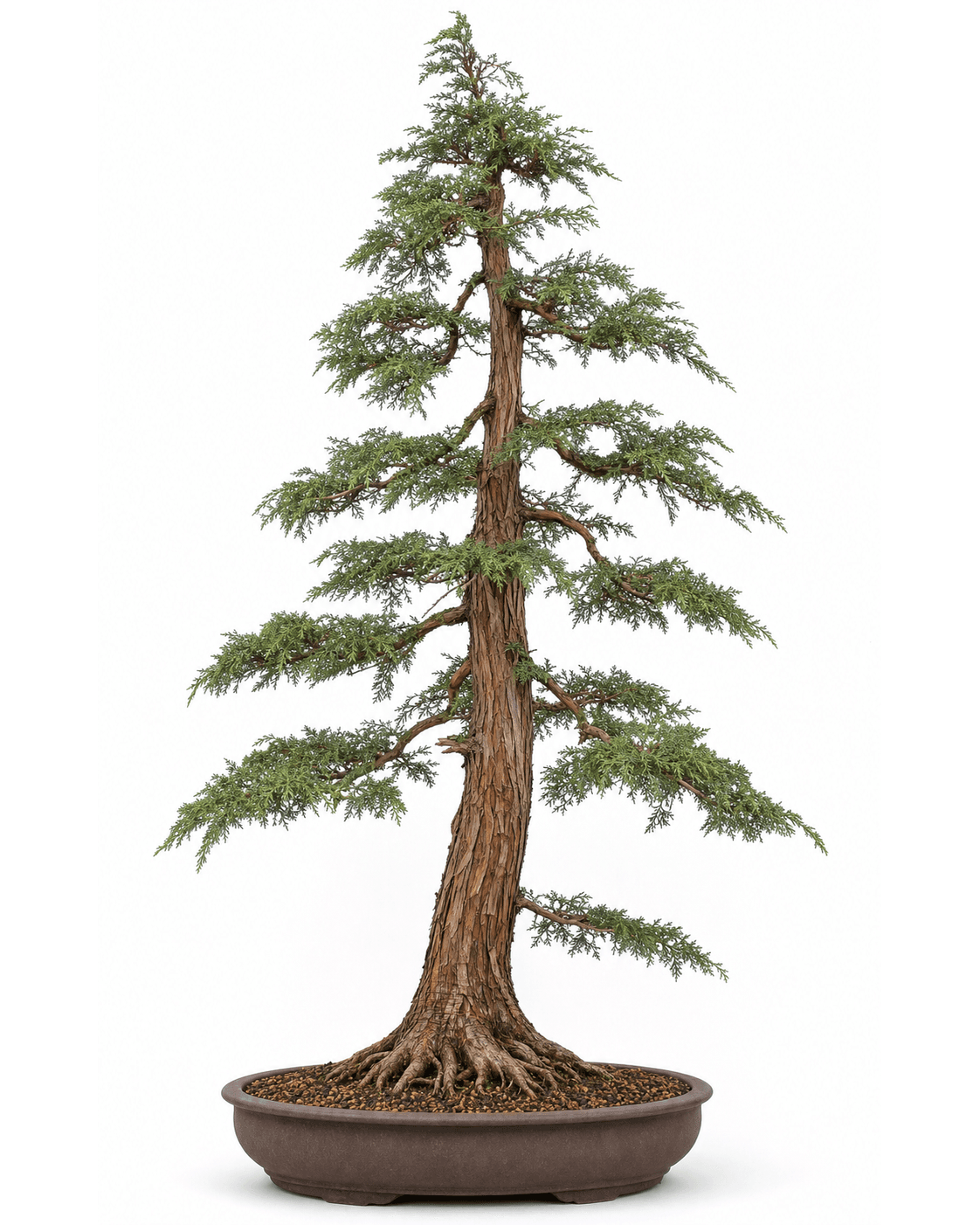
Sawara cypress bonsai are outdoor false-cypress conifers. Keep them bright, evenly moist, and oxygenated, then refine by preserving interior green and pruning fronds directionally instead of shearing a dense outer shell.
Treat Chamaecyparis pisifera as EntGrove Elongating Species > Coastal. Direct Mirai Sawara coverage is thin, so this guide uses Mirai Chamaecyparis and coastal-conifer method transparently, then grounds identity, hardiness, cultivars, pests, and diseases in Kew, NC State, Oregon State, RHS, and Purdue sources.
Updated June 5, 2026. Written by EntGrove Editorial. Last verified June 5, 2026.
Care fingerprint
Read the species through its shared care pattern.
Avoid dry-wind stress, preserve interior growth, and distinguish cypress-style pad work from juniper refinement. Use this as the starting point before local conditions and tree strength refine the calendar.
Note: Kew accepts Chamaecyparis pisifera and places it in Japan. Mirai direct Sawara coverage is thin, so the species page transparently transfers Chamaecyparis false-cypress method from Hinoki and related coastal conifer files, then grounds cultivar, hardiness, pest, and disease facts in Kew, NC State, Oregon State, RHS, and Purdue sources.
Do not prune like a pine
Elongating conifers extend from buds and shoots, so candle-cutting assumptions can remove the exact growth the tree needs.
Preserve interior growth
Spruce, fir, hemlock, cedar, redwood, cypress, and larch all become harder to design when interior buds are shaded out.
Keep recovery cool and steady
Many elongating conifers respond best when roots stay evenly moist, oxygenated, and protected from hot dry swings.
Care cadence
The calendar starts with the tree's seasonal state.
Watering
Timing: Check daily in active growth, hot wind, and after pruning. Water thoroughly, then let the soil column regain air before the next watering.
Watch for: Burnt tips, dull blue-gray or yellow foliage, dry nursery cores, compacted peat, sour wet centers, and drought after root pruning.
NC State ExtensionRHSBonsai Mirai LibraryLight and heat
Timing: Use full sun in cool climates and morning sun with afternoon shade in hot or dry climates. Shade newly exposed interior foliage for 2 to 3 weeks after heavy pruning.
Watch for: Bleached color, crispy inner fronds, weak sparse growth in too much shade, and golden cultivars burning faster than green forms.
RHSBonsai Mirai LibraryPruning
Timing: Use directional pruning in early to midsummer after strong extensions show themselves, or late summer to early fall on vigorous established trees.
Watch for: Sheared outer shells, lost interior green, vertical rope-like shoots, downward fronds, crotch congestion, and cuts into bare mature wood.
Bonsai Mirai LibraryStructural work
Timing: Wire and set larger branches in spring at bud-swell or in early fall after heat moderates, provided roots are established.
Watch for: Fresh repots, weak color, severe summer heat, fragile frond tips, and wire bite during May and June vascular swelling.
Bonsai Mirai LibraryRepotting
Timing: Repot in spring as buds swell and growth is about to begin. Use root evidence, drainage, and vigor instead of a fixed calendar.
Watch for: Bare-rooting, removing most of the root system, styling in the same season as a severe repot, or leaving a compact nursery core untouched for years.
Bonsai Mirai LibraryFertilizer
Timing: Feed actively growing trees through spring and early fall. Development trees need enough nutrition to rebuild interior growth; refined trees need moderated feed to avoid coarse extensions.
Watch for: Feeding immediately after heavy root work, pushing golden cultivars too hard, or starving weak interiors that need foliage mass to recover.
Bonsai Mirai LibraryPest and disease checks
Timing: Inspect dense foliage through warm weather, then check roots and drainage before winter storage.
Watch for: Aphids, juniper scale, shoot-boring moths, honey fungus, Phytophthora root disease, root rot symptoms, mites, and dead interior pockets.
RHSNC State ExtensionWinter protection
Timing: Keep dormant outdoors, then protect shallow pots from deep freeze, dry wind, and rapid freeze-thaw.
Watch for: Landscape Zone 4 numbers applied too literally to shallow bonsai roots, recently reduced trees, and small shohin containers.
NC State ExtensionOregon State Landscape PlantsBonsai Mirai LibrarySpecies guide
Apply the species profile before copying another tree's calendar.
At a glance
Sawara is a Japanese false cypress for outdoor bonsai, cultivar work, and fine frond design.
Kew accepts Chamaecyparis pisifera and places it in Cupressaceae, native to Japan in southern Honshu and central Kyushu. Oregon State lists Sawara falsecypress and Sawara cypress, and explains the pisifera name as a reference to the small pea-sized cones. Kew POWOOregon State Landscape Plants
In bonsai, Sawara belongs with Hinoki cypress, Japanese cedar, coast redwood, western hemlock, and other coastal elongating conifers. The care logic is shoot extension, interior foliage preservation, moist oxygenated roots, and timing around vascular recovery. Bonsai Mirai Library
The most important practical warning is source depth. Mirai mentions Chamaecyparis pisifera in the Hinoki aesthetics corpus, but most detailed method comes from Hinoki, Thuja, and coastal-cypress work. Apply the transferred Chamaecyparis method with cultivar-specific observation, especially on Boulevard, Filifera, Squarrosa, and Golden Mop material. Bonsai Mirai LibraryNC State Extension
Wild habitat
The native clue is temperate Japanese moisture, filtered light, and layered evergreen growth.
Kew gives the native range as Japan, with southern Honshu and central Kyushu called out in the general information. RHS also lists Japan as the plant range, and Oregon State records the species as native to Japan and introduced into western cultivation around 1859. Kew POWORHSOregon State Landscape Plants
Oregon State describes an evergreen conifer that can reach 160 ft or 50 m in native habitat, with a narrow conical crown, horizontally spreading branches in a single plane, nodding growth, red-brown exfoliating bark, scale-like adult foliage, and juvenile needle-like foliage on seedlings. Oregon State Landscape Plants
For care, the wild signal points to moisture without stagnation. NC State lists full sun to partial shade, moist good drainage, and acid, neutral, or alkaline pH tolerance. RHS uses the same practical language: moist but well-drained soil and full sun. NC State ExtensionRHS
For design, read the branch planes. Sawara should usually show layered evergreen sprays, soft vertical rhythm, and fine foliage texture rather than dramatic alpine deadwood. Threadleaf and boulevard cultivars add stronger texture, color, or juvenile foliage that can lead the design. Oregon State Landscape PlantsPurdue Arboretum ExplorerBonsai Mirai / Asymmetry
Reading
Read cultivar, foliage age, interior green, root core, and strength before pruning.
Sawara is cultivar-heavy. NC State lists forms including Blue Moon, Boulevard, Filifera, Filifera Aurea, Filifera Nana, Gold Dust, Golden Mop, Gold Spangle, Plumosa Aurea, Squarrosa, Sungold, True Blue, Tsukumo, Vintage Gold, and Yadkin Valley Gold. Each carries a different foliage scale and design problem. NC State Extension
Adult scale foliage and juvenile needle-like foliage should be read separately. Oregon State notes scale-like adult leaves with white markings below, plus juvenile needle-like leaves on seedlings. Many bonsai-relevant retail forms preserve juvenile or threadlike texture, so the pruning response can look different from a mature species-type tree. Oregon State Landscape PlantsPurdue Arboretum Explorer
Interior green is capital. Mirai Chamaecyparis work repeatedly shows that strong exterior tips should be reduced to feed smaller lateral interior pieces, while verticals, crotch growth, and downward fronds are edited to keep layered sprays useful. Bonsai Mirai Library
Roots are the second reading. Nursery Sawara often arrives as a landscape shrub with peat, a buried flare, and circling roots. Before styling, confirm percolation, visible root flare, and enough stored foliage mass to recover from future root conversion. NC State ExtensionBonsai Mirai Library
Pruning
Prune fronds directionally and keep the interior alive.
The most reliable Sawara pruning model comes from Mirai Hinoki and Chamaecyparis method: clean crotch growth, remove downward-hanging bottom pieces, and cut strong vertical extensions back to laterally oriented tertiary growth. The goal is a thin layered spray, not a clipped hedge outline. Bonsai Mirai Library
Avoid routine pinching on dwarf false-cypress foliage. Mirai warns that pinching Hinoki creates disordered ball-like knuckles and disrupts the natural frond layout. Sawara threadleaf and boulevard forms deserve the same caution unless a small refined design truly needs selective tip control. Bonsai Mirai Library
Prune in early to midsummer once strong extensions declare themselves, or in late summer to early fall on vigorous established trees. Heavy work during peak summer can expose shaded inner foliage to burn, especially on golden or blue juvenile forms. Bonsai Mirai Library
Avoid reducing the whole tree to tiny interior pieces at once. Mirai shows that a small remaining green piece can strengthen and become a replacement branchlet when the technique is applied selectively across an otherwise strong tree. Bonsai Mirai Library
Roots
Repot in spring and separate root conversion from major styling.
Use spring bud-swell as the main root window. Mirai Hinoki maintenance places Chamaecyparis repotting as buds swell and begin to push, aligning Sawara with the broader temperate elongating-conifer spring root rhythm. Bonsai Mirai Library
A severe nursery conversion should be staged. Free the root mass from the container wall, find the root flare, remove compacted dead pockets, and improve the bottom mat gradually. Keep enough old root function that the tree can feed its foliage while new roots colonize the mix. Bonsai Mirai Library
Avoid stacking severe operations. Mirai Chamaecyparis method separates initial styling and repotting because roots and foliage both need recovery capacity. If the repot substantially reduces roots, let the foliage stay active and postpone major pruning. Bonsai Mirai Library
After repotting, anchor the tree tightly, water until fines flush, protect from drying wind, and wait for new extension before feeding heavily or styling. Movement in the pot breaks fine roots and can erase the benefit of a technically clean repot. Bonsai Mirai Library
Soil and pot
Use a moisture-retentive conifer mix that still breathes.
A good established-tree baseline is 3 parts akadama, 1 part lava, and 1 part pumice. Mirai uses that high-akadama false-cypress mix to favor moisture, nutrition, and root ramification while retaining air through durable aggregate. Bonsai Mirai Library
Adjust for climate. In a wet cool garden, increase particle size or aggregate to protect oxygen. In dry heat, keep the akadama share high, shade the pot, and water deeply rather than misting foliage while the root core dries. Bonsai Mirai LibraryNC State Extension
Pot choice should fit the cultivar and stage. Species-type and Boulevard trees suit understated ovals, rounded rectangles, and forest slabs. Threadleaf and golden mounding forms often read better in smaller ovals, soft rectangles, or accent-scale containers that emphasize foliage texture. Bonsai Mirai / AsymmetryPurdue Arboretum Explorer
Training containers should be chosen for root quality before image. Deep boxes and broad nursery-training pots are appropriate while fixing buried flares, circling roots, and compacted organic cores. Exhibition pots come after the root pad is dense and predictable. Bonsai Mirai Library
Climate
Cold-hardy landscapes do not remove bonsai-root risk.
NC State lists USDA Zones 4a to 8b, Oregon State lists Zone 4, and RHS rates Sawara H6 in UK terms. Those numbers describe landscape plants with insulated roots, not shallow bonsai containers after pruning or root work. NC State ExtensionOregon State Landscape PlantsRHS
In cool maritime gardens, Sawara can take strong light and steady moisture. In hot inland gardens, use morning sun, afternoon shade, pot shading, and careful watering so the tree gets enough light without cooking newly exposed interior foliage. NC State ExtensionBonsai Mirai Library
In humid regions, fungal root pressure becomes more important. RHS flags honey fungus and Phytophthora root diseases, so oxygen, drainage, clean benches, and accurate watering are more useful than pushing fertilizer on a stressed tree. RHS
Indoor culture should be limited to display. Sawara needs outdoor light, air movement, seasonal temperature change, and dormancy. A bright window can hold color for a short show period, then the tree should return outdoors. NC State ExtensionRHS
Pests
Watch dense foliage, scale insects, borers, and root disease.
RHS lists aphids, juniper scale, and shoot-boring moths as possible Sawara pests. On bonsai, inspect branch bases, shaded interiors, and juvenile foliage tufts because dense sprays can hide small infestations until color shifts. RHS
RHS also lists honey fungus and Phytophthora root diseases. These are root-environment warnings: compacted organic cores, poor drainage, and chronically wet benches make root pathogens more likely than a single missed spray does. RHS
NC State tags the species as drought resistant in landscape use, but bonsai symptoms from drought can still show quickly in tips and interiors. A shallow pot has far less buffering than a landscape root system. NC State ExtensionBonsai Mirai Library
Treat only after diagnosis. Scale, mites, aphids, and borers can look like general decline from old soil, heat, shade, or over-pruning. Confirm live roots, drainage, and pest presence before escalating. RHSBonsai Mirai Library
Wiring
Wire the structure, then protect fine frond orientation.
Major wiring is safest in spring at bud-swell or early fall after heat moderates, provided roots are established. Mirai Chamaecyparis work treats structural wiring as a separate event from severe repotting. Bonsai Mirai Library
False-cypress branches can flex, stretch, and tear before snapping, but that elasticity should not invite careless torsion. Support crotches, plan the bend path, and keep branch tips oriented so the white-marked underside is not rolled upward into harsh sun. Bonsai Mirai Library
On refined trees, use wire sparingly. A full structural wiring belongs to initial styling; later sessions often need only small secondary or tertiary corrections to lay fronds laterally and keep layered sprays distinct. Bonsai Mirai Library
Check wire often during active vascular swelling, especially in May and June. Thin-barked juvenile cultivars and fast-growing strong tips can mark quickly, while older bark may hide wire pressure until the groove is set. Bonsai Mirai Library
Propagation
Seed gives species-type trees, while cuttings preserve cultivar texture.
RHS recommends propagation by seed and semi-hardwood cuttings. For bonsai, seed is useful for forests and long-term upright work, while cuttings are the practical path for preserving cultivar traits such as Filifera, Boulevard, Squarrosa, and Golden Mop texture. RHSNC State Extension
NC State lists root cutting as a recommended propagation strategy and provides a broad cultivar list. Treat nursery cultivar names as living design information because the foliage habit, color, and growth rate are often the reason the plant was propagated. NC State Extension
Air-layering should be considered possible but slower than broadleaf material. Mirai Hinoki method uses a ring cut plus tourniquet wire to improve rooting, and the upper foliage should be preserved because it feeds callus and roots. Bonsai Mirai Library
Grafting appears mostly in cultivar production rather than routine bonsai repair. Inspect graft unions on purchased dwarf or golden material before committing to a design that exposes the base. NC State ExtensionBonsai Mirai Library
Buying
Buy the foliage type and root future, not only the color.
Good Sawara material has a visible or recoverable base, healthy interior foliage, branch options close to the trunk, color appropriate to the cultivar, and a root system that can be converted without erasing all strength at once. Bonsai Mirai LibraryNC State Extension
Avoid sheared balls with bare interiors, golden shrubs with weak green cores, severe root binding, old sour peat, scale infestations, borer holes, dead brown centers, and graft unions that will dominate the future nebari. RHSBonsai Mirai Library
Boulevard, Squarrosa, Filifera, Golden Mop, Sungold, and blue forms can be excellent small material when their juvenile or threadlike texture is part of the design. They can also be slow, floppy, or too coarse for a formal image. Judge the exact plant. NC State ExtensionPurdue Arboretum Explorer
Species-type Sawara is less common in landscape trade according to Oregon State, so many retail plants are named selections. Keep the nursery tag in records and confirm Chamaecyparis pisifera before applying this page to Hinoki, Lawson cypress, Nootka cypress, Thuja, Cryptomeria, or true Cupressus. Oregon State Landscape PlantsKew POWO
Troubleshooting
Most Sawara problems start with interior loss, root imbalance, heat, or mistaken cultivar handling.
Symptom: the outside is green but the inside is brown. Likely cause: shearing, shade, or unpruned exterior extensions. Fix: stop shearing, open layers gradually, and preserve every useful interior green piece. Bonsai Mirai Library
Symptom: tips brown after pruning. Likely cause: newly exposed interior foliage burned in hot sun or wind. Fix: provide temporary shade, stabilize water, and delay more reduction until active recovery appears. Bonsai Mirai Library
Symptom: yellowing foliage with weak roots and sour smell. Likely cause: compacted organic core or root disease risk. Fix: improve drainage and oxygen, remove dead pockets during the right spring window, and seek local diagnosis for Phytophthora or honey fungus if decline continues. RHSBonsai Mirai Library
Symptom: a branch dies months after bending. Likely cause: vascular damage at the branch base or rough handling of frond shoulders. Fix: postpone further bending, protect remaining foliage, and wire future branches with crotch support and slower pressure. Bonsai Mirai Library
Symptom: golden foliage fades, burns, or browns unevenly. Likely cause: cultivar color responding to light, heat, drought, or weak roots. Fix: compare interior and exterior color, adjust afternoon shade, and confirm the cultivar normally carries gold or blue juvenile foliage. NC State ExtensionPurdue Arboretum Explorer
Symptom: pruning into bare older wood creates a permanent hole. Likely cause: the cut was behind the viable interior-green zone. Fix: redesign around live foliage, grow a replacement, graft where appropriate, or accept a more open branch structure. Bonsai Mirai Library
Design
Let the cultivar choose the image before the trunk is forced into one.
Start with foliage type, base, trunk line, defining branch, and apex. A Boulevard or Squarrosa plant with soft juvenile foliage may suit an airy upright or literati image, while a Filifera threadleaf plant may read better as a weeping, mounding, or accent-scale composition. NC State ExtensionPurdue Arboretum ExplorerBonsai Mirai / Asymmetry
Species-type Sawara and tighter green forms can borrow more directly from Hinoki design: layered lateral sprays, slender upright movement, restrained negative space, rounded-corner pots, and interior structure built from multiple vertical tiers. Bonsai Mirai LibraryOregon State Landscape Plants
Avoid forcing every Sawara into a generic pine triangle. The appeal is fine evergreen texture, red-brown exfoliating bark, small cones, fan or threadlike foliage, and the contrast between delicate sprays and a quiet trunk. Oregon State Landscape PlantsBonsai Mirai / Asymmetry
Deadwood should be restrained. Unlike old juniper, Sawara usually gains more from bark, movement, foliage texture, and branch-plane clarity than from large stripped deadwood features. Bonsai Mirai / AsymmetryBonsai Mirai Library
Cultivars
Boulevard, Filifera, Squarrosa, and golden forms are separate bonsai problems.
Oregon State notes that horticultural literature often divides Sawara into subdivisions, with Filifera carrying drooping whip-like or cord-like branchlets. Purdue profiles Chamaecyparis pisifera Filifera as threadleaf Sawara falsecypress with pendulous or weeping growth. Oregon State Landscape PlantsPurdue Arboretum Explorer
NC State lists a wide cultivar set, including Blue Moon, Boulevard, Cream Ball, Curly Tops, Dow Whiting, Filifera, Filifera Aurea, Filifera Nana, Gold Dust, Golden Mop, Gold Spangle, Lemon Thread, Plumosa Aurea, Plumosa Juniperoides, Snow, Squarrosa, Squarrosa Minimas, Sungold, True Blue, Tsukumo, Vintage Gold, and Yadkin Valley Gold. NC State Extension
Golden Mop and threadleaf forms are often sold as landscape shrubs. Their foliage can make good small bonsai, but the trunk and root base are frequently hidden inside mounding growth. Open the plant carefully before deciding that the retail silhouette is the bonsai design. NC State ExtensionBonsai Mirai Library
Old synonym and form names should stay in records. Kew lists many synonyms and infraspecific names, including Cupressus pisifera, Retinispora pisifera, Thuja pisifera, Chamaecyparis squarrosa, and several filifera, plumosa, aurea, and squarrosa forms. Kew POWO
History
Sawara is a Japanese conifer with a long cultivar history and a modern bonsai niche.
Oregon State records Sawara as introduced into western cultivation around 1859 and notes that the species type is less common in landscape trade than named selections. That explains why many bonsai candidates arrive as cultivars rather than wild-type seedling material. Oregon State Landscape Plants
The name Sawara comes from Japanese usage, while pisifera refers to the pea-sized cones. Keeping both common and Latin names visible helps separate Sawara from Hinoki, Lawson cypress, Nootka cypress, Japanese cedar, western redcedar, and true Cupressus. Oregon State Landscape PlantsKew POWO
In bonsai, Sawara is valuable less as a famous exhibition species and more as a practical false-cypress material. It offers fine texture, color variation, dwarf forms, threadleaf forms, and accessible nursery stock for growers learning Chamaecyparis timing. Bonsai Mirai LibraryNC State Extension
A strong Sawara bonsai should make cultivar identity feel intentional. The finished image can be quiet, layered, and upright, or soft and threadlike, but it should never hide weak roots and lost interiors behind a clipped retail outline. Bonsai Mirai / AsymmetryBonsai Mirai Library
Species questions
Answer the beginner questions before styling.
Can Sawara cypress be grown as bonsai?
Yes. Sawara cypress can be grown as outdoor bonsai when roots stay moist and oxygenated, interior foliage is preserved, and pruning is done directionally rather than by shearing.
Can Sawara cypress bonsai live indoors?
Long-term culture belongs outdoors. Sawara needs strong light, moving air, seasonal temperature change, and dormancy. Indoor display should be brief.
Is Sawara cypress the same as Hinoki cypress?
They are related Chamaecyparis species. Sawara is Chamaecyparis pisifera, while Hinoki is Chamaecyparis obtusa. Their false-cypress care overlaps, but cultivar identity and foliage form matter.
When should I prune Sawara cypress bonsai?
Use directional pruning in early to midsummer after strong extensions appear, or late summer to early fall on vigorous established trees. Avoid shearing the outside into a dense shell.
Should I pinch Sawara cypress?
Routine pinching is usually counterproductive on false-cypress foliage because it creates congested tufts. Prune back to useful lateral fronds and preserve interior green.
When should I repot Sawara cypress bonsai?
Repot in spring as buds swell and growth is about to begin. Inspect established bonsai every 2 to 4 years, and keep major styling separate from severe root work.
What soil is best for Sawara cypress bonsai?
A practical established-tree baseline is 3 parts akadama, 1 part lava, and 1 part pumice. Adjust particle size and aggregate for wet or dry climates.
Why is my Sawara cypress brown inside?
The usual causes are shade, shearing, overgrown exterior tips, compacted roots, or drought stress. Open layers gradually and preserve every useful interior green piece.
Which Sawara cultivars are useful for bonsai?
Boulevard, Filifera, Filifera Aurea, Filifera Nana, Golden Mop, Sungold, Squarrosa, True Blue, and dwarf blue or gold forms can work when the trunk, root flare, and interior foliage are usable.
What pests and diseases affect Sawara cypress bonsai?
RHS lists aphids, juniper scale, shoot-boring moths, honey fungus, and Phytophthora root diseases. Bonsai growers should also inspect for mites, root rot, and decline from stale soil or heat.
Sources
Species advice needs source discipline.
Next decisions
Plan the operation before copying the calendar.
A good care note for Sawara cypress records the tree's stage, the work done, and the aftercare used. That record matters more than a month-name rule.
Related species
Compare nearby trees before transferring advice.
Coast redwood
Sequoia sempervirens
Sitka spruce
Picea sitchensis
Western hemlock
Tsuga heterophylla
Coastal Douglas-fir
Pseudotsuga menziesii var. menziesii
Monterey cypress
Hesperocyparis macrocarpa