
Species guide
Western Hemlock Bonsai Care
Tsuga heterophylla
Western hemlock bonsai are outdoor coastal conifers for growers who can provide cool roots, steady moisture, shade-flexible light, and pruning timed to visible buds. Treat Tsuga heterophylla as an elongating species: develop with extension, refine with selective spring pinching and fall scissor work, and repot only as buds begin to show green.
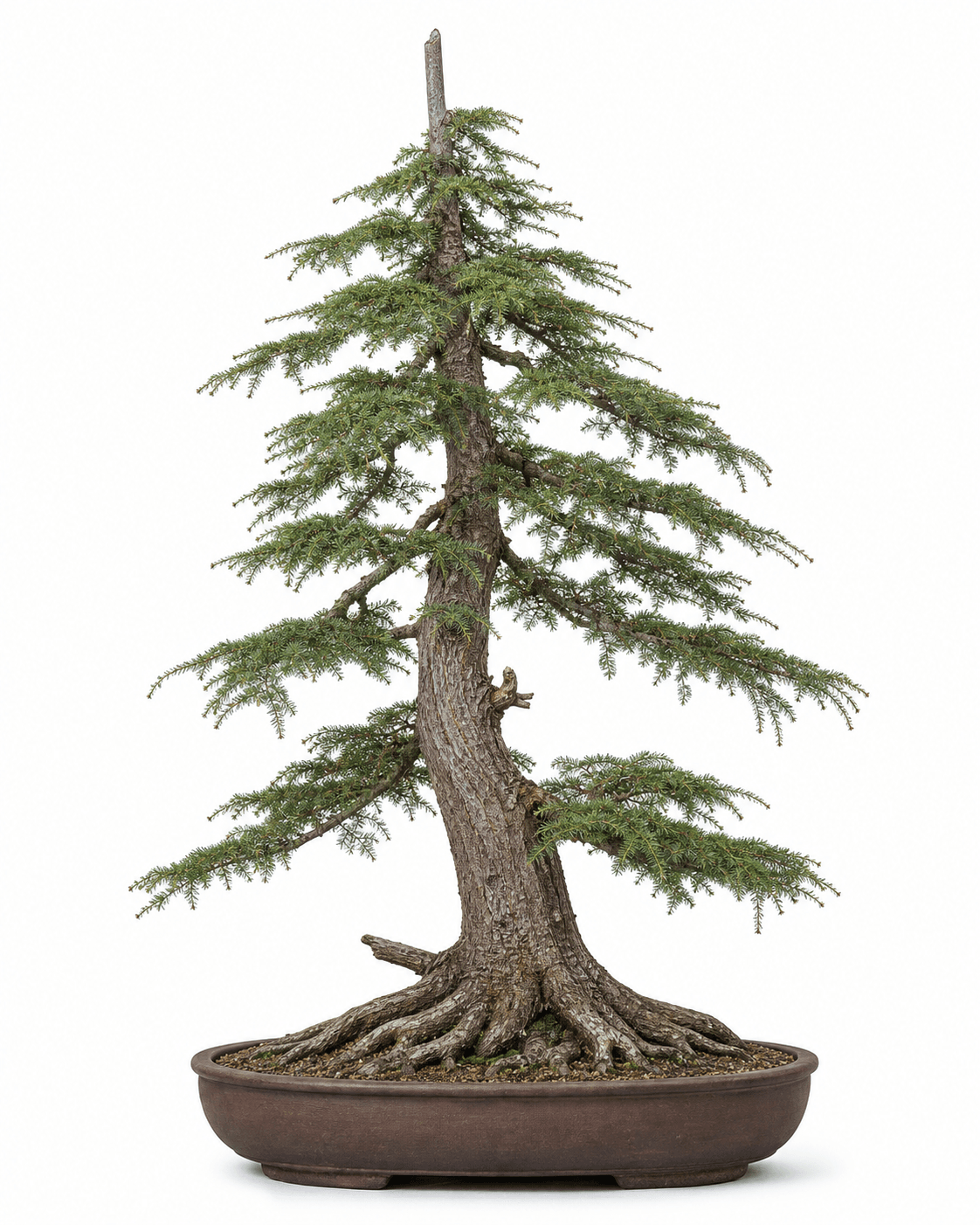
The species has direct Bonsai Mirai coverage through a dedicated Western hemlock first-styling file, plus related Tsuga pruning, potting, and elongating-conifer method. The practical image is a moist Pacific forest tree with soft lateral needles, pendulous branch tips, strong apical dominance, nurse-log roots, and wind-shaped upper structure.
Updated June 5, 2026. Written by EntGrove Editorial. Last verified June 5, 2026.
Care fingerprint
Read the species through its shared care pattern.
Avoid dry-wind stress, preserve interior growth, and distinguish cypress-style pad work from juniper refinement. Use this as the starting point before local conditions and tree strength refine the calendar.
Note: Kew accepts Tsuga heterophylla and places its native range from southern Alaska to northern California. Oregon State lists Zone 6, direct bonsai use, nurse-log rooting, and Thorsen's Weeping; NC State lists Zones 5a-8b and seed, stem cutting, and layering propagation; USDA Silvics and FEIS ground the humid Pacific Coast / northern Rocky Mountain ecology, root pathogens, defoliators, and rare mountain-hemlock hybrid note. Mirai has dedicated western-hemlock-design coverage plus Tsuga pruning, potting, and elongating-conifer fall-work method.
Do not prune like a pine
Elongating conifers extend from buds and shoots, so candle-cutting assumptions can remove the exact growth the tree needs.
Preserve interior growth
Spruce, fir, hemlock, cedar, redwood, cypress, and larch all become harder to design when interior buds are shaded out.
Keep recovery cool and steady
Many elongating conifers respond best when roots stay evenly moist, oxygenated, and protected from hot dry swings.
Care cadence
The calendar starts with the tree's seasonal state.
Watering
Timing: Check daily in active growth and heat. Water before the root pad becomes dry, then let oxygen return through the aggregate.
Watch for: Dull needles, wilting soft tips, hot pots, old wet nursery cores, and wind-exposed benches point to water movement trouble.
Bonsai Mirai LibraryNC State ExtensionSpring pinching
Timing: Pinch only vigorous refined shoots that extend beyond the intended silhouette while the new growth is still soft.
Watch for: Blanket pinching weakens development branches. Leave weak shoots and branches without interior buds to build energy.
Bonsai Mirai LibraryPost-flush pruning
Timing: After spring growth hardens, prune refined branches back to a visible bud or lateral ramification.
Watch for: Cuts past the final bud or shoot can kill the remaining tip. Weak unramified branches should extend before reduction.
Bonsai Mirai LibraryEarly-fall refinement
Timing: Use early fall, as heat breaks and vascular production starts, for selective pruning, structural correction, and wire checks.
Watch for: Tight wire, swelling buds, and fresh callus signal the phase. Work early enough that winter hardiness can still accumulate.
Bonsai Mirai LibraryRepotting
Timing: Repot when buds just begin to show green. Prepare shade, moisture control, firm tie-down, and freeze protection before starting.
Watch for: Avoid pairing heavy root work with heavy foliage work. Preserve a portion of the original root mass on conifers.
Bonsai Mirai LibraryFeeding
Timing: Feed development trees more strongly through fall to build vascular tissue. Refined trees can receive more spring support and lighter fall feeding to limit coarseness.
Watch for: The feeding plan should match the goal: thickening, recovery, or holding refined needle and internode scale.
Bonsai Mirai LibraryWiring
Timing: Wire structural branches in spring before push or in early fall on established trees. Use enough gauge because fall wood production can lift weak wire.
Watch for: Apply bends gently, support branch shoulders, and preserve the soft drooping tip character that defines the species.
Bonsai Mirai LibraryPest inspection
Timing: Inspect in spring, early summer, late summer, and fall needle-cleaning periods.
Watch for: Dwarf mistletoe, hemlock sawfly, western blackheaded budworm, hemlock looper, borers on stressed trees, root rot, and shoot blight deserve prompt identification.
USDA Forest Service SilvicsUSDA Forest Service Alaska RegionSpecies guide
Apply the species profile before copying another tree's calendar.
At a glance
Western hemlock is a moist coastal Tsuga with a precise calendar.
Tsuga heterophylla is an accepted Pinaceae species. Kew places its native range from southern Alaska to northern California, and USDA Silvics describes it as a tree of humid Pacific Coast and northern Rocky Mountain forests. Kew POWOUSDA Forest Service Silvics
For bonsai, it belongs with coastal elongating conifers. The calendar centers on green-bud spring repotting, selective spring pinching, post-flush pruning to visible buds, and early-fall work during vascular production. Bonsai Mirai Library
The care fingerprint is moisture plus air. Oregon State and NC State both describe a shade-tolerant, moist-soil conifer, while Mirai translates that into cool container roots, no full dry-down, and enough aggregate structure that oxygen returns after watering. Oregon State Landscape PlantsNC State ExtensionBonsai Mirai Library
Wild habitat
The wild tree reads from fog, shade, nurse logs, and maritime wind.
Western hemlock grows from northwestern California through Oregon, Washington, British Columbia, Alaska, Idaho, and Montana. USDA Silvics places its strongest identity in humid Pacific Coast and northern Rocky Mountain forests. USDA NRCS Plant GuideUSDA Forest Service Silvics
USDA FEIS describes low- to mid-elevation moist sites, wet benches, terraces, lower slopes, riparian areas, and maritime-influenced inland forests. It can become a climax or near-climax species after centuries without major disturbance. USDA Forest Service FEIS
Oregon State notes that seedlings can establish on mineral soil, moss, decaying litter, rotten stumps, and nurse logs, provided the rooting medium stays moist. That ecology supports bonsai designs with exposed roots, forest floors, rafts, and old bases that grip decayed wood or slab-like soil. Oregon State Landscape Plants
Mirai Western hemlock design reads the species through lower-elevation coastal influence, dead tops, strong apical dominance, upward and outward branching, and soft movement shaped by wind and rain weight. The best bonsai image should feel maritime, old, and softly responsive. Bonsai Mirai LibraryBonsai Mirai / Asymmetry
Reading
Read phase, interior buds, root moisture, and branch softness first.
Development trees need foliage mass, light to the interior, and fall vascular production. Let useful branches extend, feed the tree, and preserve weak lower growth until there are buds or laterals worth cutting back to. Bonsai Mirai Library
Refined branches are judged by interior detail: buds, secondary and tertiary structure, a clear defining branch, and fine cutback decisions. Mirai warns that a clean outer silhouette can hide poor ramification if the grower relies on hedging or over-wiring. Bonsai Mirai Library
Western hemlock differs from mountain hemlock by foliage presentation and character. Mirai notes softer, more lateral, more weeping foliage on western hemlock, while Oregon State adds the practical identification clue of broad, less sharply defined bands under the needles. Bonsai Mirai LibraryOregon State Landscape Plants
Root condition changes every decision. Hemlock can show active foliage while roots are still underdeveloped, so recent collection, repotting, or nursery-core conversion should be judged by water uptake, bud quality, interior growth, and a full stable season. Bonsai Mirai Library
Growth
Pinch only refined shoots, then prune to actual buds.
Spring pinching is for silhouette control on healthy refined zones. Remove soft, vigorous tips that grow beyond the design, then leave weaker branches and development zones to extend so they can build buds and vascular strength. Bonsai Mirai Library
Post-flush and early-fall pruning use the same rule: every cut lands at a visible bud, a lateral branch, or useful ramification. Blind cuts beyond available growth often leave a dead tip. Bonsai Mirai Library
Fall pruning is powerful because it caps the foliar load before the tree lays down vascular tissue. Done near the front edge of fall, it reduces next year coarse response while leaving time for winter hardiness. Bonsai Mirai Library
Use scissor work whenever it can preserve the species character. Mirai emphasizes the soft drooping hemlock tip, so branch selection and directional pruning often produce a better result than wiring every tertiary shoot straight. Bonsai Mirai Library
Manage Western hemlock through extension, selective soft pinching, post-harden pruning, early-fall cutback, and careful light management. Pine candle techniques belong to pine flush patterns. Bonsai Mirai Library
Roots
Repot at green bud movement and keep foliage or roots intact.
Mirai uses green bud movement as the hemlock repotting trigger. The safe window is brief because stored sugars are mobilizing, buds are waking, and root recovery can align with the new season. Bonsai Mirai Library
Keep conifer root work staged. Preserve part of the original root mass, remove old or circling roots gradually, and maintain enough foliage to move water through the recovering system. Bonsai Mirai Library
Heavy root work and heavy foliage work belong in separate seasons. Mirai treats this as a balance rule: intact foliage drives root regeneration, and intact roots support a branch-reduction year. Bonsai Mirai Library
Collected, nursery, or nurse-log-style material often has long roots and old organic pockets. Layer roots into the container, secure the trunk, and convert soil over multiple cycles before asking for a finished root pad. Bonsai Mirai LibraryOregon State Landscape Plants
Soil and pot
Use a water-retentive conifer mix that still breathes.
A practical established-tree mix is 3 parts akadama, 1 part lava, and 1 part pumice. Akadama supports fine root scaling, while lava and pumice preserve oxygen spaces over a longer conifer repot interval. Bonsai Mirai Library
USDA FEIS reports western hemlock on acidic organic and mineral soils, with optimum seedling pH around 4.5 to 5.0. NC State lists acidic soil, high organic matter, good drainage, moisture, and occasional wetness. USDA Forest Service FEISNC State Extension
Translate that ecology into bonsai as acidic moisture with air. Avoid compacted peat cores, stale wet bottoms, black pots overheating in afternoon sun, and shallow watering that leaves the central root mass dry. Bonsai Mirai LibraryNC State Extension
Pot choice should support the species story. Forest trays, slabs, low ovals, cascade pots, and unglazed muted containers can all work when they reinforce moist roots, exposed bases, pendulous branch tips, and a coastal forest mood. Bonsai Mirai / AsymmetryOregon State Landscape Plants
Climate
Maritime benches are easiest; hot dry benches need shade and wind control.
In the Pacific Northwest, coastal British Columbia, coastal Alaska, and similarly cool maritime gardens, Western hemlock can take strong light when roots stay cool and moist. Airflow still matters because dense foliage and wet organic cores can invite pests or root disease. USDA Forest Service SilvicsBonsai Mirai Library
In hot inland climates, use morning sun, dappled shade, pot shading, windbreaks, and frequent water checks. Mirai specifically recommends dappled shade and only a short direct-sun exposure during intense summer heat for containerized hemlock. Bonsai Mirai Library
In cold winter regions, keep the tree dormant and protect the container root system before severe freeze-thaw cycling. Landscape zone ratings describe in-ground trees, while bonsai roots sit above ground in a smaller thermal buffer. NC State ExtensionOregon State Landscape PlantsBonsai Mirai Library
In dry wind or low humidity, foliage can lose water faster than roots replace it. Give wind protection and avoid late-day work that exposes shaded interior needles to sudden afternoon sun. Bonsai Mirai Library
Pests
Watch defoliators, mistletoe, borers, and root pathogens before they become design problems.
USDA Silvics identifies dwarf mistletoe as a serious Pacific Coast parasite of western hemlock. It increases mortality, reduces growth, lowers wood quality, and creates decay entry points in forest trees. USDA Forest Service Silvics
Defoliators are the main insect group to know. USDA Silvics names western blackheaded budworm, western hemlock looper, and hemlock sawfly as important pests, while the Alaska Region notes sawfly larvae often feed older foliage and thin inner crowns. USDA Forest Service SilvicsUSDA Forest Service Alaska Region
Root and wound pathogens matter in bonsai because old cuts, wet soil, and weak roots compound quickly. USDA Silvics names Heterobasidion annosum, Phellinus weiri, Rhizina root rot, and shoot blight among western hemlock disease concerns. USDA Forest Service Silvics
For bonsai, inspect old needles, branch undersides, bark wounds, nebari pockets, old saw cuts, and the root core. Confirm the problem before treatment, then use local extension guidance and labeled products for the identified issue. USDA Forest Service SilvicsBonsai Mirai Library
Wiring
Wire enough to hold, then let scissor work preserve the hemlock tip.
Western hemlock branches are flexible, but fall vascular production can lift weak wire. Mirai recommends a heavier gauge than instinct suggests for structural branches that must hold through wood production. Bonsai Mirai Library
Apply bends gently. Support the branch at the point of force, move in short increments, and avoid aggressive cranking that damages the moisture-dependent vascular system. Bonsai Mirai Library
Raffia is rarely necessary on hemlock. Mirai notes that it can hide stress points and broken fibers, while the species natural snow-load adaptation already gives branches useful flexibility. Bonsai Mirai Library
Detail wiring should support branch selection. Preserve drooping tips, vary branch angles, open negative space, and check wire before fall swelling turns a temporary mark into a permanent scar. Bonsai Mirai Library
Propagation
Seed, cuttings, layering, grafting, and nursery stock are all possible, but seedlings give the cleanest roots.
NC State lists seed, stem cuttings, and layering as propagation strategies. USDA FEIS adds that western hemlock can reproduce vegetatively by layering or cuttings and can graft readily. NC State ExtensionUSDA Forest Service FEIS
Seed is practical for forests, root-over-wood ideas, and long-term trunk development. USDA sources describe abundant small winged seed, fall seed release, and improved germination after cold stratification. USDA Forest Service FEISUSDA NRCS Plant Guide
Cuttings and layers can preserve a weeping or compact form, but they should be treated as advanced propagation because new roots need cool moisture, oxygen, and protection from dry wind. NC State ExtensionBonsai Mirai Library
Collected material must be legal, ethical, and slow. A newly lifted elongating conifer should grow at least one full season before major styling, with old-wood bud production and water uptake used as recovery evidence. Bonsai Mirai Library
Buying
Choose interior buds, root promise, and branch character before height.
Good candidates have a visible or discoverable base, live interior buds, soft asymmetric branch movement, a useful defining branch, and roots that can be converted without bare-rooting. Bonsai Mirai Library
Nursery stock often presents as a dense green cone. Look past the outline and inspect the trunk, branch exits, soil core, root flare, old pruning wounds, pests, and whether lower foliage has enough strength to survive design work. Bonsai Mirai LibraryNC State Extension
Oregon State notes few cultivars in commerce and names Thorsen's Weeping as one notable form. Weeping material can help cascade, literati, or old coastal designs when the graft, roots, and vigor are sound. Oregon State Landscape Plants
Keep labels precise. Pacific hemlock, west coast hemlock, coast hemlock, and western hemlock can all point to Tsuga heterophylla, while mountain hemlock, eastern hemlock, Japanese hemlock, yew, and poison hemlock require separate records. USDA NRCS Plant GuideKew POWOOregon State Landscape Plants
Troubleshooting
Most failures trace to heat, dry wind, stale roots, weak buds, or mistimed pruning.
Symptom: tips wilt or brown while the pot is damp. Likely cause: hot roots, stale organic core, or poor oxygen. Fix: shade the pot, improve airflow, check the core before watering again, and plan staged soil correction. Bonsai Mirai Library
Symptom: a shortened branch dies back. Likely cause: the cut landed beyond the last viable bud or lateral. Fix: stop reduction, rebuild strength, and prune only to visible buds or ramification in the next safe window. Bonsai Mirai Library
Symptom: lower branches weaken. Likely cause: apical dominance, excessive shade inside a dense canopy, or premature pruning of weak branches. Fix: reduce top strength, open light paths, and leave weak branches to extend. Bonsai Mirai Library
Symptom: older needles vanish and the interior thins. Likely cause: normal needle age, sawfly, budworm, looper, shade, or root stress. Fix: identify the pest or stress first, then improve vigor and follow local treatment timing. USDA Forest Service SilvicsUSDA Forest Service Alaska Region
Symptom: black or hollow roots, sour smell, or slow water movement. Likely cause: root rot, stale wet soil, or old field core. Fix: stabilize watering, avoid fertilizer as a substitute for roots, and repot at the next green-bud window. USDA Forest Service SilvicsBonsai Mirai Library
Symptom: wire marks suddenly deepen in early fall. Likely cause: vascular swelling. Fix: unwind before the mark closes, then reset structure with fewer, better-placed wires or guy wires. Bonsai Mirai Library
Design
Design for coastal softness, dead tops, and visible interior detail.
Start with base, trunk line, defining branch, and apex. Mirai Western hemlock design emphasizes that branch elimination sets the design; wiring and pad work refine choices that were already made. Bonsai Mirai LibraryBonsai Mirai / Asymmetry
The species can support wide canopies, dead tops, retained lower branches, and upward branch movement when those choices echo coastal old-growth form. Soft, low-amplitude movement suits western hemlock better than severe bends. Bonsai Mirai Library
Foliage masses should keep negative space and a planar pointed apex. Long triangular pads, wispy tips, and selective density preserve the hemlock identity. Bonsai Mirai Library
Deadwood should stay cylindrical, rounded, and weathered. Hemlock can have jin, dead tops, shari, and hollow features, but carved grain should remain quieter than juniper deadwood because snow, rot, and wet decay shape the natural tree. Bonsai Mirai Library
Forest and nurse-log compositions are especially credible. Pair varied trunk sizes, damp forest-floor planting, exposed roots, and asymmetric spacing with Sitka spruce, cedar, or Douglas-fir context only when horticulture and scale stay coherent. Oregon State Landscape PlantsUSDA Forest Service SilvicsBonsai Mirai / Asymmetry
Cultivars
The species matters more than cultivar shopping.
Oregon State notes that Western hemlock has few nursery cultivars compared with eastern hemlock, with Thorsen's Weeping as one notable named form. Oregon State Landscape Plants
Weeping forms can be valuable for cascades, soft old apices, and asymmetric forest edges. Inspect graft union, lower branch health, trunk movement, and root condition before paying for the cultivar name. Bonsai Mirai LibraryOregon State Landscape Plants
Kew lists the accepted species name and synonym or form history. Keep trade labels in your records, then resolve care to Tsuga heterophylla after foliage, cones, buds, range, and nursery provenance agree. Kew POWOOregon State Landscape Plants
Western hemlock and mountain hemlock can hybridize rarely near Mount Baker according to USDA Silvics. Suspected hybrid or ambiguous Tsuga material should be grown by observed response, with records kept open as evidence accumulates. USDA Forest Service Silvics
History
Western hemlock carries Pacific forest, Indigenous-use, and timber history.
USDA Silvics describes Western hemlock as an important commercial tree of the Pacific Coast and northern Rocky Mountains, plus a major forest component in western hemlock, silver fir, western redcedar, Alaska cedar, and mountain hemlock communities. USDA Forest Service Silvics
The USDA NRCS guide records ethnobotanical uses of bark, pitch, boughs, and wood by Pacific Northwest peoples, including dye, tanning, cleansing, medicine, firewood, poles, and tools. USDA NRCS Plant Guide
For bonsai, that history argues for honest Pacific material and patient work: moist roots, shade memory, wind-shaped tops, soft branch tips, dead tops, and forest-floor sourcing ethics. Bonsai Mirai / AsymmetryBonsai Mirai Library
A credible exhibition Western hemlock should show interior detail, selective pruning, clean wire removal, living lower branches or believable old losses, and identifiable Tsuga heterophylla character. Bonsai Mirai Library
Species questions
Answer the beginner questions before styling.
Can Western hemlock be grown as bonsai?
Yes. Western hemlock can be grown as bonsai outdoors when it receives cool roots, even moisture, oxygenated soil, careful spring bud timing, and early-fall pruning discipline.
Can Western hemlock bonsai live indoors?
Western hemlock is an outdoor tree that needs dormancy, moving air, seasonal light, and cool roots. Indoor rooms are too warm, dry, and dim for durable growth.
When should I repot Western hemlock bonsai?
Repot when buds just begin to show green. Keep some original root mass intact, tie the tree firmly, and avoid heavy branch reduction in the same season.
How much sun does Western hemlock bonsai need?
Use morning sun or bright filtered light in most climates. In cool maritime regions it can take more sun, while hot dry regions need dappled shade and wind protection.
How often should I water Western hemlock bonsai?
Water before the root pad dries hard. The soil should remain evenly moist while still draining fast enough that oxygen returns after each watering.
Should I pinch Western hemlock?
Pinch only vigorous refined shoots while they are soft and outside the silhouette. Developing branches and weak branches should extend until they produce buds or laterals.
What soil mix works for Western hemlock bonsai?
A useful established-tree baseline is 3 parts akadama, 1 part lava, and 1 part pumice. Adjust particle size, pot depth, and water retention for local climate.
Is Western hemlock the same as mountain hemlock?
They are separate Tsuga species. Western hemlock is Tsuga heterophylla, with softer lateral foliage and a lower-elevation coastal identity. Mountain hemlock is Tsuga mertensiana, with denser radial foliage and alpine character.
Why is my Western hemlock turning brown?
Common causes include hot roots, dry wind, stale wet nursery soil, pruning past viable buds, defoliating insects, root rot, and sudden sun exposure after canopy opening.
What styles suit Western hemlock bonsai?
Informal upright, forest, raft, exposed-root, cascade, semi-cascade, literati, windswept, dead-top, and soft coastal naturalistic designs suit Western hemlock best.
Sources
Species advice needs source discipline.
Next decisions
Plan the operation before copying the calendar.
A good care note for Western hemlock records the tree's stage, the work done, and the aftercare used. That record matters more than a month-name rule.
Related species
Compare nearby trees before transferring advice.
Coast redwood
Sequoia sempervirens
Sitka spruce
Picea sitchensis
Coastal Douglas-fir
Pseudotsuga menziesii var. menziesii
Monterey cypress
Hesperocyparis macrocarpa
Japanese cedar / sugi
Cryptomeria japonica