
Species guide
Neea Bonsai Care
Neea buxifolia
Neea bonsai care starts with identity and climate. Neea buxifolia, often sold as tropical boxwood or saltwood, is a Caribbean Nyctaginaceae shrub or small tree that needs warmth, bright outdoor light when weather allows, steady moisture, and careful winter protection in a bonsai pot.
Treat Neea as Broadleaf > Tropical in EntGrove. It responds best to warm active-growth pruning, conservative repotting above about 60 F / 16 C nights, granular soil that stays moist without going sour, and frequent small corrections instead of heavy winter work.
The local Mirai corpus has no dedicated Neea file, although Neea buxifolia appears in the fruiting-bonsai design corpus. This guide transfers Mirai tropical, fruiting broadleaf, watering, soil, repotting, wiring, energy, propagation, and design method transparently, while GBIF, Kew, USDA, and public species summaries ground taxonomy, labels, range, and morphology.
Updated June 14, 2026. Written by EntGrove Editorial. Last verified June 14, 2026.
Care fingerprint
Read the species through its shared care pattern.
Treat indoor culture as a light-management problem first; prune and repot when the tree is actively growing and warm enough to recover. Use this as the starting point before local conditions and tree strength refine the calendar.
Read the foliage first
Broadleaf stress usually shows in leaf color, leaf size, wilt, scorch, or delayed hardening before it becomes a branch problem.
Match work to dormancy
Deciduous, evergreen, tropical, succulent, and flowering broadleaf trees recover on different calendars.
Protect fine roots
Root work should preserve enough active fine roots for the tree to rehydrate quickly after the operation.
Care cadence
The calendar starts with the tree's seasonal state.
Placement
Timing: Grow outdoors in bright warmth after nights are reliable, then protect before cold nights slow tropical metabolism. Acclimate indoor-held trees gradually.
Watch for: Large soft leaves, stalled shoots, scorch after abrupt exposure, cold drafts, and weak winter rooms without airflow.
Bonsai Mirai LibraryBonsai Tree Gardener: Neea buxifoliaWatering
Timing: Water deeply when the upper root zone is ready. Keep active trees from drying completely, then let air return to the soil mass.
Watch for: Wilted fine shoots, sour soil, black roots, algae crusts, calendar watering indoors, and old peat cores that stay wet inside.
Bonsai Tree Gardener: Neea buxifoliaBonsai Mirai LibraryFeeding
Timing: Feed during warm active growth after roots are working. Use lighter liquid feeding after repotting, in weak indoor light, or during cool protection.
Watch for: Oversized leaves from heavy nitrogen, pale growth in active season, fertilizer before recovery growth, and feeding stale wet soil.
Bonsai Mirai LibraryBonsai Tree Gardener: Neea buxifoliaPruning
Timing: Let shoots extend enough to feed branches, then cut back after the flush hardens. Refine with repeated small cuts during warm growth.
Watch for: Hedging the outline, stripping all new growth, pruning hard in winter protection, and removing every interior leaf on a weak tree.
Bonsai Mirai LibraryBonsai Tree Gardener: Neea buxifoliaLeaf work
Timing: Use selective leaf reduction only on strong refined trees in warm active growth. Root maturity and light should do most of the leaf-size work.
Watch for: Full defoliation as a shortcut, leaf work after repotting, and expecting defoliation to fix weak light or immature roots.
Bonsai Mirai LibraryRepotting
Timing: Repot in warmth, usually when nights stay above about 60 F / 16 C. Preserve enough roots and foliage to keep the evergreen canopy hydrated.
Watch for: Bare-rooting a leafed tree, combining hard root work with hard pruning, burying the crown, and ignoring poor percolation.
Bonsai Mirai LibraryBonsai Tree Gardener: Neea buxifoliaWiring
Timing: Wire young flexible shoots for primary direction, then rely on pruning, leader changes, and guy wires for refinement.
Watch for: Brittle older branches, wire bite during fast warm growth, dense twig mats that hide wire, and forcing formal lines onto lateral growth.
Bonsai Tree Gardener: Neea buxifoliaBonsai Mirai / AsymmetryPropagation
Timing: Use seed, cuttings, or air layers in warmth with humidity, oxygen-rich media, and aftercare that avoids both wilt and rot.
Watch for: Unlabeled batches, over-wet cuttings, separating layers before enough roots form, and mistaking seed vigor for proven bonsai quality.
Bonsai Tree Gardener: Neea buxifoliaBonsai Mirai LibraryWinter protection
Timing: Move to bright frost-free protection before cold nights. Slow watering, keep air moving, and avoid major styling while metabolism is low.
Watch for: Leaf drop from cold roots, aphids, scale, mealybug, mite buildup, fungus in dense foliage, and warm rooms with low light.
Bonsai Mirai LibraryBonsai Tree Gardener: Neea buxifoliaPest inspection
Timing: Inspect new purchases, summer flushes, indoor winter holds, and dense branch forks.
Watch for: Aphids, mealybugs, scale, mites, sticky residue, black surface fungus, twig dieback, and root-rot symptoms after overwatering.
Bonsai Tree Gardener: Neea buxifoliaBonsai Mirai LibrarySpecies guide
Apply the species profile before copying another tree's calendar.
At a glance
Neea is a tropical boxwood only in the bonsai trade sense.
Use this page for Neea buxifolia, the small-leaf tropical bonsai also sold as tropical boxwood, saltwood, Nia, Neea, and sometimes by the older synonym Eggersia buxifolia. Kew POWO: Neea buxifoliaGBIF: Neea buxifoliaPublic species summary: Neea buxifolia
GBIF places the species in Nyctaginaceae, genus Neea, with saltwood as a common English name. The tropical boxwood label is a bonsai and trade shortcut for leaf scale and dense twigging. GBIF: Neea buxifoliaBonsai Tree Gardener: Neea buxifolia
EntGrove places Neea in Broadleaf > Tropical. The calendar follows warmth, light, roots, and active growth rather than winter dormancy cues. Bonsai Mirai Library
The source-depth caveat is part of the care advice. Mirai directly lists Neea buxifolia in the fruiting-bonsai design corpus, but the local corpus has no dedicated Neea technique file, so this page names each method transfer plainly. Bonsai Mirai Library
Habitat
Neea comes from warm Caribbean conditions with small leaves and twiggy growth.
Kew-linked public summaries place Neea buxifolia in Puerto Rico and the Virgin Islands. Genus-level Neea distribution is broader, but species care should stay tied to the Caribbean saltwood plant until a nursery label proves otherwise. Kew POWO: Neea buxifoliaGBIF: Neea buxifoliaPublic species summary: Neea buxifolia
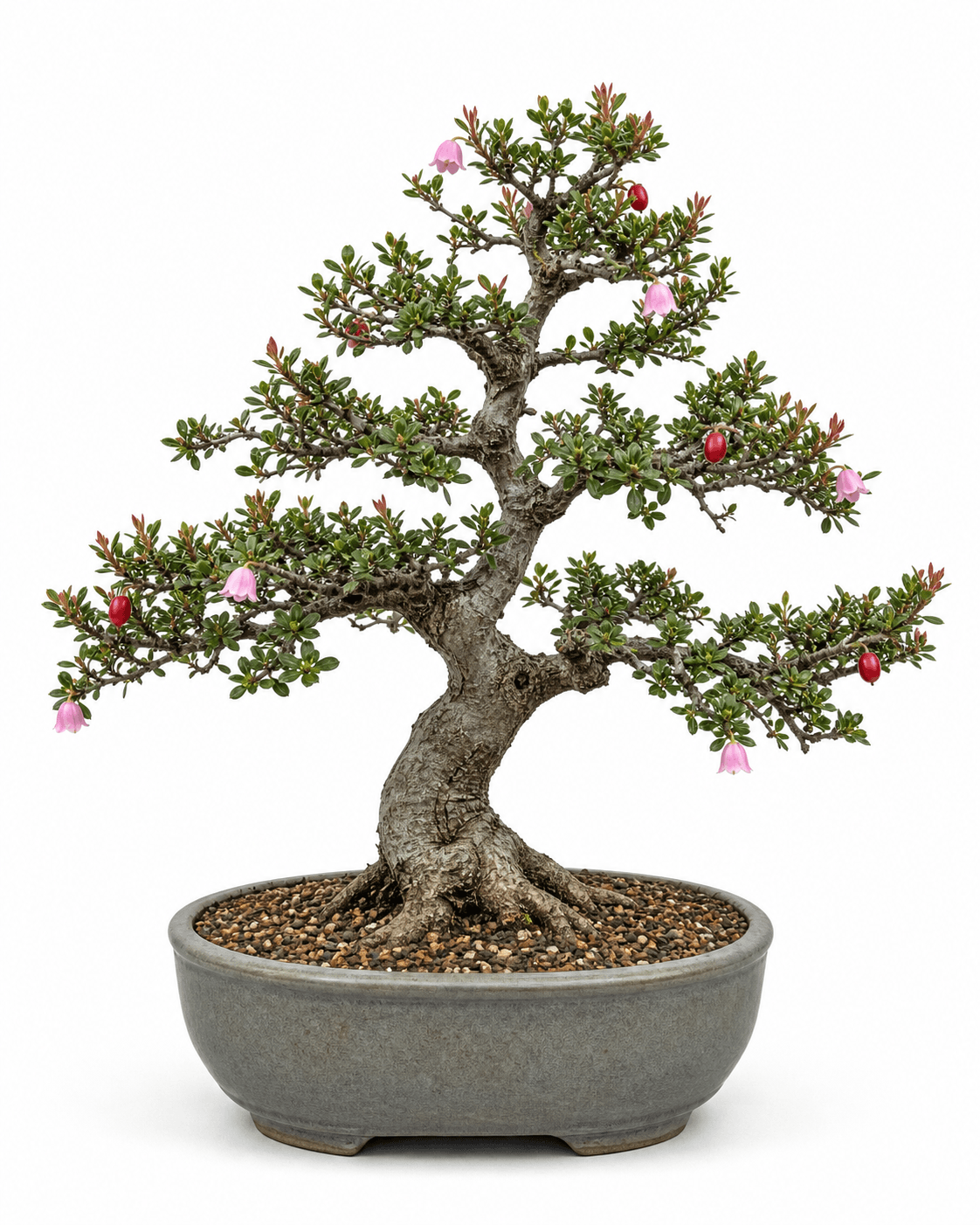
The bonsai value comes from small oblong foliage, red new growth, twig-like lateral shoots, smooth gray bark, pink flowers, and red fruit. Those traits explain why it is usually built as a compact tropical broadleaf. Bonsai Tree Gardener: Neea buxifolia
Care should copy the useful parts of the habitat: warmth, bright light, steady moisture, oxygen at the roots, and protection from cold soil. A small bonsai pot removes the buffering that a Caribbean root system would have in the ground. Bonsai Mirai LibraryBonsai Tree Gardener: Neea buxifolia
Design should show branch rhythm and trunk character rather than hiding everything under a clipped shell. Dense twigging is an asset only when light and negative space can reach inside the canopy. Bonsai Mirai / Asymmetry
Reading
Read Neea by leaf scale, twig pace, root moisture, and branch brittleness.
A strong Neea has firm small leaves, colored new shoots, steady warm-season extension, fine interior buds, quick recovery after watering, and roots that stay moist without smelling sour. Bonsai Mirai LibraryBonsai Tree Gardener: Neea buxifolia
A weak Neea often shows large pale leaves, stalled twigs, brittle dieback, sticky pest residue, leaf drop after cold nights, or yellowing while the soil stays wet. Bonsai Mirai LibraryBonsai Tree Gardener: Neea buxifolia
Development means building base, trunk line, primary branches, and root strength in a generous container. Refinement means shorter internodes, selective pruning, small leaves, and a canopy that keeps enough interior foliage alive. Bonsai Mirai LibraryBonsai Mirai / Asymmetry
Mirai tropical method treats root maturity as the main path to small foliage and ramification. Defoliation and pinching support refinement only after the tree already has surplus energy. Bonsai Mirai Library
Pruning
Use repeated warm-season cutback instead of hard silhouette clipping.
Let new shoots extend long enough to feed the branch, then cut back after the flush hardens. Choose cuts that create taper, movement, and shorter future internodes. Bonsai Mirai Library
Neea can grow dense twig mats in warm conditions. Thin selectively so light reaches interior buds and the trunk remains visible from the intended front. Bonsai Tree Gardener: Neea buxifoliaBonsai Mirai / Asymmetry
Partial leaf work can balance strong areas on refined, healthy trees. Keep enough leaves to maintain photosynthesis, especially in temperate summers where tropical recovery time is shorter. Bonsai Mirai Library
Avoid major pruning while the tree is in cool winter protection. Tropical broadleaf wounds need warmth, roots, and active growth to seal and push new buds. Bonsai Mirai Library
Repotting
Repot Neea only when warmth and root evidence support recovery.
Repot once nights are consistently above about 60 F / 16 C and the tree is already moving. Warm roots are the recovery engine for tropical bonsai. Bonsai Mirai Library
Never bare-root a leafed Neea. Preserve part of the root mass, reduce old nursery soil in stages, and leave enough foliage to keep water moving through the tree. Bonsai Mirai Library
The species-care reference describes weak taproot, lateral roots, and fine roots. That structure argues for firm tie-downs, staged reduction, and close aftercare after root work. Bonsai Tree Gardener: Neea buxifoliaBonsai Mirai Library
Keep the crown slightly proud. Burying tropical bark into a wet soil line creates a predictable crown-rot risk, especially in humid indoor or greenhouse holding. Bonsai Mirai Library
Soil and pot
Give Neea a moist tropical mix that drains before roots go stale.
A practical mix starts with akadama, pumice, and lava or similar mineral particles, then adjusts organic fraction for climate. Hot, humid, true tropical regions may need more organic fraction and more frequent repotting than cooler collections. Bonsai Mirai Library
The species-care reference calls for moist, well-draining soil and notes tolerance for heavier limestone soils. In bonsai, that translates to steady moisture with visible percolation rather than compacted mud. Bonsai Tree Gardener: Neea buxifolia
Use a development container until roots and trunk are ready. Shohin refinement can come later, with more frequent watering and feeding because the small pot leaves little buffer. Bonsai Tree Gardener: Neea buxifoliaBonsai Mirai Library
Pot pairing should be quiet. Muted glazes, warm gray, brown, dark green, and compact ovals or soft rectangles let red shoots, tiny leaves, and gray bark carry the composition. Bonsai Mirai / Asymmetry
Climate
Cold regions grow Neea as a summer outdoor tree with deliberate winter holding.
In frost-free tropical and subtropical regions, Neea can stay outdoors with active-growth pruning and steady water. Rainfall, heat, and organic media breakdown determine repot frequency. Bonsai Mirai LibraryBonsai Tree Gardener: Neea buxifolia
In Mediterranean or dry-summer regions, acclimate to sun, protect from extreme afternoon heat, and water deeply enough that fine roots do not cycle between drought and saturation. Bonsai Mirai Library
In cold-winter regions, move Neea indoors, into a greenhouse, or under lights before cold nights. Bright light, airflow, and slower watering matter more than decorative indoor placement. Bonsai Mirai LibraryBonsai Tree Gardener: Neea buxifolia
The small pot is more vulnerable than landscape roots. Protect roots before frost, and postpone pruning, repotting, and heavy feeding until the tree returns to active warm growth. Bonsai Mirai Library
Pests and diseases
Most Neea failures begin with weak indoor culture, pests, or stale wet roots.
Aphids, mealybugs, scale, and mites are the first pest checks. Dense twigs, leaf undersides, and branch forks hide infestations during winter protection. Bonsai Tree Gardener: Neea buxifoliaBonsai Mirai Library
Sticky residue, sooty surface growth, pale leaves, and ants often point to sap-feeding insects. Quarantine new tropicals and inspect before placing them near ficus, Fukien tea, Premna, or buttonwood. Bonsai Mirai Library
Root rot is a culture problem. Sour smell, black roots, yellow leaves in wet soil, and a soft crown mean styling should stop while warmth, drainage, and watering are corrected. Bonsai Mirai Library
Humid indoor rooms can encourage surface fungus inside dense crowns. Open the canopy, improve airflow, and water the root zone rather than wetting foliage repeatedly. Bonsai Mirai Library
Wiring
Wire young growth early and refine older Neea with pruning.
Use wire on young flexible shoots when they are firm enough to hold shape. Check often because warm tropical growth can thicken quickly around wire. Bonsai Mirai Library
The species-care reference warns that mature branches become brittle and difficult to wire. Respect that signal by setting primary direction early and using cutback or guy wires later. Bonsai Tree Gardener: Neea buxifoliaBonsai Mirai / Asymmetry
Pair wiring with a branch-selection plan. Dense tropical twigs can create visual noise unless the base, trunk line, defining branch, and apex are clear. Bonsai Mirai / Asymmetry
Remove wire before it bites. Small scars on gray bark are easy to create and hard to hide on shohin or small tropical boxwood bonsai. Bonsai Mirai LibraryBonsai Tree Gardener: Neea buxifolia
Propagation
Propagate Neea in warmth, then track every label carefully.
The species-care reference lists seed, cuttings, and air layering as propagation routes, with branch cuttings taken during the warm growing period. Bonsai Tree Gardener: Neea buxifolia
Mirai propagation method favors oxygen-rich media, reduced light, humidity control, no fertilizer before roots form, and patient aftercare for cuttings and newly separated layers. Bonsai Mirai Library
Air layering can be useful when a branch already has compact leaves, movement, or bark. Separate only after strong root production and protect the new root system from drought and cold. Bonsai Mirai LibraryBonsai Tree Gardener: Neea buxifolia
Keep provenance with each batch. Neea, Nia, tropical boxwood, saltwood, Buxus boxwood, Serissa, Fukien tea, and Premna can all collide in casual retail language. GBIF: Neea buxifoliaBonsai Tree Gardener: Neea buxifolia
Buying
Buy Neea for verified label, compact leaves, roots, and branch options.
Look for labels such as Neea buxifolia, tropical boxwood, saltwood, Nia, Neea, or Eggersia buxifolia. Ask the seller whether the plant is seed-grown, cutting-grown, or imported tropical stock. GBIF: Neea buxifoliaBonsai Tree Gardener: Neea buxifolia
Good material has a firm base, small leaves in strong light, red or active new shoots, visible interior buds, flexible young branches, clean gray bark, and roots that drain predictably. Bonsai Mirai / AsymmetryBonsai Tree Gardener: Neea buxifolia
Avoid plants in sour peat, trunks with soft bark at the soil line, recent hard chops without recovery growth, dense pest-ridden twig mats, and brittle older branches that must be bent to make the design work. Bonsai Mirai LibraryBonsai Tree Gardener: Neea buxifolia
Separate Neea from Buxus boxwood, Fukien tea, Serissa, Premna, Bahama berry, buttonwood, and tropical privets before applying species advice. GBIF: Neea buxifoliaPublic species summary: Neea buxifoliaBonsai Mirai Library
Troubleshooting
Fix light, roots, warmth, and pests before adding more technique.
Leaves enlarge: increase light gradually, reduce excess nitrogen, and focus on root maturity and tip control instead of repeated defoliation. Bonsai Mirai Library
Leaves yellow while soil stays wet: warm the root zone, improve drainage, pause fertilizer, and let the soil cycle more predictably before pruning again. Bonsai Mirai Library
Fine twigs die back: check cold exposure, recent hard pruning, wire damage, stale roots, and whether every interior leaf was removed. Bonsai Mirai LibraryBonsai Tree Gardener: Neea buxifolia
Leaves drop indoors: inspect light level, cold drafts, root wetness, mites, scale, mealybug, and recent movement from outdoor sun to indoor shade. Bonsai Mirai Library
Branches crack under wire: remove wire, let the branch recover, and shift to clip-and-grow, guy wires, or a different defining branch. Bonsai Tree Gardener: Neea buxifoliaBonsai Mirai / Asymmetry
Identity is unclear: verify Neea buxifolia against Eggersia buxifolia, Buxus boxwood, Nashia inaguensis, Fukien tea, Serissa, Premna, and generic tropical boxwood labels. Kew POWO: Neea buxifoliaGBIF: Neea buxifoliaPublic species summary: Neea buxifolia
Design
Style Neea as a compact tropical broadleaf with visible twig rhythm.
Start with base, trunk line, defining branch, and apex. Dense twigging should support those decisions rather than blur the silhouette into a clipped shrub. Bonsai Mirai / Asymmetry
Shohin and small-tree compositions fit Neea well because tiny leaves and red new shoots can read at close viewing distance. A stronger trunk still needs years of development before the small-leaf advantage matters. Bonsai Tree Gardener: Neea buxifoliaBonsai Mirai / Asymmetry
Broom and umbrella styles are natural fits when the base and primary forks are clean. Informal upright works when the trunk already has movement and branch placement supports asymmetry. Bonsai Tree Gardener: Neea buxifoliaBonsai Mirai / Asymmetry
Deadwood should stay minor. Neea offers foliage scale, twig density, bark, flowers, and fruit as stronger identity signals than carved tropical wood. Bonsai Mirai / AsymmetryBonsai Mirai Library
Forms
Neea pages should stay species-first until better cultivar evidence appears.
Use one parent page for Neea buxifolia. Current public search demand and source depth point to species and common-name confusion rather than named cultivar care. Kew POWO: Neea buxifoliaGBIF: Neea buxifolia
The useful labels are Neea buxifolia, tropical boxwood, saltwood, Nia, Neea, and Eggersia buxifolia. Keep genus-only Neea labels conservative until the plant can be verified. GBIF: Neea buxifoliaPublic species summary: Neea buxifolia
Select by observable bonsai traits: small leaves in strong light, short internodes, red active shoots, interior buds, flexible young branches, healthy roots, and a trunk base that can become convincing at small size. Bonsai Mirai / AsymmetryBonsai Tree Gardener: Neea buxifolia
History
Neea is a niche Caribbean tropical bonsai with unusually useful leaf scale.
GBIF records Neea buxifolia as published by Heimerl in 1896, with Eggersia buxifolia as a synonym. Public summaries link the species to Puerto Rico and the Virgin Islands. GBIF: Neea buxifoliaPublic species summary: Neea buxifolia
The genus name Neea honors Luis Nee, a botanist associated with the Malaspina expedition, through the older Ruiz and Pavon genus name. Public species summary: Neea buxifolia
In bonsai, Neea is valuable because it can make a small tropical tree image from fine leaves, twig density, colored new growth, flowers, and red fruit. Exhibition quality depends on label clarity, root maturity, and disciplined pruning. Bonsai Tree Gardener: Neea buxifoliaBonsai Mirai / Asymmetry
Species questions
Answer the beginner questions before styling.
Can Neea buxifolia be grown as bonsai?
Yes. Neea buxifolia is used as tropical boxwood bonsai because it has small leaves, dense twigging, red new shoots, and a compact tropical broadleaf habit.
Is Neea the same as boxwood?
Tropical boxwood is a common bonsai label for Neea buxifolia. Botanical boxwoods are Buxus species in a different family, so Buxus care calendars should not be copied directly.
Is Neea an indoor bonsai?
Neea should grow outdoors in warm bright weather whenever possible. Indoors is mainly winter protection and requires strong light, airflow, warmer roots, and slower watering.
When should I repot Neea bonsai?
Repot Neea in reliable warmth, usually once nights stay above about 60 F / 16 C. Preserve part of the root ball and avoid pairing heavy root work with heavy pruning.
How often should I water Neea bonsai?
Water deeply during active growth when the top of the root zone is ready. Keep the tree from drying completely, but avoid stale wet soil and reduce watering during cool winter protection.
Can Neea be defoliated?
Use selective leaf work only on strong refined trees in warm active growth. Root maturity, light, and tip control are safer paths to small leaves than repeated full defoliation.
Why are my Neea leaves getting large?
Large leaves usually point to weak light, immature roots, heavy nitrogen, or long unchecked shoots. Improve light and root health before using leaf work.
Can mature Neea branches be wired?
Wire young flexible shoots. Mature Neea branches can become brittle, so older structure is usually refined with pruning, guy wires, leader changes, or a different branch choice.
What pests attack Neea bonsai?
Aphids, mealybugs, scale, and mites are the main checks, especially indoors or in dense twigging. Inspect leaf undersides, branch forks, and sticky residue.
How do I tell Neea from Bahama berry or Fukien tea?
Start with the label and morphology. Neea buxifolia is a Nyctaginaceae saltwood with small oblong leaves and red fruit, while Bahama berry is Nashia and Fukien tea is Ehretia microphylla.
Sources
Species advice needs source discipline.
Next decisions
Plan the operation before copying the calendar.
A good care note for Neea / tropical boxwood records the tree's stage, the work done, and the aftercare used. That record matters more than a month-name rule.
Related species
Compare nearby trees before transferring advice.
Ficus retusa / Indian laurel
Ficus microcarpa
Tigerbark ficus
Ficus microcarpa 'Tigerbark'
Willow-leaf ficus
Ficus salicaria
Benjamin fig
Ficus benjamina
Ginseng ficus
Ficus microcarpa 'Ginseng'