
Species guide
Premna Bonsai Care
Premna microphylla, Premna obtusifolia
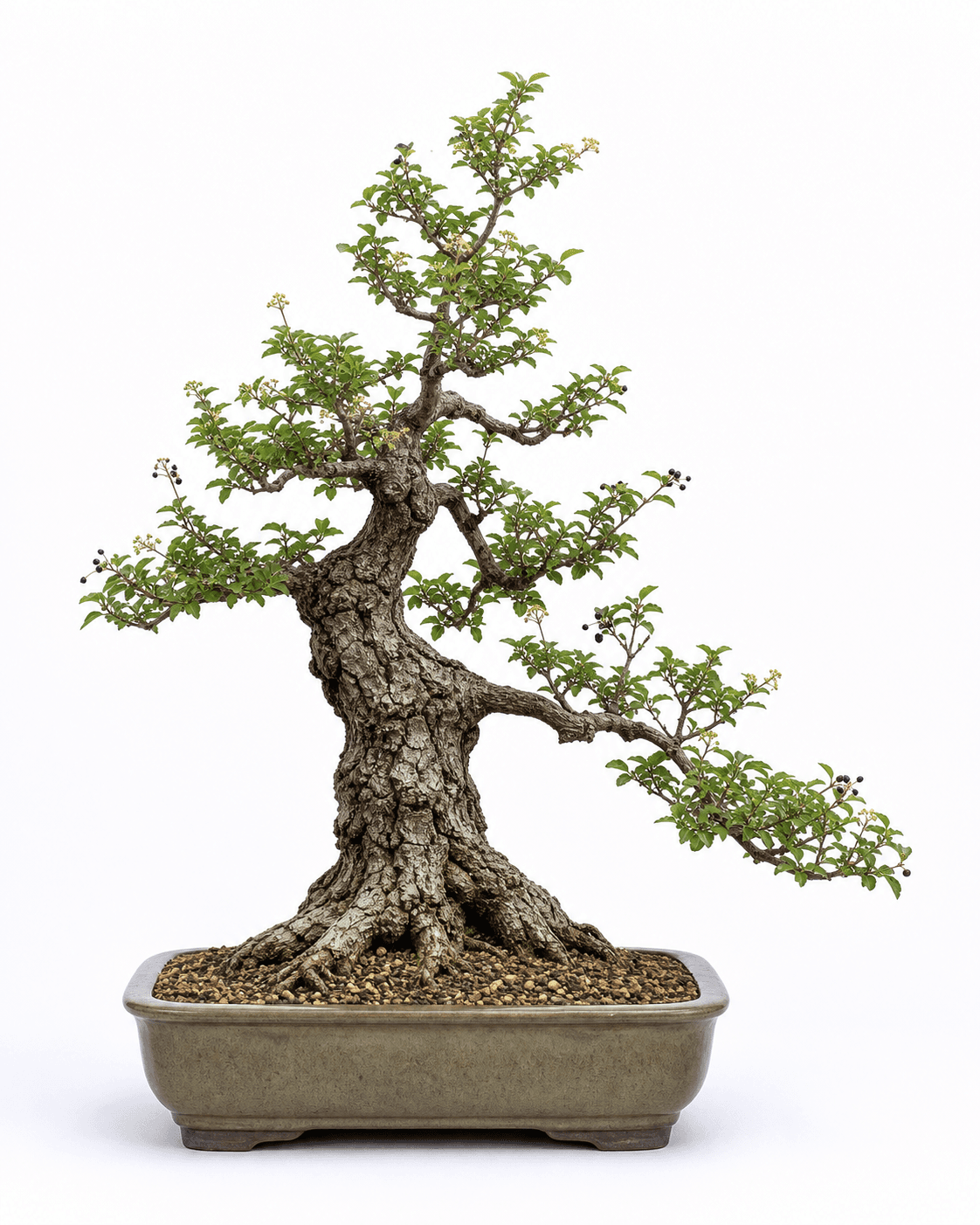
Premna bonsai care depends first on the exact plant label. The cleanest bonsai target is Premna microphylla, often called Japanese premna, musk maple, Japanese neem tree, tofu tree, or charcoal-bark premna in bonsai conversation.
Treat Premna as Broadleaf > Tropical in EntGrove: warm active-growth work, bright outdoor light in warm weather, careful watering with oxygen return, root work only after reliable warmth, and winter protection in cold regions. The small aromatic leaves, rough pale bark, and fast tropical response make it useful for clip-and-grow branch building.
The local Mirai corpus has no dedicated Premna file. This guide transfers Mirai tropical, watering, soil, repotting, wiring, energy, and design method transparently, while Kew, GBIF, and public species summaries ground taxonomy, label handling, range, morphology, and the P. obtusifolia versus P. serratifolia caution.
Updated June 13, 2026. Written by EntGrove Editorial. Last verified June 13, 2026.
Care fingerprint
Read the species through its shared care pattern.
Treat indoor culture as a light-management problem first; prune and repot when the tree is actively growing and warm enough to recover. Use this as the starting point before local conditions and tree strength refine the calendar.
Read the foliage first
Broadleaf stress usually shows in leaf color, leaf size, wilt, scorch, or delayed hardening before it becomes a branch problem.
Match work to dormancy
Deciduous, evergreen, tropical, succulent, and flowering broadleaf trees recover on different calendars.
Protect fine roots
Root work should preserve enough active fine roots for the tree to rehydrate quickly after the operation.
Care cadence
The calendar starts with the tree's seasonal state.
Placement
Timing: Grow outdoors in warm bright weather, then protect before cold nights create stalled metabolism. Move indoor or greenhouse plants back into stronger sun gradually.
Watch for: Large pale leaves, stalled shoot extension, sun scorch after a sudden move, cold drafts indoors, and pots drying too slowly in low light.
Bonsai Mirai LibraryWatering
Timing: Water thoroughly during active growth when the mix is ready, then wait for oxygen to return. Reduce water sharply when the tree is cool, leaf-thin, newly repotted, or indoors.
Watch for: Yellowing in stale soil, sour media, limp tips in wet soil, salt crust, and watering by calendar rather than by pot weight and leaf demand.
Bonsai Mirai LibraryFeeding
Timing: Feed while the tree is actively extending and light is strong. Use lighter feeding during refinement and pause fertilizer when the tree is protected, cool, or recovering from root work.
Watch for: Coarse internodes from overfeeding, weak pale growth from underfeeding, and fertilizer applied before metabolic activity returns.
Bonsai Mirai LibraryPruning
Timing: Let developing shoots extend and harden, then cut back to visible interior buds or branch forks. Refined trees can be trimmed more often after each warm flush hardens.
Watch for: Shearing without branch selection, removing all runners on a weak tree, large cuts in winter, and dense crowns that shade interior buds.
Bonsai Mirai LibraryLeaf work
Timing: Use selective leaf cutting on strong refined trees to balance light and energy. Keep leaves on branches that need thickening or recovery.
Watch for: Full defoliation during development, stripping leaves in low light, and expecting technique alone to make large leaves permanently small.
Bonsai Mirai LibraryRepotting
Timing: Repot only in reliable warmth, commonly late spring to early summer in cold-winter collections. Keep foliage in place and avoid combining heavy root work with heavy top pruning.
Watch for: Bare-rooting a leafed tree, buried root crowns, torn fine roots, cool wet aftercare, and unstable tie-downs on soft tropical roots.
Bonsai Mirai LibraryWiring
Timing: Wire flexible shoots after they firm enough to hold shape, then inspect frequently. Clip-and-grow should do most of the fine ramification work.
Watch for: Wire bite on fast swelling growth, brittle older branches, forced bends across rough bark, and branch layouts that ignore the base and trunk line.
Bonsai Mirai LibraryBonsai Mirai / AsymmetryWinter protection
Timing: Move protected trees into the brightest warm space available before cold stress. Water less, ventilate often, and reserve major work for warm active growth.
Watch for: Routine summer watering indoors, leaf drop followed by panic feeding, scale in stale rooms, and work done while temperatures are below the recovery range.
Bonsai Mirai LibraryPest and disease inspection
Timing: Inspect after import, during winter storage, after pruning flushes, and whenever leaves become sticky, distorted, or pale.
Watch for: Scale, mealybug, aphids, mites, root rot, fungal spots after stagnant humidity, and hidden pests in rough bark or branch crotches.
Bonsai Mirai LibrarySpecies guide
Apply the species profile before copying another tree's calendar.
At a glance
Premna is a warm broadleaf bonsai where identity checks come before technique.
Apply this guide first to Premna microphylla, the Japanese premna used in bonsai for small aromatic leaves, pale rough bark, and compact tropical branch building. Public species summaries place P. microphylla in Lamiaceae and list Japanese premna, musk maple, Japanese neem tree, and tofu tree among the English labels. Public species summary: Premna microphylla
The taxonomy caveat is important. The EntGrove taxonomy keeps Premna microphylla and Premna obtusifolia together because the bonsai trade uses broad Premna labels, while public summaries place P. obtusifolia near the wide P. serratifolia synonym complex. Kew POWO search: Premna microphyllaKew POWO search: Premna obtusifoliaPublic species summary: Premna serratifolia
EntGrove places Premna in Broadleaf > Tropical. The care calendar follows warmth, active leaves, water and oxygen balance, summer root work, and winter protection rather than temperate dormancy cues. Bonsai Mirai LibraryGBIF species search: Premna
The source-depth caveat is explicit. The local Mirai corpus has no dedicated Premna file, so bonsai technique is transferred from Mirai tropical, watering, soil, repotting, wiring, energy, and design files, with taxonomy and morphology checked against public botanical sources. Bonsai Mirai LibraryKew POWO search: Premna microphyllaGBIF species search: Premna
Habitat
Premna ranges across warm Asian and tropical habitats, so the exact label changes the climate story.
Public species summaries place P. microphylla in southern China, central and southern Japan, the Ryukyu region, and Taiwan. They describe woodland edge or understory conditions and slightly acidic soils. Public species summary: Premna microphylla
Premna as a genus is broader, with tropical and subtropical distribution across Africa, southern Asia, northern Australia, and island regions. This breadth explains why a vague nursery label can hide several different climate histories. GBIF species search: PremnaPublic species summary: Premna serratifolia
Care should copy the warm active-growth pattern: strong light without abrupt scorch, even water during extension, oxygen at the roots, and protection when temperatures fall below the tropical recovery range. Bonsai Mirai Library
Design should honor the tree as a small-leaved warm broadleaf. Bark, base, trunk direction, branch taper, and negative space should carry the image more than dense clipped pads. Bonsai Mirai / AsymmetryPublic species summary: Premna microphylla
Reading
Read Premna by warm growth, leaf scale, root oxygen, and interior buds.
A strong Premna shows firm new extension, compact leaves in bright light, quick drying after watering, visible interior buds, and bark that stays dry at the root crown. Bonsai Mirai LibraryPublic species summary: Premna microphylla
A weak tree shows enlarged thin leaves, stalled shoot tips, yellowing in wet soil, leaf drop in a dim room, pest buildup, or branch sections that fail to back bud after cutback. Bonsai Mirai Library
Development means building base, primary lines, sacrifice growth, and root maturity. Refinement means shorter internodes, cleaner transitions, selected leaves, and repeated small cutbacks after each warm flush hardens. Bonsai Mirai LibraryBonsai Mirai / Asymmetry
The best energy signal is active growth. When the tree has no surplus energy, pruning, wiring, feeding, and repotting should wait until light, warmth, and roots improve. Bonsai Mirai Library
Pruning
Use extension and cutback for branch building, then selective leaf work for refinement.
Let young shoots extend long enough to feed the branch and produce options. Cut back after the flush hardens, choosing buds or branch forks that create taper, movement, and smaller structure. Bonsai Mirai Library
Premna can be tempting to hedge because it responds in warm weather. Better bonsai structure comes from selecting the branch line first, then trimming to support that line. Bonsai Mirai / AsymmetryBonsai Mirai Library
Full defoliation is a refinement tool for selected strong tropicals, and repeated stripping slows development. Use partial leaf cutting to bring light inside, balance strong areas, and keep branches feeding. Bonsai Mirai Library
Avoid major pruning in winter protection. Tropical broadleaf trees need warmth and active metabolism to seal wounds, push buds, and replace the photosynthesis removed by pruning. Bonsai Mirai Library
Repotting
Repot Premna in warmth and preserve enough roots to keep the leaf mass hydrated.
Repot Premna after nights are reliably warm enough for tropical recovery. Mirai tropical method uses 60 F / 16 C nights as a practical threshold for design and repotting work, with early to midsummer often safer than early spring in cold-winter collections. Bonsai Mirai Library
Do not bare-root a leafed Premna. Leave a portion of the root mass intact, remove old wet nursery soil in stages, and preserve hydration so the foliage continues to pull water. Bonsai Mirai Library
Keep the root crown slightly proud and clean. Burying tropical bark against wet soil invites crown rot, and Premna bark is part of the tree value. Bonsai Mirai LibraryBonsai Mirai / Asymmetry
Tie the tree firmly. Fine tropical roots break when the trunk rocks, and new roots establish better when the planting angle, root pad, and container all stay still. Bonsai Mirai Library
Soil and pot
Use a tropical broadleaf mix that drains quickly and does not starve active leaves.
Premna needs both water access and oxygen. In moderate climates, a balanced akadama, pumice, and lava mix can work; in hotter or more tropical climates, add organic or moisture-holding fraction cautiously to match higher metabolism. Bonsai Mirai Library
Avoid dense peat cores in shallow bonsai pots. They stay wet in winter rooms, resist even rewetting in summer, and hide root problems until leaves show stress. Bonsai Mirai Library
Development containers can be deeper and wider to build roots and trunk. Refinement pots should reduce excess vigor while still leaving room for active tropical water demand. Bonsai Mirai Library
Pot pairing should let bark and leaf scale lead. Unglazed clay, muted earth glazes, and compact ovals or rectangles usually suit rough-bark tropical Premna better than saturated glossy color. Bonsai Mirai / Asymmetry
Climate
Cold regions grow Premna as a warm-season outdoor tree with engineered winter protection.
In tropical and subtropical regions, Premna can often be worked across a longer warm season, with repeated pruning cycles after flushes harden. Watch the tree rather than the calendar. Bonsai Mirai Library
In temperate regions, move the tree outdoors only after cold nights pass and bring it under protection before cold stress. Winter rooms need bright light, airflow, and much slower watering. Bonsai Mirai Library
Mirai tropical winter guidance puts most tropical broadleaf vigor above warm night temperatures and warns that metabolism drops sharply as nights cool. Use that principle before pruning, repotting, or fertilizing. Bonsai Mirai Library
In hot dry regions, water demand rises and leaf scorch can appear after abrupt exposure. In humid regions, fungal pressure and root oxygen become the main concerns. Bonsai Mirai Library
Pests
Most Premna problems begin with weak indoor culture, stale wet soil, or dense shade.
Scale, mealybug, aphids, and mites are the pests to check first on protected tropical broadleaf bonsai. Rough bark, branch crotches, and leaf undersides deserve close inspection. Bonsai Mirai Library
Root rot and crown rot are cultural problems. Sour soil, black roots, persistent wetness, and soft bark at the soil line should stop styling until drainage and warmth are corrected. Bonsai Mirai Library
Fungal leaf spots and mildew often follow stale air, overhead wetting in protected rooms, and dense canopies. Open the crown, improve airflow, and water the root zone rather than the foliage. Bonsai Mirai Library
Quarantine imported or newly purchased Premna. The trade label may be vague, and pest pressure can hide in old tropical nursery soil. GBIF species search: PremnaBonsai Mirai Library
Wiring
Wire early for primary direction, then let pruning build fine branch structure.
Wire flexible shoots after they firm enough to hold shape. Check often because tropical growth can swell quickly in warm weather and wire marks remain visible on compact trees. Bonsai Mirai Library
Older Premna branches should be moved cautiously. Clip-and-grow, leader changes, guy wires, and planting angle often produce cleaner lines than hard bends through rough bark. Bonsai Mirai / AsymmetryBonsai Mirai Library
Build the design from base, trunk line, defining branch, and apex. Fine twigs should support the direction rather than create a clipped ball around the trunk. Bonsai Mirai / Asymmetry
Propagation
Use cuttings, layers, and seed with clear identity records.
Premna is commonly handled in bonsai as cutting-grown or nursery-grown tropical material. Cuttings are best rooted in warmth with bright shade, oxygen-rich media, and steady humidity without waterlogging. Bonsai Mirai Library
Air-layering can be useful where a branch or top already has bark character. Separate only after strong root production, then protect the new root system through the first warm recovery period. Bonsai Mirai Library
Seed can preserve species identity when the parent plant is known, but bonsai growers usually value proven small leaves, bark texture, and branch response more than seed novelty. Public species summary: Premna microphyllaBonsai Mirai / Asymmetry
Keep the label with every propagation batch. P. microphylla, P. obtusifolia, P. serratifolia, and genus-only Premna labels should remain separate until verified. Kew POWO search: Premna microphyllaKew POWO search: Premna obtusifoliaPublic species summary: Premna serratifolia
Buying
Buy for verified label, small leaves, firm roots, and bark character.
Look for labels such as Premna microphylla, Japanese premna, musk maple, Japanese neem tree, tofu tree, charcoal-bark premna, Premna obtusifolia, or genus-only Premna. Ask the seller what name they are actually using. Public species summary: Premna microphyllaKew POWO search: Premna obtusifolia
Good material has compact leaves in strong light, visible interior buds, rough or pale bark, a convincing base, firm roots, and a trunk line that can be read before pruning. Bonsai Mirai / AsymmetryBonsai Mirai Library
Avoid plants in sour wet soil, trees recently chopped without new growth, vague imported stock with no recovery history, severe reverse taper hidden by foliage, and trunks whose bark is soft at the crown. Bonsai Mirai Library
Separate Premna from Fukien tea, Serissa, Sageretia, Brazilian rain tree, buttonwood, Neea, and tropical privets before applying species advice. Several warm broadleaf bonsai can look similar in retail photos. GBIF species search: PremnaBonsai Mirai Library
Troubleshooting
Fix light, warmth, and root oxygen before adding more technique.
Leaves enlarge: increase light gradually, reduce excess nitrogen, and let roots mature. Mirai tropical method treats root maturity and light as the real path to finer leaves. Bonsai Mirai Library
Leaves yellow in wet soil: pause fertilizer, check drainage, warm the root zone, and wait for the pot to dry more predictably before pruning. Bonsai Mirai Library
No back budding after cutback: the tree may lack surplus energy. Build strength with light, warmth, leaves, and a longer extension cycle before cutting again. Bonsai Mirai Library
Wire marks appear: remove wire immediately and switch to pruning or guy wires. Premna is usually better refined by repeated cutback than by keeping wire on too long. Bonsai Mirai LibraryBonsai Mirai / Asymmetry
Leaves drop indoors: check cold drafts, light level, root wetness, pests, and recent moves. A protected tropical may shed leaves under stress, but root health decides recovery. Bonsai Mirai Library
Species label conflicts: treat the plant conservatively as Premna until new leaves, flowers, fruit, range records, and seller history support a specific name. Kew POWO search: Premna microphyllaKew POWO search: Premna obtusifoliaGBIF species search: Premna
Design
Make bark, base, trunk direction, and small leaves carry the image.
Start by reading the base and trunk direction. Premna often succeeds as a small tropical tree when the trunk has aged bark and the branch map lets that bark remain visible. Bonsai Mirai / AsymmetryPublic species summary: Premna microphylla
Use the defining branch and apex to create movement. A compact broom can feel mature, while a leaning informal upright can make rough bark and asymmetry stronger. Bonsai Mirai / Asymmetry
The species rewards selective empty space. Open the front enough that interior branches, bark, and trunk transitions show through the foliage. Bonsai Mirai / Asymmetry
Treat deadwood cautiously. Premna is a warm broadleaf, and rough charcoal-like bark can suggest age without carving large wounds into tropical wood. Bonsai Mirai / AsymmetryBonsai Mirai Library
Forms
Most Premna bonsai variation is label, provenance, and leaf scale rather than named cultivar care.
Use one parent page for now. The key search labels are Premna microphylla, Japanese premna, musk maple, Japanese neem tree, tofu tree, charcoal-bark premna, Premna obtusifolia, and genus-only Premna. Public species summary: Premna microphyllaKew POWO search: Premna obtusifolia
P. obtusifolia deserves caution. Public synonym summaries connect that name with the P. serratifolia complex, which has a broader tropical and coastal distribution than P. microphylla. Public species summary: Premna serratifoliaKew POWO search: Premna obtusifolia
Select bonsai material by observable traits: small leaves in good light, short internodes, reliable back budding, attractive bark, and a trunk base suited to a small tree image. Bonsai Mirai / AsymmetryBonsai Mirai Library
History
Premna is a niche tropical bonsai subject with strong bark and label confusion.
Public species summaries describe P. microphylla as a small tree with aromatic leaves and purple-black fruit, and note English labels tied to Japanese and Chinese common usage. Public species summary: Premna microphylla
The tofu tree name comes from culinary uses of the leaves in parts of East Asia, where leaf pectin is used to make a jelly-like food. That use helps explain why the plant may appear under food-plant labels rather than bonsai labels. Public species summary: Premna microphylla
In bonsai, a strong Premna should show verified identity, healthy warm-season growth, compact leaf scale, visible rough bark, controlled root culture, and a design that reads as an aged broadleaf rather than a recently clipped shrub. Bonsai Mirai / AsymmetryBonsai Mirai Library
Species questions
Answer the beginner questions before styling.
Can Premna be grown as bonsai?
Yes. Premna can be trained as a tropical broadleaf bonsai when the plant has strong light, warm active growth, good drainage, frequent pruning follow-up, and frost protection.
Which Premna species is used for bonsai?
Premna microphylla is the clearest target for Japanese premna, musk maple, tofu tree, and charcoal-bark premna searches. Premna obtusifolia appears in trade and synonym contexts, so verify the exact label.
Can Premna bonsai live indoors?
Premna can overwinter indoors only with bright light, warmth, airflow, pest checks, and slower watering. Warm-season outdoor culture builds better strength.
When should Premna be repotted?
Repot Premna during reliable warmth, often late spring or early summer in cold-winter regions. Avoid bare-rooting a leafed tree and keep the root crown dry.
How often should I water Premna bonsai?
Water deeply during active warm growth when the mix is ready, then let oxygen return before watering again. Water far less when the tree is cool, indoors, weak, or newly repotted.
Should Premna be defoliated?
Use selective leaf cutting on strong refined trees. Full defoliation is rarely useful during development because leaves feed root maturation, branch thickening, and recovery.
What soil works for Premna bonsai?
Use a granular tropical broadleaf mix that drains quickly but holds enough moisture for active leaves. Adjust akadama, pumice, lava, bark, or similar components by climate.
Why are my Premna leaves getting large?
Large leaves usually point to weak light, immature roots, excess nitrogen, or too much shade inside the canopy. Improve culture before relying on leaf removal.
Is Premna the same as Fukien tea or Serissa?
Premna is a separate genus in Lamiaceae. It can be confused with other small-leaved tropical bonsai in retail photos, so confirm leaves, bark, and label history.
What is charcoal-bark Premna?
Charcoal-bark Premna is a bonsai trade description for rough pale or darkened bark character, usually tied to Premna microphylla or genus-level Premna material. Verify the botanical label before buying.
Sources
Species advice needs source discipline.
Next decisions
Plan the operation before copying the calendar.
A good care note for Premna records the tree's stage, the work done, and the aftercare used. That record matters more than a month-name rule.
Related species
Compare nearby trees before transferring advice.
Ficus retusa / Indian laurel
Ficus microcarpa
Tigerbark ficus
Ficus microcarpa 'Tigerbark'
Willow-leaf ficus
Ficus salicaria
Benjamin fig
Ficus benjamina
Ginseng ficus
Ficus microcarpa 'Ginseng'