
Species guide
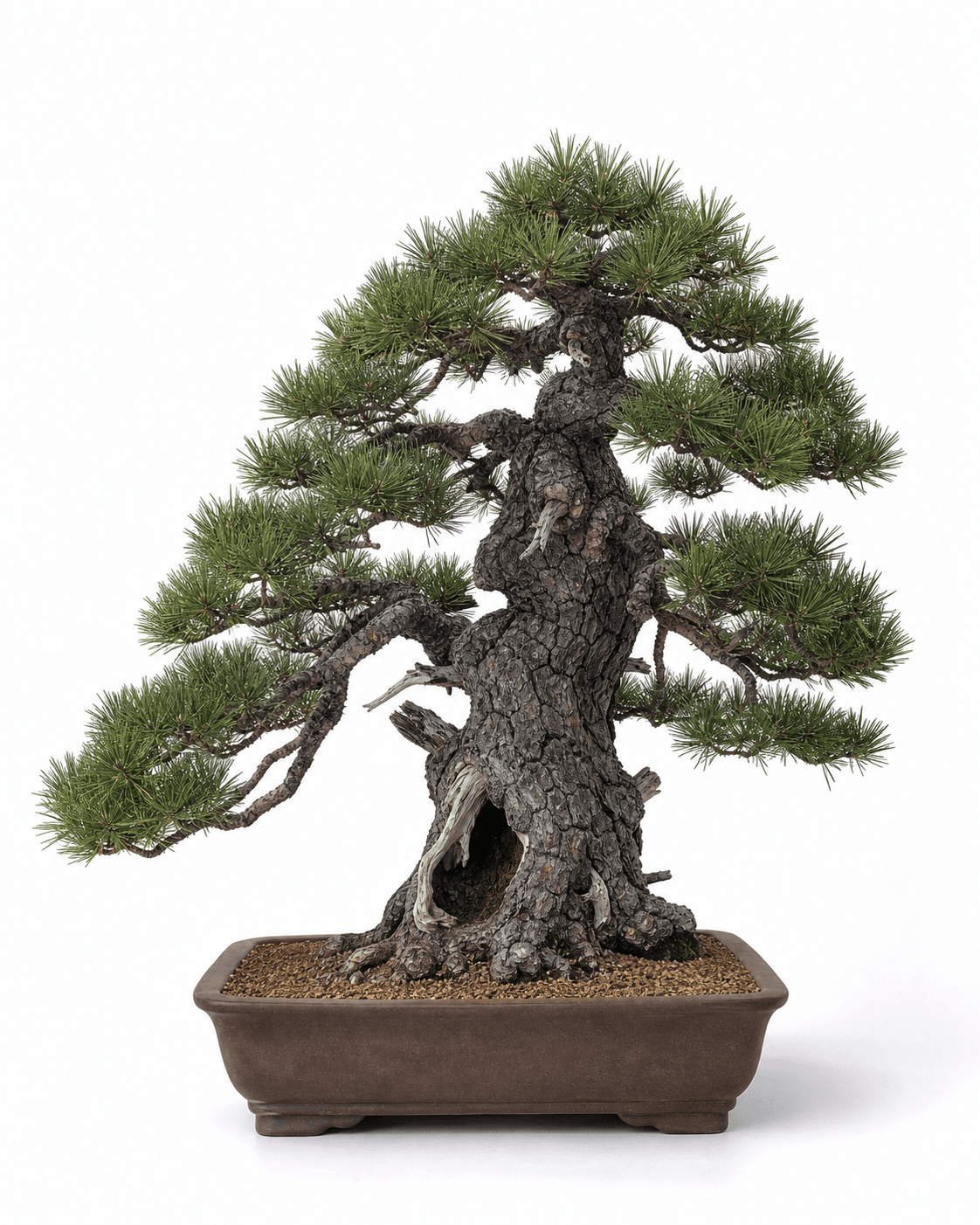
Austrian Black Pine Bonsai Care
Pinus nigra
Austrian black pine is an outdoor, two-needle pine that EntGrove places in Pine > Long-Needle Single-Flush Pines, with one important refinement exception: strong Pinus nigra can be decandled occasionally to force interior buds. Grow it in full sun, mineral soil, and complete watering cycles, then time each technique by vigor and stage.
This profile is grounded in three dedicated Bonsai Mirai Austrian black pine files plus Mirai pine fundamentals, with public sources from Kew, RHS, NC State, Purdue, UMN Extension, Oklahoma State Extension, and Missouri Department of Conservation for taxonomy, range, hardiness, morphology, and disease pressure.
Updated June 6, 2026. Written by EntGrove Editorial. Last verified June 6, 2026.
Care fingerprint
Read the species through its shared care pattern.
Do not default to Japanese black pine decandling; manage vigor through timing, needle balance, light, and conservative pruning. Use this as the starting point before local conditions and tree strength refine the calendar.
Identify flush behavior
Single-flush, multiflush, white pine, and compact pine groups have different pruning windows and different risk levels.
Avoid default decandling
Japanese black pine methods do not transfer safely to every pine, especially slow, weak, collected, or five-needle trees.
Use needles as strength data
Needle length, color, age, and density help show where vigor is strong, weak, or becoming shaded.
Care cadence
The calendar starts with the tree's seasonal state.
Placement
Timing: Grow outdoors year-round in full sun with moving air. Protect the pot in severe freezes and shield shallow roots from reflected summer heat.
Watch for: Indoor culture, shaded benches, hot walls, stagnant humid corners, and winter storage that breaks dormancy.
RHSPurdue Arboretum ExplorerBonsai Mirai LibraryWatering
Timing: Water until the whole root mass is wet, then wait for oxygen to return before watering again. Old nursery clay may stay wet inside while the outer bonsai soil dries.
Watch for: Dry pockets, sour wet cores, loose tie-downs after repotting, and using drought as the main needle-shortening tool.
Bonsai Mirai LibraryRHSDevelopment feeding
Timing: Feed aggressively when building the tree for a future decandling transition. Mirai defines aggressive organic feeding as roughly 1.5 tablespoons per location every 4 weeks.
Watch for: Preparing to decandle on weak candles, reducing foliage too early, or expecting back buds before the root and needle mass have enough stored energy.
Bonsai Mirai LibraryRefinement feeding
Timing: Once interior shoots exist and the tree is in refinement, withhold spring fertilizer or feed lightly to limit needle extension. Resume after third-year needles begin to yellow and drop.
Watch for: Strong spring feeding on a finished crown, coarse needles, strong tips stealing energy, and weak interior shoots that still need development feeding.
Bonsai Mirai LibraryDecandling transition
Timing: Use occasional full decandling only on strong, developed trees with vigorous current-year candles. Mirai files place the window from around June 1 to late July depending on the frame, while the practical test is green, unlignified candles and abundant strength.
Watch for: Annual decandling, weak candles, recently repotted roots, old brown shoots, structural pruning in the same year, and expecting a mature second flush that season.
Bonsai Mirai LibraryShoot selection
Timing: The year after decandling, wait until third-year needles begin dropping and new shoots are hardened, then reduce dense clusters to two usable lateral shoots.
Watch for: Golf-ball swelling at whorls, keeping three or more shoots at one junction, and removing too much needle mass after heavy shoot selection.
Bonsai Mirai LibraryRepotting
Timing: Repot in spring as buds move. Strong trees can tolerate substantial root reduction, but first nursery-stock conversions should keep enough roots and foliage to recover.
Watch for: Bare-rooting old clay, pruning foliage after more than half the roots are lost, fertilizing a stressed post-repot tree, and weak tie-downs.
Bonsai Mirai LibraryWiring
Timing: Wire when the tree is strong and energy-positive, often late summer to fall for structural work, while checking often because Pinus nigra can thicken fast.
Watch for: Bending across graft unions, crushing needles under wire, under-gauged wire on elastic wood, and wire left until swelling deforms the branch.
Bonsai Mirai LibraryPests and disease
Timing: Inspect during humid needle-cast periods, after hail or drought stress, after pruning, and when old nursery material arrives with compact soil.
Watch for: Diplodia tip blight, Dothistroma needle blight, needle cast, aphids, adelgids, sawflies, pine needle scale, pine wilt nematode, bark beetles, Zimmerman pine moth, mites, and shoot moths.
NC State ExtensionUMN ExtensionOklahoma State ExtensionSpecies guide
Apply the species profile before copying another tree's calendar.
At a glance
Austrian black pine is the adaptable outlier among long-needle pines.
Kew accepts Pinus nigra J.F.Arnold and gives the native range as the Mediterranean, eastern Austria, and the northern Caucasus. RHS lists Austrian pine as a large evergreen tree with dark green paired needles, pale brown ovoid cones, and a range from the Mediterranean to the northern Caucasus. Kew POWORHS
In the EntGrove taxonomy, Austrian black pine sits in Pine > Long-Needle Single-Flush Pines. Mirai files make the page more nuanced: Pinus nigra behaves as an outlier pine, with enough vigor to tolerate occasional full decandling for back-bud production when the tree has been prepared. Bonsai Mirai Library
The grower should separate three states. Development builds root and needle mass, transition decandling creates interior buds, and refinement manages those buds as shoots with restrained feeding and shoot selection. Bonsai Mirai Library
Wild habitat
Its wild and horticultural story is mountain sun, drought tolerance, and urban toughness.
Kew places the species primarily in the temperate biome, from the Mediterranean and eastern Austria to the northern Caucasus. NC State expands the country list across Albania, Algeria, Austria, Bulgaria, Cyprus, France, Greece, Italy, Morocco, Romania, Spain, Turkey, and former Yugoslav regions. Kew POWONC State Extension
RHS lists full sun, well-drained chalk, clay, loam, and sand, acid to alkaline pH, drought resistance, and H7 hardiness. Purdue adds tolerance of clay, dry, alkaline, urban, and poor-site conditions. RHSPurdue Arboretum Explorer
The care translation is direct: strong sun, drainage, root oxygen, and enough water to support growth. The species tolerates harsh landscapes, while a bonsai pot still needs even hydration and protection from root-zone extremes. Bonsai Mirai LibraryRHS
The design translation is dense dark foliage, plated bark, heavy branch whorls, and tough exposed pine character. Nursery trees often start as screening plants, so the styling task is to find one trunk line and remove the nursery symmetry over several seasons. Purdue Arboretum ExplorerBonsai Mirai / Asymmetry
Reading the tree
Read vigor through candle length, needle mass, root history, and whorl swelling.
Mirai describes Pinus nigra as a pine that quickly strengthens strong tips and weakens weak ones. If the tree is left to grow without active shoot selection, dense end whorls and inverse taper develop fast. Bonsai Mirai Library
A decandling-ready tree has multiple inches of green current-year candle extension, abundant old needles, and a root system strong enough to replace lost foliar hormone. Weak trees should grow instead. Bonsai Mirai Library
A recently repotted tree reads differently. Mirai notes that nursery Austrian black pines can lose more than half their roots during clay-soil conversion; after that, the existing needles are the recovery battery and should remain on the tree. Bonsai Mirai Library
Identification also prevents timing errors. Austrian black pine has paired stiff dark needles and rough dark bark, while generic black pine may refer to Japanese black pine, which uses a different multiflush calendar. RHSNC State Extension
Technique
Use decandling as a rare transition tool, then convert buds into structure.
Mirai is explicit that Austrian black pine decandling is a transition operation from development into refinement. It creates interior buds on a species that normally produces growth in dense terminal whorls. Bonsai Mirai Library
The timing language differs across dedicated files: one places the operation around June 1, another in early to mid July for mountainous outlier pines, and another in late July while candles remain green. The shared rule is stronger than the date: do the work only before the current-year shoot lignifies and only when the tree has spent the season building energy. Bonsai Mirai Library
Cut all current-year growing tips cleanly at the base of the new tissue, preserving the dormant buds clustered at the candle base. Do not cut shoots that failed to extend that year. Bonsai Mirai Library
After decandling, expect buds rather than a mature second flush. The following season should extend those buds into shoots; then shoot selection reduces clusters to two usable laterals and prevents swelling. Bonsai Mirai Library
Needle work stays conservative. Use light plucking only to open crotches, admit light, or weaken overly strong branches. Avoid the low needle counts and staggered plucking used on refined Japanese black pine. Bonsai Mirai Library
Repeat decandling only after the tree has rebuilt for multiple years. Mirai gives three to five years in one Austrian file and five to six years in the outlier-pine overview; annual removal of all new growth is a lethal pattern for this species. Bonsai Mirai Library
Roots
Convert nursery roots in stages and protect the needle battery afterward.
Pines store strength in roots and rely on mycorrhizal activity, so repotting spends more than soil. Repot Austrian black pine in spring as buds begin moving, then give the tree a full growing season of balanced water and oxygen. Bonsai Mirai Library
Mirai notes that nursery Pinus nigra often comes from heavy clay with sparse fine roots but high microbial activity. Root loss during first conversion is expected, and recovery depends on preserving foliage rather than styling immediately. Bonsai Mirai Library
Strong material can tolerate substantial root reduction, with Mirai citing 50 percent as safe, 60 percent as reasonable with good technique, and up to 70 percent only on a very strong tree with fine roots near the base. Bonsai Mirai Library
Stage the old core. Remove enough field or nursery soil to establish drainage and future fine roots, secure the tree firmly, then return in later cycles rather than stripping the whole system. Bonsai Mirai Library
After a heavy repot, do not prune, decandle, or fertilize aggressively. Water by actual soil moisture, keep oxygen available, and wait for strong candles before more work. Bonsai Mirai Library
Soil and pot
Use an oxygen-rich pine mix and avoid stale nursery cores.
Mirai recommends 1:1:1 akadama:pumice:lava for Austrian black pine, consistent with pine fundamentals that use akadama for nutrient holding, pumice for water retention, and lava for oxygen. Bonsai Mirai Library
The mix should drain fast enough for air to return. Pines can use working particles around 1/16 to 1/4 in, with the smallest fines removed when the climate or old soil keeps roots too wet. Bonsai Mirai Library
RHS and Purdue both emphasize well-drained soil and broad tolerance, including clay and alkaline conditions in the landscape. In bonsai, that tolerance should inform resilience, not permission to keep compacted clay in the center forever. RHSPurdue Arboretum ExplorerBonsai Mirai Library
Training containers suit the decandling transition better than small bonsai pots because the technique needs root mass and energy. Move to a more confined refinement pot after interior buds become a useful branch structure. Bonsai Mirai Library
Unglazed rectangles, soft rectangles, ovals, and rugged slabs work well. Dark bark, strong needles, and heavy trunk lines usually ask for quieter containers than colorful glazes. Bonsai Mirai / Asymmetry
Climate
Adaptable does not mean careless in a shallow pot.
Purdue lists USDA Zone 3 hardiness, RHS lists H7, and NC State describes Austrian pine as drought tolerant, salt tolerant, and tolerant of urban conditions. This is a broad landscape tolerance profile. Purdue Arboretum ExplorerRHSNC State Extension
Cold regions should protect the pot, not warm the tree into growth. Store dormant trees out of severe wind and repeated freeze-thaw while keeping winter rest intact. RHSBonsai Mirai Library
Hot and dry gardens can use the species well, especially with nursery-propagated material. Shade the pot or bench surface during extreme heat, then keep foliage in strong light. Bonsai Mirai LibraryRHS
Humid or maritime gardens need extra disease discipline. Mirai notes pines in wet maritime climates are more prone to needle cast when old nursery or collected soil remains in the root system. Bonsai Mirai LibraryOklahoma State Extension
Warm-winter regions can still grow nursery-adapted Pinus nigra, according to Mirai field observations, but timing should follow tree response rather than a cold-climate calendar copied blindly. Bonsai Mirai Library
Pests
The main disease risks are Diplodia, Dothistroma, and stress-linked decline.
NC State lists Sphaeropsis or Diplodia tip blight and Dothistroma needle blight as key Austrian pine problems, along with aphids, adelgids, bark beetles, sawflies, pine needle miner, pine needle scale, spittlebugs, spruce mites, Zimmerman pine moth, and pine wilt nematode. NC State Extension
UMN Extension says Diplodia kills young needles and growing shoots of Austrian, red, and other two- to three-needle pines, with stressed trees vulnerable to resin-soaked cankers and branch death. UMN Extension
Oklahoma State Extension identifies Austrian and Ponderosa pines as highly susceptible to Dothistroma needle blight. Symptoms include yellow or tan spots, bands, tip death beyond the band, and premature lower-branch needle shed. Oklahoma State Extension
Bonsai prevention starts with culture: full sun, airflow, sanitation, timely removal of fallen diseased needles, staged soil conversion, and avoiding wet pruning windows when disease is active. UMN ExtensionOklahoma State ExtensionBonsai Mirai Library
If a disease is active, diagnose locally before applying chemicals. UMN cautions against nitrogen fertilization on trees suffering from Diplodia blight unless a soil test directs a correction. UMN Extension
Wiring
Use enough wire for elastic wood and protect needles, buds, and grafts.
Mirai describes Austrian black pine wood as rugged and elastic, often requiring heavier structural wire than growers expect. The file cites 4-gauge on small trunks and 10-gauge even on short modest branches. Bonsai Mirai Library
Keep the wire angle consistent, spacing consistent, and gaps closed. This thread-through approach protects buds and lets the branch shoulder move without crushing adjacent growth. Bonsai Mirai Library
Never crush needles under wire. Broken pine needles reduce strength and leave the work looking careless, so clean or reorient foliage as the wire is applied. Bonsai Mirai Library
Graft unions are permanent structural weak points. Avoid placing the focus of a heavy bend across a graft, even on old grafted nursery material. Bonsai Mirai Library
Check wire frequently after spring and early-summer growth. Pinus nigra can thicken quickly, and wire bite on plated bark becomes a long-term design scar. Bonsai Mirai Library
Propagation
Seed and grafting are practical; air-layering is speculative.
RHS recommends propagation by seed sown in containers in a cold frame in spring. For bonsai, seedlings give clean roots, known age, and the best chance to build trunk movement early. RHS
Cultivar material is usually grafted. Inspect the graft union before buying because graft bulges, inverse taper, and the planned bend zone can decide whether the tree has a credible future. NC State ExtensionBonsai Mirai Library
Mirai grafting guidance treats pine graft unions as lifelong weak points. They can be styled around or converted into deadwood features, but they should not become the hinge of a major bend. Bonsai Mirai Library
Air-layering pines almost never succeeds in practice in the Mirai Austrian file. Treat any pine layer as an experiment, not as a production plan for important material. Bonsai Mirai Library
Cuttings are not the normal route for serious Pinus nigra bonsai. Seedlings, grafted dwarf cultivars, and field-grown or nursery pre-bonsai are the realistic sources. RHSNC State Extension
Sourcing
Buy for roots, buds, graft quality, and disease history before trunk size.
A strong candidate has confirmed Pinus nigra identity, live interior needles or buds, good candle extension, dark healthy foliage, a trunk line that survives branch reduction, and roots that can be staged into bonsai soil. Kew POWOBonsai Mirai Library
Nursery trees are common and useful because Austrian pine is widely planted for screens, windbreaks, and urban landscapes. Purdue and NC State both frame the species as a tough landscape tree with coarse texture and medium to fast growth. Purdue Arboretum ExplorerNC State Extension
Inspect for compact clay, circling roots, dead lower branches, multiple bar branches at one height, swelling whorls, graft bulges, severe needle cast, resinous cankers, bark beetle evidence, and pine wilt risk in local regions. Bonsai Mirai LibraryNC State ExtensionUMN Extension
Dwarf and compact forms can be useful. NC State lists Arnold Sentinel, Aurea, Black Prince, Compacta, Globosa, Hornibrookiana, Monstrosa, and Moseri; Purdue links Hornibrookiana as a dwarf Austrian pine. NC State ExtensionPurdue Arboretum Explorer
Avoid buying a name alone. Observe whether the individual tree behaves like the outlier Pinus nigra described here, then record candle timing, decandling response, disease history, graft status, and root work. Bonsai Mirai Library
Troubleshooting
Most failures trace to stacked techniques, stale roots, or disease pressure.
Symptom: no back buds after decandling. Likely cause: weak candles, insufficient needle mass, poor root strength, or hardened shoots at the time of cutting. Fix: rebuild strength for several seasons and skip the next decandling cycle. Bonsai Mirai Library
Symptom: golf-ball swelling at branch tips. Likely cause: dense bud clusters left unselected after decandling. Fix: after hardening and third-year needle drop, reduce to two usable lateral shoots per junction. Bonsai Mirai Library
Symptom: long coarse needles on a refined crown. Likely cause: spring fertilizer, too few growing points, or treating refinement like development. Fix: restrain spring feeding and distribute energy across more tips. Bonsai Mirai Library
Symptom: decline after first repot. Likely cause: heavy root loss, unstable tie-down, wet old clay, or foliage removed before recovery. Fix: stabilize the pot, preserve needles, manage water and oxygen, and postpone pruning. Bonsai Mirai Library
Symptom: tan bands, dead needle tips, and lower-branch needle loss. Likely cause: Dothistroma needle blight. Fix: improve airflow, remove fallen needles, avoid overhead evening water, and get local diagnosis. Oklahoma State Extension
Symptom: young shoots die with resin-soaked cankers. Likely cause: Diplodia shoot blight and canker, often worse on stressed trees. Fix: reduce stress, prune infected growth in dry weather, sanitize tools, and avoid nitrogen unless a soil test supports it. UMN Extension
Symptom: branch cracks or springs back after wiring. Likely cause: under-gauged wire or a bend focused on stiff, elastic wood or a graft union. Fix: rewire with stronger support, use guy wires, and move the bend away from graft tissue. Bonsai Mirai Library
Design
Design for rugged pine structure and use deadwood to solve nursery flaws.
Austrian black pine often arrives as dense nursery stock, so the first design problem is selection. Find the trunk line, defining branch, usable apex path, and future negative space before reducing the tree to pads. Bonsai Mirai / AsymmetryBonsai Mirai Library
Mirai nursery-stock design files show two paths: early-refinement material with short needles should be preserved and shoot-selected, while development material may need a decandling transition to move buds inward. Bonsai Mirai Library
Whorl swelling and inverse taper are common. Pine deadwood work can visually resolve a bulge by opening the swollen area into shari or hollowed deadwood while preserving a clear live line. Bonsai Mirai Library
Keep deadwood pine-specific. Mirai pine deadwood guidance favors broken stubs, inside-out hollowing, fibrous tears, and weathered cylindrical forms rather than exterior-stripped juniper patterns. Bonsai Mirai Library
Pot and silhouette should match the species strength. Medium and large informal upright, slanting, literati, and rugged old-pine designs give the dark needles and heavy bark enough space to read. RHSBonsai Mirai / Asymmetry
Cultivars
Cultivar labels help only after the individual tree proves useful.
Kew accepts Pinus nigra and lists Austrian pine and black pine common names. RHS adds black pine, Calabrian pine, Corsican pine, and larch pine, which explains why nursery labels can be imprecise. Kew POWORHS
NC State lists cultivar and variety names including Arnold Sentinel, Aurea, Black Prince, Compacta, Globosa, Hornibrookiana, Monstrosa, and Moseri. These can matter for scale, color, and graft status. NC State Extension
Purdue highlights Hornibrookiana as a dwarf Austrian pine and describes the straight species as stiff, dark green, and coarse textured. That distinction matters when choosing shohin, chuhin, or medium-to-large scale. Purdue Arboretum Explorer
Mirai also notes possible subspecies-level or provenance variation in decandling response. Record the observed response instead of assuming every Pinus nigra behaves identically. Bonsai Mirai Library
History
The species is better known as a tough landscape pine than a classic bonsai icon.
Kew records the name Pinus nigra J.F.Arnold as first published in Reise Mariazell Steyermark in 1785. The species is accepted and has Least Concern conservation status in Kew general information. Kew POWO
Missouri Department of Conservation describes Austrian pine as a Eurasian species planted in America for ornament and windbreak use, occasionally persisting around landscapes and old homesites. Missouri Department of Conservation
Purdue frames Austrian pine as a screen or specimen tree that tolerates city conditions, clay, dry and alkaline soils, heat, and poor sites. That horticultural toughness is why nursery material is common for bonsai conversion. Purdue Arboretum Explorer
In bonsai, its importance is methodological. Pinus nigra teaches the difference between true annual multiflush decandling and a rare outlier-pine transition that creates buds now for branch structure later. Bonsai Mirai Library
Species questions
Answer the beginner questions before styling.
Can Austrian black pine be grown as bonsai?
Yes. Austrian black pine is a strong outdoor bonsai subject when grown in full sun, mineral soil, and staged pine timing.
Can Austrian black pine bonsai live indoors?
No. Austrian black pine needs outdoor sun, airflow, and seasonal cycles. Indoor display should be brief.
Is Austrian black pine a long-needle single-flush pine?
EntGrove places it in Pine > Long-Needle Single-Flush Pines. Mirai treats Pinus nigra as an outlier within pine technique because strong trees can tolerate occasional decandling for interior buds.
Should Austrian black pine be decandled every year?
No. Use decandling as an occasional transition technique after several seasons of strength building. Consecutive annual decandling can kill the tree.
When should Austrian black pine be decandled?
Use the window while current-year candles are green, vigorous, and not fully lignified. Mirai sources range from around June 1 to late July, so strength and shoot stage matter more than the calendar date.
What happens after Austrian black pine decandling?
The tree usually sets many buds rather than a mature second flush that year. The next season grows those buds into shoots, and shoot selection turns clusters into usable bifurcation.
What soil works for Austrian black pine bonsai?
Use an oxygen-rich pine mix. Mirai recommends 1:1:1 akadama:pumice:lava for Austrian black pine, adjusted for climate and old-soil conversion.
How cold hardy is Austrian black pine bonsai?
Landscape Austrian pine is very hardy, with Purdue listing USDA Zone 3 and RHS rating H7. Bonsai roots still need pot protection during severe freezes.
What diseases affect Austrian black pine bonsai?
Diplodia shoot blight and Dothistroma needle blight are the major disease risks to know, especially on stressed or humid-site trees.
Is Austrian black pine the same as Japanese black pine?
No. Austrian black pine is Pinus nigra; Japanese black pine is Pinus thunbergii. They can both be called black pine, but their bonsai timing and decandling logic differ.
Sources
Species advice needs source discipline.
Next decisions
Plan the operation before copying the calendar.
A good care note for Austrian black pine records the tree's stage, the work done, and the aftercare used. That record matters more than a month-name rule.
Related species
Compare nearby trees before transferring advice.
Ponderosa pine
Pinus ponderosa
Jeffrey pine
Pinus jeffreyi
Bishop pine
Pinus muricata
Sugar pine
Pinus lambertiana
Eastern white pine
Pinus strobus