
Species guide
Bay Laurel Bonsai Care
Laurus nobilis
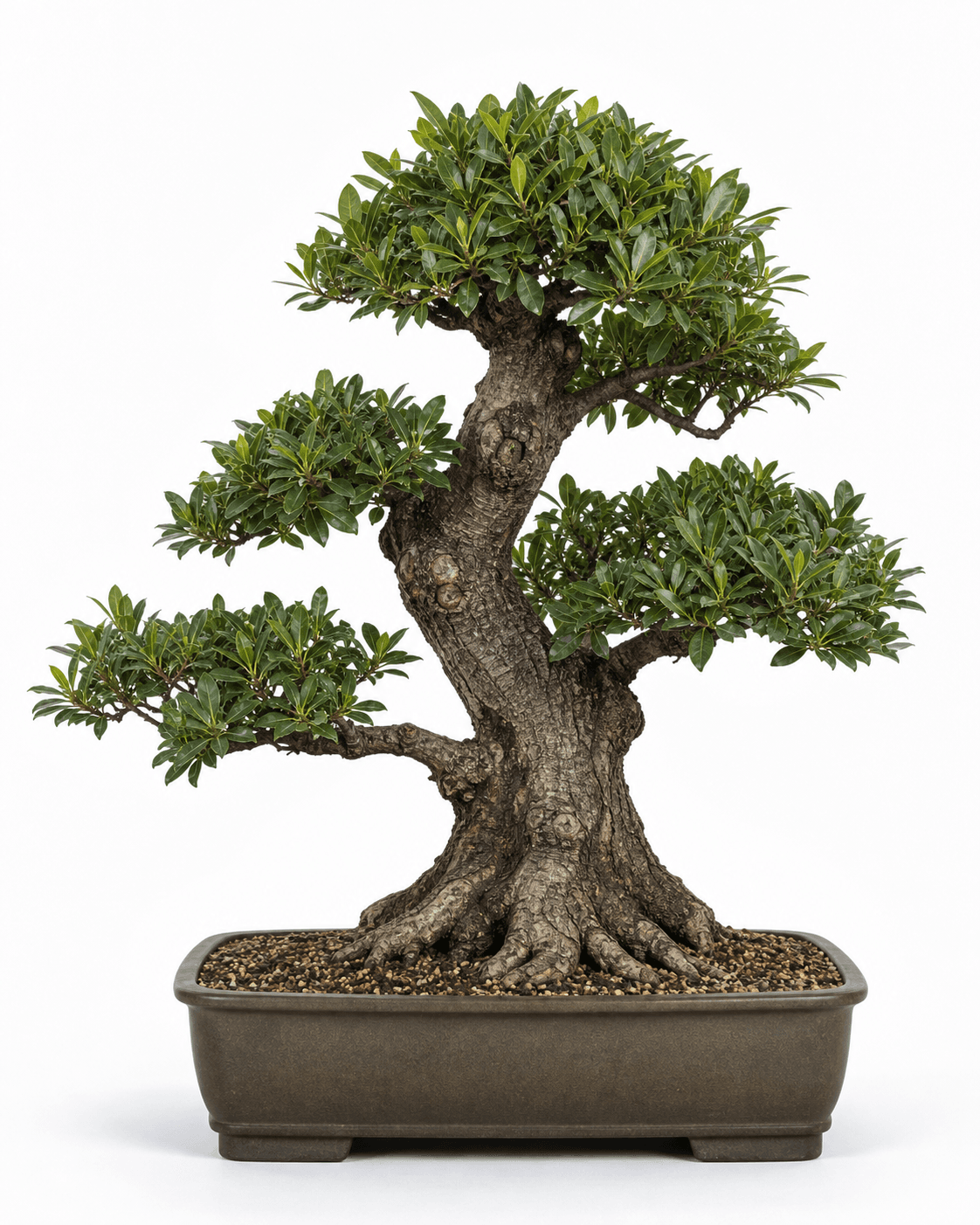
Bay laurel bonsai is Laurus nobilis, the Mediterranean evergreen used for culinary bay leaves. It works best as an outdoor broadleaf evergreen bonsai in mild climates, or as a container tree that receives strong light outside and protected winter shelter below its comfort range.
Treat Bay laurel as Broadleaf > Evergreen: keep the root system oxygenated, prune after the first flush hardens, repot in spring as buds swell, and protect small bonsai roots from freezes even where landscape plants are hardy.
The source-depth caveat matters. Mirai directly names Bay laurel as likely responsive to broadleaf-evergreen technique but does not have a dedicated Laurus file, so this guide transfers group method and grounds plant identity, hardiness, common names, pests, and culinary-leaf handling in extension sources.
Updated June 12, 2026. Written by EntGrove Editorial. Last verified June 12, 2026.
Care fingerprint
Read the species through its shared care pattern.
Protect from hard freezes when species demands it, prune with active foliage in mind, and repot when roots can recover without dormancy cues. Use this as the starting point before local conditions and tree strength refine the calendar.
Note: Mediterranean broadleaf evergreen culinary bay. Verify Laurus nobilis before applying this page because cherry laurel, English laurel, Portuguese laurel, California bay / Oregon myrtle, camphor, mountain laurel, spotted laurel, and sweetbay magnolia are different plants.
Read the foliage first
Broadleaf stress usually shows in leaf color, leaf size, wilt, scorch, or delayed hardening before it becomes a branch problem.
Match work to dormancy
Deciduous, evergreen, tropical, succulent, and flowering broadleaf trees recover on different calendars.
Protect fine roots
Root work should preserve enough active fine roots for the tree to rehydrate quickly after the operation.
Care cadence
The calendar starts with the tree's seasonal state.
Placement
Timing: Grow outdoors in full sun to partial shade when temperatures are above freezing. In cold regions, overwinter in bright frost-protected shelter rather than deep shade.
Watch for: Long internodes in shade, scorched leaves during sudden hot exposure, dry winter wind, and spring dieback after container roots froze.
NC State Extension: Laurus nobilisBonsai Mirai LibraryWatering
Timing: Water to runoff, then let the top dressing and visible soil particles dry enough to show air has returned before watering again.
Watch for: Frequent small waterings, wet nursery cores, dull yellow foliage, leaf drop after root chill, and crispy new tips after hot wind.
Bonsai Mirai LibraryNC State Extension: Laurus nobilisFeeding
Timing: Feed moderately in development after active growth confirms root function. In refinement, feed lightly every 6-8 weeks after spring elongation rather than forcing coarse shoots.
Watch for: Oversized leaves, long internodes, weak lower branches, and fertilizer applied before a recent repot has recovered.
Bonsai Mirai LibraryPruning
Timing: Let the spring flush harden, then prune back to viable interior buds. Use leaf reduction only on vigorous refined trees with coarse exterior leaves.
Watch for: A clipped topiary shell, blind interior wood, removing weak interior leaves, and cutting hard in the same season as heavy root work.
Bonsai Mirai LibraryNC State Extension: Laurus nobilisCulinary leaves
Timing: Harvest only from healthy, unsprayed trees and keep harvests light. Treat bonsai foliage as the tree energy system first and kitchen material second.
Watch for: Taking too much foliage, harvesting after pesticide use, pets chewing leaves, and serving whole leaves where they can cut or obstruct the mouth or digestive tract.
NC State Extension: Laurus nobilisBonsai Mirai LibraryRepotting
Timing: Repot in spring as buds swell. Preserve working foliage, stage old-soil conversion, tie the tree firmly, and shelter from wind while new roots establish.
Watch for: Full bare-rooting of weak evergreen material, compacted old patio soil, water bypass, and combining severe root work with major branch removal.
Bonsai Mirai LibraryWiring
Timing: Wire after growth hardens and before branches become too stiff. Use aluminum on smoother young shoots and check often as warm growth resumes.
Watch for: Wire hidden under dense leaves, bark scuffing, cracked older wood, branch tips wired downward into shade, and scars on slow-smoothing bark.
Bonsai Mirai LibraryBonsai Mirai / AsymmetryWinter protection
Timing: Protect bonsai roots before hard freezes. Keep evergreen foliage in light and above freezing when possible, especially in Zones colder than 8b.
Watch for: Healthy-looking leaves followed by spring collapse, frozen pots, dark storage, dry indoor heat, and waterlogged cold soil.
NC State Extension: Laurus nobilisBonsai Mirai LibraryPests and disease
Timing: Inspect before styling, during dense summer growth, and after winter shelter. Keep foliage open enough for light, air, and pest checks.
Watch for: Scale, psyllids, curled or rolled leaves, sticky residue, sooty growth, phytophthora or root rot, and laurel wilt risk in susceptible regions.
NC State Extension: Laurus nobilisBonsai Mirai LibrarySpecies guide
Apply the species profile before copying another tree's calendar.
At a glance
Bay laurel is a Mediterranean broadleaf evergreen bonsai with culinary leaves and frost-sensitive container roots.
Bay laurel is Laurus nobilis, an evergreen tree or shrub in Lauraceae native to the Mediterranean Basin. NC State lists the common names bay laurel, bay leaf tree, bay tree, Grecian laurel, sweet bay, tree laurel, and true laurel. NC State Extension: Laurus nobilisKew POWO search: Laurus nobilis
For bonsai, the useful facts are straightforward: it has leathery aromatic evergreen leaves, slow to medium growth, a topiary and hedge history, spring flowers, black drupes on female plants, and a landscape hardiness baseline of Zones 8b-10b. NC State Extension: Laurus nobilis
Mirai directly names Bay laurel as likely responsive to the same broadleaf-evergreen defoliation and pinching framework, then immediately warns that each species must still be evaluated by growth habit. That is the governing source-depth limit for this profile. Bonsai Mirai Library
Habitat
Read Bay laurel through Mediterranean evergreen foliage and shallow-container limits.
NC State describes sweet bay as native to lands around the Mediterranean Basin. In the ground, that ecology supports leathery evergreen leaves, tolerance of well-drained soils, and use as hedge, screen, patio plant, topiary, or small tree. NC State Extension: Laurus nobilis
The bonsai translation is more specific. Mediterranean evergreen leaves can handle sun, dry air, and mild winter activity, but a shallow container removes the deeper soil reservoir that buffers roots from heat, cold, and drought. Bonsai Mirai LibraryNC State Extension: Laurus nobilis
For care, match the native signal with oxygenated mineral soil, complete watering, strong light, and protection from hard freezes. Let the pot dry back enough for air, then water fully. Bonsai Mirai Library
For design, use the ecology instead of forcing a conifer outline. Bay laurel should read as a Mediterranean evergreen, old hedge, aromatic kitchen-garden tree, or dense broadleaf crown with visible branch exits. Bonsai Mirai / AsymmetryNC State Extension: Laurus nobilis
Reading the tree
Confirm true Laurus nobilis before applying this page.
The word laurel is shared by many unrelated plants. Keep true Bay laurel separate from cherry laurel, English laurel, Portuguese laurel, California bay or Oregon myrtle, camphor tree, mountain laurel, spotted laurel, and sweetbay magnolia. NC State Extension: Laurus nobilisKew POWO search: Laurus nobilis
NC State even lists several plants often confused with Laurus nobilis, including Aucuba, Prunus laurocerasus, and Prunus lusitanica. Those plants have different toxicity, pruning, fruit, and root behavior. NC State Extension: Laurus nobilis
After identity, read stage. Development trees need base selection, root conversion, extension, and interior buds. Refined trees need post-harden cutback, selective leaf work, light feeding, and winter protection that preserves fine twigs. Bonsai Mirai Library
Read vigor through foliage color and extension. Yellowing foliage is a root warning in the Mirai broadleaf-evergreen framework, so suspend pruning, defoliation, and styling until water entry and oxygen have been corrected. Bonsai Mirai Library
Pruning
Use post-harden pruning first; reserve leaf reduction for vigorous refined trees.
Bay laurel has firm leathery leaves, so manage it more like a coarse broadleaf evergreen than a soft pinching subject. Let spring shoots elongate and harden, then prune back to useful interior buds. Bonsai Mirai LibraryNC State Extension: Laurus nobilis
Mirai broadleaf-evergreen refinement accepts a coarse first flush, then prunes when the tree is energy positive to create a finer second flush. That rhythm suits Laurus better than constant hedge trimming. Bonsai Mirai Library
Partial defoliation is a conditional refinement tool. Reduce only large exterior leaves on vigorous trees, preserve small interior leaves, and avoid stripping weak branches of their energy supply. Bonsai Mirai Library
Topiary-trained nursery plants often have a dense shell and weak interior. Open the canopy gradually, keep light reaching inner buds, and build branch structure with pruning cycles rather than shearing the outline. NC State Extension: Laurus nobilisBonsai Mirai / Asymmetry
Roots
Repot in spring and treat old patio soil as the first problem to solve.
Mirai places broadleaf-evergreen repotting in spring as buds begin to swell. The tree has stored energy, foliage can still contribute, and new roots can form before summer heat. Bonsai Mirai Library
For Bay laurel, preserve enough foliage to power recovery and convert old soil in stages. A container-grown patio plant may have a compacted organic core that sheds water or stays wet long after the surface appears dry. NC State Extension: Laurus nobilisBonsai Mirai Library
Avoid combining severe root reduction with severe branch reduction. Mirai broadleaf-evergreen guidance warns against aggressive structural pruning in the same year as significant root work. Bonsai Mirai Library
After repotting, tie the tree firmly, water thoroughly, shelter it from drying wind, and wait for active growth before fertilizing or styling. Bonsai Mirai Library
Soil and pot
Use drainage-first broadleaf evergreen soil, then add akadama as refinement rises.
NC State says Bay laurel tolerates several well-drained soil types and can handle occasionally dry or occasionally wet conditions in landscape culture. Bonsai culture narrows that tolerance because the pot has less thermal and moisture buffer. NC State Extension: Laurus nobilis
In development, use 1:1:1 akadama:pumice:lava or a slightly pumice-forward mix if the old root core is dense, the climate is wet, or winter protection is cool. The goal is steady water with fast oxygen return. Bonsai Mirai LibraryNC State Extension: Laurus nobilis
For established refined trees, Mirai broadleaf-evergreen soil guidance favors akadama-heavy or solid akadama media because root scaling and ramification improve when watering can be managed precisely. Bonsai Mirai Library
Pot choice should support a Mediterranean broadleaf image. Muted glazed ovals, soft rectangles, and slightly deeper containers are practical while roots are being domesticated. Bonsai Mirai / Asymmetry
Climate
Landscape Zone 8b still requires bonsai-pot freeze protection.
NC State lists Bay laurel for Zones 8b-10b and says it should be brought indoors in winter in areas colder than Zone 8b to prevent frost damage. Use that as the landscape baseline, then add bonsai root protection. NC State Extension: Laurus nobilis
In mild Mediterranean or coastal climates, grow it outside year-round with winter rain management, good drainage, and protection after repotting. In hot inland climates, use full sun while temperatures are mild and add afternoon protection during heat spikes. Bonsai Mirai LibraryNC State Extension: Laurus nobilis
In colder climates, overwinter in a bright cold greenhouse, unheated sunroom, or protected frame that stays above damaging root temperatures. Evergreen foliage needs light whenever temperatures allow photosynthesis. Bonsai Mirai LibraryNC State Extension: Laurus nobilis
Avoid warm dark indoor storage. Low light, dry heat, and wet cold soil can all cause leaf drop, weak extension, and delayed spring collapse. Bonsai Mirai Library
Pests and diseases
Watch scale, psyllids, root rot, and laurel wilt signals before styling.
NC State lists scales and psyllids as occasional pests, and flags laurel wilt, phytophthora, and root rot as disease problems. Dense evergreen foliage can hide all of these until vigor has already declined. NC State Extension: Laurus nobilis
Scale often shows as bumps, sticky residue, sooty growth, or dull leaves. Isolate new nursery plants, clean light infestations physically, and avoid heavy styling until the tree is pest-free and extending. NC State Extension: Laurus nobilisBonsai Mirai Library
Psyllids can create curled or rolled leaves and distorted tender growth. Improve airflow, remove badly affected tips when timing is safe, and confirm the pest before repeated sprays on culinary foliage. NC State Extension: Laurus nobilis
Root rot prevention is bonsai prevention: open mineral media, complete watering, dry-back to oxygen, and no compacted old core that stays saturated through cool weather. NC State Extension: Laurus nobilisBonsai Mirai Library
Wiring
Wire hardened shoots carefully and let pruning build most of the fine canopy.
Wire Bay laurel after the spring flush hardens, when young shoots are firm enough to hold but before older wood becomes too rigid. Smooth-barked shoots deserve careful wire choice and frequent checks. Bonsai Mirai LibraryNC State Extension: Laurus nobilis
Mirai broadleaf-evergreen guidance reserves copper for rough-barked species that need extra holding power and can hide scars. On smoother Laurus shoots, aluminum is usually the safer first tool. Bonsai Mirai Library
Use wire for primary and secondary direction, then use pruning for ramification. A Bay laurel should show broadleaf structure and aromatic foliage mass rather than repeated conifer pad geometry. Bonsai Mirai / AsymmetryBonsai Mirai Library
Check wire often during warm growth because dense leaves hide bite. Remove wire before it marks the bark and reapply later if the branch has not set. Bonsai Mirai Library
Propagation
Cuttings and layers are more useful for bonsai predictability than seed.
Seed can produce Bay laurel, but NC State notes the species is dioecious and only female plants produce drupes. Seedlings also vary, so they are long-term selection projects rather than reliable cultivar copies. NC State Extension: Laurus nobilis
Cuttings preserve a useful plant with small leaves, compact internodes, and known culinary or ornamental traits. Treat rooted cuttings as development material until the trunk and roots justify refinement. Bonsai Mirai / AsymmetryNC State Extension: Laurus nobilis
Air-layering fits broadleaf evergreen physiology after foliage can feed new roots. Keep the layer evenly moist and oxygenated, then separate when root mass can support the retained leaves. Bonsai Mirai Library
Grafting is uncommon for ordinary Bay laurel bonsai. Nursery stock, cuttings, and layers usually provide simpler roots and cleaner labels. Bonsai Mirai / Asymmetry
Buying
Buy for base, trunk, clean leaves, and a true Laurus nobilis label.
Good Bay laurel material has visible basal flare, low branches, healthy interior buds, clean aromatic leaves, and a trunk line that can still read well after the nursery topiary outline is removed. Bonsai Mirai / AsymmetryNC State Extension: Laurus nobilis
A true label matters. Bay laurel, sweet bay, Bay leaf tree, Bay tree, Grecian laurel, and true laurel can point to Laurus nobilis, while many other laurel names point elsewhere. NC State Extension: Laurus nobilis
Avoid plants with buried bases, sticky scale residue, curled pest-damaged leaves, yellowing from wet soil, blackened dieback, weak interiors, or a potting core that repels water. NC State Extension: Laurus nobilisBonsai Mirai Library
Collected hedge or patio material can work when legal and healthy. Preserve foliage for recovery, solve water entry first, and delay refinement until the plant grows strongly in bonsai soil. Bonsai Mirai Library
Troubleshooting
Diagnose Bay laurel by roots, light, freeze exposure, pests, and label accuracy.
Symptom: yellow leaves and weak extension. Likely cause: root stress from stale wet soil, compacted nursery media, or poor oxygen. Fix: correct watering now and plan spring root-core conversion. Bonsai Mirai LibraryNC State Extension: Laurus nobilis
Symptom: spring push followed by dieback. Likely cause: winter root damage showing up when leaves demand water. Fix: improve winter shelter and wait for stable growth before pruning. Bonsai Mirai Library
Symptom: sticky leaves or black surface growth. Likely cause: scale or other sap-feeding pests. Fix: isolate, inspect stems and leaf undersides, clean the infestation, and postpone styling. NC State Extension: Laurus nobilis
Symptom: curled or rolled leaves. Likely cause: psyllid feeding or environmental distortion on tender growth. Fix: confirm the pest, improve airflow, and remove badly affected tips only when vigor supports pruning. NC State Extension: Laurus nobilis
Symptom: large leaves and long internodes. Likely cause: shade, heavy spring feeding, or a development-stage tree. Fix: increase light gradually and shift to post-harden cutback instead of constant shearing. Bonsai Mirai LibraryNC State Extension: Laurus nobilis
Symptom: a laurel tag but leaves, fruit, or toxicity behavior do not match. Likely cause: a different plant using the laurel common name. Fix: verify botanical identity before applying Laurus nobilis care. NC State Extension: Laurus nobilisKew POWO search: Laurus nobilis
Design
Style Bay laurel around aromatic Mediterranean broadleaf character.
Begin with base, trunk line, defining branch, and apex. Mirai design method uses those decisions to decide whether the composition feels stable, dynamic, restrained, or tense. Bonsai Mirai / Asymmetry
Bay laurel brings dense evergreen foliage, dark fissured bark on older material, aromatic leaves, and a long topiary history. Let the final image carry that formal garden and Mediterranean evergreen signal. NC State Extension: Laurus nobilisBonsai Mirai / Asymmetry
Good style options include informal upright, broom, twin-trunk, clump, literati, old hedge stump, and compact broadleaf tree. Negative space should reveal branch exits instead of hiding all structure under foliage. Bonsai Mirai / Asymmetry
Deadwood should be restrained. Bay laurel is strongest when old bark, trunk movement, dense foliage, and clean broadleaf branch rhythm do the visual work. Bonsai Mirai / Asymmetry
Forms
Form matters less than leaf scale, internodes, and true identity.
NC State does not list named cultivars on its Laurus nobilis profile, but it does emphasize hedge, screen, topiary, patio, container, and houseplant use. That nursery history means plants can vary mainly by training history and leaf scale. NC State Extension: Laurus nobilis
For bonsai, evaluate each plant directly: short internodes, small leaves, low shoots, clean roots, and a usable base matter more than a retail form name. Bonsai Mirai / AsymmetryBonsai Mirai Library
If a plant carries a golden, narrow-leaf, standard, spiral, or topiary label, keep that tag through early work. It may explain growth habit, leaf size, sun tolerance, or grafted structure. NC State Extension: Laurus nobilisBonsai Mirai / Asymmetry
Keep culinary handling conservative. NC State says leaves are used to flavor foods while cooking, but whole leaves should not be eaten because they can cut or obstruct the mouth or digestive tract. NC State Extension: Laurus nobilis
History
Bay laurel carries more cultural history than bonsai exhibition history.
NC State explains that the species epithet nobilis means noble or renowned and points to its well-known culinary use. The plant has long been grown as a formal garden, herb, hedge, topiary, and winter-interest evergreen. NC State Extension: Laurus nobilis
That history gives bonsai useful direction. A Bay laurel can lean into old European garden formality, Mediterranean kitchen-garden character, or compact patio-tree age rather than imitating a mountain conifer. Bonsai Mirai / AsymmetryNC State Extension: Laurus nobilis
Public bonsai writing has far less Bay laurel-specific method than it has for olive, boxwood, holly, oak, or camellia. Treat this page as a source-depth-aware broadleaf evergreen guide until more Laurus-specific bonsai evidence accumulates. Bonsai Mirai LibraryNC State Extension: Laurus nobilis
A mature Bay laurel bonsai should show reliable root oxygen, compact evergreen leaves, strong light, careful winter protection, and a clear old broadleaf structure that still reads as Laurus nobilis. Bonsai Mirai / AsymmetryBonsai Mirai Library
Species questions
Answer the beginner questions before styling.
Is Bay laurel good for bonsai?
Yes, Bay laurel can work as a broadleaf evergreen bonsai, especially in mild outdoor climates or with bright frost-protected winter shelter. Start with true Laurus nobilis, a good base, clean leaves, and roots that can be moved into mineral soil gradually.
Can Bay laurel bonsai live indoors?
Use outdoor culture as the baseline. Bay laurel needs strong light, airflow, and seasonal rhythm, so indoor placement is best for winter protection or short display rather than year-round low-light culture.
When should I repot Bay laurel bonsai?
Repot in spring as buds swell. Preserve enough foliage for recovery, convert old nursery soil in stages, secure the tree firmly, and protect it from wind until new growth confirms root function.
What soil does Bay laurel bonsai need?
Use well-drained mineral soil. A 1:1:1 akadama:pumice:lava mix is a safe development baseline, while established refined trees can move toward akadama-heavy media if watering and dry-back are reliable.
How often should I water Bay laurel bonsai?
Water fully to runoff, then wait until the surface and visible soil particles show that oxygen has returned. In hot wind, check often. In cool winter shelter, water less often but never let the root ball turn dust-dry.
Should Bay laurel bonsai be defoliated?
Use leaf reduction only on vigorous refined trees after the first flush hardens and leaf size is too coarse. Development trees and weak interior branches should keep foliage.
Why are my Bay laurel leaves yellow?
Check roots first. Yellow foliage often points to stale wet soil, poor oxygen, root rot, cold root damage, or a compacted nursery core that prevents even watering.
What pests affect Bay laurel bonsai?
Watch for scale, psyllids, curled leaves, sticky residue, sooty growth, root rot, phytophthora, and laurel wilt risk. Inspect nursery plants and winter-sheltered trees before wiring or pruning.
Is Bay laurel the same as cherry laurel or California bay?
This guide is for Laurus nobilis. Cherry laurel is Prunus laurocerasus, and California bay or Oregon myrtle is Umbellularia californica. Verify the botanical label before applying this care schedule.
Sources
Species advice needs source discipline.
Next decisions
Plan the operation before copying the calendar.
A good care note for Bay laurel records the tree's stage, the work done, and the aftercare used. That record matters more than a month-name rule.
Related species
Compare nearby trees before transferring advice.
English boxwood
Buxus sempervirens
Japanese boxwood
Buxus microphylla
Korean boxwood
Buxus sinica var. insularis
English holly
Ilex aquifolium
Japanese holly
Ilex crenata