
Species guide
Cedar Elm Bonsai Care
Ulmus crassifolia
Cedar elm bonsai care starts with treating Ulmus crassifolia as an outdoor warm-temperate deciduous elm with naturally small leaves, rough bark, and strong summer growth. Give it sun, moisture with oxygen, staged spring root work, repeated elm cutback, and heat-aware timing rather than indoor culture or a fixed calendar.
The local Mirai corpus gives direct cedar elm guidance in the Chinese elm summer-work file and broader Ulmus, elm, deciduous structural development, watering, soil, repotting, wiring, propagation, energy, and design files. Kew, USDA Forest Service Silvics, Texas A&M Forest Service, Oklahoma State, Virginia Tech, and UC Davis ground taxonomy, native range, fall flowering, growth rate, disease pressure, and seed behavior.
The main failure points are warm indoor growing, confusing cedar elm with Chinese elm or Siberian elm, pruning during protective summer dormancy, letting fast shoots create swelling, drying a shallow pot because the landscape tree is drought-tolerant, damaging the elm root sheen, letting wire bite into rough bark, and ignoring Dutch elm disease, elm leaf beetle, aphids, powdery mildew, seed escape, or nursery roots that were never corrected.
Updated June 18, 2026. Written by EntGrove Editorial. Last verified June 18, 2026.
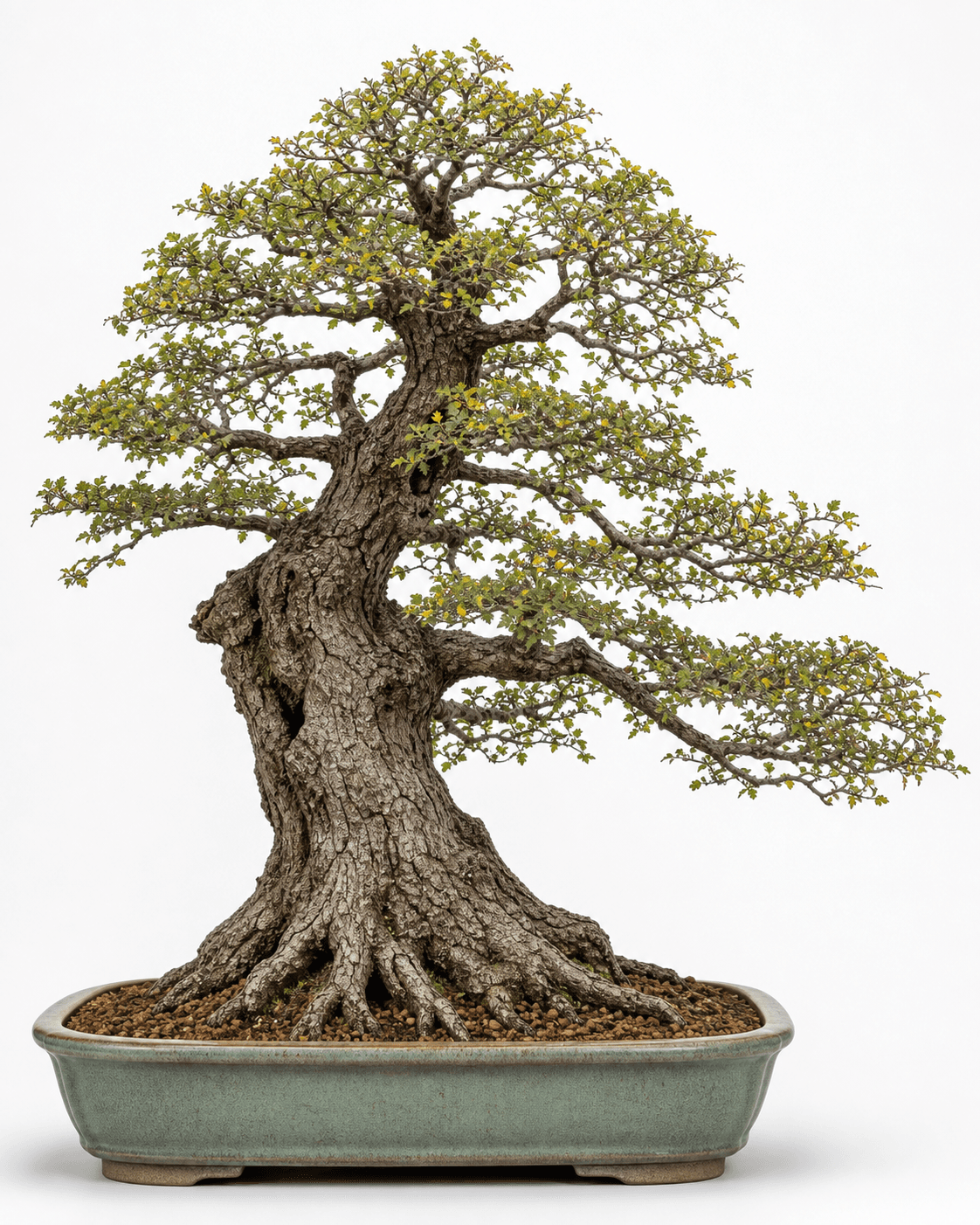
Care fingerprint
Read the species through its shared care pattern.
Repot and structural prune around dormant-to-active transitions; protect new leaves; time refinement work after growth hardens. Use this as the starting point before local conditions and tree strength refine the calendar.
Note: Cedar elm is a native southern U.S. elm with fall flowering and naturally small leaves; do not apply Chinese elm, Siberian elm, or winged elm advice until the Ulmus label is verified.
Read the foliage first
Broadleaf stress usually shows in leaf color, leaf size, wilt, scorch, or delayed hardening before it becomes a branch problem.
Match work to dormancy
Deciduous, evergreen, tropical, succulent, and flowering broadleaf trees recover on different calendars.
Protect fine roots
Root work should preserve enough active fine roots for the tree to rehydrate quickly after the operation.
Care cadence
The calendar starts with the tree's seasonal state.
Placement
Timing: Keep outdoors year-round with sun, air movement, rain, and winter dormancy. Protect container roots and fine twigs during hard freezes, drying wind, and rapid freeze-thaw swings outside the warm native range.
Watch for: Weak warm-room growth, late soft shoots, twig dieback after exposed freezes, and coarse shaded growth from too little light.
Kew POWOUSDA Forest Service SilvicsBonsai Mirai LibraryLight and heat
Timing: Use full sun when roots can keep pace. In sustained severe heat or hot wind, move the pot into afternoon protection and defer refinement pruning if the tree is shedding leaves to protect itself.
Watch for: Protective summer dormancy, leaf shedding from heat, scorched pot edges, long shade internodes, and judging a stressed tree as ready for work.
Bonsai Mirai LibraryOklahoma State ExtensionTexas A&M Forest ServiceUC Davis ArboretumWatering
Timing: Water thoroughly when the upper soil begins to dry and the lower root zone still has moisture. Spring extension, full sun, wind, and shallow containers shorten the interval quickly.
Watch for: Hydrophobic edges, stale wet nursery cores, late-day wilting, foliar mass that outruns the reservoir, and using landscape drought tolerance as a reason to let a bonsai pot dry hard.
Texas A&M Forest ServiceUC Davis ArboretumBonsai Mirai LibraryFertilizer
Timing: Feed by stage once growth resumes. Push development trees after spring leaf-out, moderate trees in secondary structure, refine lightly after the first flush hardens, and end deciduous feeding early enough for shoots to harden before winter.
Watch for: Runaway extension, excess potassium patterns in elm, fertilizer applied during heat stress, weak yellowing from roots rather than hunger, and late soft growth.
Bonsai Mirai LibraryPruning
Timing: In development, let selected shoots extend enough to thicken, then thin junctions before four or more shoots create swelling. In refinement, prune hardened small-leaf elm shoots back to viable buds, with weaker areas left longer.
Watch for: Crowded nodes, top dominance, inner twig starvation, pruning during heat dormancy, and large summer cuts that need stub-and-seal dieback management.
Bonsai Mirai LibraryTexas A&M Forest ServiceWiring
Timing: Wire structural branches selectively once the tree is vigorous enough to respond. Check elm wire often during active growth, and shift older or rough-barked sections to guy wires, branch weights, or clip-and-grow.
Watch for: Wire bite within a few months, trunk-crossing wire on rough bark, gray bark splitting to green phloem during a bend, and under-gauged aluminum that lets branches spring back.
Bonsai Mirai LibraryVirginia Tech DendrologyRepotting
Timing: Repot as buds swell and warmth returns. Preserve the root sheen under the base, correct heavy roots like branches, open the surface, sides, and bottom for oxygen, and anchor the tree so new roots cannot move.
Watch for: Sour nursery soil, compacted wet akadama, pot lift, circling roots, weak upper branches, rushed second repots, and root reduction that destroys fine roots under the trunk.
Bonsai Mirai LibraryUSDA Forest Service SilvicsFlower and seed control
Timing: Watch late-summer flowers and autumn samaras. Remove flowers or seed when refinement is the goal, when volunteers would be a problem, or when local monitoring flags seedling spread.
Watch for: Fall seed ripening, rapid germination, flower clusters on weak trees, seedlings under benches, and energy diverted from branch building.
USDA Forest Service SilvicsUC Davis ArboretumVirginia Tech DendrologyPest checks
Timing: Inspect during active growth, especially after weather stress or weak root conditions.
Watch for: Dutch elm disease flagging, powdery mildew, elm leaf beetle feeding, aphids, Spanish moss on branches in humid Texas settings, root rot, and branch dieback after heat or root stress.
Oklahoma State ExtensionUSDA Forest Service SilvicsBonsai Mirai LibrarySpecies guide
Apply the species profile before copying another tree's calendar.
At a glance
Cedar elm is a small-leaf native elm for outdoor growers.
The botanical name is Ulmus crassifolia Nutt. in Ulmaceae. Common labels include cedar elm, Texas cedar elm, fall elm, basket elm, red elm, southern rock elm, scrub elm, lime elm, Texas elm, and olmo. Kew gives the native range as central and southeastern United States to northeastern Mexico. Kew POWOUSDA Forest Service SilvicsTexas A&M Forest ServiceUC Davis Arboretum
Use it as an outdoor deciduous or semi-evergreen-in-mild-climates bonsai. Landscape sources list full sun to part shade, moderate to low water needs, 1 to 2 inch rough leaves, late-summer to fall flowers, fall-ripening samaras, and landscape size around 50 to 70 feet tall. The bonsai scale sweet spot is medium to large, though small-leaf young material can work in compact sizes when roots and internodes are controlled early. Oklahoma State ExtensionVirginia Tech DendrologyTexas A&M Forest ServiceUC Davis Arboretum
Difficulty is intermediate. The tree has useful vigor, naturally small leaves, rough bark, and native availability, but it demands outdoor dormancy, root-sheen preservation, frequent pruning, early wire removal, seed monitoring, and disease checks. Strong styles include broom, informal upright, clump, twin-trunk, multi-trunk, raft, and rough-barked native deciduous images. Bonsai Mirai LibraryBonsai Mirai / AsymmetryUSDA Forest Service Silvics
Wild habitat
Its wild range explains both the toughness and the heat timing.
USDA Silvics places cedar elm in the southern United States and northeastern Mexico, with strong populations through Texas, Oklahoma, Arkansas, Louisiana, Mississippi, Tennessee, and a northern Florida outpost. It grows along limestone watercourses, on bottomland ridges, in dense poorly drained central Texas clay, and on dry limestone hills where it stays smaller. Kew POWOUSDA Forest Service Silvics
For care, the wild lesson is broad tolerance inside a small-root constraint. Landscape sources describe drought tolerance and full sun, while Mirai watering methodology still makes water and oxygen the central bonsai balance. A cedar elm in a shallow pot can tolerate heat only when the roots remain hydrated, oxygenated, and cool enough to function. Texas A&M Forest ServiceUC Davis ArboretumBonsai Mirai Library
For design, read the tree as a southern limestone, bottomland, and urban-tough elm rather than as a delicate import. The best bonsai images use rough bark, small leaves, a believable elm crown, and fall timing for the species. Dry-hill material can suggest compact age, while streamside material asks for broader deciduous branching and stronger root mass. USDA Forest Service SilvicsBonsai Mirai / Asymmetry
Reading the tree
Separate development vigor from refinement control.
Mirai separates development from refinement by the work the tree still needs to do. In development, cedar elm should extend enough to thicken trunks, close wounds, and build primary branches. In refinement, the aim shifts to viable buds, short internodes, dense terminal ramification, and even energy across the crown. Bonsai Mirai Library
Vigor in this species must be used deliberately. Texas A&M lists growth up to 1.5 feet per year, and UC Davis recorded 36 inches per year in tree trials. Mirai deciduous structural guidance warns that vigorous elm junctions with four or more shoots create inverse swelling that becomes permanent. Texas A&M Forest ServiceUC Davis ArboretumBonsai Mirai Library
Heat changes the reading. The direct Mirai cedar elm note says a tree under extreme heat can enter protective summer dormancy, so aggressive refinement pruning should wait while the tree is shedding transpirational capacity. In practice, a quiet tree in hot weather needs water, shade moderation, and root recovery before scissors. Bonsai Mirai Library
Pruning
Prune cedar elm before vigor turns into swelling.
In structural development, let chosen shoots extend for thickness, then thin every junction to a main line plus one useful secondary, or to a single leader where dominance is clear. Mirai elm work treats four or more shoots at a point as a future knuckle, especially on vigorous deciduous material. Bonsai Mirai Library
In refinement, wait until the first flush has hardened and then cut strong shoots back to the first viable buds that can divide. Mirai small-leaf elm work uses pruning more than broad defoliation; small leaves make full leaf removal less useful, while repeated cutback builds twig density. Bonsai Mirai LibraryUSDA Forest Service Silvics
Large cuts need elm dieback logic. Mirai recommends leaving a stub on dieback-prone deciduous material, sealing fresh cambium, and returning later when natural recession shows the final cut line. On thick-barked elm, cut to bark level rather than chasing the shoulder too far, then let the tree roll callus around a protected wound. Bonsai Mirai Library
Fall leaf-drop pruning can be useful on fully deciduous cedar elm only after natural abscission begins. Mirai gives elms as part of the fully deciduous group that can use the two-to-three-week leaf-drop window, but stress-shed leaves after heat or drought are a warning to wait for recovery. Bonsai Mirai Library
Roots
Protect the elm root sheen and correct nursery roots early.
Mirai treats elm as a sheen-sensitive deciduous group. The fine-root layer beneath the root flare controls health, water movement, and branch retention. When that zone is damaged on a weak elm, branch loss can follow even when the top work looked reasonable. Bonsai Mirai Library
Repot as buds swell and warmth returns. Mirai says elms respond later than many deciduous trees because they need heat to break dormancy. Hydrate before work, keep roots misted if they dry, open the surface, sides, and bottom, and preserve the interior root column unless health forces deeper correction. Bonsai Mirai Library
Cedar elm gives encouraging root evidence for early training. USDA Silvics says young trees are relatively shallow rooted, resistant to root pruning in the nursery, and later moderately tolerant of compaction or root disturbance. That supports early root correction on vigorous stock, followed by recovery time before shallow show containers. USDA Forest Service SilvicsBonsai Mirai Library
Treat roots like branches. The Mirai elm repotting approach cuts heavy surface roots back to smaller secondary roots so taper begins in the nebari. Anchor the tree firmly after repotting; a tree that rocks cannot rebuild fine roots. Bonsai Mirai Library
Soil and pot
Use water-retentive aggregate soil with real oxygen.
Cedar elm soil should translate wet bottomlands, clay tolerance, and dry limestone hills into bonsai balance. Heavy organic potting soil holds too much stale water in a shallow container, while a dry mineral mix can fail quickly in full sun. Mirai soil fundamentals define the target as structure, oxygen, water, and nutrient retention together. USDA Forest Service SilvicsBonsai Mirai Library
For development, use an aggregate deciduous mix that drains freely and keeps enough moisture for summer extension, such as akadama, pumice, and lava or comparable regional particles. Post-collection or heavy nursery-root correction can start pumice-forward. Refined, well-rooted trees can move toward akadama-forward or solid akadama where water quality and freeze management make that practical. Bonsai Mirai Library
Pot choice should respect elm sheen and southern heat. Mirai notes that deeper containers drain faster than shallow ones and can help oxygen reach sheen-based roots. A medium-depth oval, soft rectangle, or slab with adequate soil reservoir suits most cedar elm images better than an ultra-shallow pot too early. Bonsai Mirai Library
Aesthetically, rough bark and yellow fall color can work in subdued glazed pots or warm unglazed clay. The Mirai deciduous pot convention favors glaze when seasonal color and renewal are the story, but native rough-bark cedar elm can also read well in quiet earth-toned containers that avoid fighting the bark. Bonsai Mirai LibraryBonsai Mirai / AsymmetryTexas A&M Forest Service
Climate
Adapt the schedule to southern heat and container winter risk.
In Texas, Oklahoma, Arkansas, Louisiana, Mississippi, Tennessee, and nearby climates, full sun and long growing seasons can build cedar elm quickly. The grower still has to moderate the pot: hot benches, dry wind, and shallow containers can force the tree into protective summer behavior even when landscape trees nearby look relaxed. USDA Forest Service SilvicsTexas A&M Forest ServiceBonsai Mirai Library
In dry interior climates, afternoon shade, wind breaks, slightly deeper containers, and water-retentive aggregate soil help the root system keep pace with transpiration. In humid southeastern climates, the bigger risk is stale soil and dense foliage that invites mildew, aphids, beetles, or branch decline. Oklahoma State ExtensionUC Davis ArboretumBonsai Mirai Library
In colder regions, keep the tree dormant but protect the container. Set pots on the ground, mulch around the pot, use an unheated cold frame, or group containers where roots and fine twigs avoid desiccating wind. A heated room breaks dormancy and produces weak growth. Kew POWOBonsai Mirai Library
Regional adaptation also includes seed responsibility. UC Davis says seeds germinate readily and the species should be monitored for invasiveness. Remove samaras where volunteers would create trouble or where local guidance calls for caution. USDA Forest Service SilvicsUC Davis Arboretum
Pests and diseases
Watch elm diseases, leaf feeders, and stress signals.
Oklahoma State lists Dutch elm disease, powdery mildew, elm leaf beetle, and aphids. USDA Silvics also lists cedar elm as susceptible to Dutch elm disease, although less harmed than American elm in the cited comparisons, and notes only occasional slight damage from elm leaf beetle. Oklahoma State ExtensionUSDA Forest Service Silvics
Mirai adds the cultural lens: pests and fungi often follow weak roots, crowded humid interiors, poor airflow, excessive nitrogen, or water-oxygen imbalance. Correct drainage, airflow, sun, and vigor before reaching for treatments, then use regional extension guidance when a pest or disease needs a specific control. Bonsai Mirai Library
Dutch elm disease risk should be handled practically. Sudden flagging, vascular streaking, bark beetle activity, or one-sided dieback belongs in an extension-diagnostic workflow. Avoid pruning infected material across healthy elms without sanitation, and keep stressed trees out of beetle-attracting decline cycles. USDA Forest Service SilvicsOklahoma State Extension
In humid Texas settings, USDA Silvics notes Spanish moss can drape branches and weaken or kill them. In bonsai, the equivalent warning is simple: remove shade, clutter, and persistent moisture from the branch structure before biology becomes a design problem. USDA Forest Service SilvicsBonsai Mirai Library
Wiring
Wire only the structure that needs placement.
The Mirai deciduous wiring approach is selective. Wire primary and secondary structure when it changes the design, then rely on pruning, clip-and-grow, guy wires, and branch weights for finer ramification. Wiring every small branch turns an elm into a conifer silhouette and damages the natural deciduous character. Bonsai Mirai LibraryBonsai Mirai / Asymmetry
Cedar elm is rough-barked but still needs attention. Mirai says rough-bark deciduous can hide minor wire marks better than smooth-bark material, while elm wire can bite within three to four months because growth continues through the season. Check often once the first flush hardens. Bonsai Mirai Library
For bends, roll the branch along the direction of the wire wrap rather than forcing one hinge point. Mirai gives a clear elm warning signal: gray bark splitting to reveal green phloem means the branch is near failure. Stop, reposition, or switch to a slower method. Bonsai Mirai Library
Use wire choices by bark and branch. Copper can be useful on mature rough-bark elm when fewer turns and stronger holding power matter; aluminum, guying, and clip-and-grow are safer on young, thin, or brittle sections. Avoid trunk-crossing wire on mature bark. Bonsai Mirai Library
Propagation
Seed is easy, but good bonsai roots still take planning.
USDA Silvics says cedar elm is commonly grown from seed, flowers from August to September, and ripens fruit from September to October, with storage and stratification improving germination. UC Davis reports rapid seed germination in trial observations. Use seed only when you can contain the seedlings. USDA Forest Service SilvicsUC Davis Arboretum
Cuttings and layers borrow from elm method. USDA Silvics says cedar elm can probably be propagated vegetatively like other elms by layering, air-layering, and greenwood cuttings; the Mirai elm propagation note supports cuttings under mist, bottom heat, and well-aerated media. USDA Forest Service SilvicsBonsai Mirai Library
Air layering is useful for correcting poor nursery roots, salvaging an upper trunk, or turning an inverse-taper junction into a clump. Let the layer build radial roots before separation, then anchor the new tree firmly and give it a recovery season before hard styling. Bonsai Mirai Library
Grafting is mainly a repair tool. Approach grafts, thread grafts, and root grafts can add missing branches or roots while the tree is vigorous. Match cambium tightly, immobilize the union, and plan for a full growing season or more before relying on the graft. Bonsai Mirai LibraryBonsai Mirai / Asymmetry
Sourcing
Buy the base and roots before the native label.
Good cedar elm material can come from local seedlings, nursery liners, landscape-grown pre-bonsai, or ethically removed volunteers in its native range. USDA Silvics says cedar elm is commonly planted as an ornamental shade tree in Oklahoma and Texas, and Texas A&M calls it one of the most common elm trees in Texas. USDA Forest Service SilvicsTexas A&M Forest Service
Start inspection at the soil line. USDA Silvics says mature cedar elm can have an unusual triangular, square, or deeply scalloped cross-section, while Virginia Tech describes furrowed light-brown bark, small buds, zig-zag twigs, and drooping branches. Those traits matter only when the base, taper, roots, and low buds are usable. USDA Forest Service SilvicsVirginia Tech DendrologyBonsai Mirai / Asymmetry
Texas Tested Texas Tough cedar elm lines may be useful landscape stock, but bonsai value still depends on the individual tree. Judge nebari, trunk movement, internodes, bud placement, bark, root correction history, and how much structure can remain after pruning. Texas A&M Forest ServiceBonsai Mirai / Asymmetry
Reject stock with severe root girdling, sour compacted nursery soil, irreversible inverse taper, no low buds, active Dutch elm disease symptoms, heavy beetle damage, heat-shocked weak growth, or a vague elm label. Confirm whether the plant is Ulmus crassifolia, Ulmus parvifolia, Ulmus pumila, Ulmus americana, Ulmus alata, or a hybrid before applying this page. Kew POWOUSDA Forest Service SilvicsOklahoma State ExtensionBonsai Mirai Library
Troubleshooting
Diagnose cedar elm from roots, heat, and identity first.
Leaves dropping during extreme heat can be protective summer dormancy. Move the pot out of the hottest exposure, stabilize watering, pause pruning, and wait for renewed growth before refinement work. Bonsai Mirai Library
Random twig or branch dieback usually points to a damaged elm sheen, stale soil, unchecked extension starving the interior, poorly timed large cuts, or disease. Inspect drainage, root smell, pruning history, wound sealing, and branch distribution before blaming fertilizer. Bonsai Mirai LibraryOklahoma State Extension
Yellow leaf margins can point to elm nutrient imbalance, while broad yellowing across the canopy is a stronger warning of declining health. Check water quality, drainage, root oxygen, fertilizer salt, pest pressure, and heat stress before adding more feed. Bonsai Mirai Library
Leaf skeletonizing, holes, or sticky tender shoots point toward elm leaf beetle, aphids, or other feeders. Hand-remove when light, restore airflow and vigor, isolate weak trees, and use regional extension controls when the infestation exceeds mechanical management. Oklahoma State ExtensionUSDA Forest Service Silvics
Seedlings under benches mean seed control failed. Remove samaras earlier, clean bench surfaces after autumn seed drop, and pull volunteers before roots establish. UC Davis ArboretumUSDA Forest Service Silvics
Design
Design cedar elm as a rough-barked southern deciduous tree.
Start with base, trunk line, defining branch, and apex. Mirai design methodology uses those anchors to decide what the tree already wants to say. Cedar elm often reads strongest when the image respects rough bark, small leaves, a southern native range, and elm crown architecture. Bonsai Mirai / AsymmetryBonsai Mirai LibraryUSDA Forest Service Silvics
Deciduous branch structure should move up and out, then subdivide into rounded terminal masses. Mirai describes mature broadleaf images as layered, asymmetrical, and broken into multiple foliage zones; flat conifer pads erase the elm character. Bonsai Mirai LibraryBonsai Mirai / Asymmetry
Good styles include broom, informal upright, twin-trunk, multi-trunk, clump, raft, and naturalistic collected-native forms. Let sacrifice growth build taper and bark, then remove it before the junction swells beyond repair. Bonsai Mirai LibraryUSDA Forest Service Silvics
Deadwood should be restrained. Mirai broadleaf design treats deciduous deadwood as more temporary than conifer jin and shari. Use scars, hollows, bark, branch hierarchy, and winter silhouette as the age language rather than making deadwood the main feature. Bonsai Mirai Library
Forms
Most labels are regional names, not separate bonsai calendars.
Kew lists Ulmus monterreyensis and Ulmus opaca as synonyms under Ulmus crassifolia. USDA Silvics lists basket elm, red elm, southern rock elm, and olmo; UC Davis adds fall elm, scrub elm, lime elm, Texas elm, and southern rock elm. Treat these as identity clues unless the plant proves to be another elm species. Kew POWOUSDA Forest Service SilvicsUC Davis Arboretum
Texas A&M Forest Service promotes Texas Tested Texas Tough cedar elm lines with better height, diameter, and survival than unimproved family lines in that program. A bonsai grower should still evaluate root flare, trunk movement, internodes, bark, bud density, and branch placement before trusting a named line. Texas A&M Forest ServiceBonsai Mirai / Asymmetry
Hybrids and label overlap are real. USDA Silvics records open-pollinated crosses between Chinese elm and cedar elm, and the broader elm trade can blur Ulmus labels. Use leaves, bark, flowers, samaras, source history, and scientific labels before applying care from a different elm profile. USDA Forest Service SilvicsKew POWO
History
Cedar elm is common shade-tree material with uncommon bonsai promise.
USDA Silvics published the cedar elm species chapter in 1990 and describes a strong-wooded southern tree used as ornamental shade material in Oklahoma and Texas. Texas A&M Forest Service similarly presents Texas cedar elm as common, hardy, drought-tolerant, deciduous, and capable of living over 100 years. USDA Forest Service SilvicsTexas A&M Forest Service
Landscape history for the species matters for bonsai because local material can be plentiful in the right region. Small leaves, rough bark, shallow young roots, root-pruning tolerance, and fall reproductive timing give growers a useful native alternative to imported elm material. USDA Forest Service SilvicsBonsai Mirai Library
There is no single famous cedar elm bonsai standard that defines the species for beginners. That is an opportunity: the strongest examples should come from long-term local practice, clean root correction, repeated deciduous cutback, and design choices that read from the southern habitat of the tree. Bonsai Mirai / AsymmetryBonsai Mirai LibraryUSDA Forest Service Silvics
Identity
Separate cedar elm from other common elm labels.
Cedar elm is Ulmus crassifolia. Chinese elm in bonsai usually means Ulmus parvifolia, Siberian elm is Ulmus pumila, American elm is Ulmus americana, and winged elm is Ulmus alata. September elm, Ulmus serotina, is another fall-flowering North American elm that can confuse late-season identification. Kew POWOUSDA Forest Service Silvics
Identification should start with the small rough leaves and fall reproductive timing. Virginia Tech describes alternate, simple, narrowly ovate to nearly lanceolate leaves, 1 to 2 inches long, with an uneven base and rounded teeth, plus late-summer and fall flowers and fall-ripening samaras. Virginia Tech Dendrology
Source history matters. Nursery material sold in the southern United States may be genuine cedar elm, a Texas Tested selection, a seedling, or a loosely labeled elm. Confirm the label before using disease, hardiness, seed, or indoor/outdoor advice from any elm page. Texas A&M Forest ServiceUC Davis ArboretumUSDA Forest Service Silvics
Species questions
Answer the beginner questions before styling.
Is cedar elm a good beginner bonsai?
Cedar elm suits an outdoor beginner who can water reliably, prune often, and keep a tree outside through the seasons. It is intermediate because fast elm growth, heat timing, root sheen, wire bite, seed, and disease checks all need attention.
Can cedar elm bonsai live indoors?
Grow cedar elm outdoors for long-term culture. It needs sun, air movement, seasonal dormancy, and outdoor light intensity. Indoor display should be brief and followed by a return to outdoor conditions.
What is the scientific name for cedar elm?
EntGrove uses Ulmus crassifolia Nutt. Kew accepts that name in Ulmaceae and lists Ulmus monterreyensis and Ulmus opaca as synonyms.
Is cedar elm the same as Chinese elm?
Cedar elm is Ulmus crassifolia. Chinese elm in bonsai usually means Ulmus parvifolia, while Siberian elm is Ulmus pumila. Identify leaves, bark, flowers, samaras, and source history before applying care from another elm page.
How much sun does cedar elm bonsai need?
Use full outdoor sun when roots and watering are reliable. In severe heat, temporary afternoon protection can prevent root and foliage stress, but permanent shade usually gives long internodes and weak interior growth.
How often should I water cedar elm bonsai?
Water when the upper soil begins to dry and the root zone still has moisture. Then water thoroughly until the whole root mass is wet. Landscape drought tolerance does not remove the need for even moisture and oxygen in a bonsai pot.
When should I prune cedar elm bonsai?
In development, let chosen shoots extend to build thickness, then thin crowded junctions before they swell. In refinement, prune hardened shoots back to viable buds. Pause aggressive work during extreme-heat dormancy or after stress leaf drop.
When should I repot cedar elm bonsai?
Repot in spring as buds swell and warmth returns. Preserve the fine-root sheen under the base, correct heavy roots in stages, and anchor the tree firmly so new roots can grow without movement.
What soil works best for cedar elm bonsai?
Use an aggregate deciduous mix that balances moisture and oxygen. Development trees can use akadama, pumice, and lava or comparable regional particles; refined, well-rooted trees can move toward akadama-forward soil when watering and winter protection are reliable.
Why is my cedar elm dropping leaves in summer?
Extreme heat can push cedar elm into protective summer dormancy. Stabilize water, cool the pot, provide temporary afternoon protection, and wait for renewed vigor before pruning, wiring, or fertilizing heavily.
Should I remove cedar elm seeds?
Remove samaras when refinement is the goal, when seedlings would be a nuisance, or when local guidance suggests monitoring. UC Davis notes rapid seed germination, and fall seed production can spend energy a refined tree needs elsewhere.
Sources
Species advice needs source discipline.
Next decisions
Plan the operation before copying the calendar.
A good care note for Cedar elm records the tree's stage, the work done, and the aftercare used. That record matters more than a month-name rule.
Related species
Compare nearby trees before transferring advice.
Japanese maple
Acer palmatum
Trident maple
Acer buergerianum
Amur maple
Acer tataricum subsp. ginnala
Field maple
Acer campestre
Korean hornbeam
Carpinus turczaninovii