
Species guide
Coast Live Oak Bonsai Care
Quercus agrifolia
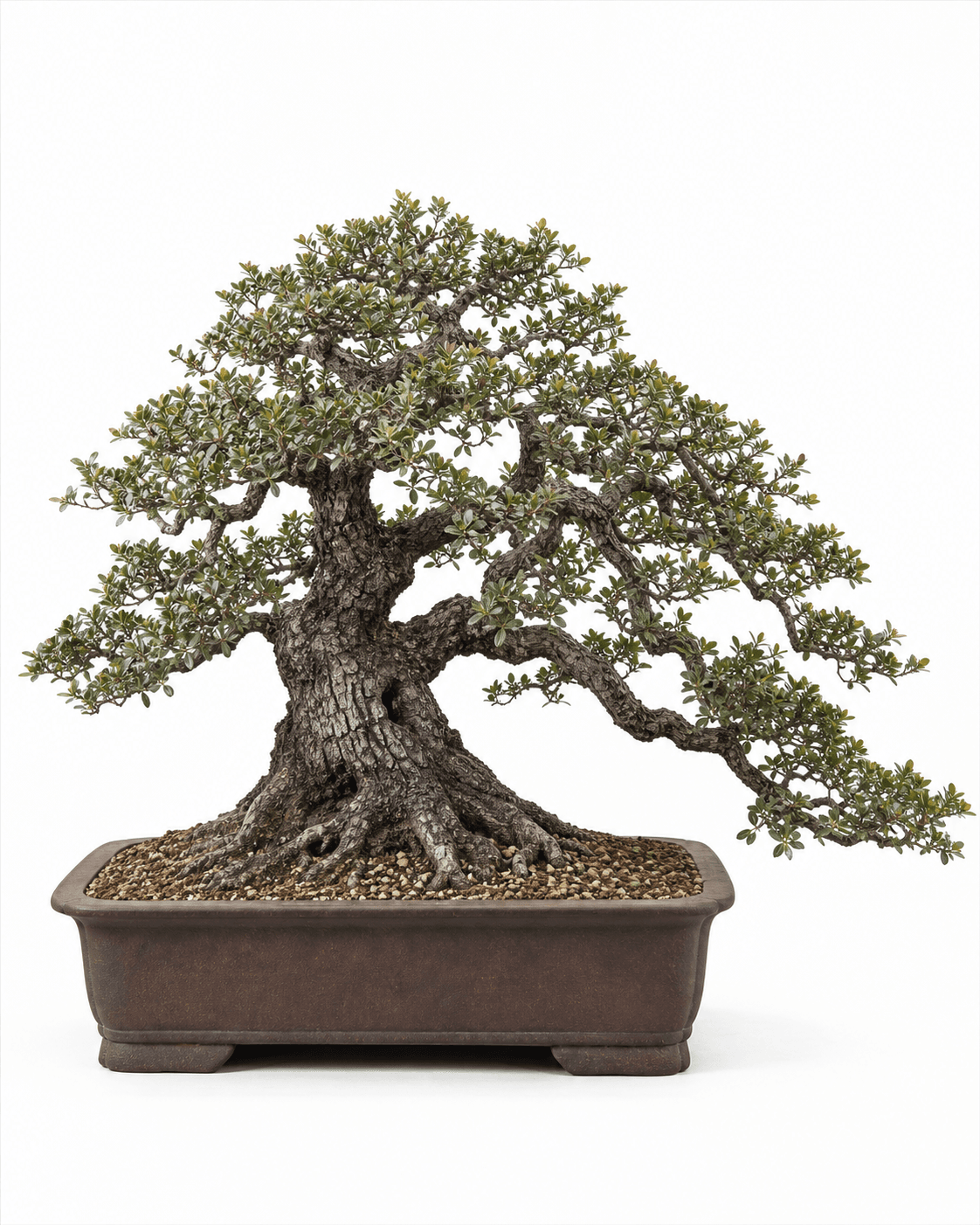
Coast live oak bonsai is an outdoor California evergreen oak for warm, bright benches, careful root work, and broad naturalistic design. Its small leathery leaves, rugged bark, and sweeping branch habit make it one of the more bonsai-ready oaks, but refinement depends on patient wet-dry watering, staged repotting, and climate-aware timing.
Use this page for confirmed Quercus agrifolia, including coast live oak, California live oak, and encina labels. Kew accepts Quercus agrifolia Nee in Fagaceae and places its native range from western California to northern Baja California, Mexico.
The beginner fit is narrow but real. Choose it if you can grow outdoors in sun, protect container roots from hard cold, avoid stale wet soil, and follow local sudden-oak-death rules where Phytophthora ramorum is present.
Updated June 18, 2026. Written by EntGrove Editorial. Last verified June 18, 2026.
Care fingerprint
Read the species through its shared care pattern.
Repot and structural prune around dormant-to-active transitions; protect new leaves; time refinement work after growth hardens. Use this as the starting point before local conditions and tree strength refine the calendar.
Note: Coast live oak is botanically a broadleaf evergreen California and Baja California oak; it stays in the deciduous oak group until the oak cluster is split, so follow the species page before copying English-oak timing.
Read the foliage first
Broadleaf stress usually shows in leaf color, leaf size, wilt, scorch, or delayed hardening before it becomes a branch problem.
Match work to dormancy
Deciduous, evergreen, tropical, succulent, and flowering broadleaf trees recover on different calendars.
Protect fine roots
Root work should preserve enough active fine roots for the tree to rehydrate quickly after the operation.
Care cadence
The calendar starts with the tree's seasonal state.
Placement
Timing: Grow outside in sun and moving air. In colder gardens, shelter the pot before sustained freezing and return it to outdoor light as soon as conditions are safe.
Watch for: Heated rooms, stagnant patios, frozen containers, protected storage that dries the tree, and transferring timing from southern live oak, cork oak, or English oak without checking species and climate.
Bonsai Mirai LibraryOregon State Landscape PlantsUSDA NRCS Plant GuideLight
Timing: Use full sun after establishment. Shift to temporary shade after repotting, in small show containers, or during inland heat waves when the root system cannot keep up.
Watch for: Long internodes, oversized leaves, weak interior buds, lower branches shaded by a dense apex, and sudden scorch after moving protected material into full exposure.
Bonsai Mirai LibraryOregon State Landscape PlantsWatering
Timing: Water thoroughly, then wait for a visible dry-back before watering again. Check both the sunny and shaded sides of the pot, especially after repotting or during hot wind.
Watch for: Frequent light sprinkling, overspray from neighboring trees, a sour organic core, hydrophobic dry pockets, root rot, and the false comfort of a still-green canopy after root damage.
Bonsai Mirai LibraryUSDA NRCS Plant GuideFeeding
Timing: Feed for the stage. Development trees can be fed more strongly after roots are active; refined trees use lighter feeding, often every 6 to 8 weeks, and skip fertilizer during coarse spring elongation.
Watch for: Oversized leaves, long internodes, soft late growth, salt on fresh roots, and fertilizer used to mask poor water, soil, or light.
Bonsai Mirai LibrarySpring pinching and pruning
Timing: On refined trees, pinch soft coast live oak shoots while they are elongating, often around the 6-leaf stage, to release interior buds. Let developing branches run when thickening, healing, or trunk building matters more.
Watch for: Pinching weak branches, treating flowering tips the same as vegetative shoots, swelling clusters from too many new shoots at one node, and removing energy from branches that need girth.
Bonsai Mirai LibraryPost-flush refinement
Timing: After the first flush hardens and the tree is energy-positive, prune long shoots back near interior buds and selectively reduce large exterior leaves to invite a finer second flush.
Watch for: Leaf reduction on weak interior growth, late-season foliage stripping, coarse apex dominance, and pruning without a visible purpose such as bifurcation, back-budding, or light admission.
Bonsai Mirai LibraryWiring
Timing: Wire primary and secondary structure while branches are flexible and the tree is strong, either after the first flush hardens or during the protected Mediterranean fall-to-winter working window.
Watch for: Copper bite, scars hidden under darkening bark, branch cracking, crossing branches over the trunk, and detail-wiring fine twigs while the tree still needs primary structure.
Bonsai Mirai LibraryVirginia Tech DendrologyRepotting
Timing: In protected Mediterranean practice, evergreen oaks can be repotted after winter solstice through January or early February. In colder regions, spring bud swell is the safer default. Reduce old root systems progressively.
Watch for: Bare-rooting, removing the old core in one pass, mobile soil, premature fertilizer, repotting because a calendar says so, and failing to honor the post-repot dry-back interval.
Bonsai Mirai LibraryUSDA NRCS Plant GuidePest and disease checks
Timing: Inspect during warm active growth, after wet still weather, after nursery purchase, and any time a tree from a sudden-oak-death region shows cankers, decline, or suspicious bleeding.
Watch for: Sudden oak death, root and crown rot, California oakworm, galls, acorn weevils, borers, spider mites, scale, twig blights, and local quarantine or disposal rules.
UC IPM sudden oak deathUSFS FEISUC IPMSpecies guide
Apply the species profile before copying another tree's calendar.
At a glance
Coast live oak is a California broadleaf evergreen oak for outdoor bonsai.
Quercus agrifolia is the coast live oak of California oak woodland and related Baja California habitat. Kew accepts the name, Oregon State describes a broadleaf evergreen tree with 2-6 cm leathery leaves and 2.5-4 cm acorns, and Virginia Tech emphasizes the short trunk, crooked spreading branches, and holly-like leaves that help distinguish it from other live oaks. Kew POWOOregon State Landscape PlantsVirginia Tech Dendrology
The bonsai spec is precise: outdoor sun, warm-season vigor, winter root protection, oxygen-rich soil, staged root correction, retained evergreen foliage, and branch movement that rises from the shoulder before sweeping outward and down. The current EntGrove taxonomy parks the page in the oak-heavy Broadleaf > Deciduous cluster, while the care calendar treats it as an evergreen California oak. Bonsai Mirai LibraryOregon State Landscape Plants
Medium and large bonsai are the natural target because the tree needs room for a broad crown, older bark, and low structural branches. A small tree can be built from seed, but a convincing coast live oak usually reads through canopy breadth, asymmetry, rugged bark, and a base that feels anchored. Bonsai Mirai LibraryBonsai Mirai / AsymmetryVirginia Tech Dendrology
Wild habitat
Its native pattern is California: winter moisture, summer dry-down, coastal moderation, and irregular branch spread.
Kew places Quercus agrifolia from western California to northern Baja California. USDA NRCS describes a warm wet winter and dry summer pattern moderated by fog and cool temperatures, with the tree growing on well-drained bluffs, slopes, canyons, and upland sites rather than ground that freezes. Kew POWOUSDA NRCS Plant Guide
Care follows that place. The tree wants sun and airflow, full watering followed by oxygen return, protection from hard root-zone freezing, and caution with summer irrigation in stale or organic soil. USDA NRCS warns that summer irrigation around mature landscape trees can promote root and crown rot, which translates in bonsai to avoiding a constantly wet core. USDA NRCS Plant GuideBonsai Mirai Library
Design also follows that place. Mirai oak design guidance reads coast live oak as a tree with upward branch shoulders and long outward-to-downward sweep, different from snow-loaded conifers and different again from Southeastern live oaks that can drop limbs to the ground. The image should feel wind-shaped and spacious rather than clipped into stacked pads. Bonsai Mirai LibraryBonsai Mirai / Asymmetry
Species separation matters. Virginia Tech lists interior live oak, Engelmann oak, scrub oak, and canyon live oak as look-alikes, while Oregon State keeps southern live oak, holm oak, cork oak, valley oak, and many other Quercus species separate. Confirm Quercus agrifolia before using this calendar. Virginia Tech DendrologyOregon State Landscape PlantsKew POWO
Reading the tree
Read coast live oak by stage, foliage load, soil oxygen, and branch origin.
A developing coast live oak needs extension, light, foliage, and enough container volume to thicken branches and heal old work. A refined tree needs shorter internodes, smaller leaves, and more frequent decisions about pinching, selective leaf reduction, and whether the tree is energy-positive enough for another operation. Bonsai Mirai Library
Foliage is the engine. Broadleaf evergreen guidance from the local corpus treats retained leaves as winter and spring energy storage, so removing foliage from weak interior branches can weaken the exact branch the design needs. Strong exterior growth can be reduced only after the tree has shown enough vigor. Bonsai Mirai Library
Soil oxygen is often the real diagnostic. Yellowing foliage, weak push after repotting, or a tree that looks green while slowly fading can point to roots that were kept too wet, moved in the pot, fertilized too early, or forced to grow through decomposed interior soil. Bonsai Mirai LibraryUSDA NRCS Plant Guide
Branch origin has design authority. Mirai Quercus work keeps branches on the side of the trunk where they originate and avoids crossing them over the trunk for short-term shape. On coast live oak, the first few inches of branch movement often matter more than detail-wiring every tip. Bonsai Mirai LibraryBonsai Mirai / Asymmetry
Pruning
Use pinching, post-flush pruning, and selective leaf work according to stage.
Coast live oak differs from many coarse broadleaf evergreens because its new growth can be pinched while still soft. The local broadleaf evergreen corpus recommends pinching strong Quercus agrifolia shoots around the 6-leaf stage to remove apical suppression and wake latent interior buds. Bonsai Mirai Library
Pinching is a refinement tool. On a tree still building primary branches, leave selected shoots unpinched so they lengthen, photosynthesize, and thicken. On a refined tree, pinch the strong exterior tips, leave weak interior shoots with their leaves, and reduce new clusters to two useful lines before swelling forms. Bonsai Mirai Library
After the first flush hardens, prune long shoots back near interior buds and selectively reduce large exterior leaves by roughly 30 to 50 percent where light and ramification are the goal. Small interior leaves should usually stay intact because they feed weaker zones. Bonsai Mirai Library
Late-season restraint is part of refinement. Broadleaf evergreen leaves fund fall and winter storage, so repeated summer and late-summer foliage removal can reduce the tree before cold, disease pressure, or root work arrives. Stop when the stated goal has already been achieved. Bonsai Mirai Library
Cuts need living support below them. Mirai Quercus study guidance keeps live nodes downstream of cuts and avoids pruning beyond the last functioning growth point, because unsupported sections can die back instead of closing cleanly. Bonsai Mirai Library
Roots
Repot by evergreen-oak timing, root evidence, and conservative reduction.
The direct local oak-repotting corpus treats Quercus agrifolia as an evergreen oak that can be repotted after winter solstice through January or early February in protected Mediterranean practice. In colder regions without greenhouse-level aftercare, spring bud swell is the more conservative default. Bonsai Mirai Library
Repot for a reason: loss of percolation, decomposed soil, root correction, or a container change. If the soil still percolates and the tree is strong, a calendar interval alone is weak evidence. If the core is decomposed, remove it across successive repots rather than in one dramatic pass. Bonsai Mirai Library
After root work, immobilize the tree and honor dry-back. The Mirai oak-repotting file emphasizes firm tie-down, careful soil integration with appropriately sized chopsticks, full initial hydration, then waiting until the top dressing lightens before watering again. Fertilizer waits for a clear growth response. Bonsai Mirai Library
USDA NRCS adds the ecological reason for caution: coast live oak depends on mycorrhizal partners and often builds a strong early root system from acorn-grown seedlings. Bonsai work should correct taproot and nursery-root problems in stages, while protecting active feeder roots and the tree base. USDA NRCS Plant GuideBonsai Mirai Library
The USFS transplant study on mature coast live oaks is useful as a caution, even though bonsai repotting is a different operation. Trees moved with canopy left intact survived better than trees given the standard heavy canopy reduction, which supports the bonsai rule that massive top reduction does not automatically compensate for massive root loss. USFS transplant study
Soil and pot
Use oxygen-rich aggregate soil and a pot that can carry a wide evergreen oak.
Coast live oak grows on well-drained native sites, and the local oak-repotting corpus warns that post-repot root initiation depends on a complete wetting followed by oxygen return. A potting mix that stays wet at the center after the surface dries is a major risk. USDA NRCS Plant GuideBonsai Mirai Library
For primary development, Mirai oak-repotting guidance allows coarser aggregate with some organic content where thickening, wound closure, and root rebuilding are still needed. For refinement, 100 percent akadama or an akadama-led mix can scale leaves, roots, and internodes more effectively if the grower can manage watering. Bonsai Mirai Library
Coast live oak does not need the same acidic correction as cork oak by default. The local oak-evolution corpus treats Quercus agrifolia as able to grow in near-neutral grassland soils and standard akadama, pumice, and lava systems, while chlorosis should still prompt a water, pH, and root-health check. Bonsai Mirai LibraryUSDA NRCS Plant Guide
Pot choice should support water control and the visual mass of the tree. Use deeper development containers while building roots and canopy, then move toward quiet unglazed rectangles, ovals, or rugged earth-tone pots that can hold a broad low crown without looking fragile. Bonsai Mirai LibraryBonsai Mirai / Asymmetry
Climate
Adjust for coastal California, inland heat, cool maritime benches, and colder containers.
In coastal California and similar mild Mediterranean climates, coast live oak can stay closer to its native rhythm: bright light, winter moisture, summer dry-down, and an evergreen canopy that keeps working when temperatures stay above freezing. USDA NRCS Plant GuideBonsai Mirai Library
Inland heat changes the water and shade equation. Full sun remains valuable, but a recently repotted tree, tiny pot, or young seedling may need temporary afternoon protection while the root system catches up. Avoid replacing shade with constant wet soil. Bonsai Mirai LibraryOregon State Landscape Plants
In cool maritime gardens, the tree may survive light cold but struggle to gain heat for root recovery and repeated flushes. Greenhouse or cold-frame protection can be useful, but the space still needs light, airflow, and winter watering when the soil remains active. Bonsai Mirai Library
In colder regions, protect container roots before hard freezes and watch winter wind. Winter-care guidance in the local corpus treats wind desiccation as a major killer when frozen roots cannot replace water stripped from evergreen foliage. Bonsai Mirai LibraryOregon State Landscape Plants
Keep regional disease context in the plan. In sudden-oak-death counties, do not move suspect material casually, and follow local disposal and nursery guidance. In unaffected regions, the risk is still relevant when purchasing California material. UC IPM sudden oak deathUSFS FEIS
Pests and diseases
Sudden oak death is the regional headline, but ordinary oak stress problems matter too.
UC IPM lists coast live oak among susceptible oaks for sudden oak death. On infected red-oak-group trees, symptoms can include sticky bleeding from bark cankers, later foliage browning, and decline that may follow a long hidden infection period. Diagnosis and regulated material handling belong with local extension or arborist guidance. UC IPM sudden oak death
USFS FEIS records broader coast live oak pest and disease pressure, including root and crown rot, twig blights, California oakworm, acorn insects, and other stress-linked problems. In bonsai, those issues intensify after stale soil, low airflow, weak light, or poorly timed root work. USFS FEISUC IPM
California oakworm can defoliate coast live oak during outbreak cycles, according to USFS FEIS. A healthy, established tree can rebuild better than a newly repotted or recently collected one, so after any defoliation event, reduce additional work and check roots before feeding hard. USFS FEIS
For day-to-day bonsai prevention, grow the tree in sun and airflow, avoid waterlogged organic cores, inspect leaf undersides and branch crotches, quarantine questionable nursery stock, and use local IPM guidance before applying pesticides to regulated oak diseases. UC IPMUC IPM sudden oak deathBonsai Mirai Library
Wiring
Wire the structural inches, then let pruning and growth finish the canopy.
Mirai Quercus guidance favors copper for oaks because the wood is firm and the wire needs holding power. On young smooth bark, scars can remain visible for years; on older rugged bark, the visual risk changes, but the vascular risk remains if wire bites deeply. Bonsai Mirai LibraryVirginia Tech Dendrology
Wire the first 2 to 3 inches of young structural branches with care. Those first inches set branch shoulder, direction, and relationship to the trunk, while the eventual tips can be rebuilt through future growth and pruning. Bonsai Mirai LibraryBonsai Mirai / Asymmetry
Heavy bends need the right season and restraint. Mediterranean oak guidance uses the period after the spring flush hardens or the late-fall-to-early-winter vascular window in protected climates. Avoid hard bending immediately after root work or during heat stress. Bonsai Mirai Library
Thread wire between leaves and avoid crushing evergreen foliage. A mangled leaf can stay visible or die, and the tree uses retained leaves for energy storage and water movement. Bonsai Mirai Library
Propagation
Use acorns first; treat cuttings, layers, and grafts as advanced or repair paths.
Fresh acorns are the cleanest propagation path for bonsai because they let the grower manage the taproot and base early. USDA NRCS recommends local acorn collection where appropriate because local seed may be adapted to site conditions, and it describes direct seeding and container seedling practices. USDA NRCS Plant Guide
Seedlings need early root decisions. Shorten or redirect the primary root in stages, preserve enough active roots to keep the seedling strong, and avoid burying future nebari under a deep nursery core that will be difficult to correct later. Bonsai Mirai LibraryUSDA NRCS Plant Guide
Cuttings are an unreliable main strategy for oaks. The local cork-oak and propagation corpus treats Quercus cuttings as much less dependable than many broadleaf species, so do not build a sourcing plan around easy rooting unless your own local trial records prove otherwise. Bonsai Mirai Library
Air layering and grafting are possible bonsai techniques, but they should be used with clear intent: saving a base, building radial roots, correcting a missing branch, or preserving a specific piece of material. For layers, water-oxygen balance in the sphagnum matters as much as vigor above the wound. Bonsai Mirai Library
Sourcing
Buy confirmed local identity, roots you can improve, and branches that already suggest live oak.
Most useful material will be acorn-grown seedlings, California native-plant nursery stock, legal collected seedlings, field-grown trunks, or bonsai nursery pre-stock. USDA NRCS notes that coast live oak is available from native plant nurseries within its range. USDA NRCS Plant Guide
Choose material with a visible base, low usable buds or branches, healthy evergreen foliage, no active cankers, and trunk movement that can support a broad asymmetrical crown. A younger tree with workable roots often beats an older trunk locked into a poor nursery root system. Bonsai Mirai LibraryVirginia Tech DendrologyOregon State Landscape Plants
Reject material with sticky bleeding cankers, unexplained decline, sour soil, severe circling roots, recent severe root pruning, hidden wire scars, or a generic live oak label. A vague live oak tag may point to Quercus agrifolia, Quercus virginiana, Quercus ilex, Quercus chrysolepis, or another species with different timing. UC IPM sudden oak deathVirginia Tech DendrologyKew POWO
Local provenance is valuable. USDA NRCS encourages local acorn use where restoration is the goal, and bonsai growers can borrow that caution by preferring material adapted to similar winter cold, summer heat, fog, soil, and disease pressure. USDA NRCS Plant Guide
Troubleshooting
Diagnose through roots, foliage timing, disease context, and the last major operation.
Symptom: yellowing older leaves after repotting. Likely cause: normal broadleaf evergreen adjustment if buds remain viable and the tree stays hydrated. Fix: stabilize the tree, water with dry-back, delay fertilizer, and wait for strong growth before pruning. Bonsai Mirai Library
Symptom: green leaves slowly pale while soil stays wet. Likely cause: airless roots, decomposed core soil, winter root damage, or a repot that left the tree mobile. Fix: improve dry-back, protect from cold wet exposure, and plan staged soil correction in the next safe window. Bonsai Mirai LibraryUSDA NRCS Plant Guide
Symptom: weak interior buds after repeated pinching. Likely cause: strong areas were pinched but weak leaves were also removed, cutting off the energy needed for recovery. Fix: leave weak interior foliage intact and reduce the apex instead. Bonsai Mirai Library
Symptom: a branch declines below a wire mark. Likely cause: reduced water conductivity under a bite or crack. Fix: remove biting wire, reduce stress on that branch, and rebuild shape with guy wires, clip-and-grow, or a later structural cycle. Bonsai Mirai Library
Symptom: sticky bleeding cankers or sudden decline in a West Coast region. Likely cause: possible sudden oak death or another serious canker issue. Fix: isolate the tree, avoid moving debris, and follow UC IPM and local extension diagnosis and disposal guidance. UC IPM sudden oak deathUSFS FEIS
Symptom: coarse long shoots and large leaves in refinement. Likely cause: shade, heavy feeding, too much development soil, or missed pinching timing. Fix: improve light, reduce fertilizer intensity, prune after hardening, and shift soil strategy only when roots justify it. Bonsai Mirai Library
Design
Style it as a California live oak, with branch shoulders, breadth, and asymmetry.
Start with base, trunk line, defining branch, and apex. Mirai design fundamentals use those elements to decide whether a tree should read as stable, tense, compressed, expansive, or wind-shaped before detail branches are selected. Bonsai Mirai LibraryBonsai Mirai / Asymmetry
Coast live oak branch movement should rise from the shoulder, move outward, and often sweep down as the branch matures. Quercus study guidance specifically separates California coast live oak movement from Mediterranean oak and Southeastern live oak movement, so regional character should show in the first bends. Bonsai Mirai Library
Virginia Tech and Oregon State both describe a short trunk, crooked spreading branches, a broad rounded form, and bark that becomes thick and furrowed. That favors informal upright, spreading live-oak, twin-trunk, clump, slanting, and broad low-branch designs. Virginia Tech DendrologyOregon State Landscape Plants
Deadwood should support the image rather than dominate it. The local oak corpus warns that oak deadwood can rot, so old bark, live vein, branch structure, and canopy breadth are usually better primary design assets than carved hollows. Bonsai Mirai Library
Pot pairing should be quiet and grounded. Unglazed earth-tone rectangles, ovals, or rugged containers with enough depth for water control usually serve the species better than delicate glazed pots. Bonsai Mirai LibraryBonsai Mirai / Asymmetry
Cultivars and forms
Most bonsai questions are species and provenance questions, not cultivar questions.
Kew treats Quercus agrifolia var. oxyadenia and several older names as synonyms under Quercus agrifolia. For bonsai care, that means the page can normalize those labels while still asking the grower to confirm the tree is coast live oak rather than another live oak species. Kew POWO
Regional forms can differ in leaf size, heat response, cold tolerance, and disease pressure because California oak habitats vary sharply over short distances. Keep records for the individual tree and its source rather than assuming every Quercus agrifolia behaves identically. Bonsai Mirai LibraryUSDA NRCS Plant Guide
The common search confusions are practical: coast live oak versus southern live oak, cork oak, holm oak, canyon live oak, interior live oak, scrub oak, English oak, and unidentified native oak seedlings. Leaf shape, acorn, twig fuzz, bark, range, and source label should all be checked. Virginia Tech DendrologyOregon State Landscape PlantsKew POWO
Named bonsai cultivars are not the main pathway for this species. Seed-grown and local-source material usually matter more, because early root handling and low branch placement decide the future bonsai more than a form name on a nursery tag. USDA NRCS Plant GuideBonsai Mirai Library
History
The bonsai image should borrow from California oak woodland and long-lived native-tree culture.
Coast live oak is part of California woodland identity: broad crowns, irregular branch spread, acorn cycles, wildlife value, and old bark under dry-summer skies. USDA NRCS and USFS FEIS both frame the species through habitat, restoration, acorns, fire response, and associated organisms. USDA NRCS Plant GuideUSFS FEIS
For bonsai design, that history argues for a tree that feels accumulated rather than manufactured. The strongest coast live oak images often show low structure, heavy branch bases, space under the canopy, and a crown wider than it is tall. Bonsai Mirai LibraryBonsai Mirai / AsymmetryVirginia Tech Dendrology
Exhibition care should protect the story. Visible fresh wire, crushed bark, over-mossed trunk, a wet black soil surface, or a dainty pot can distract from the California oak image. The tree should look outdoor-grown and weather-aware. Bonsai Mirai LibraryBonsai Mirai / Asymmetry
Species questions
Answer the beginner questions before styling.
Is coast live oak a good beginner bonsai?
It can be a good first oak for a patient outdoor grower in a mild or protected climate. It is demanding for indoor growers, exposed hard-freeze storage, stale wet soil, and anyone trying to finish roots and branches in one season.
Can coast live oak bonsai live indoors?
Long-term indoor culture fails. Coast live oak needs outdoor sun, airflow, seasonal signals, and cool winter protection rather than heated-room conditions.
Is coast live oak evergreen or deciduous?
Coast live oak is evergreen. EntGrove currently groups it with oak-heavy deciduous broadleaf pages only because the evergreen California and Mediterranean oak subcluster has not been split out yet.
How much sun does coast live oak bonsai need?
Use full outdoor sun once roots are healthy and watering is reliable. Temporary shade is useful after repotting, during inland heat waves, or in very small pots.
How often should I water coast live oak bonsai?
Water thoroughly to runoff, then wait for visible dry-back and oxygen return before watering again. Dry-summer native habitat does not mean prolonged drought in a shallow pot.
When should I prune coast live oak bonsai?
Pinch strong soft shoots during spring refinement, then prune after the first flush hardens if the tree is energy-positive. Preserve weak interior foliage and avoid late-season foliage stripping.
When should I repot coast live oak bonsai?
In protected Mediterranean practice, evergreen oaks can be repotted after winter solstice through January or early February. In colder regions, spring bud swell is safer. Repot for drainage, soil decay, root correction, or container change.
Should I defoliate coast live oak bonsai?
Use selective leaf reduction rather than routine full defoliation. Strong exterior leaves can be reduced during refinement, while weak interior leaves should usually remain because they feed recovery and back-budding.
Is California live oak the same as coast live oak?
Usually yes in bonsai and California native-plant trade. EntGrove normalizes coast live oak, California live oak, encina, and confirmed Quercus agrifolia to this page while keeping other live oaks separate.
Should I worry about sudden oak death?
Yes if you are in or near affected West Coast regions or buying material from those regions. Watch for bleeding cankers or unexplained decline, avoid moving suspect debris, and follow UC IPM and local quarantine guidance.
Sources
Species advice needs source discipline.
Next decisions
Plan the operation before copying the calendar.
A good care note for Coast live oak records the tree's stage, the work done, and the aftercare used. That record matters more than a month-name rule.
Related species
Compare nearby trees before transferring advice.
Japanese maple
Acer palmatum
Trident maple
Acer buergerianum
Amur maple
Acer tataricum subsp. ginnala
Field maple
Acer campestre
Korean hornbeam
Carpinus turczaninovii