
Species guide
Mastic Tree Bonsai Care
Pistacia lentiscus
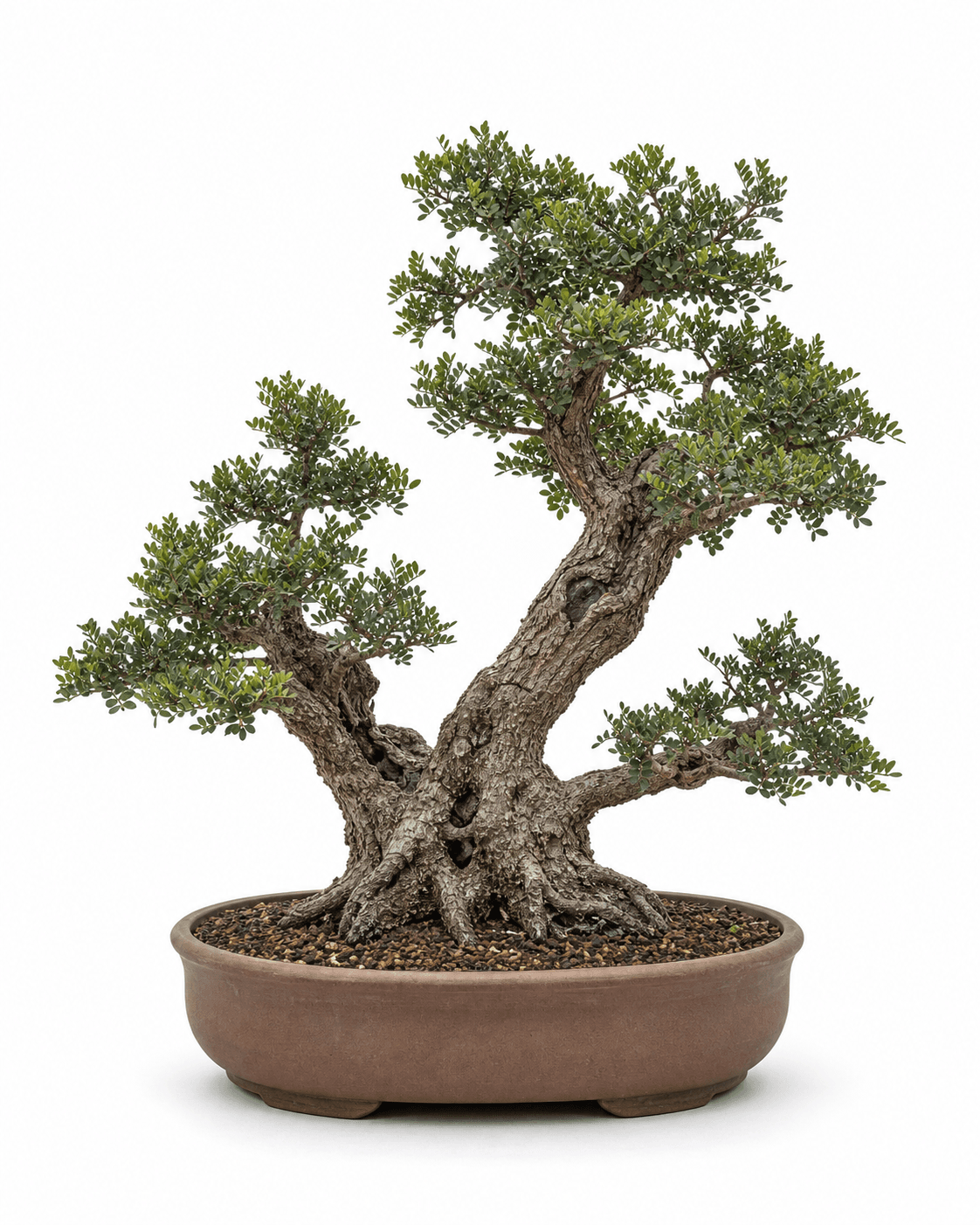
Mastic tree bonsai is Pistacia lentiscus, a resinous Mediterranean broadleaf evergreen in the cashew family. It needs strong outdoor light, sharply drained mineral soil, complete watering with oxygen return, and winter protection before a shallow pot freezes.
Treat mastic tree as Broadleaf > Evergreen: repot in spring as buds swell, prune after the first flush hardens, preserve working foliage during root recovery, and reserve leaf reduction for vigorous refined trees.
The source-depth caveat matters. The local Mirai corpus has no dedicated Pistacia lentiscus class, so this guide transfers broadleaf-evergreen and Mediterranean-source method, then grounds identity, common names, hardiness, propagation, flowers, fruit, resin, and disease risk in RHS, Kew, and Britannica references.
Updated June 12, 2026. Written by EntGrove Editorial. Last verified June 12, 2026.
Care fingerprint
Read the species through its shared care pattern.
Protect from hard freezes when species demands it, prune with active foliage in mind, and repot when roots can recover without dormancy cues. Use this as the starting point before local conditions and tree strength refine the calendar.
Note: Mediterranean broadleaf evergreen Anacardiaceae material with resinous bark and small leathery leaflets. Verify against edible pistachio, terebinth, Chinese pistache, false mastic, yellow mastic, and Schinus pepper-tree labels before applying care or buying for bonsai.
Read the foliage first
Broadleaf stress usually shows in leaf color, leaf size, wilt, scorch, or delayed hardening before it becomes a branch problem.
Match work to dormancy
Deciduous, evergreen, tropical, succulent, and flowering broadleaf trees recover on different calendars.
Protect fine roots
Root work should preserve enough active fine roots for the tree to rehydrate quickly after the operation.
Care cadence
The calendar starts with the tree's seasonal state.
Placement
Timing: Grow outdoors in full sun and shelter from cold wind during the warm season. In colder regions, move the pot to a bright frost-free greenhouse, cold frame, or protected windowed space before freezes.
Watch for: Long weak internodes in shade, stalled spring growth after cold roots, dry winter wind, and dark indoor storage that slowly drains evergreen foliage.
RHS: Pistacia lentiscusBonsai Mirai LibraryWatering
Timing: Water thoroughly until runoff, then allow the top layer and visible particles to dry enough for air to return. Increase frequency during hot wind and after strong root growth fills the pot.
Watch for: Frequent shallow sips, a peat-heavy nursery core, yellow leaves, blackened root tips, and the mistaken idea that drought resistance equals neglect in bonsai culture.
RHS: Pistacia lentiscusBonsai Mirai LibraryFeeding
Timing: Feed moderately once active growth confirms root function. In refinement, use lighter feeding after the spring flush hardens rather than forcing coarse extension.
Watch for: Oversized shoots, weak interior leaves, fertilizer applied immediately after repotting, and coarse top growth that shades the design branches.
Bonsai Mirai LibraryPruning
Timing: Let spring growth harden, then cut back to useful interior buds or branchlets. Use clip-and-grow first on older wood, then wire young shoots while they remain flexible.
Watch for: Repeated hedge shearing, stripping small interior leaves, cutting hard in the same season as major root work, and chasing fruit at the cost of branch vigor.
Bonsai Mirai LibraryRHS: Pistacia lentiscusRepotting
Timing: Repot in spring as buds swell and warm shelter is available. Convert old nursery soil in stages, retain working foliage, tie the tree firmly, and let roots recover before heavy styling.
Watch for: Full bare-rooting, cold wet aftercare, water bypass around a compacted core, wobble in the pot, and repotting because of calendar pressure rather than root condition.
Bonsai Mirai LibraryLeaf work
Timing: Use selective exterior leaf reduction only on vigorous refined trees after the flush hardens. Preserve interior foliage and weak branches as energy sources.
Watch for: Routine full defoliation, removing the small leaves you need for scale, and reducing foliage while yellowing or root stress is present.
Bonsai Mirai LibraryRHS: Pistacia lentiscusWiring
Timing: Wire hardened young shoots during active growth, then check often. Use guy wires, directional pruning, or staged bends where older resinous wood resists movement.
Watch for: Wire hidden under evergreen leaflets, bark scuffing, brittle old branch collars, sap sensitivity on skin, and scars that remain visible on slow-smoothing bark.
Bonsai Mirai LibraryBritannica: PistaciaWinter protection
Timing: Follow RHS H2 as the conservative baseline: protect from freezing, keep the foliage bright, ventilate during mild spells, and avoid warm dry rooms unless strong supplemental light is available.
Watch for: Frozen pots, wet cold soil, leaf drop after winter, late spring branch death, and translating landscape hardiness to bonsai roots without a local grower proving it.
RHS: Pistacia lentiscusBonsai Mirai LibraryPests and disease
Timing: Inspect before buying, before wiring, during dense summer growth, and after winter shelter. Keep the crown open enough for light, airflow, and scale checks.
Watch for: Scale, aphids, mites, sticky residue, sooty mold, fungal root rot, wet peat, and contact sensitivity to resin or sap on susceptible skin.
RHS: Pistacia lentiscusBritannica: PistaciaBonsai Mirai LibrarySpecies guide
Apply the species profile before copying another tree's calendar.
At a glance
Mastic tree is a resinous Mediterranean evergreen for bright, protected bonsai culture.
Mastic tree is Pistacia lentiscus, a Mediterranean evergreen shrub or small tree in Anacardiaceae. RHS lists the common names mastic tree, Chios mastic, lentisco, lentisk, mastic, and mastic resin plant. RHS: Pistacia lentiscusKew POWO search: Pistacia lentiscus
The bonsai appeal is leaf scale and age signal. The leaves are aromatic, leathery, evergreen, and pinnate with small leaflets, while the trunk and branches can carry the resinous Mediterranean character that gives the tree its name. RHS: Pistacia lentiscusBritannica: Pistacia
The care frame is Broadleaf > Evergreen. Use strong light, mineral drainage, full watering followed by dry-back, spring root work, post-harden pruning, and bright frost-free winter protection. Bonsai Mirai LibraryRHS: Pistacia lentiscus
The hardiness line is stricter than many growers expect. RHS rates Pistacia lentiscus H2, recommends mild frost-free outdoor culture, and advises glasshouse or movable containers for colder areas. RHS: Pistacia lentiscus
Habitat
Mediterranean origin explains the foliage, but the pot changes the water rule.
RHS lists the plant range as Mediterranean, and Britannica identifies Pistacia lentiscus as the Mediterranean Pistacia that supplies mastic resin. The plant is built for sun, dry air, and sharply drained soil. RHS: Pistacia lentiscusBritannica: Pistacia
The wild signal does not permit dry container culture. A shallow pot heats, cools, and dries faster than the ground, while organic nursery soil can stay wet inside even when the surface looks dry. Bonsai Mirai Library
For care, translate habitat into oxygen and light: open mineral particles, complete saturation, enough drying back for root oxygen, full sun during the growing season, and shelter from freezing roots. RHS: Pistacia lentiscusBonsai Mirai Library
For styling, make the tree read as Mediterranean scrub, coastal hedge, or old resinous shrub rather than as a delicate deciduous silhouette. Let dense evergreen masses support the design, but keep branch exits visible. Bonsai Mirai / AsymmetryRHS: Pistacia lentiscus
Reading the tree
Separate identity, stage, and root condition before pruning.
Start with the label. This page is for Pistacia lentiscus, not edible pistachio, terebinth, Chinese pistache, false mastic, yellow mastic, or Schinus pepper tree. RHS: Pistacia lentiscusBritannica: Pistacia
Then read stage. Development material needs a stable base, root conversion, branch selection, and extension. Refined material needs controlled feeding, post-harden pruning, and selective leaf work that keeps interior foliage alive. Bonsai Mirai LibraryBonsai Mirai / Asymmetry
Read root health through color, extension, and water movement. Yellow foliage or sudden dullness should pause pruning and styling until the grower checks percolation, old soil, cold damage, and root oxygen. Bonsai Mirai LibraryRHS: Pistacia lentiscus
Small leaflets can make weak shoots look more finished than they are. Before wiring a branch into the final design, confirm that it is fed by healthy foliage and receives enough light to stay useful. Bonsai Mirai Library
Pruning
Prune after hardening and keep enough foliage to power evergreen recovery.
Let spring growth extend and harden before refinement pruning. Cut back to useful interior leaves or branchlets, then let the second response prove which buds are active. Bonsai Mirai Library
Mastic tree should not be treated as a constant topiary clip. Repeated shearing builds a green shell, shades the interior, and removes the small inner growth that creates believable bonsai scale. Bonsai Mirai LibraryRHS: Pistacia lentiscus
Partial leaf reduction is a refinement tool for vigorous trees. Reduce large exterior leaves, preserve interior leaves, and skip leaf work in the same season as major root conversion. Bonsai Mirai Library
Fruit and resin are secondary to health. If flowers or fruit appear, keep them only on strong refined branches and remove them from weak trees or development material that needs extension. RHS: Pistacia lentiscusBonsai Mirai Library
Roots
Repot in spring, preserve foliage, and avoid aggressive bare-rooting.
Use spring bud-swell as the standard repotting window. The local Mirai corpus has Mediterranean evergreen examples that can initiate roots early, but there is no dedicated mastic file proving a special winter schedule. Bonsai Mirai Library
Convert nursery soil in stages. Remove enough old soil to restore water entry and oxygen, keep working roots and foliage, and leave a portion of the old root system functional when the tree is weak. Bonsai Mirai Library
Tie the tree firmly after root work. Evergreen broadleaf recovery depends on new root tips, and wobble breaks those new tips before the foliage can confirm recovery. Bonsai Mirai Library
After repotting, water thoroughly, shelter from wind, keep the tree bright and warm enough to grow, and withhold fertilizer until extension proves root function. Bonsai Mirai LibraryRHS: Pistacia lentiscus
Soil and pot
Use mineral drainage first, then refine the mix after roots are trustworthy.
RHS asks for sharply drained soil, and bonsai culture should make that literal. A 1:1:1 akadama:pumice:lava mix is a reliable development baseline for old nursery material and hedge stock. RHS: Pistacia lentiscusBonsai Mirai Library
Established refined trees can move toward more akadama when the grower can water precisely and protect the tree from cold wet conditions. Wet climates and weak roots usually deserve more pumice or lava. Bonsai Mirai Library
Choose pots with enough depth for oxygen, thermal buffering, and root development. Very shallow containers can come later, after branch structure and fine roots are already reliable. Bonsai Mirai LibraryBonsai Mirai / Asymmetry
Pot character should support the plant ecology: quiet unglazed clay, restrained earth colors, or simple forms that let resinous bark and small compound leaves carry the image. Bonsai Mirai / Asymmetry
Climate
Adjust by winter risk, not by a single copied care calendar.
In mild frost-free climates, mastic tree can live outdoors with full sun, shelter from cold wind, and fast drainage. In colder regions, treat it as a movable Mediterranean evergreen. RHS: Pistacia lentiscus
RHS H2 is the conservative public hardiness signal. For U.S. growers, use local experience before leaving a bonsai outside during freezes because a pot loses the ground insulation that landscape roots use. RHS: Pistacia lentiscusBonsai Mirai Library
Hot dry regions need more frequent watering, afternoon observation, and protection for freshly repotted trees. Cool wet regions need sharper drainage, stronger shelter from winter rain, and more patience after pruning. RHS: Pistacia lentiscusBonsai Mirai Library
Winter shelter should be bright, cool, and ventilated. Warm indoor rooms are useful only when light is strong and humidity, pests, and dry heating can be managed. RHS: Pistacia lentiscusBonsai Mirai Library
Pests and disease
Root rot is the named public risk; dense bonsai foliage still needs pest checks.
RHS lists mastic tree as generally pest-free and says it may be susceptible to fungal root rot. In bonsai, root rot risk rises when old organic soil, winter cold, and frequent small watering overlap. RHS: Pistacia lentiscusBonsai Mirai Library
Still inspect for scale, aphids, mites, sticky residue, and sooty mold. Dense evergreen leaflets and winter shelter can hide small pests until vigor drops. Bonsai Mirai Library
Because Pistacia is in Anacardiaceae, handle sap and resin with common-sense caution if you are sensitive to cashew-family plants. Use gloves for heavy pruning and wash tools after resinous work. Britannica: PistaciaRHS: Pistacia lentiscus
The best prevention is cultural: strong light, air movement, clean tools, staged root conversion, no standing water, and quarantine for new nursery or imported material. Bonsai Mirai LibraryRHS: Pistacia lentiscus
Wiring
Wire young shoots, support older wood, and check bite under evergreen foliage.
Wire after growth has hardened enough to hold a set. Young shoots are the safest material; older resinous wood should be tested gently and moved in stages. Bonsai Mirai Library
Use the off hand to support each bend, protect bark where needed, and keep coils visible enough to inspect. Small evergreen leaflets can hide wire bite quickly during warm growth. Bonsai Mirai Library
Use guy wires, clip-and-grow, and branch selection when a bend would damage the branch collar or tear bark. The design goal is credible old-shrub movement, not dramatic conifer contortion. Bonsai Mirai / AsymmetryBritannica: Pistacia
After wiring, maintain sun on the branch tips. A wired branch pulled into shade can survive the bend and still fail because retained evergreen foliage stops producing enough energy. Bonsai Mirai Library
Propagation
Seed and softwood cuttings are the public baseline; bonsai clones need patience.
RHS recommends propagation by seed or by softwood cuttings in late spring or early summer. Seedlings can vary in leaf scale, sex, growth habit, and resin character. RHS: Pistacia lentiscus
Cuttings are useful when a grower finds compact, small-leaf, dense material. Keep cuttings warm, bright, and evenly moist in a sharply drained medium until roots are proven. RHS: Pistacia lentiscusBonsai Mirai Library
Air layers may be tempting on hedge material, but use them as an experiment unless local growers have proven the exact stock. Do not sacrifice the best trunk before confirming that the tree roots reliably from layers. Bonsai Mirai Library
Grafting is uncommon for ordinary mastic bonsai. Reserve graft thinking for root correction or cultivar preservation after the grower has strong, disease-free material and a clear design reason. Bonsai Mirai / Asymmetry
Buying
Buy the base and identity, then solve the roots.
The best candidates are nursery shrubs, old container stock, mild-climate hedge removals with legal permission, or Mediterranean specialty nursery material with a clear Pistacia lentiscus label. RHS: Pistacia lentiscus
Inspect the base, bark texture, branch exits, root flare, interior foliage, and water movement through the pot. A romantic resin story cannot compensate for a weak trunk or sour root ball. Bonsai Mirai / AsymmetryBonsai Mirai Library
Separate mastic tree from edible pistachio, terebinth, Chinese pistache, false mastic, yellow mastic, and Schinus pepper tree before buying. Their leaf persistence, cold tolerance, fruit, and bonsai timing differ. RHS: Pistacia lentiscusBritannica: Pistacia
Red flags include peat-heavy nursery cores, wobbling trunks, sticky scale residue, dead interiors, recent hard pruning with no new growth, and labels that say only mastic or pepper tree without a botanical name. RHS: Pistacia lentiscusBonsai Mirai Library
Troubleshooting
Most failures trace to identity, cold roots, wet roots, or too much pruning.
Yellow leaves: check soil oxygen first. The usual causes are wet organic soil, a compacted nursery core, cold root damage, or watering that never fully saturates the root mass. Bonsai Mirai LibraryRHS: Pistacia lentiscus
Sudden leaf drop after winter: assume cold, dark shelter, dry indoor heat, or wet frozen roots before blaming normal evergreen shedding. Move future wintering toward bright frost-free protection. RHS: Pistacia lentiscusBonsai Mirai Library
Sticky leaves or black film: inspect for scale, aphids, and other sap-feeding pests. Clean the foliage, improve light and airflow, and treat only after identifying the pest. Bonsai Mirai Library
No fruit: Pistacia is a dioecious genus, and RHS describes male and female mastic flowers separately. A lone plant may never fruit, and bonsai pruning often removes flower-bearing growth. RHS: Pistacia lentiscusBritannica: Pistacia
Conflicting advice: recheck the plant. Advice for Pistacia vera, Pistacia terebinthus, Pistacia chinensis, or Schinus can be plausible and still wrong for Pistacia lentiscus bonsai. RHS: Pistacia lentiscusBritannica: Pistacia
Design
Design from Mediterranean shrub age: base, trunk line, leaf mass, and restraint.
Start with base and trunk line. Mastic tree often works best when the image suggests an old sun-baked shrub or coastal hedge with compact evergreen masses and a clear line through the trunk. Bonsai Mirai / AsymmetryRHS: Pistacia lentiscus
Choose one defining branch or movement idea early, then remove branches that only create a clipped ball. Dense leaf mass should frame the line rather than hide it. Bonsai Mirai / Asymmetry
Deadwood should be conservative. Resinous Mediterranean character can support scars, hollows, and old cuts, but durable juniper-style jin and shari are not the default image. Bonsai Mirai / AsymmetryBritannica: Pistacia
For display, use leaf texture and quiet pot selection. Fruit can be a seasonal accent on female plants, but it should never drive pruning decisions on a weak tree. RHS: Pistacia lentiscusBonsai Mirai / Asymmetry
Forms
Named bonsai cultivars are secondary to verified species identity and leaf scale.
RHS common labels include Chios mastic, lentisco, lentisk, mastic, and mastic resin plant. These are label clues, not bonsai cultivars with standardized care differences. RHS: Pistacia lentiscus
Chios material is culturally important for resin, but a bonsai buyer should still evaluate trunk, roots, leaf scale, sex, branch density, and local climate fit. RHS: Pistacia lentiscusBritannica: Pistacia
If a nursery offers dwarf, compact, or variegated forms, record the full label and grow it conservatively until vigor and winter response are known. Do not assume normal species strength. Bonsai Mirai Library
Male and female plants can matter for flowers and fruit. For bonsai care, sex is less important than verified identity, root health, and the ability to build dense interior branching. RHS: Pistacia lentiscus
History
Mastic tree carries resin history more than a fixed Japanese bonsai canon.
Britannica describes Pistacia as a genus that includes the economically important pistachio and the Mediterranean P. lentiscus, which supplies mastic resin. Britannica: Pistacia
RHS notes that the sap of Pistacia lentiscus is used to produce mastic. In bonsai writing, that history is useful for identity and character, not for medical or culinary claims. RHS: Pistacia lentiscus
As a bonsai subject, mastic tree belongs most naturally with Mediterranean broadleaf evergreens such as olive, common myrtle, cork oak, and Bay laurel, where ecology and container technique matter more than inherited Japanese species rules. Bonsai Mirai LibraryBonsai Mirai / Asymmetry
A convincing mastic bonsai should feel sun-exposed, aromatic, compact, and resilient. The best examples will likely come from patient nursery-stock conversion rather than quick styling on newly purchased shrubs. Bonsai Mirai / AsymmetryRHS: Pistacia lentiscus
Species questions
Answer the beginner questions before styling.
Can mastic tree be grown as bonsai?
Yes. Pistacia lentiscus has small evergreen leaflets, resinous bark character, and a Mediterranean shrub habit that can suit small to medium bonsai when it receives strong light, mineral drainage, and frost-free winter protection.
Is mastic tree an indoor bonsai?
Use it as an outdoor Mediterranean evergreen. Indoors works only as bright winter protection or short display, and warm low-light rooms usually cause weak growth, pests, or root problems.
How often should I water mastic tree bonsai?
Water when the soil has dried back enough for oxygen to return, then water to runoff. In hot sun this may be frequent; in cool winter shelter it may be much less frequent.
When should I repot mastic tree bonsai?
Repot in spring as buds swell and warm protection is available. Inspect every 3-4 years, stage old-soil conversion, preserve foliage, and avoid full bare-rooting weak evergreen material.
Can I defoliate mastic tree bonsai?
Use selective exterior leaf reduction only on vigorous refined trees after the flush hardens. Routine full defoliation is a poor fit because retained evergreen foliage powers recovery.
How hardy is mastic tree bonsai?
RHS rates Pistacia lentiscus H2 and recommends mild frost-free outdoor culture or glasshouse and container wintering in colder areas. Protect bonsai roots before freezing.
Why are my mastic tree leaves turning yellow?
Check roots and water movement first. Yellow foliage often points to wet organic soil, poor oxygen, cold root damage, or a nursery core that stays soggy inside.
What pests affect mastic tree bonsai?
RHS lists it as generally pest-free, but bonsai growers should still inspect for scale, aphids, mites, sticky residue, sooty mold, and fungal root rot in stale wet soil.
Is mastic tree the same as pistachio or Chinese pistache?
No. This guide is for Pistacia lentiscus. Edible pistachio is Pistacia vera, Chinese pistache is Pistacia chinensis, and terebinth is Pistacia terebinthus.
Is mastic tree the same as pepper tree?
No. Pepper tree labels usually point to Schinus species, which are different plants. Verify Pistacia lentiscus on the tag before applying this care schedule.
Sources
Species advice needs source discipline.
Next decisions
Plan the operation before copying the calendar.
A good care note for Mastic tree records the tree's stage, the work done, and the aftercare used. That record matters more than a month-name rule.
Related species
Compare nearby trees before transferring advice.
English boxwood
Buxus sempervirens
Japanese boxwood
Buxus microphylla
Korean boxwood
Buxus sinica var. insularis
English holly
Ilex aquifolium
Japanese holly
Ilex crenata